Goliath at Six Flags Great America is one of those coasters that feels like a turning point. Not just for the park, but for the entire modern coaster era. When it opened, it was a loud, confident statement: wooden coasters could be smooth, aggressive, airtime-heavy, and modern without losing that wild, out-of-control energy people love about wood.
But Goliath is also a coaster with a story. It is tied to the rise of Rocky Mountain Construction (RMC), the shift away from pure height and speed records, and the industry-wide obsession with airtime and pacing. It is a ride that looks simple from the midway and then absolutely surprises you once you are on it.
This guide covers the full picture: what Goliath is, how it was built, how it rides, how it compares to other RMCs, and why it became such a big deal for Six Flags Great America.
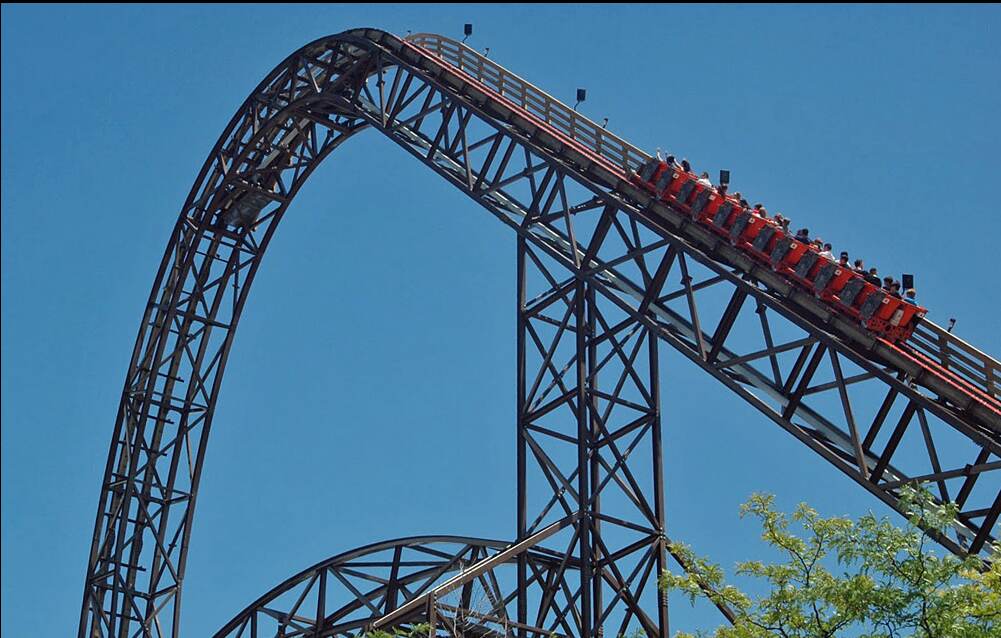
Quick Facts: What Kind of Coaster Is Goliath?
Goliath is a wooden coaster, but not in the traditional sense. It uses a wooden support structure, yet the track is RMC’s steel-topped system called Topper Track. That hybrid approach is the key to why it rides the way it does.
At a high level, Goliath is designed around three things: steep drop, relentless pacing, and repeated airtime hits. It is not a coaster that wastes time. It gets to the point fast and stays intense until the brakes.
Where Goliath Sits in the Park and Why That Matters
Six Flags Great America has always had a strong coaster lineup, but it is also a park with a very specific personality. It is loud, bold, and built around big crowd-pleasers. When Goliath arrived, it fit that identity perfectly, but it also added something the park did not have in the same way before: a modern airtime machine with that RMC snap.
Placement matters because it shapes how a coaster feels. Goliath’s footprint and structure are part of the visual experience. You see the steep drop and the dense tangle of track. It looks compact, almost like it is coiled up. That compactness is not just aesthetics, it is pacing. A tight layout means you are constantly transitioning from one element to the next, and that is exactly what Goliath does.
The Big Context: RMC and the Reinvention of Wooden Coasters
To understand Goliath, you have to understand what RMC did to the coaster world.
For decades, wooden coasters were loved for their character, but they came with tradeoffs. Traditional wooden track can get rough over time, maintenance is intense, and pushing extreme elements is harder because wood does not behave like steel. Parks had a choice: keep wood coasters classic and relatively conservative, or accept that roughness and maintenance were part of the deal.
RMC changed that equation. Their innovation was not just one thing, it was a whole approach:
First, they developed track systems that let coasters keep a wooden structure while riding more like steel. Topper Track uses laminated wood with a steel running surface. Later, their I-Box track went even further, using a full steel box track mounted on wooden supports.
Second, they brought a design philosophy that prioritized aggressive shaping: steep drops, rapid-fire transitions, and airtime that feels like it is trying to throw you out of your seat. This was not the floating, gentle airtime of classic hypers. This was ejector airtime, the kind that hits fast and hard.
Goliath is part of that early wave where RMC was proving the concept on brand-new builds, not just conversions. It helped cement the idea that RMC was not a niche builder. They were the future.
Why Six Flags Great America Built Goliath When It Did
Parks do not build coasters in a vacuum. They build them to solve problems.
For Six Flags Great America, a ride like Goliath does several things at once:
It adds a headline attraction that is easy to market. A steep drop and a record-style narrative gets attention.
It appeals to enthusiasts who travel for unique experiences. RMC coasters became a pilgrimage category almost overnight.
It gives the park a modern wooden coaster experience that feels different from older wood coasters. Even if you love classic wood, you can feel that Goliath is built from a different era of engineering.
It also fits the Six Flags strategy of building rides that feel intense without requiring a massive footprint or the cost of a 300-foot monster. Goliath is relatively compact compared to some huge steel coasters, but the experience is big.
Engineering Deep Dive: What Makes Goliath Work
The Lift and Drop: Setting the Tone
The lift hill is the calm before the punch. It is not a long, scenic climb. It is a setup. The train crests, and then you get the defining moment: a steep drop that immediately tells you what kind of ride this is.
Steep drops matter because they convert potential energy into speed quickly. The steeper the drop, the faster you reach high speed, and the more aggressive the forces can be in the first few elements. Goliath uses that to its advantage. It does not slowly build intensity. It starts intense and stays there.
Topper Track: Why It Feels So Different
Traditional wooden track is layered wood with a steel running strip. Over time, it can develop roughness because wood flexes, settles, and changes with weather. That is part of the charm, but it can also limit what you can do with shaping.
Topper Track is designed to be more consistent and durable. The steel running surface provides a smoother interface for the wheels, and the laminated structure allows for tighter tolerances. That means RMC can design sharper crests and more aggressive transitions without the ride becoming unbearably rough.
In practical terms, this is why Goliath can deliver repeated ejector airtime moments while still feeling controlled and modern.
Trains and Restraints: Airtime With Confidence
RMC trains and restraint systems are part of the signature. The lap bar style restraint is designed to keep you secure while still allowing that dramatic airtime sensation. On a ride like Goliath, restraint design is not just safety, it is experience design. A more restrictive restraint can mute airtime. A well-designed lap bar lets you feel it fully.
Pacing: The Real Secret Weapon
Lots of coasters have a big drop. Lots of coasters have airtime. What makes Goliath stand out is pacing.
Pacing is the rhythm of the ride, how quickly it moves from one element to the next, and how consistently it maintains intensity. Some coasters have a strong first half and then meander. Goliath does not. It is compact, dense, and designed to keep you off-balance in the best way. You barely have time to reset between airtime hits.
The Ride Experience: What It Feels Like, Element by Element
Goliath is one of those coasters where the first ride can feel like a blur, and the second ride is when you start noticing the craft.
First Drop
The first drop is steep and fast. It is not just about height, it is about angle. You get that moment where your body wants to keep going forward while the track disappears underneath you. It is a clean, dramatic start.
Airtime Hills and Ejector Moments
This is where Goliath earns its reputation. The airtime is not gentle. It is sharp and forceful. You will feel repeated moments where you are pressed up against the lap bar, especially if you ride in the back half of the train.
RMC airtime tends to feel like a series of punches rather than long floats. That is not better or worse, it is just a different style. If you love that aggressive airtime, Goliath is a feast.
Turns and Transitions
The turns are not just connectors. They are part of the thrill. RMC loves quick transitions that change direction in a way that feels snappy. That is part of why the ride feels so relentless. Even when you are not cresting a hill, you are being moved around.
Final Run to the Brakes
Goliath tends to finish strong. It does not feel like it is limping to the end. The last stretch keeps delivering speed and sensation, and then the brakes hit and you realize how tense your body was the whole time.
Best Seats on Goliath: Front vs Back vs Middle
Seat choice matters on a coaster like this.
The front row tends to give you a cleaner view and slightly smoother sensation. You still get airtime, but it can feel a bit more controlled because the front of the train is pulled over crests before the rest of the train is fully committed.
The back rows are where the ride can feel meaner in the best way. When the train crests a hill, the back is still being pulled upward while the front is already dropping. That creates stronger airtime and a more dramatic whip over the top of hills.
The middle can be a great compromise, especially if you want the intensity without the absolute maximum airtime snap.
How Goliath Compares to Other RMC Coasters
RMC coasters are a whole category now, so comparisons are inevitable.
Goliath is often discussed alongside other early RMC builds and conversions because it represents that moment when RMC was proving their style could work in a major chain park at scale.
Compared to some later RMCs, Goliath can feel slightly more straightforward in layout, but that is not a weakness. It is focused. It is an airtime-first ride with a clear identity.
It also has a particular kind of compact aggression that some larger RMCs do not replicate in the same way. Bigger does not always mean more intense. Compact can be brutal, and Goliath is compact in the right way.
Why Enthusiasts Love It and Why Some People Bounce Off It
Goliath is not a coaster that tries to be universally gentle. It is designed to thrill, and it does that by being forceful.
Enthusiasts love it because it is a pure expression of modern airtime design. It is the kind of coaster that makes you laugh involuntarily because your body is not expecting the next hit.
Some riders, especially those who prefer smoother, floatier rides, might find it a little too aggressive. That is not a flaw, it is a preference thing. If you love classic B&M hyper airtime, RMC ejector can feel like a different language. If you love RMC, it feels like home.
Who Should Ride Goliath?
If you love airtime, especially strong airtime, you should ride Goliath.
If you are a wooden coaster fan who wants something modern and intense, you should ride Goliath.
If you are new to coasters and still building confidence, Goliath might not be your first big step. It is not the most intimidating coaster in the world, but it is intense in a way that can surprise people.
If you are someone who loves the idea of a coaster that feels fast, snappy, and relentless without being 300 feet tall, Goliath is exactly that.
Practical Tips for Riding Goliath at Six Flags Great America
When to Ride
Lines can get long on popular coasters. If you want a shorter wait, aim for early in the day or later in the afternoon when crowds shift toward shows, food, or family areas. Weekdays are generally easier than weekends.
How to Maximize Airtime
Ride toward the back if you can. Keep your back against the seat and let the ride do what it does. If you tense up, airtime can feel harsher. If you relax into it, it feels exhilarating.
Loose Articles
Because the ride is airtime-heavy, secure everything. Phones, hats, glasses, anything loose is at risk. Even if the park allows certain items in secured pockets, it is better to be cautious on a ride like this.
Goliath’s Legacy: Why It Still Matters
Goliath is not just a coaster. It is a marker in coaster history.
It represents the era when RMC went from an interesting upstart to a defining force in the industry. It represents the shift toward airtime and pacing as the main obsession for enthusiasts. It represents a park investing in a ride that feels modern and distinctive without needing to chase the tallest record.
For Six Flags Great America, Goliath is a flagship experience. It is the kind of coaster that becomes part of the park’s identity. People do not just ride it, they talk about it. They plan for it. They compare it. They argue about front row vs back row like it is a personality trait.
And that is what a great coaster does. It becomes a story people carry with them.
Frequently Asked Questions About Goliath at Six Flags Great America
Is Goliath a wooden coaster or a steel coaster?
It is best described as a modern wooden coaster with a steel-topped track system. The structure is wood, but the running surface is engineered for a smoother, more precise ride than traditional wooden track.
Is Goliath rough?
It is typically smoother than classic wooden coasters, but it is intense. The intensity comes from airtime and quick transitions, not from roughness.
Is Goliath scary?
It can feel intimidating if you are nervous about steep drops or strong airtime. If you are comfortable with big coasters, it is more exhilarating than scary.
Conclusion: The Coaster That Proved Modern Wood Could Be Brutal and Beautiful
Goliath at Six Flags Great America is one of those rides that makes you appreciate coaster design as an art form. It is not just tall. It is not just fast. It is not just a list of stats. It is a carefully engineered experience built around a specific feeling: repeated, aggressive airtime delivered with modern precision.
If you love coasters, Goliath is a must. If you love wooden coasters, it is a fascinating evolution of what wood can be. And if you love the history of the coaster industry, it is a ride that marks a real shift in the modern era.
It is the kind of coaster that does not just entertain you. It changes your expectations.
