The question “How many people have died on roller coasters?” is one that many thrill-seekers ask before boarding their first coaster. The answer might surprise you: roller coaster fatalities are extraordinarily rare. In fact, you’re statistically more likely to be struck by lightning than to die on a roller coaster. Yet despite the low numbers, roller coaster deaths do occur, and each incident represents a tragedy that impacts families, parks, and the industry as a whole.
This post examines the data on roller coaster fatalities in the United States, explores the causes of accidents, and explains how safety regulations and technological improvements have made coasters safer than ever before. Understanding these statistics helps put the risk of roller coasters into perspective and demonstrates why modern coasters are among the safest forms of entertainment available.
The Numbers: How Many People Have Died on Roller Coasters?
United States Fatality Data (1994-2004)
The most comprehensive study of roller coaster fatalities in the United States comes from a 10-year period spanning 1994 to 2004. During this decade, researchers documented 40 deaths across 39 separate incidents. This averages to approximately 4 deaths per year from roller coaster rides in the entire United States.
Of these 40 deaths, 29 (73%) occurred among roller coaster patrons—people riding the coaster. The remaining 11 deaths (27%) involved ride employees, including operators and maintenance workers. This distinction is important because employee deaths often involve different circumstances than patron deaths, such as being struck by a moving train during maintenance or operation.
The victims ranged in age from 7 to 77 years old, demonstrating that roller coaster fatalities can affect people across the entire age spectrum, though certain age groups and pre-existing health conditions carry higher risk.
Historical Fatality Rates
From 1987 to 2000, the estimated average was 4.5 amusement ride-related deaths per year across all rides (not just roller coasters). This rate has remained relatively stable over the decades, though the number of rides and riders has increased significantly. This suggests that safety improvements have kept pace with the growth of the industry.
From 1990 to 2004, there were 52 documented deaths associated with amusement parks overall, with roller coasters accounting for a significant portion of these fatalities.
Global Perspective
Globally, roller coaster deaths are also rare, but data collection varies significantly by country. The United States accounts for approximately 40% of global roller coaster deaths since 1980, despite having only about 25% of the world’s roller coasters. This statistic suggests that factors beyond the coasters themselves—such as maintenance standards, regulatory oversight, and operator training—play a significant role in fatality rates.
Modern Era (2000s-2020s)
In the modern era, with improved safety standards, better maintenance practices, and more rigorous inspections, the fatality rate has remained low. Annual reports from the International Association of Amusement Parks and Attractions (IAAPA) show that serious injuries and fatalities continue to decline as a percentage of total rides operated.
According to recent data, the odds of dying on a roller coaster ride are approximately 1 in 750 million. To put this in perspective, you’re more likely to die from being struck by lightning (1 in 500,000 chance in your lifetime) than from a roller coaster accident.
What Causes Roller Coaster Fatalities?
Mechanical Failure and Structural Issues
Mechanical failures and structural malfunctions have been responsible for a significant portion of roller coaster deaths. Research shows that mechanical and structural malfunctions produced 22 fatalities in 15 separate events during the 1994-2004 study period.
These failures can include broken welds, structural cracks, wheel assembly failures, brake system malfunctions, and track separation. Modern coasters are designed with redundant safety systems to prevent catastrophic failures, but older coasters or those with inadequate maintenance can be vulnerable to mechanical issues.
The most common mechanical failures involve:
- Brake system failures that prevent the train from stopping properly
- Wheel assembly failures that cause the train to derail or lose contact with the track
- Structural cracks or welds that fail under stress
- Lift hill chain failures that cause trains to roll backward
- Restraint system failures that allow riders to be ejected
Rider Ejection and Falls
Ejection from the ride is one of the most common causes of roller coaster fatalities. Of the 29 patron deaths during the 1994-2004 study period, 11 (38%) were caused by external causes such as falling or being ejected from the ride.
Ejections can occur due to several reasons:
- Restraint failure or improper restraint application
- Rider non-compliance (not following safety instructions)
- Structural failure that allows riders to exit the train
- Design flaws in the restraint system
- Maintenance issues that compromise restraint integrity
Falls from the ride can also occur when riders attempt to exit during operation, stand up during the ride, or when structural failures create openings through which riders can fall.
Operator Error and Human Factors
While statistics often cite “human error” as the cause of 70-90% of accidents, this statistic is misleading. The reality is more nuanced. Operator error can include:
- Failing to properly secure restraints before dispatch
- Dispatching a train with a mechanical issue
- Failing to follow proper operating procedures
- Inadequate training or fatigue
- Miscommunication between operators
However, many of these “operator errors” occur within a system that may have inadequate training, poor communication, or insufficient safeguards. Modern coasters increasingly use automated systems to reduce reliance on human operators and minimize the potential for error.
Pre-existing Medical Conditions
Some roller coaster deaths occur due to riders with pre-existing medical conditions experiencing a cardiac event or other health crisis during the ride. These deaths are technically caused by the medical condition rather than the coaster itself, but they are still counted in fatality statistics.
Conditions that increase risk include:
- Heart disease or arrhythmias
- Uncontrolled high blood pressure
- Recent surgery or injury
- Pregnancy
- Severe anxiety or panic disorders
Most parks post health warnings and require riders to self-assess their fitness to ride. However, not all riders accurately assess their own health status.
Maintenance and Inspection Issues
Many roller coaster fatalities can be traced back to inadequate maintenance or inspection. Coasters that are not properly maintained can develop cracks, corrosion, and wear that eventually lead to catastrophic failure.
Issues that can arise from poor maintenance include:
- Rust and corrosion that weakens structural components
- Worn wheels that lose contact with the track
- Brake pad wear that reduces stopping power
- Lubrication issues that cause friction and wear
- Undetected cracks that propagate under stress
Notable Roller Coaster Incidents and Fatalities
The Kingda Ka Incident (2005)
One of the most notable recent incidents involved Kingda Ka at Six Flags Great Adventure in New Jersey. On June 8, 2005, an empty test train was launched on the world’s tallest and fastest roller coaster at the time. The launch track ripped itself apart during the test, causing significant damage to the ride. While this incident did not result in fatalities, it demonstrated how catastrophic mechanical failures can occur on modern coasters and highlighted the importance of rigorous testing and inspection.
The Verrückt Water Slide Tragedy (2016)
While technically a water slide rather than a roller coaster, the Verrückt incident at Schlitterbahn Waterpark in Kansas City is one of the most tragic amusement ride accidents in recent memory. On August 7, 2016, 10-year-old Caleb Schwab was killed on the world’s tallest water slide. The raft became airborne and Caleb was ejected, striking a metal net support structure. The incident resulted in criminal charges against the park operators and highlighted the importance of proper design, testing, and safety oversight.
Six Flags Park Incidents
Six Flags parks have experienced multiple fatalities over the years. To date, there have been 99 deaths at amusement parks that were or are currently managed by the Six Flags Entertainment Corporation. While this number includes all rides and attractions, not just roller coasters, it demonstrates that even major, well-established parks can experience tragic incidents.
Understanding the Causes: Why Do Roller Coaster Accidents Happen?
Design Flaws
Some roller coaster accidents result from design flaws that weren’t identified during the initial design and testing phase. Modern coasters use computer modeling and finite element analysis to identify potential issues before construction, but older coasters or those designed with less rigorous testing may have inherent design vulnerabilities.
Design flaws can include:
- Inadequate restraint systems that don’t properly secure riders
- Track configurations that create unexpected forces
- Brake systems that are inadequate for the coaster’s speed and weight
- Structural designs that create stress concentrations
Manufacturing Defects
Even well-designed coasters can have manufacturing defects that compromise safety. Defects in welds, material flaws, or assembly errors can create weak points that fail under the stresses of operation.
Manufacturing defects can include:
- Poor quality welds that fail under stress
- Material defects or contamination
- Assembly errors that compromise structural integrity
- Defective components from suppliers
Inadequate Maintenance
Many roller coaster accidents can be traced to inadequate maintenance. Coasters that are not properly inspected and maintained can develop issues that eventually lead to failure. Inadequate maintenance can result from:
- Insufficient funding for maintenance
- Lack of trained maintenance personnel
- Failure to follow manufacturer recommendations
- Deferred maintenance to cut costs
Operational Issues
Operational issues can include improper training, inadequate communication, fatigue, or failure to follow proper procedures. These issues can lead to restraints not being properly secured, mechanical issues not being addressed, or unsafe dispatch of trains.
Safety Regulations and Standards
ASTM F24 Committee Standards
The ASTM F24 Committee is responsible for developing safety standards for amusement rides and devices in the United States. These standards address the design, manufacture, operation, maintenance, and inspection of roller coasters and other amusement rides.
Key ASTM standards for roller coasters include:
- ASTM F2291 – Standard Practice for Design of Amusement Rides and Devices
- ASTM F2374 – Standard Practice for Inspection, Maintenance, and Operation of Amusement Rides and Devices
- ASTM F2291 – Standard for Roller Coaster Design, Manufacture, Operation, and Maintenance
These standards establish minimum requirements for safety, but they are not mandatory federal regulations. Instead, they serve as industry guidelines that many states and parks adopt into their own regulations.
State and Local Regulations
Regulation of amusement rides varies significantly by state. Some states have rigorous inspection and safety requirements, while others have minimal oversight. This variation can lead to differences in safety across the country.
States with strong amusement ride safety programs typically require:
- Annual permits for all rides
- Regular inspections (often quarterly or semi-annual)
- Non-destructive testing for structural integrity
- Operator training and certification
- Incident reporting and investigation
- Maintenance records and documentation
Federal Oversight
The Consumer Product Safety Commission (CPSC) has authority over amusement rides, but federal oversight is limited. The CPSC collects data on amusement ride injuries and fatalities through the National Electronic Injury Surveillance System (NEISS), but it does not have the authority to mandate specific safety standards or inspect rides.
This means that amusement ride safety is primarily the responsibility of states and individual parks, which can lead to inconsistencies in safety practices.
How Safety Has Improved Over Time
Design Improvements
Modern roller coasters are designed with multiple safety systems and redundancies that older coasters lack. Improvements include:
- Computer modeling and simulation to identify potential issues before construction
- Redundant brake systems that can stop the coaster even if one system fails
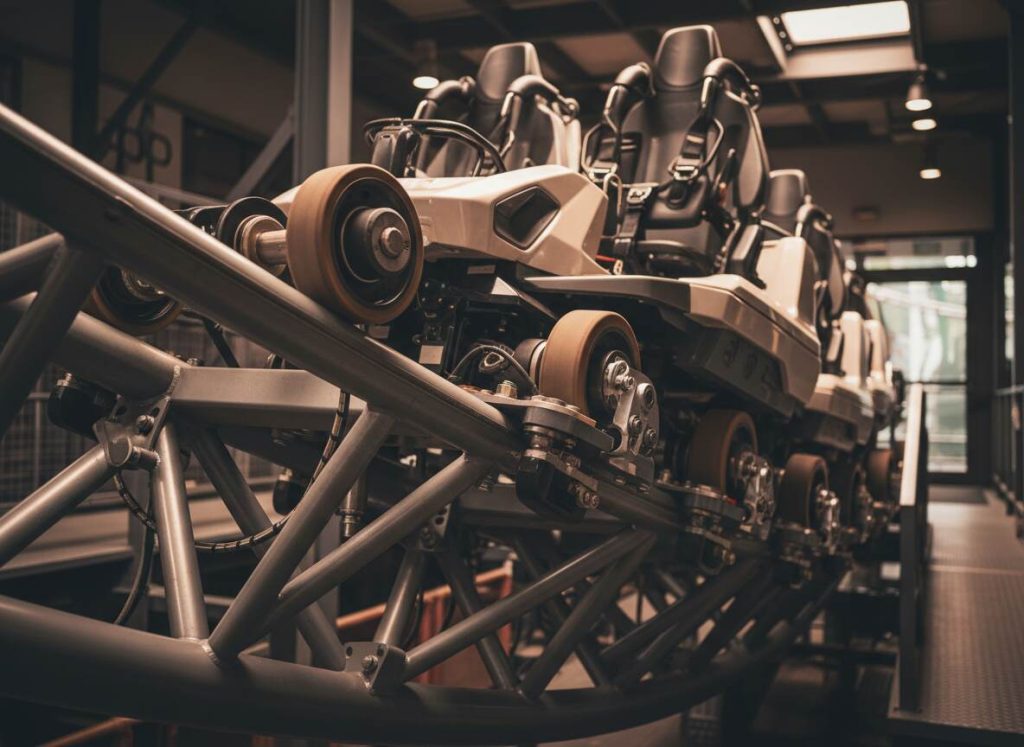
- Multiple wheel systems that keep the train on the track from above, below, and the sides
- Advanced restraint systems with backup mechanisms
- Block zone systems that prevent trains from colliding
- Sensor systems that detect mechanical issues and stop the coaster automatically
Manufacturing Standards
Modern manufacturing processes are more rigorous and controlled than in the past. Quality control measures include:
- Certified welders and welding procedures
- Non-destructive testing of welds and structural components
- Material certification and testing
- Dimensional accuracy and tolerance control
- Final inspection and testing before delivery
Maintenance and Inspection Practices
Modern parks have more rigorous maintenance and inspection practices than in the past. These include:
- Detailed maintenance schedules based on manufacturer recommendations
- Regular non-destructive testing for cracks and defects
- Computerized maintenance tracking systems
- Trained and certified maintenance personnel
- Regular safety audits and reviews
Operator Training
Modern parks invest in operator training and certification. Operators are trained on proper procedures, emergency response, and safety protocols. Many parks use automated systems to reduce reliance on human operators.
Putting the Risk in Perspective
Comparing Roller Coaster Risk to Other Activities
To understand the actual risk of roller coasters, it’s helpful to compare them to other activities:
- Roller coaster fatality risk: approximately 1 in 750 million rides
- Lightning strike fatality risk: approximately 1 in 500,000 lifetime risk
- Motor vehicle fatality risk: approximately 1 in 101 lifetime risk
- Skydiving fatality risk: approximately 1 in 101,000 jumps
- Swimming fatality risk: approximately 1 in 1,188 lifetime risk
- Hiking fatality risk: approximately 1 in 340,000 lifetime risk
- Bicycling fatality risk: approximately 1 in 88,992 lifetime risk
These comparisons demonstrate that roller coasters are extraordinarily safe compared to many common activities. You’re far more likely to be injured or killed driving to the amusement park than riding a roller coaster once you get there.
The Role of Selection Bias
One reason roller coasters are so safe is selection bias. People who ride roller coasters are generally healthy enough to do so. Parks post health warnings, and many riders self-select out if they have health concerns. This means that the population riding coasters is healthier than the general population, which reduces the fatality rate.
In contrast, activities like driving are mandatory for many people and include the entire population, including those with health conditions that might impair their ability to drive safely.
The Importance of Perspective
While roller coaster fatalities are tragic, they are extraordinarily rare. The media tends to sensationalize coaster accidents, which can create a perception that coasters are more dangerous than they actually are. In reality, modern roller coasters are among the safest forms of entertainment available.
Specific Causes of Death: A Detailed Analysis
Cardiac Events (22% of Deaths)
Approximately 22% of roller coaster deaths are caused by cardiac events—heart attacks, arrhythmias, or other cardiac emergencies. These deaths occur when riders with pre-existing heart conditions experience a cardiac event during the ride. The physical stress of the ride, combined with the adrenaline rush and G-forces, can trigger a cardiac event in susceptible individuals.
Cardiac events are technically not caused by the coaster itself, but rather by the rider’s pre-existing condition. However, they are still counted in fatality statistics because they occur during the ride.
Parks attempt to prevent these deaths by posting health warnings and requiring riders to self-assess their fitness to ride. However, not all riders accurately assess their own health status, and some riders may not be aware of their cardiac condition.
Ejection and Falls (38% of Deaths)
As mentioned earlier, ejection and falls account for approximately 38% of patron deaths. These deaths occur when riders are ejected from the train or fall from the ride due to restraint failure, structural failure, or rider non-compliance.
Restraint failure can occur due to:
- Improper application of the restraint by the operator
- Mechanical failure of the restraint system
- Rider manipulation of the restraint (undoing it during the ride)
- Design flaws in the restraint system
- Wear and tear that compromises the restraint
Modern restraint systems are designed with backup mechanisms to prevent ejection even if the primary restraint fails. However, older coasters or those with inadequate restraint systems may be vulnerable to ejection.
Mechanical and Structural Failure (24% of Deaths)
Mechanical and structural failures account for approximately 24% of deaths. These failures can include brake system failures, wheel assembly failures, track separation, and structural cracks.
Mechanical failures are often preventable through proper maintenance and inspection. However, they can also result from design flaws or manufacturing defects that are not identified until after the coaster is in operation.
Other Causes (16% of Deaths)
The remaining 16% of deaths are caused by other factors, including:
- Collision with stationary objects (support structures, trees, etc.)
- Collision with other trains
- Entanglement with ride components
- Asphyxiation or suffocation
- Unknown or undetermined causes
Employee Deaths and Workplace Safety
Types of Employee Deaths
Of the 11 employee deaths documented during the 1994-2004 study period, they occurred in different circumstances than patron deaths. Employee deaths typically involve:
- Being struck by a moving train during operation or maintenance
- Falls from elevated work areas during maintenance or repair
- Entanglement with moving components
- Electrocution from electrical systems
- Exposure to hazardous materials
Workplace Safety Improvements
Parks have implemented several measures to improve employee safety:
- Lockout/tagout procedures that prevent accidental operation during maintenance
- Proper training and certification for maintenance personnel
- Personal protective equipment (PPE) requirements
- Safety protocols for working at heights
- Regular safety audits and inspections
- Incident reporting and investigation procedures
The Role of Rider Behavior and Compliance
Non-Compliance and Risk-Taking
Some roller coaster deaths and injuries result from riders not following safety instructions or engaging in risky behavior. Examples include:
- Standing up during the ride
- Removing or loosening restraints during the ride
- Throwing objects from the ride
- Attempting to exit during operation
- Riding while intoxicated
- Riding despite health warnings
Parks attempt to prevent this behavior through safety briefings, signage, and operator vigilance. However, some riders ignore these warnings and engage in risky behavior anyway.
Operator Responsibility
Operators play a crucial role in preventing accidents caused by rider non-compliance. Operators are responsible for:
- Ensuring restraints are properly secured
- Monitoring riders for non-compliance during the ride
- Enforcing safety rules and policies
- Stopping the ride if they observe unsafe behavior
- Communicating safety instructions clearly
However, operators are often under pressure to maximize throughput and may not have adequate time to properly secure restraints or monitor riders. This can increase the risk of accidents.
Specific Coaster Types and Risk Factors
Wooden Coasters
Wooden coasters have a different risk profile compared to steel coasters. Wooden coasters are more prone to mechanical issues due to the natural properties of wood, which can warp, crack, and deteriorate over time. However, wooden coasters typically operate at lower speeds and with less extreme forces than steel coasters, which may offset the increased mechanical risk.
Historical data shows that wooden coasters account for a significant portion of fatalities, particularly older wooden coasters that may not have been properly maintained.
Steel Coasters
Steel coasters are generally more durable and reliable than wooden coasters, with fewer maintenance issues related to material degradation. However, steel coasters can still experience mechanical failures, particularly if they are not properly maintained or if they have design flaws.
Modern steel coasters have multiple redundant safety systems that make them very safe. However, older steel coasters or those with inadequate maintenance may be at higher risk.
Flying Coasters
Flying coasters, such as the Vekoma Flying Dutchman model, have a unique risk profile due to their design. The prone position and the complexity of the restraint system create different safety considerations compared to traditional coasters.
However, data suggests that flying coasters are not inherently more dangerous than other coaster types. The key factor is proper design, maintenance, and operation.
Inverted Coasters
Inverted coasters, where the track is above the riders, have a different risk profile compared to traditional coasters. The inverted position and the complexity of the restraint system create different safety considerations.
However, modern inverted coasters are designed with multiple safety systems and redundancies that make them very safe. Historical data shows that inverted coasters are not inherently more dangerous than other coaster types.
The Impact of Age and Maintenance on Safety
Older Coasters and Increased Risk
Older roller coasters tend to have higher fatality rates than newer coasters. This is due to several factors:
- Older coasters may not have been designed with modern safety standards
- Materials may have degraded over decades of operation
- Maintenance practices may be inadequate or outdated
- Restraint systems may be less effective than modern systems
- Lack of modern safety features like block zones and sensor systems
However, many older coasters have been retrofitted with modern safety systems and are maintained to modern standards. The age of the coaster itself is less important than the quality of maintenance and the implementation of modern safety features.
The Importance of Regular Maintenance
Regular maintenance is crucial for coaster safety. Coasters that are properly maintained have significantly lower fatality rates than those with inadequate maintenance. Maintenance should include:
- Regular inspections of all structural components
- Non-destructive testing for cracks and defects
- Replacement of worn components
- Lubrication and adjustment of moving parts
- Testing of safety systems
- Documentation of all maintenance activities
Case Studies: Learning From Accidents
The Verrückt Water Slide (2016)
The Verrückt water slide tragedy at Schlitterbahn Waterpark in Kansas City resulted in the death of 10-year-old Caleb Schwab on August 7, 2016. The incident revealed several critical safety failures:
- The ride was not properly tested before opening
- The design had flaws that were not identified during the design phase
- Safety protocols were not followed
- There was inadequate operator training
- The park prioritized profit over safety
The incident resulted in criminal charges against the park operators and highlighted the importance of proper design, testing, and safety oversight. It also demonstrated that even modern attractions can have catastrophic failures if safety is not prioritized.
The Kingda Ka Launch Track Failure (2005)
On June 8, 2005, Kingda Ka at Six Flags Great Adventure experienced a catastrophic failure of the launch track during a test run. The launch track ripped itself apart, causing significant damage to the ride. While no one was injured because the test was conducted without riders, the incident demonstrated the potential for catastrophic mechanical failure on modern coasters.
The incident was caused by a design flaw in the launch system that was not identified during the design and testing phase. The failure resulted in the ride being closed for several months while repairs were made and the design was reviewed.
The Space Mountain Incident (2003)
In 2003, a rider died on Space Mountain at Disney’s Magic Kingdom from a cardiac event. While the death was not caused by a mechanical failure or design flaw, it highlighted the importance of health screening and the risks associated with riding coasters for people with pre-existing health conditions.
Preventing Future Fatalities: Best Practices and Recommendations
Design and Engineering
To prevent future fatalities, coasters should be designed with:
- Comprehensive computer modeling and simulation
- Multiple redundant safety systems
- Advanced restraint systems with backup mechanisms
- Fail-safe design principles
- Regular design reviews and updates
- Rigorous testing before operation
Manufacturing and Quality Control
To prevent manufacturing defects, manufacturers should implement:
- Strict quality control procedures
- Certified welders and welding procedures
- Non-destructive testing of all critical components
- Material certification and testing
- Final inspection and testing before delivery
- Traceability of all components
Maintenance and Inspection
To prevent mechanical failures, parks should implement:
- Regular maintenance schedules based on manufacturer recommendations
- Regular non-destructive testing for cracks and defects
- Computerized maintenance tracking systems
- Trained and certified maintenance personnel
- Regular safety audits and reviews
- Adequate funding for maintenance
Operation and Training
To prevent operational errors, parks should implement:
- Comprehensive operator training and certification
- Clear safety protocols and procedures
- Adequate staffing to prevent fatigue
- Regular safety briefings for operators
- Automated systems to reduce reliance on human operators
- Incident reporting and investigation procedures
Regulation and Oversight
To prevent accidents, governments should implement:
- Mandatory safety standards for all amusement rides
- Regular inspections by qualified inspectors
- Operator training and certification requirements
- Incident reporting and investigation procedures
- Penalties for safety violations
- Public access to safety records and incident data
The Future of Roller Coaster Safety
Emerging Technologies
New technologies are being developed to further improve roller coaster safety:
- Artificial intelligence and machine learning for predictive maintenance
- Advanced sensors that detect mechanical issues in real-time
- Drone inspections for hard-to-reach areas
- 3D printing for rapid replacement of worn components
- Advanced materials that are more durable and resistant to fatigue
- Virtual reality training for operators
Regulatory Trends
There is a growing trend toward stricter safety regulations and more rigorous oversight of amusement rides. Some states are implementing more comprehensive inspection programs, and there is discussion at the federal level about establishing mandatory safety standards.
However, there is also resistance from the industry, which argues that overly strict regulations could stifle innovation and increase costs. Finding the right balance between safety and innovation remains an ongoing challenge.
Conclusion: Understanding the Real Risk
Roller coaster fatalities are tragic, but they are extraordinarily rare. With approximately 1 in 750 million rides resulting in death, roller coasters are among the safest forms of entertainment available. You’re far more likely to be injured or killed driving to the amusement park than riding a roller coaster once you get there.
The low fatality rate is the result of decades of improvements in design, manufacturing, maintenance, and operation. Modern coasters are designed with multiple redundant safety systems, manufactured to strict quality standards, maintained regularly, and operated by trained personnel.
While accidents do happen, and each fatality is a tragedy, the industry continues to improve safety practices and implement new technologies to prevent future accidents. The combination of rigorous engineering, regular maintenance, proper training, and regulatory oversight has made roller coasters one of the safest forms of entertainment available.
So the next time you’re at an amusement park, you can ride with confidence knowing that the coaster you’re about to board has been designed, built, maintained, and operated with safety as a top priority. The odds are overwhelmingly in your favor that you’ll have a thrilling, safe experience and walk away with memories that will last a lifetime.
Frequently Asked Questions About Roller Coaster Deaths
What is the most common cause of roller coaster deaths?
Based on historical data from 1994-2004, the most common causes of roller coaster deaths are ejection and falls (38%), followed by cardiac events (22%), and mechanical/structural failures (24%). The remaining 16% are caused by other factors. It’s important to note that many of these deaths are preventable through proper design, maintenance, and operation.
Are older roller coasters more dangerous than newer ones?
Older roller coasters can be more dangerous if they have not been properly maintained or retrofitted with modern safety systems. However, many older coasters have been well-maintained and upgraded with modern safety features, making them just as safe as newer coasters. The key factor is the quality of maintenance and the implementation of modern safety standards, not the age of the coaster itself.
Which type of roller coaster is the safest?
No single coaster type is inherently safer than others. Safety depends on proper design, manufacturing, maintenance, and operation. Modern coasters of all types—wooden, steel, inverted, flying, etc.—are designed with multiple safety systems and redundancies that make them very safe. The key is that the coaster is well-maintained and operated according to safety protocols.
Can you die from the G-forces on a roller coaster?
While extreme G-forces can be uncomfortable and potentially dangerous for people with certain health conditions, modern roller coasters are designed to operate within safe limits. Typical coasters produce 3-5 G’s, which is well within the range that healthy people can tolerate. However, people with heart conditions, high blood pressure, or other health issues should consult a doctor before riding.
What should I do if I have a health condition and want to ride a roller coaster?
If you have a pre-existing health condition, you should consult with your doctor before riding a roller coaster. Parks post health warnings that list conditions that may put you at risk. If you have any of these conditions, it’s best to err on the side of caution and not ride. Your health and safety are more important than any thrill.
How can I reduce my risk when riding a roller coaster?
To reduce your risk when riding a roller coaster, you should:
- Follow all safety instructions provided by the operator
- Ensure your restraints are properly secured
- Do not remove or loosen restraints during the ride
- Do not stand up or move around during the ride
- Do not throw objects from the ride
- Do not ride if you have health conditions that put you at risk
- Do not ride while intoxicated
- Choose well-maintained coasters at reputable parks
Are theme parks required to report roller coaster accidents?
Accident reporting requirements vary by state. Some states require parks to report all accidents and injuries, while others have minimal reporting requirements. The Consumer Product Safety Commission collects data on amusement ride injuries and fatalities, but the data is not always complete or accurate due to inconsistent reporting across states.
How often are roller coasters inspected?
Inspection frequency varies by state and local regulations. Some states require annual inspections, while others require quarterly or semi-annual inspections. Parks should also conduct regular internal inspections and maintenance according to manufacturer recommendations. The frequency of inspections should be based on the coaster’s age, condition, and operational history.
The Role of Media Sensationalism
How Media Coverage Affects Perception
Media coverage of roller coaster accidents tends to be sensationalized and disproportionate to the actual risk. When a roller coaster accident occurs, it receives significant media attention, which can create the perception that coasters are more dangerous than they actually are.
In reality, roller coaster fatalities are rare news events. If a roller coaster accident occurred every single day for a year, it would still be less common than deaths from car accidents, which occur hundreds of times per day but receive far less media attention per incident.
The “Availability Heuristic”
The availability heuristic is a cognitive bias where people overestimate the likelihood of events that are easily recalled or widely publicized. Because roller coaster accidents receive significant media coverage, people tend to overestimate the risk of riding coasters.
This bias can lead to irrational fear of roller coasters despite the statistically low risk. Understanding this bias can help people make more rational decisions about whether to ride coasters based on actual risk rather than perceived risk.
International Perspectives on Roller Coaster Safety
Safety Standards Around the World
Safety standards for roller coasters vary significantly around the world. Some countries have rigorous safety standards and oversight, while others have minimal regulations.
Countries with strong safety standards include:
- United States: ASTM standards and state/local regulations
- European Union: EN 13814 and EN 13849 standards
- Japan: Amusement Park Safety Association standards
- Canada: CSA standards and provincial regulations
Countries with weaker safety standards may have higher fatality rates due to inadequate design, manufacturing, maintenance, or operation.
Global Fatality Rates
The United States accounts for approximately 40% of global roller coaster deaths since 1980, despite having only about 25% of the world’s roller coasters. This suggests that factors beyond the coasters themselves play a role in fatality rates.
Countries with stricter safety standards and better oversight tend to have lower fatality rates, while countries with weaker regulations may have higher rates.
The Economics of Safety
The Cost of Safety
Implementing and maintaining high safety standards has significant costs. These costs include:
- Design and engineering costs for safe coasters
- Manufacturing costs for quality components
- Regular maintenance and inspection costs
- Operator training and certification costs
- Insurance and liability costs
These costs can be substantial, particularly for smaller parks with limited budgets. However, the cost of a single fatality—in terms of lawsuits, settlements, and loss of business—can far exceed the cost of implementing proper safety measures.
The Business Case for Safety
From a business perspective, safety is not just a moral imperative but also a financial necessity. Parks that prioritize safety tend to have better reputations, higher attendance, and lower insurance costs. Parks that cut corners on safety may save money in the short term but risk catastrophic financial losses if an accident occurs.
The most successful parks understand that safety and customer satisfaction go hand in hand. Customers want to have fun, but they also want to feel safe. Parks that deliver both tend to be the most successful.
Psychological Aspects of Roller Coaster Risk Perception
Why People Ride Despite Fear
Many people ride roller coasters despite being afraid of them. Psychologically, this is because the fear is perceived as manageable and the thrill is rewarding. The controlled nature of the fear—knowing that the ride is designed to be safe and will end—allows people to experience the adrenaline rush without the actual danger.
This is different from real danger, where the outcome is uncertain. On a roller coaster, the outcome is almost certainly safe, which allows people to enjoy the sensation of danger without the actual risk.
The Role of Trust
Trust in the park, the ride operators, and the safety systems is crucial for people to feel comfortable riding coasters. Parks that maintain a good safety record and communicate their safety practices build trust with customers. Parks that have had accidents or safety issues may struggle to rebuild trust even after implementing improvements.
Conclusion: The Bottom Line on Roller Coaster Safety
The data is clear: roller coasters are extraordinarily safe. With a fatality rate of approximately 1 in 750 million rides, you’re far more likely to be injured or killed doing almost any other activity than riding a roller coaster.
The safety of modern roller coasters is the result of decades of improvements in design, manufacturing, maintenance, and operation. Engineers, manufacturers, and park operators have worked tirelessly to make coasters safer, and it shows in the statistics.
While accidents do happen, and each fatality is a tragedy that impacts families and communities, the industry continues to improve. New technologies, stricter regulations, and a commitment to safety are making coasters safer than ever before.
So if you’ve been hesitant to ride a roller coaster because of safety concerns, you can ride with confidence. The odds are overwhelmingly in your favor. Enjoy the thrill, make memories, and know that you’re statistically safer on a roller coaster than you are driving to the amusement park.
