Introduction: A Coaster That Went Backwards (And Forwards)
If you visited Knott’s Berry Farm between 1990 and 2017, there’s a good chance you experienced one of the most disorienting, adrenaline-pumping rides the park had to offer: the Boomerang. This wasn’t just another roller coaster. It was a Vekoma shuttle coaster that launched you forward through a series of inversions, then—in a twist that still blows people’s minds—launched you backward through the same course in reverse. For 27 years, the Boomerang stood as a testament to creative engineering and the kind of controlled chaos that makes theme parks unforgettable.
But like many beloved coasters, the Boomerang eventually reached the end of its operational life. In 2017, Knott’s Berry Farm made the difficult decision to retire the ride, replacing it with Sol Spin, a family-friendly spinning coaster. For longtime fans, the closure marked the end of an era. For newer visitors, it’s a piece of coaster history they’ll never experience firsthand.
This post dives deep into the Boomerang’s history, engineering, what made it so special, and why it ultimately had to go.
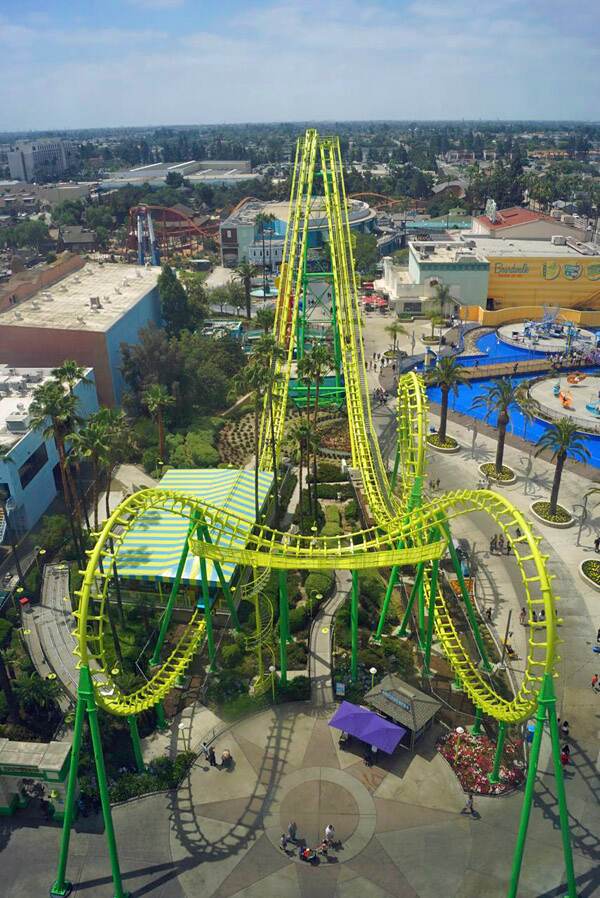
The History of Boomerang at Knott’s Berry Farm
When It Opened: 1990
The Boomerang debuted at Knott’s Berry Farm in 1990, replacing the Corkscrew, an older Arrow Dynamics coaster that had served the park since 1975. The decision to replace the Corkscrew was strategic: Knott’s wanted a ride that would draw crowds and compete with the increasingly impressive coaster lineups at nearby parks like Disneyland and Six Flags Magic Mountain.
Vekoma, the Dutch manufacturer, was the perfect choice. The company had already proven itself with innovative shuttle coasters at parks across Europe and North America. The Boomerang design was relatively new at the time, and Knott’s Berry Farm became one of the early adopters of this unique ride type in Southern California.
The Vekoma Connection
Vekoma’s Boomerang model became iconic in the late 1980s and early 1990s. The company designed multiple Boomerang coasters for parks worldwide, each with slight variations but all sharing the same core concept: a shuttle launch system that propels riders forward through a series of inversions, then reverses and launches them backward through the same track in the opposite direction.
This design was brilliant for several reasons. First, it maximized the thrill-per-square-foot of real estate. Parks didn’t need massive sprawling layouts; the shuttle system meant the coaster could occupy a relatively compact footprint while delivering an intense experience. Second, the backward portion was genuinely disorienting and unique—most coasters don’t reverse direction mid-ride, making the Boomerang feel like two rides in one.
A Quarter-Century of Operation
From 1990 to 2017, the Boomerang became a staple of Knott’s Berry Farm. It wasn’t the park’s most famous coaster—that distinction belonged to Ghostrider, the legendary wooden coaster—but it held a special place in the hearts of thrill seekers. Families brought their kids to conquer their first major inversion on the Boomerang. Coaster enthusiasts appreciated its engineering. Casual visitors appreciated the sheer intensity of the experience.
The ride operated reliably for decades, a testament to Vekoma’s engineering and Knott’s maintenance team. Downtime was minimal, and the coaster became a dependable part of the park’s identity.
The Engineering Behind the Boomerang
The Shuttle Launch System
Unlike traditional coasters that use a chain lift or cable system to slowly climb a hill, the Boomerang relied on a hydraulic launch system. Riders were strapped into a train and accelerated from 0 to approximately 50 mph in just a few seconds. This sudden acceleration was part of the thrill—your body was pressed back into your seat as the coaster shot forward.
The launch system was one of the most critical components of the ride. It had to be powerful enough to propel the train through multiple inversions and up the back spike (a vertical section that pointed skyward), then reverse and launch backward with equal force. Modern computer systems monitored the launch pressure and speed constantly, ensuring consistency and safety.
The Track Layout and Inversions
The Boomerang’s track was approximately 2,100 feet long, though riders only experienced about half of that in each direction. The layout included several key elements:
The Cobra Roll: This was the signature inversion of the Boomerang design. Riders entered a twisted loop that inverted them twice in quick succession, creating an intense whipping sensation. The cobra roll was disorienting on the forward pass and even more mind-bending on the backward pass, because riders didn’t know which direction the inversions would come from.
The Loop: A traditional vertical loop that inverted riders 360 degrees. On the forward pass, it felt like a standard loop. On the backward pass, riders were essentially going through the loop upside-down in reverse, which created a genuinely surreal experience.
The Back Spike: At the end of the forward portion, the track climbed nearly vertically, creating a spike that pointed toward the sky. Riders crested this spike, experienced a moment of weightlessness, then the train reversed direction. The back spike was crucial to the ride’s operation—it’s where the train essentially “turned around” before launching backward.
The Train Design
Vekoma’s Boomerang trains were compact and sleek, typically seating 16 to 20 riders in two rows. The seats were positioned so that riders faced forward on the initial launch, then faced backward during the return journey. The restraint system consisted of lap bars and over-shoulder harnesses, providing security while allowing riders to feel the G-forces of the inversions.
The trains were designed to be lightweight yet durable, capable of withstanding the stresses of constant acceleration, inversion, and reversal. Over 27 years of operation, Knott’s maintained these trains meticulously, replacing worn components and ensuring they remained in top condition.
Braking and Control Systems
The Boomerang relied on multiple braking systems for safety. Magnetic brakes slowed the train as it returned to the station, ensuring a smooth stop. Computer systems monitored train position, speed, and launch pressure in real time, automatically adjusting the launch force if needed and halting operations if any parameter fell outside safe ranges.
These safety systems were state-of-the-art when the ride opened and remained reliable throughout its operational life. The Boomerang had an excellent safety record, with no major incidents attributable to mechanical failure.
What Made the Boomerang Special
The Disorientation Factor
What set the Boomerang apart from other coasters was its unique ability to disorient riders. Most coasters follow a linear path—you go up, you go down, you go through inversions in a predetermined sequence. The Boomerang broke that pattern. You experienced the same inversions twice, but in reverse order and from a different perspective. Your brain struggled to process the familiar-yet-alien sensation of going backward through a loop you’d just gone through forward.
This disorientation was part of the appeal. Riders would exit the station laughing, talking excitedly about how weird it felt to go backward. The Boomerang created a unique memory that other coasters couldn’t replicate.
Accessibility to Thrill Seekers
The Boomerang wasn’t the tallest, fastest, or longest coaster at Knott’s Berry Farm. But it was accessible. The height requirement was reasonable (around 48 inches), making it attainable for teenagers and younger thrill seekers. The intensity was genuine—multiple inversions, a launch, and the disorienting backward section—but not so extreme that it felt dangerous or out of control.
This made the Boomerang a perfect “next step” coaster for people graduating from family rides to more intense experiences. It was a rite of passage for many Knott’s visitors.
The Compact Footprint
Knott’s Berry Farm is a relatively compact park compared to mega-parks like Disneyland or Six Flags Magic Mountain. The Boomerang’s shuttle design meant it could deliver a world-class coaster experience without requiring acres of sprawling track. This efficiency made it possible for Knott’s to offer a diverse coaster lineup in a limited space.
The Ride Experience: What It Felt Like
The Queue and Anticipation
Waiting in line for the Boomerang, you could see the track overhead, watch trains launch and reverse. The sound of the hydraulic launch system was distinctive—a loud, mechanical whoosh followed by the screams of riders. This built anticipation. You knew what was coming, but knowing didn’t make it less intense.
The Launch
As the train pulled into the station, you were locked into your seat by lap bars and over-shoulder harnesses. The restraints were snug but not uncomfortable. Then came the moment of truth: the launch. The hydraulic system engaged with a sudden, powerful acceleration. Your body was pressed back into your seat as the coaster shot forward. The acceleration lasted only a few seconds, but it felt longer—a rush of adrenaline as the world blurred around you.
The Forward Inversions
After the launch, you were moving at approximately 50 mph, climbing toward the first inversion. The cobra roll hit hard—two inversions in quick succession that inverted you, twisted you, and left you gasping. The G-forces pressed you against your restraints. Your stomach dropped. Your inner ear screamed that you were upside-down and falling.
Then came the traditional loop, another 360-degree inversion that felt more “normal” after the cobra roll but still intense. By this point, your heart was pounding, your adrenaline was spiking, and you were experiencing the full-body rush that makes coaster enthusiasts addicted to these machines.
The Back Spike and Reversal
As the train climbed the back spike, the intensity momentarily decreased. You were climbing nearly vertically, moving slower as gravity fought against your momentum. There was a moment of weightlessness at the top—a brief pause where you felt suspended in space. Then the train reversed direction.
This was the moment that made the Boomerang unique. Suddenly, you were facing backward, and the coaster was launching you back through the course you’d just traveled. Your brain struggled to orient itself. The inversions came at you from unexpected angles. The cobra roll felt different because you were experiencing it in reverse. The loop was surreal because you were already upside-down when you entered it.
The Return Journey
The backward journey was shorter than the forward journey, but it felt longer because of the disorientation. Riders often reported that the backward section felt more intense than the forward section, even though the physics were identical. The psychological element of not knowing what was coming next, of experiencing familiar inversions from an unfamiliar perspective, added a layer of intensity that pure physics couldn’t explain.
The Brake Run and Exit
As the train slowed in the brake run, the intensity faded. Riders were left breathless, laughing, and often eager to go again. The Boomerang was short—the entire ride lasted less than two minutes—but it packed an enormous amount of sensation into that brief window.
Why the Boomerang Had to Go
Age and Maintenance Costs
By 2017, the Boomerang had been operating for 27 years. While Vekoma coasters are known for durability, age takes its toll. Components wear out. Parts become harder to source. Maintenance costs increase. The hydraulic launch system, while reliable, required regular servicing and occasional replacement of seals, pumps, and other components.
Knott’s Berry Farm faced a decision: continue investing in an aging coaster, or retire it and invest in something new. The economics of theme park operations often favor the latter choice, especially when the park wants to refresh its lineup and attract new visitors.
Changing Guest Preferences
By the late 2010s, the coaster landscape had changed dramatically. Newer shuttle coasters like Vekoma’s Shockwave and other modern designs offered smoother rides, more inversions, and updated technology. Families were increasingly interested in spinning coasters and family-friendly thrills rather than pure intensity. The Boomerang, while beloved by enthusiasts, was starting to feel dated to casual park visitors.
Space for New Attractions
The Boomerang’s footprint, while compact, was still valuable real estate. Knott’s decided to replace it with Sol Spin, a family-friendly spinning coaster that could appeal to a broader audience. This decision reflected a broader trend in the theme park industry toward inclusive attractions that appeal to multiple age groups and thrill levels.
The Nostalgia Factor
For many longtime Knott’s visitors, the closure of the Boomerang was bittersweet. It represented the end of an era. Coaster enthusiasts mourned the loss of a unique ride type—shuttle coasters with backward sections are relatively rare, and each closure represents a piece of coaster history disappearing.
The Legacy of the Boomerang
A Unique Ride Type
The Boomerang at Knott’s Berry Farm was part of a larger family of Vekoma Boomerang coasters. Similar rides operated at parks worldwide, including Wonderland Sydney in Australia, Alton Towers in England, and various parks across Europe. However, not all of these coasters survived. Many have been retired, making the Boomerang a piece of increasingly rare coaster history.
Memories and Milestones
For thousands of visitors, the Boomerang was a milestone coaster. It was the ride where they conquered their fear of inversions. It was the ride they rode with friends on a summer day at Knott’s. It was the ride that made them fall in love with coasters. These personal connections ensure that the Boomerang remains alive in the memories of those who experienced it.
The Evolution of Shuttle Coasters
The Boomerang represented a specific era in shuttle coaster design. It was more advanced than the early shuttle coasters of the 1980s but less sophisticated than modern launches like those on Vekoma’s newer models. Studying the Boomerang provides insight into how coaster technology evolved and how designers balanced intensity, safety, and guest experience.
Frequently Asked Questions About the Boomerang
Q: When did the Boomerang close? A: The Boomerang at Knott’s Berry Farm closed in 2017 after 27 years of operation.
Q: What replaced the Boomerang? A: Sol Spin, a family-friendly spinning coaster, replaced the Boomerang in the same location.
Q: How fast did the Boomerang go? A: The Boomerang reached speeds of approximately 50 mph during its launch.
Q: How many inversions did the Boomerang have? A: The Boomerang had three inversions: a cobra roll (two inversions) and a traditional loop, experienced twice (forward and backward).
Q: Was the Boomerang safe? A: Yes, the Boomerang had an excellent safety record. It operated reliably for 27 years with no major mechanical failures causing injuries.
Q: Can you still ride a Boomerang coaster? A: Yes, Vekoma Boomerang coasters still operate at several parks worldwide, though the number has decreased as older coasters have been retired.
Q: Why did Knott’s retire the Boomerang instead of refurbishing it? A: Theme parks typically retire aging coasters when maintenance costs become prohibitive and newer attractions can better serve the park’s strategic goals. The Boomerang was 27 years old, and investing in a new attraction was considered a better use of resources.
Conclusion: Remembering a Coaster Classic
The Boomerang at Knott’s Berry Farm was more than just a roller coaster. It was a unique engineering achievement, a rite of passage for thrill seekers, and a beloved fixture of Southern California’s coaster landscape for nearly three decades. Its backward-launching design made it genuinely different from other coasters, and that difference created memories that lasted far longer than the two-minute ride itself.
While the Boomerang is gone, it remains part of Knott’s Berry Farm’s history. For those who experienced it, the memory of that disorienting, thrilling backward journey will stay with them forever. And for coaster historians and enthusiasts, the Boomerang represents an important chapter in the evolution of shuttle coaster design—a chapter that’s increasingly rare as older coasters retire and newer designs take their place.
If you never got the chance to ride the Boomerang, you missed something special. But if you did, you carry with you a piece of coaster history that fewer and fewer people will ever experience.
