If you’re a beginner, the “best” roller coaster is not the biggest one. It’s the one that teaches your brain a new skill without overwhelming you. The goal is to get off the ride thinking: okay, I can do this again, not: never again.
This guide is built for true beginners, including adults who are trying coasters for the first time, people coming back after a bad experience, and anyone who wants a smart ramp-up plan that actually works.
If you want the deeper fear and confidence side of this, you’ll probably like: Overcome Roller Coaster Phobia.
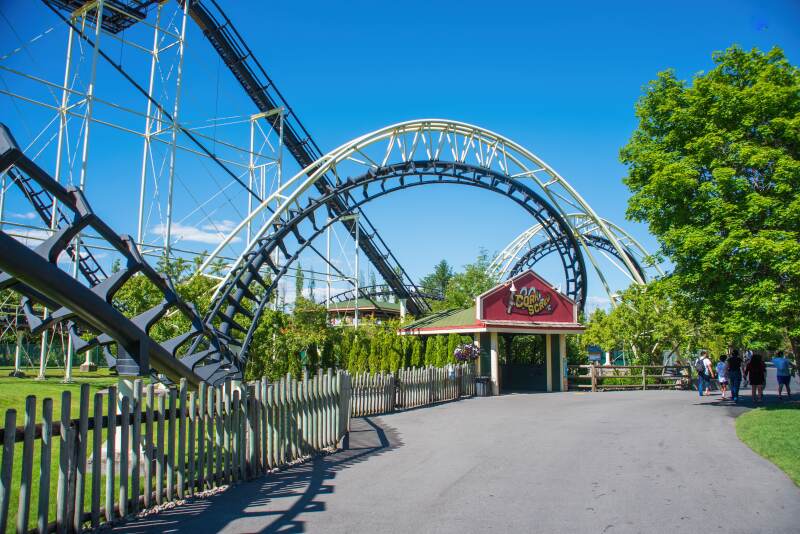
The Quick Answer: What Makes A Coaster Beginner-Friendly?
Beginner-friendly coasters usually have most of these traits:
- Lower height (you’re not staring down a skyscraper drop)
- Moderate speed (fast enough to feel exciting, not fast enough to feel out of control)
- Smooth track (roughness is what makes many beginners hate coasters)
- Shorter ride time (you can “survive it” easily, then choose to level up)
- Comfortable restraints (secure without feeling like a trap)
- Predictable forces (no violent snaps, no sudden headbanging)
And here’s the big myth: inversions are not automatically the scary part. For many beginners, the scariest thing is actually a tall first drop, or feeling like the ride is out of control. Some inverted coasters are more beginner-friendly than some non-inverting coasters.
If you want to understand why restraints feel different from ride to ride, this helps: Why Roller Coasters Have Different Restraints.
How To Choose Your First Coaster (A Beginner Ramp-Up Plan)
Step 1: Start With A “Family Coaster” That Still Feels Like A Real Coaster
You want something that has real coaster speed and real coaster airtime sensations, but without extreme height or intensity. This is where your brain learns: the track is smooth, the restraint holds you, and the fear spike is temporary.
Step 2: Move To A Smooth Mid-Tier Coaster With A Bigger Drop
Once you’ve done one or two family coasters, the next step is a coaster that is taller and faster, but still smooth and predictable. This is where you learn to tolerate the first drop, which is the main mental barrier for most beginners.
Step 3: Try One “New Sensation” At A Time
Do not jump from “tiny coaster” to “inversions, launch, and extreme height all at once.” Pick one new element:
- A launch coaster (fast start, usually not a huge lift hill)
- A coaster with one inversion (to learn that upside down is not dangerous)
- A coaster with stronger airtime (to learn that floating feeling is normal)
Step 4: Avoid Rough Coasters Early
This is the biggest beginner mistake. A rough coaster can convince your body that coasters are painful, even if the fear part is manageable. Smoothness matters more than stats.
The Best Beginner Coasters (By Type, So You Can Find One At Almost Any Park)
Instead of listing one “best beginner coaster in the world,” I’m going to give you the beginner coasters that exist in almost every region, and what to look for. Then I’ll give you specific famous examples you can recognize.
1) The Best First Coaster For Most People: A Modern Family Coaster
What it feels like: fun, fast enough to be real, not terrifying.
What to look for:
- Steel track
- Comfortable lap bar
- Height that feels manageable from the queue
Examples beginners often love:
- Disney-style family coasters (smooth, themed, predictable)
- Modern “junior” coasters that are actually well-paced
- Family launch coasters (fast start, usually no towering lift)
If you’re at Disney and want a gentle ramp-up, these guides help you pick the least intense options first: Least Intense Roller Coasters At Magic Kingdom and Least Intense Roller Coasters At Disneyland.
2) Best Beginner Coaster If You Hate Big Drops: A Launch Coaster With No Huge Lift Hill
What it feels like: a quick burst of speed, then smooth turns and hills.
Launch coasters can be easier for beginners because they remove the slow, anxiety-building climb up a lift hill. You do not have time to talk yourself out of it. You just go.
Beginner tip: the launch itself can feel intense, but it’s usually over in a second or two. Many people find that easier than a towering first drop.
3) Best Beginner Coaster To Learn Airtime: A Smooth “Floater” Coaster
What it feels like: lightness in your stomach, like a tiny moment of floating.
Airtime is the sensation that scares beginners because it can feel like you are coming out of your seat. You are not. Your restraint is doing its job. A good beginner airtime coaster gives you gentle “float” moments, not violent pops.
If you want the science behind why that floating feeling happens, this is a fun companion read: How Roller Coasters Work (Engineering + Physics).
4) Best Beginner Coaster To Try An Inversion: A Smooth, Modern Inverting Coaster
What it feels like: surprisingly normal. Most inversions feel like a fast roll, not like hanging upside down.
Beginners often assume inversions will feel like being upside down for a long time. In reality, most coaster inversions happen quickly, and the forces keep you comfortably in your seat.
Beginner tip: pick a coaster with just one or two inversions first, not a ride that stacks them back-to-back.
5) Best Beginner Coaster If You Get Motion Sick: A Smooth Ride With Gentle Turns
Motion sickness is different from fear, and beginners often confuse them. If you get nauseous easily, avoid:
- spinning coasters
- coasters with lots of tight, whippy transitions
- rides that run backward
Start with a smooth family coaster, sit toward the middle of the train, and keep your eyes forward. If you want more “guest first aid” style advice for feeling faint or unwell at parks, this is helpful: Do Roller Coasters Cause Kidney Stones? (it’s more about body myths and what sensations are normal than people expect).
Beginner Mistakes That Make Coasters Feel Scarier Than They Are
Watching The Ride Too Long
For some people, watching trains crest the lift hill over and over builds anxiety. If that’s you, stop watching and commit to riding.
Starting On The Wrong Coaster
A beginner’s first coaster should be smooth and friendly. If your first coaster is rough, you might decide you “hate coasters” when you really just hate rough coasters.
Riding On An Empty Stomach Or A Too-Full Stomach
Beginners often feel sick because they ate nothing, or they ate a heavy meal right before riding. A light, stable snack and water is usually the sweet spot.
Where To Sit On A Coaster If You’re A Beginner
- Middle seats usually feel the most balanced
- Front row often feels less forceful on drops (but more exposed visually)
- Back row often feels more intense on drops and airtime
For most beginners, the middle is the best first ride.
A Simple “First Day” Beginner Plan
- Ride 1: a modern family coaster
- Ride 2: the same coaster again (confidence matters)
- Ride 3: a smooth mid-tier coaster with a bigger drop
- Ride 4: a launch coaster or a coaster with one inversion (pick one new sensation)
And if you’re with a group, it helps to plan this out so you’re not pressured into skipping steps: Theme Park Planning For Large Groups.
Best Beginner Roller Coasters Worldwide (Real Examples You Can Actually Seek Out)
Now let’s get specific. Below are beginner-friendly coasters around the world that consistently work as “first real coaster” rides, or as smart second and third steps. I’m not ranking these as “best coasters.” I’m ranking them as best beginner experiences, which is a totally different goal.
To keep this useful, I’m grouping them by what they’re good for. If you’re building confidence, pick a category that matches your fear trigger (big drops, speed, inversions, motion sickness), then choose a coaster from that bucket.
Beginner Bucket 1: The Best True First Coasters (Gentle, Smooth, Still Feels Real)
These are the coasters that most beginners can ride and immediately think: okay, that was fun, I can do another. They tend to be well-maintained, smooth, and designed to be welcoming.
Seven Dwarfs Mine Train (Magic Kingdom, Walt Disney World, United States)
This is one of the best “first coaster for adults who are nervous” rides on Earth. It’s smooth, it’s not too tall, and it has that Disney pacing where nothing feels abrupt. The theming also helps because your brain has something to focus on besides fear.
If you’re building a Disney beginner plan, start here: Least Intense Roller Coasters At Magic Kingdom.
Big Thunder Mountain Railroad (Disney Parks, Multiple Locations)
Big Thunder is a classic beginner coaster because it feels fast and wild without being truly intense. It’s “chaotic fun,” not “I’m in danger.” It also teaches you a key beginner lesson: speed can feel thrilling without being scary.
Hagrid’s Magical Creatures Motorbike Adventure (Universal’s Islands of Adventure, United States)
This is a beginner-friendly coaster for people who think they hate coasters. It’s long, story-driven, and broken into sections, so you never feel trapped in one continuous terror moment. It’s also a great “bridge ride” between family coasters and bigger thrill coasters.
Casey Jr. Circus Train (Disneyland Paris, France)
This is a true starter coaster. If someone is extremely nervous, this is the kind of ride that can get them over the first mental hurdle: the restraint works, the track feels stable, and the fear spike is tiny.
Wicker Man (Alton Towers, England)
Wicker Man is a great “first wooden coaster” for beginners because it’s thrilling but not aggressively intense in the way some older wooden coasters can be. It also has a strong atmosphere, which helps beginners focus on the experience, not the fear.
Beginner Bucket 2: Best Beginner Coasters If You Hate Big Drops
If your fear is the lift hill, pick coasters that either launch you or keep the height modest. The goal is to avoid that slow climb where you talk yourself out of it.
TRON Lightcycle / Run (Magic Kingdom, Walt Disney World, United States)
TRON is a fantastic “I’m scared of lift hills” coaster because the launch is quick and the ride is smooth. It feels intense for a moment, but it’s not a towering drop coaster. It’s also over fast, which beginners often appreciate.
Revenge of the Mummy (Universal Parks, Multiple Locations)
This is a beginner-friendly launch coaster for people who want thrills without the “I can see my death from the top of the lift hill” anxiety. It’s also a great example of how theming can make fear feel like excitement instead.
Rock ’n’ Roller Coaster (Disney’s Hollywood Studios, United States)
This is a bigger step, but it’s still a great beginner option for people who fear height more than speed. The launch is intense, yes, but you skip the lift hill dread entirely. For many beginners, that tradeoff is worth it.
Beginner Bucket 3: Best Beginner Coasters To Learn Airtime (Without Getting Wrecked)
Airtime is the “but my stomach” fear. These coasters teach you that the floating feeling is normal and safe, without throwing you into violent ejector airtime immediately.
Expedition Everest (Disney’s Animal Kingdom, United States)
Everest is a great beginner “level up” coaster because it’s smooth, it’s well-paced, and it introduces bigger drops and stronger forces without feeling chaotic. It also has a story and scenery, which helps beginners stay grounded.
Colorado Adventure (Phantasialand, Germany)
This is a fantastic beginner coaster because it’s a mine train style ride that feels fast and exciting, but it’s not built around extreme intensity. It’s a “confidence builder” coaster that still feels like a real thrill ride.
Space Mountain (Disney Parks, Multiple Locations)
Space Mountain is a weird beginner pick because it can feel intense, but it’s beginner-friendly for a specific type of person: someone who is scared of height and drops but can handle speed. In the dark, you don’t see the drop coming, which some beginners find easier and others find worse. Know yourself.
Beginner Bucket 4: Best Beginner Coasters With Inversions (To Learn Upside Down Is Fine)
If you want to try an inversion, pick a modern, smooth coaster with just one or two inversions. You want “clean and controlled,” not “whippy and relentless.”
Soarin’ Over California? No, Here’s The Real Beginner Inversion Pick: Pégase Express (Parc Astérix, France)
Pégase Express is a great beginner “inversion-adjacent” coaster experience because it introduces you to more dynamic coaster elements without being a full-on inversion machine. It’s a smart bridge ride for beginners in Europe.
Dragon (Legoland Parks, Multiple Locations)
Legoland Dragon coasters are excellent beginner coasters because they are designed for families but still teach you coaster sensations in a controlled way. They’re also a great “first coaster for kids who are nervous” ride.
Galactica (Alton Towers, England)
Flying coasters can be intense, but Galactica is often considered one of the more approachable ways to experience that style. It’s a big step, but for some beginners, the smoothness and the “gliding” sensation feels less scary than a traditional sit-down coaster.
Beginner Bucket 5: Best Beginner Coasters For Adults Who Are Embarrassed To Be Scared
This is real. A lot of adults are not just scared, they’re ashamed of being scared. These coasters help because they are “respectable” rides that still function as beginner ramps.
Guardians of the Galaxy: Cosmic Rewind (EPCOT, Walt Disney World, United States)
This is one of the best adult beginner coasters in the world because it’s smooth, it’s joyful, and it feels like an experience, not a test. It can trigger motion sickness for some people because of the spinning, but fear-wise, it’s a great confidence builder.
Harry Potter and the Forbidden Journey? Not A Coaster, But A Great Warm-Up
This isn’t a coaster, but it’s worth mentioning because it’s a perfect “I need to get used to motion and restraint systems” warm-up ride before you do a coaster. If you can handle this, you can probably handle a beginner coaster.
Beginner Bucket 6: Beginner Coasters To Avoid (Even If People Tell You They’re Fine)
Some coasters are “beginner friendly” only if you already like coasters. If you’re truly new, be careful with:
- Older wooden coasters that are rough or have aggressive laterals
- Spinning coasters if you get motion sick easily
- Coasters with over-the-shoulder restraints that can cause headbanging on older designs
- Anything marketed as “extreme” or “record-breaking” as your first ride
If you want a confidence-first approach, start with the least intense coaster in the park, ride it twice, then level up.

Leave a Reply