Some roller coasters change names and you move on. Others change names and the fanbase collectively shrugs and keeps calling it what it has always been. At Canada’s Wonderland, Top Gun is that ride.
Even if you know it today under a newer identity, the coaster’s core appeal has stayed the same since the mid-1990s: it is a compact, inversion-heavy inverted coaster built to feel like a series of fighter-jet maneuvers. It is also one of the park’s most debated credits, because it sits right in the middle of the Vekoma SLC conversation. Some riders call it a nostalgic classic. Others call it a headache machine. Both reactions can be honest, depending on the day, the train, and how you ride it.
This is the full enthusiast-focused history of the coaster originally known as Top Gun, including its name changes, its place in Canada’s Wonderland’s lineup, and the details coaster people actually care about.
Quick Answer: What Is Top Gun Now?
Top Gun is the original 1995 name of the inverted coaster now operating as DareDeviler at Canada’s Wonderland. According to the Roller Coaster Database, it is a Vekoma SLC / 689m Standard model (a Suspended Looping Coaster) and it has been operating since 5/7/1995. The ride’s identity has shifted through multiple name changes, but the layout and “fighter jet” intent have remained the throughline.
At A Glance: What Kind Of Coaster Is It?
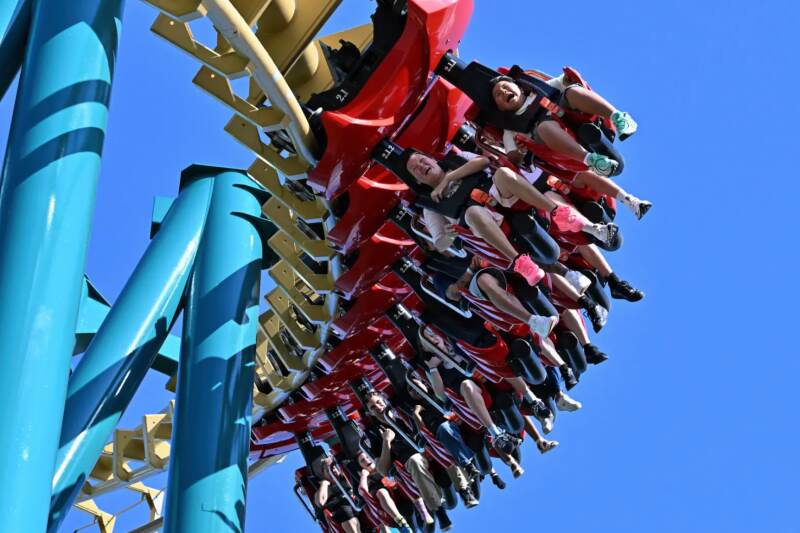
This is an inverted coaster, meaning the train runs beneath the track and riders’ legs hang freely. It is also an SLC, which is important because SLCs are their own category in coaster culture. They are common, recognizable, and often controversial.
RCDB lists the ride as:
- Type: Steel, Inverted
- Manufacturer: Vekoma
- Model: SLC / 689m Standard
- Operating Since: 5/7/1995
- Inversions: 5 (implied by the SLC element set and commonly documented, but always treat RCDB as the stat sheet)
If you want the cleanest “spec card” reference, RCDB’s listing is the best starting point: DareDeviler at Canada’s Wonderland.
The Name Change Timeline: Top Gun, Flight Deck, DareDeviler
This coaster’s name history is basically a case study in how parks evolve their branding over decades. The ride itself can stay the same, but the story around it gets rewritten to match the park’s current marketing language, licensing realities, and theming priorities.
1995: Top Gun Opens
When the coaster opened in 1995 as Top Gun, the name did a lot of heavy lifting. It instantly communicated speed, intensity, and aviation swagger. You did not need a deep theme. The title alone told guests what kind of thrill they were buying.
It also fit the era. In the 1990s, parks leaned into bold, high-concept ride names that sounded like movies, even when they were not officially tied to a specific franchise. “Top Gun” felt like a promise: sharp turns, quick inversions, and the sensation of being thrown through maneuvers you would associate with fighter jets.
2008: Top Gun Becomes Flight Deck
In 2008, the ride was renamed Flight Deck. This is the kind of change that usually signals a shift away from a name that feels too tied to a specific pop-culture reference, and toward something the park can own forever.
Even if you never cared about the licensing side, “Flight Deck” is a smart replacement name because it keeps the aviation theme intact. It still sounds like jets. It still sounds like speed. It just does not depend on a particular cultural moment to make sense.
Later: Flight Deck Becomes DareDeviler
Eventually, the coaster was renamed again to DareDeviler, and this is where the branding becomes more general on purpose. “DareDeviler” sells the ride as a pure thrill challenge, even if you have zero interest in planes, jets, or military aesthetics.
That matters in modern park marketing. Parks increasingly want ride names that work as quick emotional labels. “DareDeviler” is basically a one-word ad. It tells you who the ride is for.
For enthusiasts, the funny part is that none of these name changes alter the real identity of the ride. It is still the same SLC layout and the same style of intensity. The name is the wrapper.
What Enthusiasts Mean When They Say “It’s An SLC”
Vekoma’s Suspended Looping Coaster model is one of the most widespread inverted coaster formats in the world. It exists in many parks, often with similar element sequencing. That standardization is part of why parks bought them. They were proven, compact, and delivered inversions without requiring a custom layout budget.
But SLCs also developed a reputation over time. If you have been around coaster forums for any length of time, you have seen the same arguments repeat:
- They can be snappy and fun when running well.
- They can feel harsh when track wear, wheel wear, or train design amplifies head movement.
- They are often compared to B&M inverts, and that comparison is usually not flattering.
The important nuance is that “SLC” does not automatically mean “bad.” It means you should expect a different kind of ride personality. The transitions tend to be tighter. The pacing is often relentless. The comfort level can be more variable.
Ride Experience: What It Feels Like (And Why It Feels Faster Than It Looks)
Top Gun’s layout style is built around quick inversion stacking and rapid direction changes. Even if the top speed number is not record-breaking, the ride can feel intense because it does not give you long, floaty breathers. It is a sequence coaster. You are always heading into the next thing.
Most riders walk off remembering three sensations:
- Inversion rhythm: elements come quickly, with little downtime.
- Snap: transitions feel sharp rather than sweeping.
- Leg-dangling exposure: the inverted format makes everything feel more “open” and therefore more dramatic.
If you are the kind of enthusiast who loves coasters that feel like they are trying to pick a fight with you, this ride can scratch that itch. If you prefer smooth, graceful, sustained forces, it might feel like an older design philosophy.
How To Ride It Like An Enthusiast (Without Letting It Beat You Up)
This is where Top Gun becomes very “coaster person” specific. A lot of the ride’s reputation comes down to how riders handle the restraint system and how much head movement they allow.
Comfort Strategy: Control Your Head Position
If you ride loose and let your head bounce side-to-side, you are more likely to have a rough experience. If you keep your head forward and stable, many riders find it more manageable. This is not a magic fix, but it is the difference between “that was intense” and “why did I do that to myself.”
Best Seat: What To Pick Depending On Your Goal
There is no single “best seat” for everyone, but there are patterns:
- Back rows: often feel more aggressive, with more whip through transitions.
- Front half: can feel slightly more controlled and can reduce the sense of being snapped around.
If you are chasing intensity, go back. If you are trying to enjoy the ride without getting rattled, try the front half first and adjust from there.
Common Misconception: “It’s Basically A B&M Invert”
It is an inverted coaster, but it is not the same ride style as a B&M invert. B&M inverts are usually praised for smoothness and sweeping force profiles. SLCs tend to be more compact and more abrupt. That is not automatically a flaw, but it is a different experience, and it is why the same person can love one and dislike the other.
Why The Ride Stayed Relevant Through Multiple Eras
Canada’s Wonderland has continued to add major coasters over the years, which changes how older rides are perceived. A coaster like Top Gun is no longer “the newest thing.” Its role becomes more specific.
It stays relevant because it still offers something that is easy to market and easy to understand:
- It looks intimidating from the midway.
- It delivers inversions in a tight package.
- It has nostalgia weight for locals who grew up with the Top Gun name.
- It is a recognizable model that enthusiasts like to compare across parks.
In a park with a deep lineup, that kind of “reliable intensity credit” matters. Not every coaster has to be the headline act to be valuable.
What Coaster Enthusiasts Usually Want To Know (And How To Think About It)
When enthusiasts talk about this coaster, the conversation usually circles around a few themes. Here is the honest version of each.
Is It Rough?
It can be. SLCs are known for variability in comfort, and rider experience can change depending on maintenance condition, wheel condition, and how the train is tracking that day. The more useful question is not “is it rough,” but “is it rough enough to ruin it for you.” For some people, yes. For others, it is part of the ride’s personality.
Is It Worth Riding If You’ve Done Other SLCs?
If you are collecting credits, yes, because it is a major SLC in a major park with a long operating history. If you are not a credit chaser and you already know you dislike SLC ride feel, you might prioritize other coasters in the park first and come back to it if the line is short.
Does The Name Change Matter To The Ride Experience?
Not really. The name changes matter to the story and the nostalgia, not to the physics. The coaster you ride today is still the same fundamental machine that opened in 1995. The wrapper has changed. The core has not.
The Bottom Line
Top Gun at Canada’s Wonderland is one of those coasters that becomes bigger than its current name. It opened in 1995, it evolved through the park’s branding eras, and it remains a recognizable, inversion-forward inverted coaster that sparks strong opinions.
If you love compact, aggressive pacing and you do not mind a ride that asks you to brace a little, it can be a genuinely fun lap, especially as a nostalgia hit. If you are sensitive to head movement or you prefer modern smoothness, it might be the coaster you ride once per visit, if at all.
Either way, it is still a real piece of Canada’s Wonderland history, and it is still the coaster a lot of people will always call Top Gun.
For the most reliable public stat sheet and model identification, see RCDB’s listing for DareDeviler.

Leave a Reply