There are roller coasters that are tall, and then there are roller coasters that feel like they have their own weather system.
That is basically the giga coaster experience: huge scale, huge speed, and a layout that just keeps going. Even people who think they “don’t care about coaster stats” tend to remember their first giga, because it does not feel like a normal ride. It feels like you got strapped to a high-speed train that happens to live in the sky.
This guide covers what makes a coaster a giga coaster, what does not count (because yes, there are rules), and the most popular giga coasters that coaster fans bring up again and again.
What Is a Giga Roller Coaster?
A giga roller coaster is a complete-circuit roller coaster that is between 300 feet and 399 feet tall, or has a drop within that same 300 to 399 foot range.
That definition matters because it explains why some coasters “feel giga” but do not count, and why some coasters count even if the lift hill itself is under 300 feet.
The term “giga coaster” was originally coined as a marketing category, but it has become a widely used classification in coaster culture.
What Makes a Coaster “Giga”? The Rules That Actually Matter
1) It has to be a complete circuit
A complete-circuit coaster is one where the track forms a full loop of operation: you leave the station, complete the course, and return to the station without reversing direction on the same track like a shuttle.
This is why some very tall rides are not considered giga coasters even if they hit the right height range. If it is a shuttle coaster (out-and-back on the same track), it is usually categorized differently.
2) The key range is 300 to 399 feet (height or drop)
A coaster can qualify as giga if:
- its height is between 300 and 399 feet, or
- its drop is between 300 and 399 feet
That “or drop” part is important. A coaster can have a lift hill under 300 feet and still qualify if the first drop meets the 300 foot threshold.
3) It is not a hyper coaster and it is not a strata coaster
Think of these categories like weight classes:
- Hyper coaster: 200 to 299 feet
- Giga coaster: 300 to 399 feet
- Strata coaster: 400 feet and up
A hyper coaster can be absolutely elite, but a giga coaster is a different scale. And once you hit strata territory, you’re usually dealing with a different ride style (often a top hat and extreme acceleration).
A Short History: Why Gigas Became a “Thing”
The first widely recognized giga coaster is Millennium Force at Cedar Point, which opened in 2000 and helped popularize the category as a distinct class of coaster.
Once parks realized that “300 feet” was a psychological line in the sand for marketing, the giga category became a way to say: this is not just tall, this is a new tier.
And then the arms race slowed down a bit, because building and maintaining a 300+ foot coaster is not casual. It is expensive, it is complex, and it is a commitment.
What Makes Giga Coasters Feel So Different (Even If You’ve Ridden Big Coasters Before)
People assume the main difference is height. Height is part of it, but the real “giga feeling” is a combination of four things:
1) Speed that stays with you
Giga coasters are not just fast at the bottom of the first drop. They tend to carry speed for a long time, because the layouts are designed to keep the train moving like it has somewhere important to be.
2) Long, sweeping elements instead of tight, snappy ones
A lot of gigas focus on huge, elegant shapes: massive drops, giant overbanks, long airtime hills, wide turns that feel like you’re carving across the horizon.
That can make them feel smoother and more “grand,” even when they are intense.
3) Airtime that feels different because of scale
Airtime on a smaller coaster can feel like a quick pop. Airtime on a giga can feel like you are floating across a whole section of the park.
It is not always the most violent airtime, but it is often the most cinematic.
4) The psychological effect of being that high
Even if you are not afraid of heights, your brain notices when you are 300+ feet up. The view is different. The wind is different. The lift hill feels like it takes a year. And the first drop feels like a decision you cannot undo.
The Most Popular Giga Roller Coasters (and Why People Love Them)
There are only a handful of gigas in the world compared to other coaster categories, which is part of why they have such a strong reputation. These are the ones that come up constantly in coaster conversations, rankings, and “you have to ride this” lists.
Millennium Force (Cedar Point, Ohio, USA)
If giga coasters have a founding myth, this is it.
Millennium Force is famous because it helped define what a giga coaster is supposed to feel like: fast, smooth, and relentless, with a layout that uses speed and terrain in a way that feels almost effortless. It is not trying to beat you up. It is trying to make you feel like you are flying over the park at highway speeds.
Why it’s popular:
- iconic status as the first major giga coaster category-definer
- speed-focused ride experience
- huge presence on the skyline
Steel Dragon 2000 (Nagashima Spa Land, Japan)
Steel Dragon 2000 is often discussed with a kind of awe because it is a giga coaster that also leans into sheer size and distance. It is known for feeling like a marathon: big drops, big hills, big everything.
Why it’s popular:
- legendary scale
- long, sustained ride experience
- “this is what a giant coaster feels like” energy
Intimidator 305 / Project 305 (Kings Dominion, Virginia, USA)
This is the giga coaster people bring up when they want to talk about intensity.
Intimidator 305 (now commonly called Project 305) has a reputation for being aggressive, fast, and physically demanding, especially in its high-speed turns. It is not the “gentle giant” style of giga. It is more like a fighter jet that happens to be 300+ feet tall.
Why it’s popular:
- extreme speed and intensity
- a very distinct personality compared to other gigas
- a “test piece” coaster for experienced riders
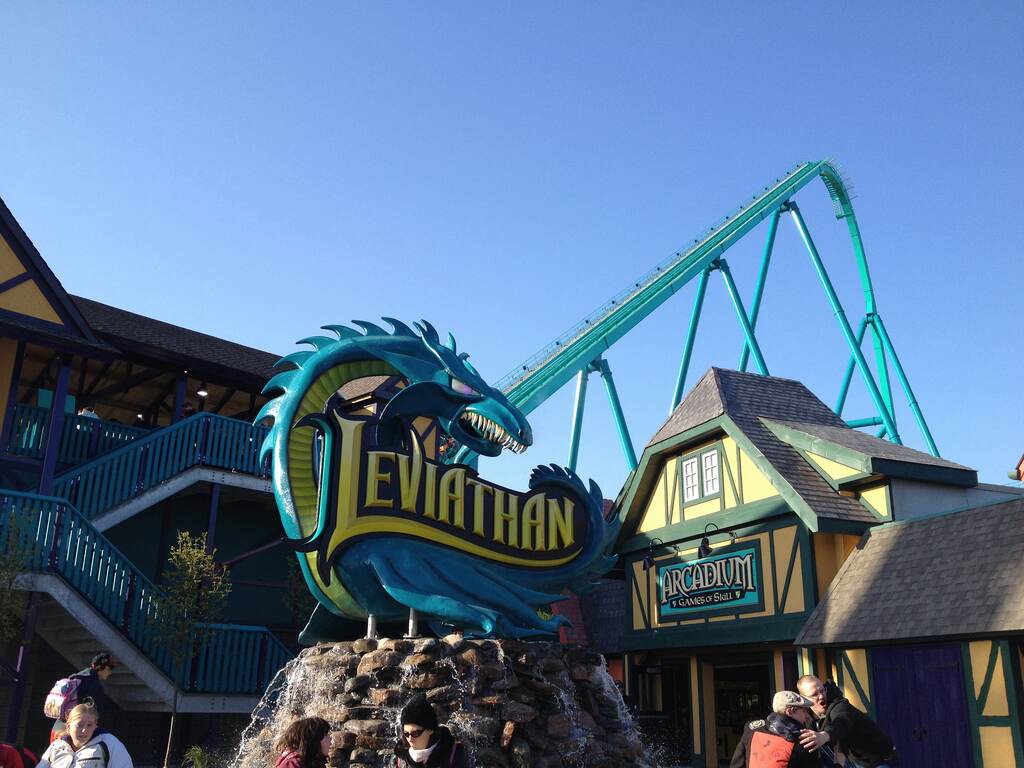
Leviathan (Canada’s Wonderland, Ontario, Canada)
Leviathan is a fan favorite because it balances giga scale with a ride experience that feels clean, powerful, and fun. It is the kind of coaster that makes people laugh, not just scream.
Why it’s popular:
- huge, elegant layout
- strong airtime moments
- smooth ride style that appeals to a wide audience
Fury 325 (Carowinds, North Carolina, USA)
Fury 325 is often treated like the modern gold standard for a certain kind of giga coaster: fast, smooth, and perfectly paced. It is famous for feeling like it never lets up, and for having a layout that uses speed like a weapon.
Why it’s popular:
- relentless pacing
- big, sweeping elements that still feel aggressive
- reputation as one of the best steel coasters in the world
Red Force (Ferrari Land, Spain)
Red Force is the outlier in the giga category because it is a launched giga coaster rather than a traditional lift hill giga. It is also known for being extremely tall within the giga range.
This makes it feel closer to the strata-coaster “top hat” style experience, but it still falls within the giga classification.
Why it’s popular:
- launch-driven intensity
- towering top hat silhouette
- a different flavor of “giga” than the classic airtime-hill marathon style
Orion (Kings Island, Ohio, USA)
Orion is a great example of why “drop height” matters in the giga definition. Its lift hill is under 300 feet, but its drop reaches the giga threshold, so it qualifies.
Orion is often described as a giga coaster that emphasizes speed, flow, and big shapes, with a ride style that feels modern and polished.
Why it’s popular:
- giga classification via drop height
- smooth, modern layout
- strong “big coaster” experience without being punishing
Common Questions People Have About Giga Coasters
Are giga coasters scarier than other coasters?
They can be, mostly because of the height and speed. But “scarier” depends on what triggers you. Some people fear height more than intensity, and gigas are very height-forward. Other people fear roughness or tight inversions, and many gigas are actually smoother and more open than smaller, more inversion-heavy coasters.
Do giga coasters usually have inversions?
Traditionally, most gigas focus on speed and airtime rather than inversions. That is not a hard rule, but it has been the dominant design style: big drop, big speed, big hills, big turns.
What’s the difference between a giga coaster and a hyper coaster in real life?
A hyper coaster can feel huge. But a giga coaster tends to feel more like a full journey: higher viewpoint, longer sustained speed, and bigger elements that take up more physical space. It is the difference between “that was a big coaster” and “that was an event.”
The Bottom Line
A giga coaster is not just “a tall coaster.” It is a specific class: a complete-circuit coaster in the 300 to 399 foot range (by height or drop), built to deliver a scale of speed and layout that most rides simply cannot match.
And the reason the best gigas are so popular is simple: they feel iconic. They are the coasters people travel for. They are the ones that show up in skyline photos. They are the ones you remember months later when someone says, “What’s the biggest coaster you’ve ever ridden?”

Leave a Reply