When people ask for the most affordable theme parks, they usually mean, “Where can I have a full, satisfying theme park day without feeling like I got financially mugged in the parking lot and then again at lunch?” That is a fair question, and it is also a question that gets answered badly online because most lists obsess over ticket price and ignore everything else.
So this post is built on one rule: we are ranking affordability by True Day Cost, not by the cheapest advertised ticket.
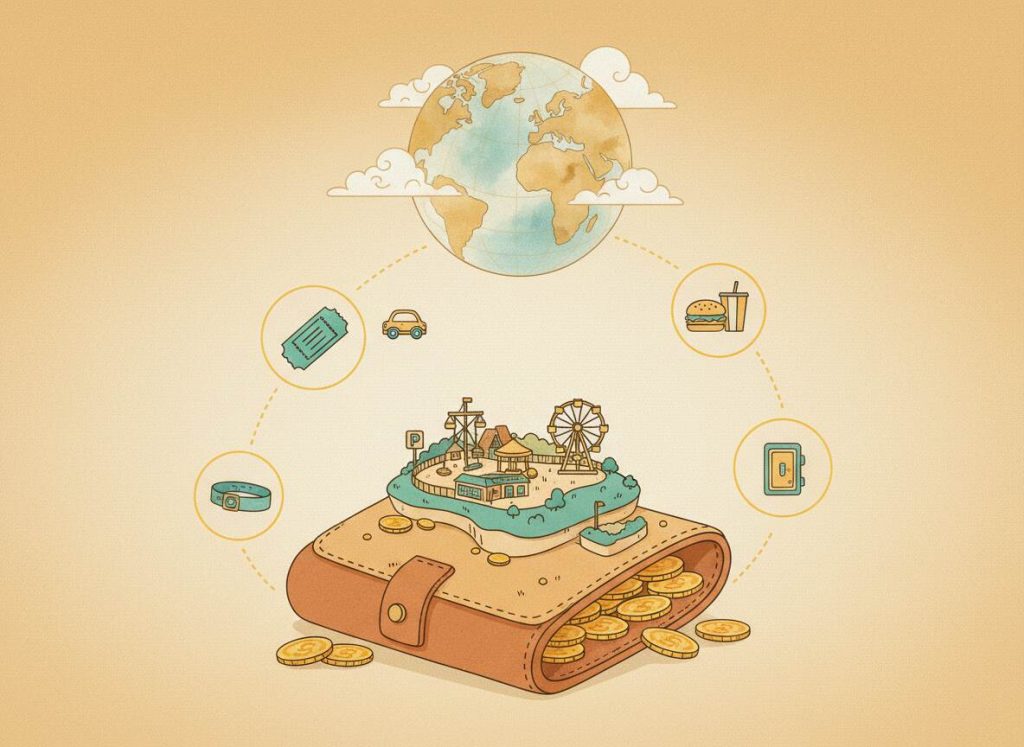
True Day Cost is the total you are likely to pay for a normal day that still feels fun:
True Day Cost = admission + parking or local transport + realistic food and drink + typical add-ons
Those “typical add-ons” are the sneaky killers. They include lockers (especially at water parks), paid ride reservation systems, stroller rentals, and the “we are hot and desperate” purchases like bottled water if outside food is restricted.
Because this is a worldwide list, I am not going to pretend that one exact price is permanently true. Pricing changes by date, exchange rate, and season. What I can do, and what I will do, is identify parks that are structurally affordable. These are parks that stay affordable year after year because their business model includes things like free parking, free admission, generous policies, or unusually strong included perks.
Why “Most Affordable” Is Hard to Define (and Why That Actually Helps You)
It is hard to define “most affordable” worldwide because a park can be cheap in one category and expensive in another. A park can have a low ticket price but high parking fees. A park can have a fair ticket price but food that is priced like an airport. A park can be affordable for locals who bring their own food and arrive by train, but expensive for tourists who rent a car and buy every meal inside.
So instead of forcing a fake universal ranking, I am going to give you a curated list of parks that win on True Day Cost for clear reasons, and I am going to explain those reasons in mini writeups so you can apply the logic to parks in your own country too.
The Most Affordable Theme Parks (Worldwide) With Mini Writeups
Knoebels Amusement Resort (Pennsylvania, USA)
If you want the cleanest example of a park that is affordable by design, it is Knoebels. This is the park I bring up when someone tells me they want a budget-friendly theme park day that still feels like a real park day, not a sad compromise.
Knoebels is structurally affordable because it removes two of the biggest cost categories immediately. According to Knoebels’ own pricing information, the park offers free admission and free parking, and you can either pay per ride or buy ride passes depending on the day and your preferences. That matters because it means your baseline spend can be close to zero if you are visiting casually, traveling with non-riders, or bringing young kids who are not going to marathon coasters.
In True Day Cost terms, Knoebels is powerful because it lets you scale your spending to your actual day. If you only want a few rides and some food, you can do that without paying a gate price that forces you to “get your money’s worth.” If you want a full ride day, you can do that too. That flexibility is rare, and it is one of the most genuinely budget-friendly structures in the theme park world.
Why it stays affordable: free admission, free parking, flexible pay-per-ride model.
What to watch for: pay-per-ride can become expensive if you are a heavy rider who does everything multiple times, so you need to choose the pricing option that matches your group.
Holiday World & Splashin’ Safari (Indiana, USA)
Holiday World is a different kind of affordable. It is not “cheap because it charges almost nothing.” It is affordable because it reduces the constant drip of in-park spending that turns a normal day into a budget disaster.
Holiday World’s own FAQ and park information highlight a set of included perks that are unusually meaningful, including free soft drinks and free sunscreen. Their main site also explicitly markets free parking as part of the experience. Those perks sound small until you have paid for drinks for a family at a major destination park and realized you just spent the price of a small appliance on soda and water.
In True Day Cost terms, Holiday World often wins because it reduces the number of “we have to buy this” moments. It is easier to stick to a budget when hydration is not a recurring purchase and parking is not a surprise fee.
Why it stays affordable: free parking, free soft drinks, and other included basics that reduce in-park spending.
What to watch for: like any park, your day can still get expensive if you add premium extras, but the baseline day is friendlier than most.
Europa-Park (Rust, Germany)
Europa-Park is not the cheapest park in Europe by ticket price, and I want to be clear about that. However, it often earns a spot in affordability discussions for one reason: it can deliver an enormous amount of value for what you pay, especially compared to other major “destination-level” parks.
Europa-Park’s official ticket information shows that it uses date-based pricing, and its official arrival information indicates that parking is a separate fee. That means it is not a “free parking” affordability champion like Knoebels or Holiday World. The reason it can still be considered in an affordability post is that it often provides a full, high-capacity, full-day experience without the same level of paid add-on pressure that some other major parks create.
In True Day Cost terms, Europa-Park can be a strong value day if you plan well, buy tickets for lower-priced dates, and avoid turning the day into a premium-upgrade spree. It is the kind of park where the base ticket can still feel like it buys you a complete experience, which is not always true at the top end of the market.
Why it can be affordable: strong value per day when compared to other major destination parks, and a full experience without “mandatory” paid systems for many visitors.
What to watch for: date-based ticket pricing and paid parking mean your True Day Cost depends heavily on timing.
Efteling (Kaatsheuvel, Netherlands)
Efteling is another park that often sits in the “not the cheapest, but surprisingly reasonable for the quality” category. Efteling’s official ticket overview provides a clear range of ticket prices for 2026, which is helpful because it shows the park is transparent about variable pricing rather than hiding it behind marketing language.
Efteling can be a strong affordability pick for travelers who want a high-quality theme park day without paying the premium pricing that some global brands command. It is also a park where the experience is not built around constant upcharges in the same way some modern parks are. That matters for True Day Cost because the more a park relies on upsells, the harder it is to keep your spending under control.
Why it can be affordable: strong quality-to-price ratio, transparent ticket ranges, and a day that can feel complete without heavy add-ons.
What to watch for: parking is typically a separate cost, and your ticket price depends on the day you choose.
Tokyo Disney Resort (Tokyo, Japan)
I am including Tokyo Disney Resort for a very specific affordability reason, and it is not because it is “cheap.” It is because, compared to some other Disney destinations, Tokyo Disney’s ticket pricing can be meaningfully lower, and the resort provides an extremely high-quality full-day experience.
The official Tokyo Disney Resort ticket page shows variable pricing and provides ticket amounts in yen. For many international visitors, the biggest cost is not the ticket, it is the flight and lodging. However, if you are already in Japan, or if you are comparing Disney destinations, Tokyo Disney can sometimes be a better True Day Cost value than people expect because the base ticket can buy a very complete day without the same level of “pay extra to fix your day” pressure that some guests feel elsewhere.
Why it can be affordable: strong value relative to the experience, and potentially lower ticket pricing compared to other Disney destinations, depending on date and exchange rate.
What to watch for: Tokyo itself can be a budget-friendly city in some ways, but travel costs dominate if you are flying internationally.
More of the Most Affordable Parks Worldwide (Theme Parks + Amusement Parks)
Now that we are including amusement parks that deliver a full theme park day, we can talk about the parks that are genuinely budget-friendly in practice. These are the places where you can show up, have a full day, and not feel like every basic need is a monetization opportunity.
Blackpool Pleasure Beach (Blackpool, England, UK)
Blackpool Pleasure Beach is one of those parks that can be surprisingly affordable depending on how you buy, because it has historically offered a mix of ticketing options and promotions that reward planning ahead. It is also located in a classic seaside resort town, which often means you can find a wide range of lodging and food options nearby, including genuinely budget options if you are not trying to do a luxury trip.
From a True Day Cost perspective, the biggest affordability advantage here is that you can often control your total spend by choosing the right ticket type and by relying on the surrounding area for food and extras rather than being trapped in a “single resort bubble.” That said, the affordability of any UK park can swing based on peak season, and Blackpool is very seasonal, so timing matters more than people think.
Why it can be affordable: the surrounding town gives you budget flexibility, and planning ahead can reduce ticket costs.
What to watch for: peak summer pricing and crowds can change the value equation fast.
Gröna Lund (Stockholm, Sweden)
Gröna Lund is a strong affordability pick in a very specific way. Stockholm is not the cheapest city in Europe, but Gröna Lund benefits from being in a major city with strong transit. If you are already in Stockholm, you can often avoid car costs entirely, which matters because in many places parking is the hidden fee that breaks the budget.
Gröna Lund is also a park where you can realistically do a shorter visit and still feel satisfied, because the park is compact and the experience is concentrated. That can lower True Day Cost because you are less likely to buy multiple meals inside the park or spend all day accumulating small purchases. It is not the cheapest park by ticket price, but it can be a very controllable spend, which is a kind of affordability people underestimate.
Why it can be affordable: transit access and a compact experience that does not force an all-day spend.
What to watch for: city pricing for lodging and food outside the park can dominate your trip cost if you are traveling in.
Parc Astérix (Plailly, France)
Parc Astérix often lands in affordability conversations because it can deliver a big, high-thrill day without the same price level as some of the most famous European destination parks. It is also a park where the value can be very date-dependent, because European parks frequently run promotions and seasonal offers that change the True Day Cost dramatically if you plan around them.
In True Day Cost terms, Parc Astérix can be a strong pick for travelers who want a “major park day” near Paris without paying the premium that comes with the most globally branded option in the region. It is not “cheap,” but it can be “more affordable than you expected,” which is a real category for international travelers.
Why it can be affordable: strong ride lineup and full-day value relative to other nearby destination options.
What to watch for: transport and timing matter, and the best affordability often comes from planning around promos.
Energylandia (Zator, Poland)
Energylandia is one of the clearest examples of a modern European park that is widely discussed as a value powerhouse. Poland can be a more affordable travel destination than many parts of Western Europe, and Energylandia has built a reputation for offering a large amount of ride content for the price of admission.
From a True Day Cost perspective, the biggest affordability advantage is that you can often get a full, high-thrill day at a price point that feels lower than comparable “big coaster day” parks in more expensive countries. When people talk about affordable coaster trips in Europe, this park comes up constantly for a reason.
Why it can be affordable: strong ride quantity and intensity for the cost, and a generally more budget-friendly region for many travelers.
What to watch for: if you are flying internationally, travel costs can erase the savings, so it is best as part of a regional trip.
Gardaland (Lake Garda, Italy)
Gardaland is not always the cheapest Italian attraction, but it can be a strong affordability pick for families because it is located in a region that already has a lot of tourism infrastructure. That matters because you can often find a wide range of lodging and food options nearby, including budget-friendly ones, and you are not forced into a single resort ecosystem.
In True Day Cost terms, Gardaland can be affordable when you treat it as a day trip within a broader vacation, rather than a standalone “park resort” experience. The park can deliver a full day for families, and the surrounding area gives you flexibility to control costs.
Why it can be affordable: a full family day with lots of nearby lodging and food options outside the park.
What to watch for: peak tourist season around Lake Garda can raise your total trip cost even if the park ticket itself is reasonable.
More North America Value Picks (Beyond the Two Famous Examples)
North America has a weird affordability split. The biggest destination resorts can be brutally expensive, but the mid-tier and regional parks can be some of the best value entertainment you can buy if you plan even a little.
Silver Dollar City (Missouri, USA)
Silver Dollar City is not usually the cheapest ticket in the United States, but it often earns a place in value discussions because the experience feels complete without needing a pile of paid upgrades. It is a park where atmosphere, shows, and craft demonstrations add “included value” that is not just ride throughput. That matters for True Day Cost because when a park gives you a lot to do beyond standing in lines, you are less likely to feel pressured to buy line skipping as a fix.
It can also be a strong multi-day value if you are pairing it with other regional attractions, because the broader area often has more affordable lodging than the biggest destination markets.
Why it can be affordable: strong included entertainment value and a “complete day” feel without mandatory add-ons.
What to watch for: if you add premium experiences and buy everything inside, it stops being affordable fast, so it rewards a plan.
Dollywood (Tennessee, USA)
Dollywood is similar to Silver Dollar City in the sense that it can be a value win because it offers a lot of included experience beyond rides, and it sits in a region with a huge range of lodging options. Pigeon Forge and Gatlinburg have everything from budget motels to cabins, which means you can build a trip that matches your budget.
From a True Day Cost perspective, Dollywood can be affordable when you plan around ticket deals, choose lodging wisely, and avoid turning the day into a premium-upgrade festival. It is not “cheap,” but it can be “reasonable,” and that is often what people really mean when they say affordable.
Why it can be affordable: lots of lodging flexibility nearby and a full-day experience that does not rely entirely on paid add-ons.
What to watch for: peak season crowds can increase the temptation to buy line skipping.
Canada’s Wonderland (Ontario, Canada)
Canada’s Wonderland can be a strong affordability pick for locals and regional travelers because season passes and multi-visit strategies can reduce the per-day cost dramatically. Like many large regional parks, it rewards people who buy early and commit to more than one visit. If you are a one-and-done traveler, it can still be affordable on the right day, but the real value is often in pass math.
Why it can be affordable: strong multi-visit value and pass strategies that lower per-day cost.
What to watch for: day ticket pricing can vary, and parking can be a meaningful add-on depending on your ticket type.
Asia: Affordable Does Not Usually Mean the Biggest Global Brands
In Asia, the most affordable parks are often not the ones that international tourists name first. The big famous parks can be worth it, but they are rarely the “most affordable.” The value winners are often regional parks that price for locals and offer aggressive promotions through local channels.
Nagashima Spa Land (Kuwana, Japan)
Nagashima Spa Land is frequently discussed among enthusiasts as a park where you can get a huge amount of thrill value without the same pricing structure as the most globally branded destinations. It is also a good example of why “affordable” depends on your travel context. If you are already in Japan, it can be a strong value day. If you are flying in solely for the park, travel costs dominate.
Why it can be affordable: high thrill value for the day relative to some other major-name options.
What to watch for: the affordability depends on your broader Japan itinerary and how you handle transport and lodging.
Everland (Yongin, South Korea)
Everland is a park that can be affordable in practice because South Korea has strong transit and a culture of deals and promotions for attractions. For locals and regional travelers, this can mean a lower True Day Cost than you might expect for a major park. For international travelers, it can still be a value win if it is part of a broader Seoul trip, because you are not building an entire vacation budget around a single park resort.
Why it can be affordable: deal culture, transit access, and strong all-around park value.
What to watch for: the best pricing is often tied to local booking habits and timing.
Closing: Affordable Does Not Mean “Cheap,” It Means “Predictable”
If you take nothing else from this post, I want it to be this: the most affordable theme parks are rarely the ones with the lowest advertised ticket price. The most affordable parks are the ones where you can predict your spending, control your spending, and still feel like you had a complete day when you leave.
That is why True Day Cost matters so much. It forces you to look at the parts of a park day that quietly drain budgets, like parking fees that feel unavoidable, food pricing that makes you buy more than you planned, and add-ons that turn a “reasonable” day into a premium day without you noticing until you check your bank app later.
The parks that consistently win on affordability tend to share the same DNA. They either remove big costs entirely, like parks with free admission or free parking, or they reduce the constant drip of spending by including meaningful basics and offering bundles that actually make sense for real human beings. They also tend to be parks where you can have a good day without paying extra just to make the lines tolerable, because when a park’s business model depends on selling you a fix, it stops being affordable in practice.
And honestly, this is the encouraging part. You do not need a “perfect cheap park” to have an affordable theme park life. Once you start thinking in True Day Cost, you can make almost any park more affordable by choosing the right day, buying early, deciding your food plan before you arrive, and being honest about whether a season pass will actually get used. You can also spot the parks that will never be budget-friendly for your travel style, and that alone can save you money and disappointment.
Affordable parks are not always flashy, and they are not always the ones people brag about on social media. They are the parks that respect your day, respect your budget, and still give you that feeling you came for in the first place: that you got to step out of normal life for a while and just have fun.

Leave a Reply