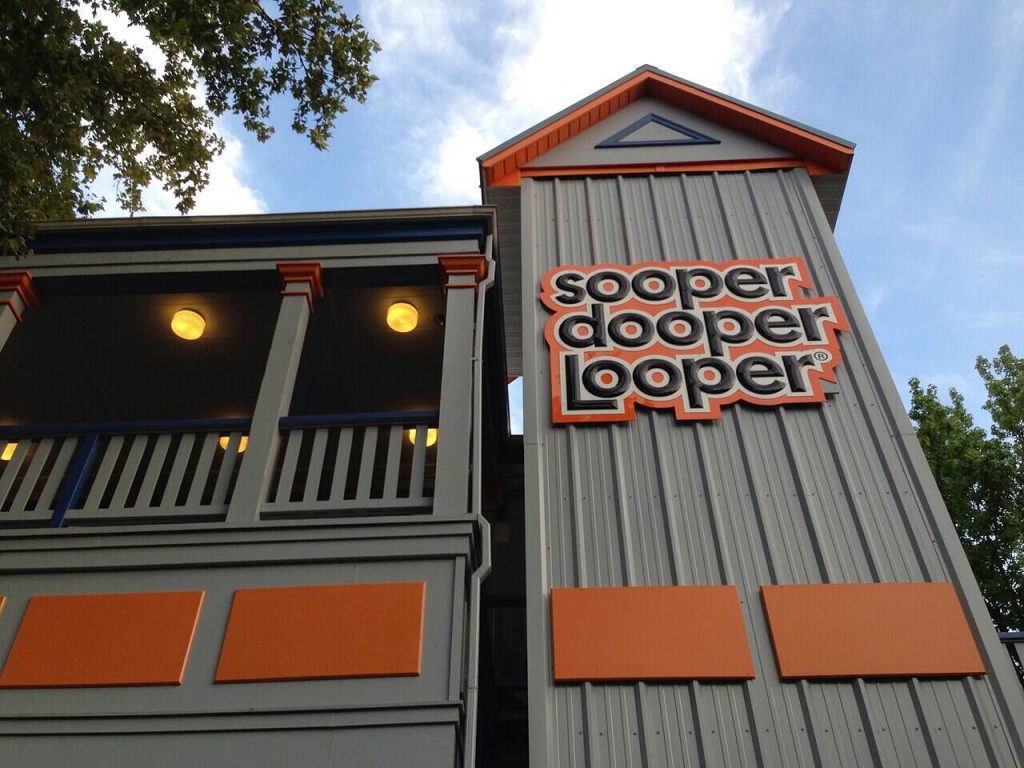
When Hersheypark announced its newest attraction in December 1976, the name alone made people smile. SooperDooperLooper—stylized as sooperdooperLooper—wasn’t just a catchy title for a roller coaster. It was a deliberate choice that reflected the park’s playful spirit and the sheer audacity of what they were about to build. But the story of how this iconic coaster came to be, and why it mattered so much to the amusement park industry, is far more interesting than its whimsical name suggests.
The Planning Years: 1975-1976
The Name That Almost Wasn’t
Planning for SooperDooperLooper began in 1975, and from the start, the park’s leadership was divided on what to call it. During the planning stages, Hersheypark shortlisted two names: “Merry Derry Dip” and “SooperDooperLooper.” The former referenced Derry Township, the area where Hershey, Pennsylvania was located, and an executive at the park preferred it for its local connection.
But the executive was outvoted by his own wife and children, who championed the latter name. It’s a small detail, but it’s telling—even the families closest to the park’s decision-makers understood that SooperDooperLooper had a magic that “Merry Derry Dip” simply didn’t possess. The name was fun, memorable, and impossible to forget. In the end, the family vote won out, and roller coaster history was made.
Bringing It from Switzerland
In February 1976, Hersheypark purchased the coaster from Anton Schwarzkopf in Zürich, Switzerland. Schwarzkopf was already legendary in the coaster world, known for designing some of the most innovative and thrilling rides in Europe. The SooperDooperLooper would be a Schwarzkopf Looping Racer model, similar to The New Revolution at Six Flags Magic Mountain in Valencia, California.
The decision to go with Schwarzkopf was significant. This wasn’t just any coaster manufacturer—Schwarzkopf represented cutting-edge European engineering and design philosophy. By choosing him, Hersheypark was signaling that they weren’t content with incremental improvements. They wanted something revolutionary.
The Announcement and Construction Begins
Hersheypark announced its intentions to add a new looping roller coaster for the 1977 season in April 1976. The announcement emphasized that the new coaster would include a vertical loop—a feature that was still relatively rare in the United States at the time. The coaster would be located near the park’s amphitheater and log flume, in an area that would become known as “The Hollow.”
Work began on the project site on October 29, 1976. The name was officially presented to the media in December 1976, along with illustrations that showed the dramatic vertical loop that would become the coaster’s signature element. Parts of the coaster began arriving from its European manufacturer, and foundation work commenced in the early weeks of December.
The park called the project “the park’s most structurally involved project to date.” They weren’t exaggerating. The coaster would require approximately 500 tons of steel and 8,300,000 pounds (3,800,000 kg) of concrete for its foundation work. The total cost exceeded $3 million—an enormous sum for 1977.
Construction: Winter, Challenges, and Triumph
The Winter Build
Construction of SooperDooperLooper continued into the winter months of 1976-1977, which caused minor problems when mechanical equipment broke down in the cold. But the park pushed forward. Preparation on the coaster’s vertical loop and station were conducted in February 1977. By that same month, 80 percent of the concrete foundation work was complete—a testament to the intensity of the construction effort.
The vertical loop itself was finished in March 1977, a critical milestone. By early May, construction was complete. The coaster had been built in roughly six months, an impressive feat given the complexity of the design and the harsh winter conditions.
The Preview and Opening
A preview ceremony was held on May 6, 1977, with 250 visitors in attendance. These lucky few got to experience the coaster before it opened to the general public. Their reactions would set the tone for what was to come.
SooperDooperLooper officially opened to the public on May 8, 1977, alongside the park’s season. Hersheypark touted the looping coaster as the longest to open on the East Coast—a claim that reflected both the coaster’s 2,614-foot track length and its significance to the region’s amusement park landscape.
The Ride Experience: What Made It Special
The Layout and Elements
The SooperDooperLooper experience begins the moment riders board the train at the station. The train leaves the station and makes a slight right turn before proceeding up a 28-degree incline lift hill. This isn’t a steep climb—it’s gradual, building anticipation.
At the top of the lift hill, the train makes a left turn with a small dip and descends a long 75-foot drop. This is where riders reach the coaster’s maximum speed of 45 miles per hour. The speed might not sound extreme by modern standards, but in 1977, it was thrilling.
Then comes the main event: the 57-foot vertical loop. This wasn’t just any loop—it was the signature element of the entire coaster, the feature that made SooperDooperLooper different from anything else on the East Coast. Riders experience the sensation of being turned upside down, a feeling that was still novel and exciting to most people in 1977.
Exiting the loop, the train makes a long, ascending sweeping left turn that travels through the middle of the loop structure itself. The coaster then traverses a gentle right curve that includes a short tunnel. This tunnel section would later become famous for something unexpected—an animatronic spider that would drop down towards the train and scare riders. It was a small touch, but it added an extra element of surprise and fun.
Out of the tunnel, the track travels along the terrain through various turns. The train goes down a drop, then up another hill into a downward spiraling helix before hitting the final brake run. This is followed by a right turn back to the station.
One complete cycle of the SooperDooperLooper takes around one minute and forty-five seconds—a relatively short ride by modern standards, but perfectly paced for the experience Schwarzkopf designed.
The Terrain Coaster Philosophy
What made SooperDooperLooper special was that it was a terrain coaster—a design that utilizes the landscape in its layout rather than building up massive support structures. This approach gave the coaster a more integrated, natural feel. It flowed with the land rather than imposing itself upon it. The maximum height of 70 feet was modest compared to later coasters, but the terrain coaster design made the ride feel more dynamic and engaging.
The Technical Specifications
Height: 70 feet (21 meters)
Speed: 45 miles per hour (72 km/h)
Track Length: 2,614 feet (797 meters)
Inversions: 1 (the 57-foot vertical loop)
Lift Hill Angle: 28 degrees
Drop Height: 75 feet (23 meters)
Ride Duration: Approximately 1 minute 45 seconds
Manufacturer: Anton Schwarzkopf (West Germany)
Model: Looping Racer
Opening Date: May 8, 1977
Cost: More than $3 million
Steel Used: Approximately 500 tons
The Design Team Behind the Magic
Anton Schwarzkopf: The Visionary
Anton Schwarzkopf was the lead designer and manufacturer of SooperDooperLooper. Schwarzkopf was a German engineer and coaster designer who had already established himself as one of the most innovative minds in the industry. His Looping Racer model represented a new approach to coaster design—combining speed, inversions, and terrain integration in ways that had rarely been attempted before.
Werner Stengel: The Architect
Werner Stengel was one of the architects who assisted in designing the coaster. Stengel would go on to become one of the most respected coaster designers in the world, but his early work on SooperDooperLooper showed his talent for creating innovative layouts that maximized thrills while maintaining safety and rider comfort.
The Support Team
R. Duell Associates assisted with the design, while General Manufacturer and Equipment Company implemented sensor equipment. Intamin acted on behalf of Schwarzkopf as the business facilitator for the attraction and aided in various roles during construction. This was a collaborative effort involving some of the best minds in the amusement park industry.
The Evolution of SooperDooperLooper
Original Configuration
When SooperDooperLooper opened in 1977, it operated with three trains, each seating 24 riders. The original trains were manufactured by Schwarzkopf himself, reflecting the German engineering that had designed the coaster.
The coaster debuted with white track and orange trains—a color scheme that was visually striking and helped the coaster stand out in the park.
The Tunnel Addition (1979)
A 150-foot tunnel featuring lights and sounds was added to the coaster for the 1979 season. This wasn’t just a cosmetic addition—it fundamentally changed the ride experience. The tunnel added an element of mystery and darkness to the journey, and the lights and sounds created an immersive atmosphere that enhanced the overall experience.
Train Changes (1989)
In 1989, the original Schwarzkopf trains were replaced with trains manufactured by Giovanola. This was a significant change, as the new trains featured different restraint systems and ride characteristics. The coaster was also repainted in 1989 to feature a black track and blue supports—a color scheme that gave it a more modern, sleek appearance.
Modern Updates (2012)
For the 2012 season, the Giovanola trains were replaced with trains manufactured by Gerstlauer, featuring an orange color scheme that paid homage to the original trains. The control system was also updated with magnetic brakes, improving safety and reliability. The station platform was refurbished during the same season.
Interestingly, one of the original Giovanola trains was donated to the National Roller Coaster Museum and Archives, preserving a piece of SooperDooperLooper history for future generations.
Current Configuration (2021 and Beyond)
As of 2021, SooperDooperLooper operates with two trains (down from the original three), each with six cars arranged two-seats across in two rows, allowing for a maximum capacity of 24 riders per train. The track retains the black and blue color scheme, with the vertical loop painted white—a striking visual element that draws the eye.
The coaster now features lap bar restraints on each train, a safety feature that has become standard on modern coasters.
The Dark Side: Incidents and Accidents
The 1977 Tragedy
Just four months after opening, tragedy struck. On August 25, 1977, a 16-year-old worker from Lebanon, Pennsylvania, died after being hit by a moving train in the station’s loading area while performing maintenance. A second maintenance worker was reportedly slightly injured in the accident.
The coaster remained closed during an investigation, and would reopen on September 1. Initially, the park claimed that the 16-year-old’s actions caused the train to set in motion, suggesting that the victim was at fault. However, an initial investigation by the Occupational Safety and Health Administration (OSHA) differed from the park’s investigation.
The park later reversed course, stating that the accident victim was not at fault and placed blame with the media for the divergence of facts regarding the accident. OSHA fined Hersheypark the maximum penalty of $2,000 in September for two violations in safety protocol regarding the possibility of hazards.
The family of the 16-year-old later sued Schwarzkopf and Intamin for damages. This tragic incident highlighted the importance of safety protocols and worker training on new attractions.
The 1988 Incident
On May 1, 1988, a 22-year-old park visitor was seriously injured after falling from the coaster while riding. The coaster was closed pending investigations from the park and Pennsylvania’s Bureau of Amusement Rides and Attractions.
Mechanical fault was ruled out, with preliminary reports stating that the visitor had stood up while the coaster was in motion. State investigators cleared the park of wrongdoing on May 6, faulting the rider for their conduct in opening their lap bar restraint. The coaster reopened on May 7.
This incident underscored the importance of rider responsibility and proper restraint use, even as it raised questions about how riders could open restraints during operation.
The Impact: Attendance and Industry Influence
The Attendance Boom
The impact of SooperDooperLooper on Hersheypark was immediate and dramatic. Attendance at Hersheypark increased from 1.4 million to 1.7 million visitors during the 1977 season, ranking the park among the top three United States amusement parks. The increase in visitors was partially attributed to the opening of SooperDooperLooper.
This wasn’t just a successful coaster—it was a game-changer for the park. It put Hersheypark on the map as a destination for thrill seekers and demonstrated that the park could compete with larger, more established parks.
The First Inverting Coaster at Hersheypark
SooperDooperLooper was the first inverting roller coaster at Hersheypark. This distinction was significant because it marked a turning point in the park’s identity. Before SooperDooperLooper, Hersheypark was known for family-friendly attractions. With this coaster, the park signaled that it was ready to appeal to thrill seekers as well.
The Cultural Phenomenon
After five years of operation, over 200,000 t-shirts with the slogan “I survived the sooperdooperLooper” were sold. This merchandise success prompted the park to celebrate the coaster with a t-shirt day for the end of the 1981 season. The slogan became iconic, representing not just the coaster itself, but the entire experience of visiting Hersheypark.
The Critical Reception: What the Experts Said
Dean R. Wise (York Daily Record)
Dean R. Wise, a reporter for the York Daily Record, recorded guests’ reactions to the coaster, with most riders exclaiming various praise. Wise personally commented that the coaster was quick and ended his commentary stating it was “positively insane”—high praise for a new attraction.
Charles Shaw (Intelligencer Journal)
Charles Shaw, a staff member for the Intelligencer Journal, highlighted the steep incline of the lift hill as well as the excitement of the vertical loop, calling it “rather fun” after fully grasping the experience. However, Shaw noted that the remainder of the ride was “a little anti-climatic” as it contained elements seen on other coasters. This was an honest assessment—the loop was the star, and everything else was supporting cast.
Sue Smith (Lancaster New Era)
Sue Smith, an editor for Lancaster New Era, commented that though she had her eyes closed during the ride, the sensation of the coaster was “a little scary and a lot thrilling,” emphasizing the vertical loop. Her review captured the emotional intensity of the experience, even for someone who was too nervous to keep their eyes open.
Lorrie Brown (Public Opinion)
Lorrie Brown, a reporter for the Public Opinion, remarked that though the physical appearance of the loop was smaller than first anticipated, she concluded “the sooperdooperLooper delivers.” Brown additionally stated the coaster produced “a whirlwind of motion” and was similarly scared by the end helix as with the vertical loop. Her review emphasized that the coaster’s impact exceeded expectations, despite its modest height.
Why SooperDooperLooper Mattered: The Bigger Picture
The East Coast Gets Its First Major Looping Coaster
In 1977, looping coasters were still relatively rare in the United States. The New Revolution at Six Flags Magic Mountain (which opened in 1976) was one of the first, but SooperDooperLooper brought the technology and thrills to the East Coast in a way that was accessible to millions of people.
This democratization of the looping coaster experience was significant. It meant that riders on the East Coast no longer had to travel to California to experience an inversion. Hersheypark had brought the future to Pennsylvania.
The Schwarzkopf Legacy
SooperDooperLooper was part of Anton Schwarzkopf’s legacy of innovation. His Looping Racer design proved that you could create a thrilling, inverting coaster that was also elegant, efficient, and integrated with the landscape. This design philosophy influenced coaster designers for decades to come.
The Terrain Coaster Philosophy
The success of SooperDooperLooper demonstrated the value of terrain coaster design. Rather than building massive support structures, Schwarzkopf had created a coaster that worked with the natural landscape. This approach became increasingly popular in the decades that followed, as designers recognized that terrain coasters could be just as thrilling as traditional coasters while being more visually integrated with their surroundings.
The Hersheypark Renaissance
SooperDooperLooper marked the beginning of Hersheypark’s transformation from a family amusement park to a destination for thrill seekers. The park would go on to add more coasters and thrill rides, but it was SooperDooperLooper that started the journey. The coaster proved that Hersheypark could compete with the best parks in the country.
The Coaster Today: A Living Piece of History
Still Going Strong
Nearly 50 years after its opening, SooperDooperLooper remains one of the most beloved coasters at Hersheypark. It’s not the tallest, fastest, or most intense coaster at the park—those titles belong to other attractions. But it remains special because of what it represents: innovation, accessibility, and the joy of experiencing something new.
Location in The Hollow
SooperDooperLooper is located in “The Hollow” section of Hersheypark, alongside other coasters like Skyrush and the Comet. The Hollow has become one of the most coaster-dense areas of the park, but SooperDooperLooper remains the anchor attraction that started it all.
The coaster replaced the site of the former Twin Ferris Wheels (manufactured by Eli Bridge) and the Alpine Flyer attraction, transforming the area into a thrill zone.
A Terrain Coaster Classic
What makes SooperDooperLooper enduring is its elegant design. It doesn’t rely on extreme heights, speeds, or multiple inversions to be thrilling. Instead, it uses terrain, pacing, and the psychological impact of the vertical loop to create an engaging experience. This is why it remains popular with riders of all ages and experience levels.
Comparing SooperDooperLooper to Other Historic Coasters
vs. The New Revolution (Six Flags Magic Mountain)
SooperDooperLooper and The New Revolution are essentially the same coaster design—both are Schwarzkopf Looping Racer models. However, SooperDooperLooper’s terrain integration and the tunnel addition (added in 1979) give it a slightly different character. Both coasters are historically significant, but SooperDooperLooper’s location on the East Coast made it more accessible to a larger population.
vs. The Great American Revolution (Six Flags Great Adventure)
The Great American Revolution opened in 1976, one year before SooperDooperLooper. While both are looping coasters from the same era, they represent different design philosophies. The Great American Revolution is a more traditional coaster with a more pronounced structure, while SooperDooperLooper emphasizes terrain integration.
vs. Space Mountain (Magic Kingdom)
Space Mountain, which opened in 1975, was an indoor coaster that brought thrills to a Disney park. While Space Mountain was innovative in its own right, SooperDooperLooper was more accessible to the average amusement park visitor. Both coasters were important milestones in coaster design, but they served different purposes.
The Legacy of SooperDooperLooper
A Gateway to Thrills
For millions of people, SooperDooperLooper was their first experience with a looping coaster. The coaster served as a gateway to the world of thrill rides, introducing riders to the sensation of inversion and the excitement of modern coaster design. Many of those riders went on to become coaster enthusiasts, seeking out more intense and innovative attractions.
A Design Masterpiece
From a design perspective, SooperDooperLooper remains a masterpiece. It demonstrates how to create a thrilling experience without relying on extreme dimensions. The coaster’s elegant layout, smooth transitions, and integration with the landscape make it a textbook example of good coaster design.
A Cultural Icon
The “I survived the sooperdooperLooper” merchandise phenomenon shows that SooperDooperLooper transcended being just a ride. It became a cultural icon, a symbol of Hersheypark and of the thrill-seeking spirit of the 1970s and beyond.
An Industry Influence
While SooperDooperLooper wasn’t the first looping coaster in the world, it was one of the first to bring the experience to a major East Coast amusement park. This influenced how other parks approached coaster design and investment. Parks recognized that investing in innovative, thrilling attractions could drive attendance and establish their parks as destinations.
Frequently Asked Questions About SooperDooperLooper
Q: Is SooperDooperLooper still operating? A: Yes, SooperDooperLooper is still operating at Hersheypark as of 2026, nearly 50 years after its opening.
Q: How tall is SooperDooperLooper? A: The coaster reaches a maximum height of 70 feet (21 meters).
Q: How fast does SooperDooperLooper go? A: The coaster reaches a maximum speed of 45 miles per hour (72 km/h).
Q: How long is the track? A: The total track length is 2,614 feet (797 meters).
Q: How many inversions does SooperDooperLooper have? A: SooperDooperLooper has one inversion—the 57-foot vertical loop.
Q: Who designed SooperDooperLooper? A: The coaster was designed and manufactured by Anton Schwarzkopf, a German engineer and coaster designer. Werner Stengel assisted in the design.
Q: When did SooperDooperLooper open? A: SooperDooperLooper opened on May 8, 1977.
Q: How much did SooperDooperLooper cost to build? A: The coaster cost more than $3 million to plan and build—an enormous sum in 1977.
Q: What type of coaster is SooperDooperLooper? A: SooperDooperLooper is a steel terrain coaster, specifically a Schwarzkopf Looping Racer model.
Q: Is SooperDooperLooper suitable for families? A: Yes, SooperDooperLooper is family-friendly. While it includes an inversion, the coaster is not as intense as some other attractions at Hersheypark. It’s a good introduction to looping coasters for riders who are new to inversions.
Q: What is the height requirement for SooperDooperLooper? A: Specific height requirements may vary, but the coaster is generally accessible to riders of various heights. Check with Hersheypark for current requirements.
Q: Why is it called SooperDooperLooper? A: The name was chosen during planning in 1975-1976. While an executive preferred “Merry Derry Dip” (referencing the local Derry Township), his wife and children voted for “SooperDooperLooper,” which was ultimately selected. The playful name reflects the park’s fun-loving spirit.
Q: What happened to the original trains? A: The original Schwarzkopf trains were replaced with Giovanola trains in 1989. One of the Giovanola trains was later donated to the National Roller Coaster Museum and Archives.
Conclusion: The Coaster That Started It All
SooperDooperLooper is more than just a roller coaster. It’s a piece of history, a symbol of innovation, and a gateway to thrills for millions of riders. From its whimsical name chosen by a family vote to its elegant Schwarzkopf design, from its record-breaking opening to its enduring popularity nearly 50 years later, SooperDooperLooper represents everything that makes roller coasters special.
The coaster didn’t have the tallest drop or the fastest speed. It didn’t have multiple inversions or extreme G-forces. What it had was something more valuable: elegance, accessibility, and the ability to create a memorable experience for riders of all ages and thrill levels.
In 1977, SooperDooperLooper brought the future of coaster design to the East Coast. It showed that you could create a thrilling, inverting coaster that was also beautiful, efficient, and integrated with its surroundings. It transformed Hersheypark from a family amusement park into a destination for thrill seekers. And it created a cultural phenomenon that lasted for decades.
Nearly 50 years later, SooperDooperLooper continues to deliver thrills and create memories. It remains a testament to the vision of Anton Schwarzkopf, the courage of Hersheypark’s leadership, and the enduring appeal of a well-designed roller coaster.
For anyone visiting Hersheypark, SooperDooperLooper is essential. It’s not just a ride—it’s a journey through coaster history, a chance to experience the innovation that changed the industry, and a reminder of why we love roller coasters in the first place.
