Theme park meal plans are one of those purchases that feels like it should be simple. You see a flat price. You imagine a day where you never have to think about food again. You picture yourself smugly sipping a drink while everyone else is doing mental math at a menu board.
Sometimes that is exactly what happens. Sometimes a meal plan is the single best “add-on” you can buy, because it turns a chaotic day into a predictable one and it genuinely saves money.
And sometimes it is the most expensive way to eat chicken tenders you have ever experienced.
This post is the full, realistic explanation: how theme park meal plans actually work, the break-even math that matters, the traps that quietly wreck your savings, and the specific situations where you should skip the plan and just buy food like a normal person.
If you like the “true day cost” approach to theme parks, this is basically the food chapter that plugs into posts like Most Affordable Theme Parks Worldwide and Budget Theme Park Vacation Guide.
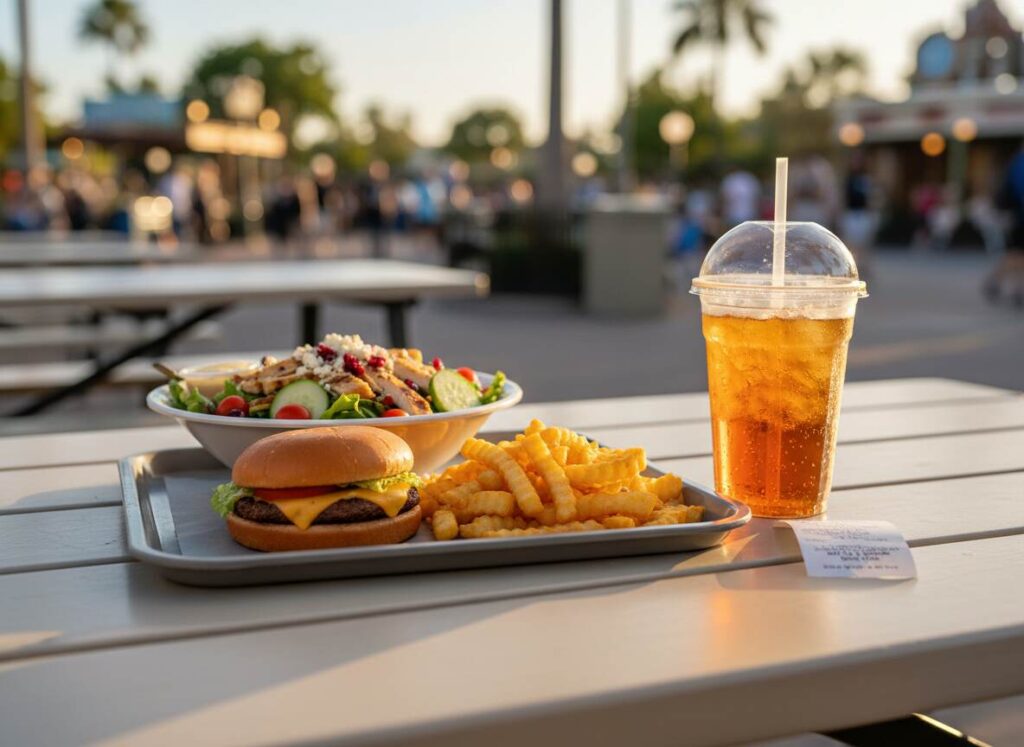
The Quick Answer: When Meal Plans Save Money
Meal plans usually save money when all of these are true:
You will actually eat enough full meals. Not “I might.” Not “I should.” You will.
You will be in the park most of the day. Meal plans are designed for open-to-close people, not “roll in at 3:00 pm” people.
You are willing to follow the rules. Every plan has rules: what counts as a meal, where you can redeem it, and how often you can redeem it. If you hate rules, you will hate meal plans.
You are not a light eater. If you normally split meals, snack all day, or you are traveling with a kid who eats three fries and declares themselves full, meal plans are often a bad deal.
Meal plans usually do not save money when:
You are skipping breakfast. Or you are the kind of person who eats one big meal and calls it a day.
You want specific “iconic” foods. Many plans exclude the most expensive or most special items, or they restrict where you can redeem.
You are trying to be “healthy” in a way that reduces your spending. If your plan is “I’ll just bring a protein bar and drink water,” a meal plan is not your friend.
What Counts As A “Meal Plan” In Theme Parks
Theme park meal plans come in a few common flavors. The names change by company, but the structure is usually one of these:
All-Day Dining Plans (The “Every Few Hours” Model)
This is common at regional parks. You pay a flat price, and you can redeem a meal at participating locations, usually with a time restriction between redemptions (for example, every 90 minutes, every 2 hours, every 4 hours). The details vary by park and season, so you always want to check the official terms for the park you are visiting.
This is the plan that can be a ridiculous deal for a hungry teenager, a coaster marathon adult, or a family that is already planning to buy multiple meals anyway.
This is also the plan that becomes a terrible deal if you do not like the participating locations, you are not in the park long enough, or you simply do not eat that much.
Quick-Service Dining Plans (The “Meal Credits” Model)
This is common at destination resorts. You buy a plan that includes a certain number of quick-service meals, sometimes snacks, and sometimes a refillable mug or drink component. You are essentially prepaying for food credits.
Disney is the most famous example of this style. Their official Disney Dining Plans page lays out what is included per night of stay, and it is very specific about what a table-service meal includes versus a quick-service meal, and what is excluded (like gratuities). If you want to see the structure straight from the source, here is the official page: Disney Dining Plans.
Table-Service Dining Plans (The “Reservations And Structure” Model)
This is the plan that sounds fancy and can be convenient, but it is also the plan that can go sideways fast if you do not like being locked into reservation timing. It can also be a poor value if you do not order the pricier items that maximize the credit value.
Disney’s page is a good example of how structured this can get. It spells out what a table-service meal redeemed at breakfast includes versus lunch or dinner, and it also notes that some experiences redeem more than one table-service meal per person.
The Only Math That Matters: Break-Even In Real Life
Most people do meal plan math in a way that makes them feel smart, but does not match how they actually eat in a theme park.
The real break-even question is not “How much is a meal?” It is:
How many plan-eligible meals will I realistically redeem, at the times I will actually be hungry, at places I will actually want to eat?
That is it. Everything else is noise.
Here is how I recommend doing the math without turning your vacation into a spreadsheet nightmare.
Step 1: Decide What Kind Of Eater You Are In A Park
Be honest. Theme parks change your habits. Heat, walking, adrenaline, and lines all mess with appetite.
Most people fall into one of these buckets:
The One-Meal Person. You eat one real meal and snack a little. Meal plans rarely save you money.
The Two-Meal Person. You eat lunch and dinner, plus a snack. Meal plans might save you money if the plan includes both meals and you are in the park long enough.
The Frequent Snacker. You do not want big meals. You want “a little something” all day. Meal plans often do not fit this pattern unless snacks are included and the snack list is generous.
The Hungry Marathoner. You are doing open to close and you will eat multiple full meals. Meal plans can be a slam dunk.
Step 2: Count Your Park Hours, Not Your Calendar Day
A meal plan is not “worth it” because you are technically at the resort for a day. It is worth it because you are in the park long enough to redeem enough meals.
If you are arriving late, leaving early, taking a long mid-day break, or park-hopping in a way that makes redemption inconvenient, your redemption count drops fast.
This is the same logic I use in crowd calendar planning posts. A “full day” is not the same thing on a low-crowd day versus a high-crowd day, because lines change your ability to eat when you want. If you want the crowd side of this, see Cheapest Days To Visit Theme Parks and think about how crowd levels change your food timing.
Step 3: Look At The Participating Locations Like A Picky Adult
This is where people get burned.
Meal plans are not “food.” Meal plans are “food at participating locations.” If the participating list is mostly places you do not like, or places that are inconvenient to your day, you will not redeem enough to win the math.
Before you buy, skim the official list of participating locations for your park. If you cannot find it easily, that is already a small red flag.
When Meal Plans Save Money (Specific Scenarios)
You Are Feeding Teenagers Or Big Appetites
This is the most consistent “yes” scenario. Teenagers can eat like they are training for a sport they are not actually playing. If you are already planning to buy multiple meals, a plan can cap your spending and reduce the constant “how much is this going to cost” stress.
You Are Doing Open To Close, No Long Breaks
If you are truly in the park for most of operating hours, you have more chances to redeem. That is obvious, but it matters more than people think because many plans have time restrictions between meals.
On a long day, those restrictions become a feature. On a short day, they become a brick wall.
You Are The Type Who Buys Drinks And Snacks Anyway
If your normal theme park behavior is “we keep buying drinks” and “we keep buying little snacks,” you might already be spending enough that a plan saves money, especially if it includes a drink component or snack credits.
This is also why people feel like they “saved money” even when they did not. They compare the plan to their most chaotic spending day, not to what they would have spent if they had planned.
You Want Predictability More Than Maximum Savings
This is the underrated reason to buy a meal plan. Sometimes you do not want to optimize. You want to stop thinking about it. You want a spending cap.
That is legitimate. Budgeting is not only about spending less. It is also about reducing the mental load. I talk about this a lot in Budget Theme Park Vacation Guide, because “predictable” is often more valuable than “cheap.”
When Meal Plans Do Not Save Money (And Why People Still Buy Them)
You Are A Light Eater Or A Meal Splitter
If you split meals, share food, or you are satisfied with one meal and a snack, you are the person meal plans are designed to subsidize. You are paying for someone else’s value.
You Skip Breakfast And Eat Late Lunch
This is a common adult pattern. You rope drop, you ride rides, you forget to eat, and then you eat one big meal at 2:30 pm. Meal plans usually require you to eat like a structured person. If you do not, you will not redeem enough.
You Want “Iconic” Foods That Are Not Included
Many plans exclude specialty items, festival booths, limited-time foods, or premium restaurants. You can end up paying for a plan and then paying out of pocket for the foods you actually wanted.
This is why I always tell people to decide what kind of food day they want first. If your goal is “try the weird stuff,” a meal plan can actively get in your way.
You Are Visiting On A Low-Crowd Day And You Would Have Packed Food
If you are the kind of person who brings snacks, brings a refillable bottle, and maybe even leaves the park for a cheaper meal, meal plans are usually a bad deal. They are priced for people who are going to buy park food no matter what.
This is also why free-admission parks can feel so cheap. Knoebels is the best example. If you want the “how to do it right” version of that, see Cheapest Days For Knoebels Rides and notice how much of the savings comes from not being forced into a bundle.
The Traps That Quietly Wreck Your Meal Plan Value
Trap 1: You Buy The Plan And Then You Still Buy Extra Snacks
This is the most common failure mode. You buy the plan thinking it will cover food, but you still impulse-buy snacks because theme parks are snack machines.
If you buy a plan, you need a rule like: “One snack outside the plan, max.” Otherwise you are double-paying.
Trap 2: You Redeem On Cheap Items
Some plans allow a range of items. If you consistently redeem on the cheapest possible meals, you reduce your value. This is especially true on credit-based plans where the “best value” is often the higher-priced entrees.
I am not saying you should force yourself to eat something you do not want. I am saying you should not buy a plan and then redeem it in a way that guarantees you lose the math.
Trap 3: You Waste Time Walking To Plan Locations
Time is money in a theme park, and it is also energy. If the plan locations are inconvenient, you will either waste time getting there or you will give up and buy something else. Either way, your plan value drops.
Trap 4: You Forget The Plan Exclusions
Gratuities, alcohol, specialty experiences, and certain premium items are commonly excluded. Disney’s dining plan page is very explicit that gratuities are not included, for example. If you are doing table-service meals, that matters.
Always read the “Important Details” section on the official plan page. It is not fun, but it is cheaper than surprises.
A Simple Decision Checklist (No Spreadsheet Required)
Buy the meal plan if you can answer “yes” to most of these:
– I will eat at least two full meals in the park.
– I will be in the park long enough to redeem them comfortably.
– I like the participating locations and they are convenient to my day.
– I want predictable spending more than I want maximum flexibility.
– I am not planning to bring significant food from outside.
Skip the meal plan if you can answer “yes” to any of these:
– I usually eat one meal and snack lightly.
– I want to try specific specialty foods that are not plan-friendly.
– I am arriving late or leaving early.
– I am traveling with kids who are unpredictable eaters.
– I am the kind of person who will still buy snacks constantly.
FAQ
Are Theme Park Meal Plans Worth It?
They are worth it when you will redeem enough full meals at participating locations and you want predictable spending. They are usually not worth it for light eaters, late arrivals, or people who mainly snack.
How Do I Calculate If A Meal Plan Saves Money?
Estimate how many plan-eligible meals you will realistically redeem, then compare that to what you would have bought without the plan. Use your real eating habits, not your “vacation fantasy self.”
Why Do People Feel Like They Saved Money With A Meal Plan Even When They Didn’t?
Because the plan reduces decision stress and caps spending. That can feel like savings, even if the math is break-even or slightly negative.
What Is The Biggest Mistake People Make With Meal Plans?
Buying the plan and then still buying extra snacks and drinks out of habit, which turns the plan into an additional cost instead of a replacement cost.
If you want, I can do a Part 2 that gets more concrete with a break-even example using realistic 2026 price ranges (quick-service meal, snack, drink) and show three “day types” where the plan wins, breaks even, or loses. That tends to earn featured snippets because it answers the question people are actually asking: “How many meals do I need for this to be worth it?”

Leave a Reply