Most tall people can ride most roller coasters. The bigger issue is usually not height by itself, it’s how your height interacts with the ride’s restraint system and your body proportions (long legs, long torso, broad shoulders, and where you carry muscle or weight).
In other words: being tall does not automatically mean you’re “too big” for coasters, but it can make certain ride types uncomfortable, or occasionally impossible to ride if the restraint cannot lock safely.
If you want the deeper explanation of why restraints feel so different ride to ride, this companion post helps: Why Roller Coasters Have Different Restraints.
The Quick Answer
- Yes, tall people can ride roller coasters in most cases.
- No, there is not one universal “max height” rule across all parks and rides.
- Sometimes, a specific coaster will have a posted maximum height, or a restraint design that simply does not work for certain body shapes.
Why Height Can Be A Problem (And Why It Often Isn’t)
Roller coasters are designed around a “rider envelope,” basically a safe range of body sizes the ride can accommodate. That envelope is enforced by:
- Restraint geometry (where the lap bar or shoulder harness sits)
- Seat geometry (how deep the seat is, where the hip point lands)
- Clearances (how close the train passes to supports, scenery, tunnels, and platforms)
- Emergency egress (how easily riders can be evacuated if needed)
Most modern coasters are built to accommodate a wide range of adults, including tall adults. But certain ride styles and certain older designs can be tighter.
Important Distinction: Tall Vs “Does The Restraint Close?”
Parks do not want to guess. They need the restraint to lock into a verified safe position. That means the practical question is:
Can the restraint close and lock properly on your body?
If yes, you ride. If no, you do not, even if you are only slightly outside the “comfortable” range. It’s not about embarrassment or judgment. It’s about the ride’s safety system needing a confirmed locked position.
Which Coasters Are Hardest For Tall People?
1) Coasters With Tight Legroom Or Low Lap Bars
If you have long legs or long femurs, the problem is often knee clearance. Some trains have a low lap bar pivot point or a seat design that forces your knees up higher than is comfortable.
These issues show up more on:
- older coaster trains
- compact cars designed around smaller rider envelopes
- some multi-row cars where the seat pitch is tight
2) Older Over-The-Shoulder Restraints (Head And Shoulder Fit)
Over-the-shoulder restraints are not automatically bad, but older designs can be uncomfortable for tall riders with broad shoulders or long torsos. You might fit, but feel squeezed, or you might get headbanging if the restraint sits at an awkward height.
Modern restraint design has improved a lot, which is one reason newer coasters often feel more accommodating.
3) Coasters With Strict Maximum Height Limits (Clearance-Based)
Some rides have a posted maximum height. When that happens, it’s usually about clearances, not comfort. If a ride passes close to structures, theming, tunnels, or platforms, the park may enforce a maximum height to keep riders within the safe clearance envelope.
This is less common than minimum height limits, but it does exist.
4) Coasters With Very Confined Seats (Shoulders, Hips, Or Torso Length)
Some ride vehicles are simply snug. If you are tall and also have a broad frame, you may run into a “seat geometry” issue where the restraint can close but you’re uncomfortable, or the restraint cannot close because your body sits higher in the seat than the design expects.
What About Maximum Height Limits? Are They Real?
Yes, they can be real, but they are not universal. Most parks do not post maximum heights on most coasters. When a maximum height is posted, it’s usually because:
- the ride has tight overhead or side clearances
- the ride vehicle design has a defined upper envelope
- the manufacturer or park has chosen a conservative limit for consistency
Also, some parks enforce maximum height limits more strictly than others. That does not mean one park is “safer” than another. It often reflects the ride lineup and the specific clearance profiles of those rides.
How Tall Is “Too Tall” For Roller Coasters?
There isn’t one number. Different rides have different envelopes. Two coasters in the same park can have completely different comfort levels for tall riders because the trains are different.
The most honest answer is: you’re too tall for a specific coaster if the park’s posted maximum height says so, or if the restraint cannot lock on you.
Practical Tips For Tall Riders (What Actually Helps)
1) Use The Test Seat, And Use It Correctly
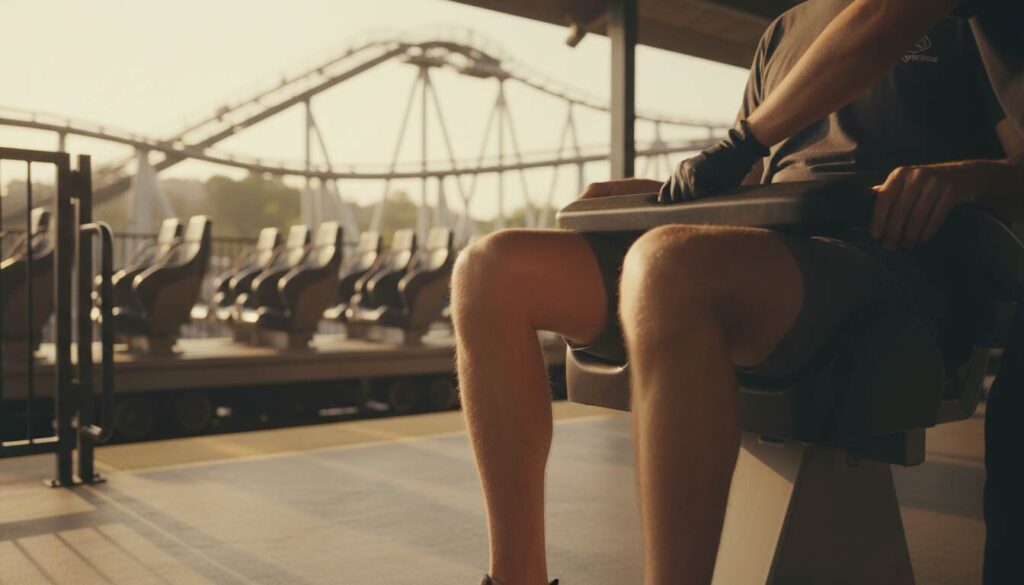
Many coasters have a test seat near the entrance. Use it. Sit the way you would on the ride, and pull the restraint down firmly until it clicks into place. If you “barely” get it to latch on the test seat, ask the ride attendant what the policy is before you wait an hour.
2) Ask For A Specific Row If The Train Has Different Seats
Some coasters have slightly different seats in certain rows (for example, an accessible row, or a row with modified restraints). Policies vary, but it can be worth asking politely if there’s a more accommodating seat option.
3) Sit Back, Don’t Slouch Forward
Tall riders sometimes lean forward out of habit, especially if the seat feels tight. Sitting back with your hips fully in the seat can help the restraint close into its intended position.
4) Expect More Discomfort On Older Trains
This is not a rule, but it’s a pattern. Newer trains and newer restraint designs tend to be more accommodating. Older trains can be tighter and less forgiving for long legs and long torsos.
5) Prioritize Lap Bars Over Older Shoulder Harnesses If Comfort Matters
Many tall riders find modern lap bar systems more comfortable than older over-the-shoulder systems, especially for shoulder and head comfort.
Are Tall People More At Risk On Roller Coasters?
Not automatically. Safety is primarily about:
- restraint fit and lock confirmation
- rider behavior (following instructions, keeping limbs inside)
- the ride’s design envelope and clearances
If the restraint locks properly and you follow the rules, being tall does not inherently make the ride unsafe. It can make it less comfortable on certain coasters, but discomfort is not the same thing as danger.
What To Do If You Get Turned Away (Without Making It A Whole Thing)
It’s frustrating, but it happens. If a restraint cannot lock, the ride operator usually does not have discretion. The safest move is to:
- ask if there is a different row or seat option
- ask if the park has a list of rides with maximum height limits
- move on to another coaster with a different restraint style
And if you’re with a group, planning ahead helps so you’re not stuck negotiating at the platform. This group planning post is useful for that kind of logistics: Theme Park Planning For Large Groups.

Leave a Reply