When you walk through a theme park and look at the different roller coasters, you’ll notice something interesting: they don’t all have the same restraints. Some coasters have lap bars that hold you down from above. Others have over-shoulder harnesses that wrap around your upper body. Some have seat belts, and some have a combination of multiple restraint systems. You might wonder why there’s such variety, and the answer is more complex and fascinating than you might think. The type of restraint a coaster uses depends on the forces the ride generates, the type of inversions it performs, the speed it reaches, and the overall design philosophy of the ride. Understanding why different coasters have different restraints gives you insight into how engineers design these incredible machines to keep riders safe while delivering thrilling experiences.
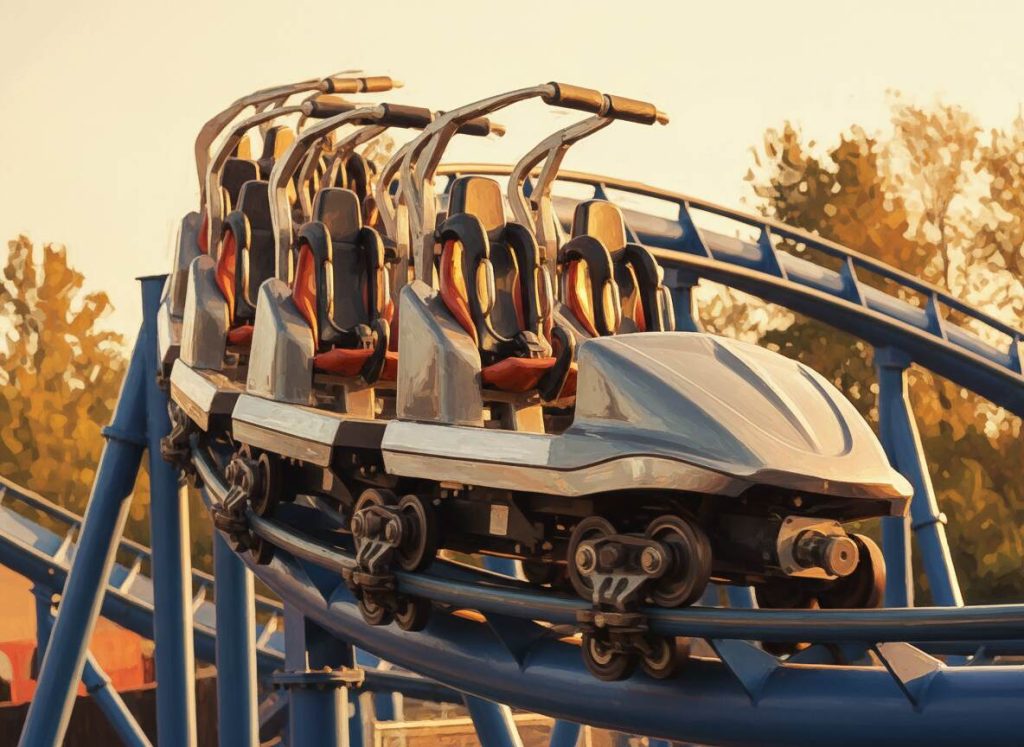
The Purpose of Roller Coaster Restraints
Before we dive into the different types of restraints, it’s important to understand what restraints actually do. The primary purpose of a restraint system is to keep riders securely in their seats throughout the entire ride, no matter what forces they experience. When a coaster goes through a loop, riders experience negative G-forces, which create a sensation of weightlessness. Without restraints, riders could be thrown from their seats. Restraints prevent this from happening by holding riders in place.
Restraints also serve a secondary purpose: they provide psychological comfort to riders. Many people feel more secure knowing they’re held in place, even if the forces involved don’t technically require restraints. This psychological aspect is important to ride designers, as it allows them to create rides that feel thrilling while still making riders feel secure.
Different restraint systems are designed to handle different types of forces. A coaster that only goes forward and backward might not need the same type of restraint as a coaster that performs multiple inversions. A coaster that reaches extremely high speeds might need more secure restraints than a slower coaster. Engineers carefully analyze the forces that riders will experience on each coaster and design restraint systems that are appropriate for those forces.
The Lap Bar: Simple, Effective, and Iconic
The lap bar is one of the most common restraint systems on roller coasters, and it’s been around for decades. A lap bar is a horizontal bar that comes down across your lap, holding you in your seat from above. Lap bars are typically padded for comfort and are secured with a latch mechanism that locks the bar in place once it’s lowered.
Lap bars are effective for coasters that don’t perform inversions or that only perform inversions where riders experience positive G-forces throughout the inversion. A positive G-force is when you’re pushed into your seat, like when you’re accelerating in a car. In these situations, gravity naturally keeps you in your seat, and the lap bar is there primarily to prevent you from sliding out or standing up during the ride.
One of the advantages of lap bars is that they’re relatively simple and comfortable. They don’t restrict your upper body, so you can move your arms and upper body freely during the ride. This makes them popular on family-friendly coasters and on coasters where comfort is a priority. Lap bars are also quick to operate, which means riders can get on and off the coaster quickly, allowing the park to move more people through the ride.
However, lap bars have limitations. They’re not suitable for coasters that perform inversions where riders experience negative G-forces, which create a sensation of weightlessness. In these situations, a lap bar alone isn’t enough to keep riders securely in their seats. This is why coasters that perform inversions typically use over-shoulder harnesses or a combination of restraints.
The Over-Shoulder Harness: Securing Riders Through Inversions
The over-shoulder harness is the restraint system you’ll find on most modern looping coasters. An over-shoulder harness consists of two padded bars that come down over your shoulders and lock together across your chest. This system is designed to keep you securely in your seat even when you’re upside down or experiencing negative G-forces.
Over-shoulder harnesses became necessary when coasters began performing inversions. When a coaster goes through a loop, riders at the top of the loop experience negative G-forces, which create a sensation of weightlessness. Without an over-shoulder harness, riders would be thrown from their seats. The harness holds riders in place by securing them from above, preventing them from being lifted out of their seats.
One of the advantages of over-shoulder harnesses is that they’re very secure. They’re designed to handle extreme forces, and they’re suitable for coasters that perform multiple inversions or that reach very high speeds. Modern over-shoulder harnesses are also relatively comfortable, with padded bars and ergonomic designs that distribute pressure evenly across the shoulders and chest.
However, over-shoulder harnesses do have some disadvantages. They restrict your upper body movement, which some riders find uncomfortable or claustrophobic. They also take longer to operate than lap bars, which can slow down the loading and unloading process. Some riders also find them intimidating, which is why parks often use them on more intense coasters that appeal to thrill-seekers rather than families.
Seat Belts and Lap Belt Systems
Some coasters use seat belts or lap belt systems as their primary restraint. These are similar to the seat belts in a car, and they work by securing riders across the lap or across the lap and chest. Seat belts are often used on coasters that don’t perform inversions but that still need to keep riders secure during high-speed turns and drops.
Seat belts are comfortable and unobtrusive, which makes them popular on family-friendly coasters. They’re also quick to operate, which means riders can get on and off the coaster quickly. However, seat belts alone aren’t suitable for coasters that perform inversions, as they don’t provide enough security during negative G-force situations.
Some coasters use a combination of seat belts and lap bars, which provides additional security while still maintaining a level of comfort and ease of operation. This hybrid approach is often used on coasters that perform mild inversions or that have unusual track designs that require additional security measures.
Clamshell Restraints: Comfort and Security Combined
Clamshell restraints are a newer type of restraint system that combines elements of lap bars and over-shoulder harnesses. A clamshell restraint consists of a padded bar that comes down over your lap and chest, creating a clamshell-like shape that holds you securely in your seat. The bar is typically hinged so that it can be adjusted to fit different body sizes comfortably.
Clamshell restraints offer several advantages over traditional lap bars and over-shoulder harnesses. They’re more comfortable than over-shoulder harnesses because they don’t restrict upper body movement as much. They’re also more secure than lap bars because they provide additional support across the chest. Clamshell restraints are suitable for coasters that perform inversions, and they’ve become increasingly popular on modern coasters because of their combination of comfort and security.
One of the disadvantages of clamshell restraints is that they can be slower to operate than lap bars, which can impact the loading and unloading process. However, many parks have found that the improved comfort and security of clamshell restraints is worth the slight increase in loading time.
Winged Coasters and Unique Restraint Challenges
Winged coasters present a unique restraint challenge because riders sit on the sides of the track, with their legs dangling over the sides. Traditional lap bars and over-shoulder harnesses don’t work well for this seating arrangement, so winged coasters use specialized restraint systems.
Most winged coasters use a combination of lap bars and thigh restraints. The lap bar holds riders down from above, while the thigh restraint wraps around the thighs and holds riders in place from below. This dual-restraint system keeps riders secure even when they’re sitting on the sides of the track with their legs dangling.
Some winged coasters also use specialized over-shoulder harnesses that are designed to work with the side-seating arrangement. These harnesses are engineered to keep riders secure while still allowing them to enjoy the sensation of flying through the air with their legs dangling.
Floorless Coasters and Restraint Innovation
Floorless coasters remove the floor beneath riders’ feet, creating a sensation of dangling in the air. This unique seating arrangement requires specialized restraint systems that keep riders secure without a floor to support them.
Most floorless coasters use a combination of lap bars and seat belt systems. The lap bar holds riders down from above, while the seat belt provides additional security across the lap. Some floorless coasters also use specialized harnesses that wrap around the thighs and legs, providing additional support and security.
The challenge with floorless coasters is that riders need to feel secure without a floor beneath them, but they also need to be able to exit the coaster quickly and safely. Engineers have developed restraint systems that balance these needs, using a combination of different restraint types to provide both security and ease of operation.
Wooden Coasters and Traditional Restraint Systems
Wooden coasters typically use simpler restraint systems than steel coasters, often relying on lap bars or seat belts. This is because wooden coasters generally don’t perform inversions, so they don’t need the additional security of over-shoulder harnesses. The forces on wooden coasters are different from steel coasters, and the restraint systems are designed accordingly.
However, modern wooden coasters have become more intense, with steeper drops and higher speeds. Some modern wooden coasters now use over-shoulder harnesses or clamshell restraints to provide additional security during these more intense elements. This evolution reflects how restraint technology has advanced to keep pace with coaster design innovations.
The Engineering Behind Restraint Design
Designing a restraint system is a complex engineering process that involves analyzing the forces riders will experience on the coaster and determining what type of restraint is necessary to keep them safe. Engineers use computer simulations and physical testing to ensure that restraint systems can handle the forces they’ll encounter.
The design process also involves considering comfort, ease of operation, and rider psychology. A restraint system needs to be secure enough to keep riders safe, but it also needs to be comfortable enough that riders want to ride the coaster again. It needs to be easy to operate so that the park can move riders through the loading and unloading process quickly. And it needs to feel secure to riders, even if the actual forces don’t technically require a particular type of restraint.
Engineers also consider the durability and maintenance requirements of restraint systems. A restraint system needs to be able to withstand thousands of cycles of use without degrading or becoming less secure. The materials used in restraint systems are carefully selected to ensure that they can handle the stresses they’ll encounter over the life of the coaster.
Testing and Certification of Restraint Systems
Before a coaster opens to the public, its restraint systems are thoroughly tested and certified. Engineers perform static tests to ensure that the restraints can handle the forces they’re designed for. They also perform dynamic tests where the coaster is run with test dummies or sandbags to simulate the forces that real riders will experience.
Restraint systems are also subject to regular inspections and maintenance. Park maintenance staff inspect restraints daily to ensure that they’re functioning properly and that they’re not showing signs of wear or damage. Any restraints that show signs of wear are replaced or repaired before the coaster operates again.
The Evolution of Restraint Technology
Restraint technology has evolved significantly over the history of roller coasters. Early coasters often had minimal restraints, relying on riders to hold on to handholds or grab bars. As coasters became faster and more intense, restraint systems became more sophisticated.
The development of the over-shoulder harness was a major breakthrough in restraint technology, as it allowed coasters to perform inversions safely. The development of clamshell restraints and other modern restraint systems represents the latest evolution in restraint technology, combining comfort, security, and ease of operation.
Looking forward, restraint technology will likely continue to evolve. Engineers are exploring new materials and designs that could provide even better combinations of comfort and security. Some parks are experimenting with restraint systems that use sensors to monitor rider position and ensure that restraints are properly secured. As coaster design continues to push boundaries, restraint systems will need to evolve to keep pace.
Why Parks Choose Different Restraints
Different parks and different coaster manufacturers have different philosophies about restraint systems. Some parks prioritize comfort and ease of operation, and they choose simpler restraint systems like lap bars or seat belts. Other parks prioritize intensity and thrills, and they choose more secure restraint systems like over-shoulder harnesses.
The type of coaster also influences the choice of restraint system. A family-friendly coaster might use lap bars, while an intense hypercoaster might use over-shoulder harnesses or clamshell restraints. The target audience for the coaster also plays a role, as different riders have different preferences and comfort levels with different types of restraints.
Budget is also a factor. Over-shoulder harnesses and clamshell restraints are more expensive to manufacture and maintain than lap bars or seat belts. Parks with smaller budgets might choose simpler restraint systems, while parks with larger budgets might invest in more sophisticated systems.
The Reassuring Reality of Restraint Systems
The variety of restraint systems on roller coasters reflects the sophistication and care that goes into designing these rides. Engineers don’t choose a restraint system arbitrarily; they carefully analyze the forces on each coaster and design restraint systems that are appropriate for those forces. Every restraint system is tested and certified to ensure that it can safely keep riders in their seats.
When you’re on a roller coaster, you can trust that the restraint system holding you in place has been carefully engineered and tested to keep you safe. Whether it’s a simple lap bar or a sophisticated over-shoulder harness, the restraint system is doing exactly what it’s designed to do: keeping you secure so you can enjoy the thrill of the ride with confidence.
