Planning a theme park visit for a large group or family reunion is one of the most exciting and challenging projects you can undertake. The promise of a day filled with thrilling rides, delicious food, and shared memories is incredibly appealing. But the logistics of coordinating dozens of people, managing different energy levels and preferences, handling transportation, and keeping everyone safe and happy can feel overwhelming.
The good news is that with proper planning and the right strategies, a large group theme park visit can be one of the most memorable experiences your family or group will ever have. This comprehensive guide will walk you through every aspect of planning and executing a successful large group theme park visit, from the initial planning stages all the way through to the day itself.
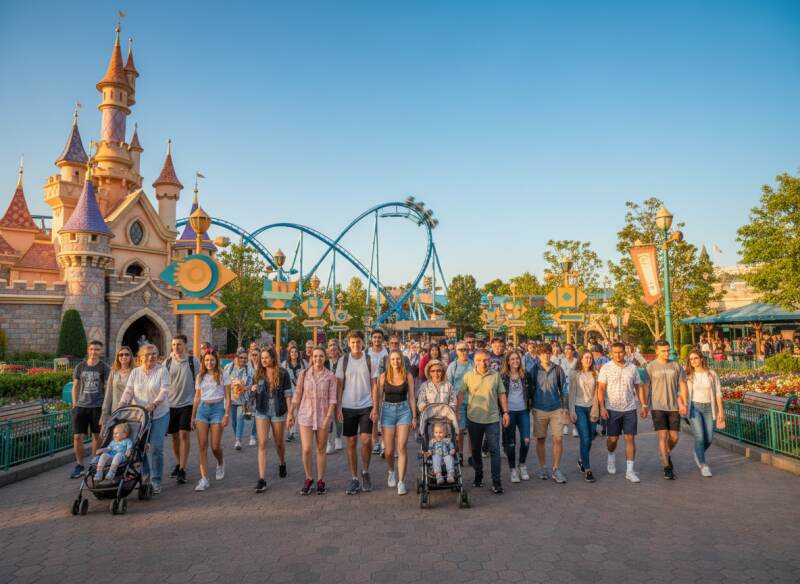
Defining Your Group and Setting Realistic Expectations
Before you start booking anything, you need to have a clear understanding of your group. How many people are you planning to bring? What are their ages? What are their physical abilities? What are their interests and preferences? What is your budget?
These questions might seem basic, but they are absolutely critical to the success of your visit. A group of twenty people that includes young children, teenagers, adults, and elderly grandparents will require a very different approach than a group of twenty adults in their twenties and thirties.
Start by creating a detailed list of everyone who will be attending. Include their age, any physical limitations or health concerns, their height (important for ride restrictions), and their general interests. Are they thrill-seekers who want to ride the biggest roller coasters? Are they more interested in shows and character interactions? Are they foodies who want to explore the park’s culinary offerings? Do they prefer to move at a leisurely pace or do they want to maximize the number of attractions they experience?
Once you have this information, you can start to set realistic expectations for the group. If you have very young children and elderly grandparents in your group, you’re not going to be able to do everything. You’re not going to be able to ride every roller coaster and see every show in a single day. Instead, you need to focus on creating a positive experience for everyone, which might mean splitting up at times and doing different activities.
Have an honest conversation with your group about what everyone wants to get out of the visit. Are you trying to maximize the number of attractions? Are you trying to create a relaxed, family-friendly experience? Are you trying to celebrate a specific milestone or occasion? Once everyone understands the goals for the visit, you can plan accordingly.
Choosing the Right Park and Time of Year
Not all theme parks are equally suited for large groups. Some parks are more family-friendly and easier to navigate with young children. Others are more focused on thrill rides and might not have as much to offer for younger visitors or elderly guests.
Consider the parks that are most accessible to your group. If you’re on the East Coast, you might be considering Disney World, Universal Studios, or regional parks like Kings Dominion or Busch Gardens. If you’re on the West Coast, Disneyland, Universal Studios Hollywood, or Six Flags parks might be more accessible. If you’re in the Midwest, Cedar Point, Kings Island, or Six Flags parks might be your best options.
Think about what each park offers. Disney parks are generally considered the most family-friendly and have the most to offer for a wide range of ages and interests. Universal parks are known for their immersive themed lands and movie-based attractions. Regional parks often have excellent roller coasters and are less crowded than the major destination parks.
The time of year you visit will have a huge impact on your experience. Summer is peak season at most parks, which means larger crowds, longer wait times, and higher prices. Spring and fall are generally better times to visit, with smaller crowds and more pleasant weather in many regions. Winter can be a great time to visit some parks, especially in warmer climates, though some parks have reduced hours or limited operations during the winter months.
Consider visiting during a weekday rather than a weekend. Weekday visits typically have significantly smaller crowds than weekend visits. If your group can visit on a Tuesday or Wednesday, you’ll likely have a much better experience than if you visit on a Saturday or Sunday.
Also consider visiting during a slower time of year. The weeks after Labor Day and before Thanksgiving are typically much slower than the summer months. The weeks after New Year’s Day and before Presidents’ Day are also typically slower. Avoiding school holidays and major vacation periods will help you avoid the largest crowds.
Budgeting for Your Large Group Visit
One of the biggest challenges of planning a large group theme park visit is managing the budget. With dozens of people, costs can add up very quickly. You need to have a clear understanding of how much the visit will cost and how those costs will be divided among group members.
Start by calculating the basic costs. Admission tickets are the largest expense. Research the ticket prices for your chosen park. Many parks offer discounts for advance purchases, so buying tickets ahead of time can save you money. Some parks also offer special group rates if you have a large enough group, so it’s worth contacting the park directly to ask about group discounts.
Beyond admission, you need to budget for food and beverages. Theme park food is notoriously expensive, with meals often costing $15-25 per person. For a group of twenty people eating three meals a day, this can easily add up to $900-1500 for the day. Consider whether your group will eat inside the park or outside the park. Eating outside the park can significantly reduce costs, though it requires leaving the park and potentially losing time.
You also need to budget for parking. Most theme parks charge for parking, typically $15-25 per vehicle. If your group is arriving in multiple vehicles, this can add up. Some parks offer preferred parking for an additional fee, which can be worth it for large groups as it reduces walking distance and makes it easier to meet up.
Consider budgeting for souvenirs and merchandise. Many people want to purchase souvenirs from their theme park visit. T-shirts, hats, and other merchandise can cost $25-50 per item. If everyone in your group buys a souvenir or two, this can add up to several hundred dollars.
You might also want to budget for special experiences like character dining, behind-the-scenes tours, or special shows. These experiences can cost $50-200 per person but can create memorable moments that people will remember for years.
Once you have a total budget, you need to decide how to divide costs among group members. Some groups split all costs equally. Others have the organizers cover some costs and ask group members to cover others. Some groups ask people to pay for their own admission and food, but split the cost of parking and transportation. Whatever approach you choose, make sure everyone understands the financial expectations ahead of time.
Choosing Your Accommodation Strategy
For a large group, accommodation is a critical logistical challenge. You need to find lodging that can accommodate everyone, is reasonably priced, and is conveniently located to the park.
One option is to rent a large vacation home or villa. Many areas near major theme parks have vacation rental companies that offer large homes that can accommodate 15-30 people. These homes often have multiple bedrooms, multiple bathrooms, a full kitchen, and common areas where the group can gather. Renting a large home can be more economical than booking multiple hotel rooms, and it provides a central gathering place for the group.
Another option is to book multiple hotel rooms at the same hotel or nearby hotels. This gives people more privacy than a vacation rental and is often easier to arrange. However, it can be more expensive than renting a large home, and coordinating check-in and check-out for a large group can be challenging.
Some groups choose to stay at hotels on-property at the theme park. Disney and Universal both offer on-property hotels that can be convenient for large groups, though they are typically more expensive than off-property options. The advantage of staying on-property is that you can often enter the park early and stay late, and you don’t have to worry about transportation to and from the park.
If you’re visiting a regional park that doesn’t have on-property hotels, you’ll need to find nearby accommodations. Research hotels in the area and look for ones that offer group rates or have multiple rooms available. Some hotels offer free parking, which can be a significant savings for a large group.
Regardless of where you stay, make sure everyone understands the accommodation arrangements ahead of time. Who will be sharing rooms? How will room assignments be decided? Will the group gather at a specific time each morning before heading to the park? Will everyone return to the accommodation at the same time each evening? Clear communication about these logistics will help prevent misunderstandings and conflicts.
Transportation and Logistics
Getting a large group to and from the theme park is a significant logistical challenge. You need to figure out how everyone will get there, where they will park, and how you will stay connected throughout the day.
If your group is coming from the same area, you might consider renting a charter bus or coach. A charter bus can accommodate 40-50 people and eliminates the need for multiple vehicles. The cost is typically $1000-2000 for a day trip, which works out to $20-50 per person depending on group size. The advantages of a charter bus are that everyone travels together, the driver handles navigation, and you don’t have to worry about parking multiple vehicles. The disadvantages are that you’re locked into a specific schedule and you lose the flexibility of having individual vehicles.
Another option is to have everyone drive their own vehicle. This gives people flexibility and allows them to arrive and leave on their own schedule. However, it requires coordinating parking for multiple vehicles and makes it harder to keep the group together.
A compromise approach is to have a few people drive and carpool with others. This reduces the number of vehicles while still giving some flexibility. You might have three or four vehicles carrying the entire group, which is easier to coordinate than having everyone drive separately but still gives people some flexibility.
Regardless of how you arrange transportation, make sure everyone has clear information about where to meet, what time to meet, and what to do if someone is running late. Consider having a designated meeting point at the park where everyone gathers at a specific time each day.
For staying connected throughout the day, consider setting up a group text or messaging app. This allows people to communicate with each other, share their location, and coordinate meeting times. Apps like WhatsApp, GroupMe, or Telegram work well for this purpose.
Planning Your Park Strategy
With a large group, you can’t just show up at the park and wing it. You need a strategy for how you’re going to navigate the park, which attractions you’re going to prioritize, and how you’re going to manage the group throughout the day.
Start by researching the park ahead of time. Look at a map of the park and identify the attractions that are most important to your group. Which rides does everyone want to experience? Which shows do you want to see? Which restaurants do you want to eat at?
Consider the layout of the park and plan a route that minimizes backtracking. Many parks are designed so that the most popular attractions are spread throughout the park to distribute crowds. Plan your route so that you hit the most popular attractions during the times when crowds are typically lighter.
A common strategy is to head to the most popular attractions first thing in the morning when the park opens. Lines are typically shortest in the first hour after the park opens. If you can get to the park right when it opens and head straight to the most popular attractions, you can often experience several major attractions before the crowds build up.
Another strategy is to use the park’s virtual queue system if available. Many parks now offer apps that allow you to reserve a time to experience an attraction without waiting in line. This can be a huge time-saver for large groups.
Consider whether your group will stay together for the entire day or whether you’ll split up at times. With a large group, it’s often not realistic for everyone to stay together for every attraction. Some people might want to ride the biggest roller coasters while others prefer to watch shows or explore shops. You might designate certain times when the group meets up (like for meals) and allow people to do their own thing at other times.
If you do split up, make sure everyone has a way to communicate and a clear plan for how to meet back up. Establish a designated meeting point and a specific time to meet. Make sure everyone has each other’s phone numbers and knows how to contact the group leader if they have questions or concerns.
Managing Different Preferences and Energy Levels
One of the biggest challenges of a large group visit is managing the fact that different people have different preferences and energy levels. Some people want to ride every roller coaster. Others prefer to take a leisurely pace and enjoy the atmosphere. Some people are morning people who want to get to the park early. Others are night owls who prefer to sleep in.
The key to managing these differences is communication and flexibility. Before the visit, have a conversation with your group about what everyone wants to get out of the experience. Make it clear that not everyone will be able to do everything and that’s okay.
Consider creating sub-groups based on preferences and energy levels. You might have a “thrill ride group” that focuses on the biggest and fastest roller coasters. You might have a “family-friendly group” that focuses on attractions suitable for young children. You might have a “show and dining group” that focuses on entertainment and culinary experiences. People can choose which sub-group they want to be part of, and they can move between groups as their interests change.
Make sure there are designated rest areas where people can take breaks. Theme parks can be exhausting, especially for young children and elderly guests. Having a shaded spot where people can sit down, have a snack, and recharge is important. Some parks have benches and shaded areas throughout the park. Others have air-conditioned indoor attractions where people can cool off and rest.
Be prepared for people to leave the park early or arrive late. Some people might get tired or overwhelmed and want to leave before the park closes. Others might not be able to arrive until later in the day. Have a plan for how to handle these situations so that people don’t feel like they’re letting the group down.
Food and Dining Strategies
Food is one of the biggest expenses and logistical challenges of a large group theme park visit. With dozens of people to feed, you need a strategy for how you’re going to handle meals.
One option is to have everyone eat at their own pace at different restaurants throughout the park. This gives people flexibility and allows them to choose what they want to eat. However, it can be hard to coordinate and people might end up spending a lot of money on expensive theme park food.
Another option is to make advance reservations for group dining. Many parks offer character dining experiences or special group dining packages that can be reserved in advance. These experiences often provide a fixed menu at a set price, which can help control costs and ensure that everyone eats at the same time.
A third option is to have people bring their own food into the park. Many parks allow outside food to be brought in, though policies vary. If your park allows it, you could pack sandwiches, snacks, and drinks for everyone. This can significantly reduce food costs and ensure that people have food they like available throughout the day.
Consider the timing of meals. Eating at off-peak times can help you avoid the longest lines at restaurants. Eating lunch at 11:00 AM or 1:30 PM, rather than at noon, can significantly reduce wait times. Similarly, eating dinner at 4:30 PM or 8:00 PM, rather than at 6:00 PM, can help you avoid the crowds.
Make sure to budget for snacks and drinks throughout the day. Theme park snacks are expensive, but staying hydrated and having energy throughout the day is important. Consider having some people bring refillable water bottles or purchasing a refillable drink package if available.
Safety and Communication
With a large group, safety and communication are critical. You need to make sure everyone stays safe, knows where to go, and knows how to contact help if needed.
Before the visit, establish clear safety rules for the group. Make sure everyone knows the designated meeting points if someone gets separated from the group. Make sure everyone has a way to contact the group leader or other group members. Consider having everyone wear matching shirts or wristbands so that group members can easily identify each other.
For young children, consider using wristbands or ID cards that have contact information in case they get separated from their parents. Some parks sell wristbands specifically for this purpose, or you can make your own.
Establish a communication protocol. Make sure everyone knows how to use the group text or messaging app. Establish specific times when people should check in with the group leader. Make sure everyone knows what to do if they get lost or separated from the group.
Consider designating a group leader or leaders who are responsible for keeping track of the group and making decisions throughout the day. This person should have a list of everyone in the group and their contact information. They should be the point of contact for any issues or emergencies.
Make sure everyone knows about any health concerns or medications that might be relevant. If someone has a medical condition that might affect their ability to ride certain attractions or handle the physical demands of the day, make sure the group is aware so that accommodations can be made.
Managing Conflicts and Keeping Morale High
With a large group spending an entire day together, conflicts are bound to arise. Someone might be unhappy with the itinerary. Someone might feel like they’re not getting to do what they want. Someone might be tired and cranky. You need to be prepared to manage these conflicts and keep morale high.
The key to managing conflicts is to be flexible and to listen to people’s concerns. If someone is unhappy with the plan, try to find a compromise that works for everyone. If someone is tired, encourage them to take a break. If someone is upset, give them space and check in with them later.
Make sure to build in some flexibility to your plan. Don’t schedule every minute of the day. Leave room for spontaneity and for people to do things they want to do. Some of the best memories from a theme park visit come from unexpected moments and unplanned experiences.
Consider planning some group activities that everyone can enjoy together. This might be watching a parade or a nighttime show, eating a meal together, or participating in a group photo. These shared experiences help build camaraderie and create memories that people will treasure.
Make sure to acknowledge and celebrate the occasion you’re visiting for. If it’s a family reunion, take a group photo. If it’s a milestone birthday or anniversary, make sure to celebrate it in a special way. These celebrations help make the visit feel special and memorable.
Making the Most of Your Visit
Beyond just managing logistics, you want to make sure your group actually has a great time and creates lasting memories. Here are some strategies for making the most of your large group theme park visit.
First, encourage people to be present and engaged. Theme parks are designed to be immersive and magical. Encourage people to put their phones away at times and really experience the park. Take in the atmosphere, enjoy the music and theming, and engage with the attractions and entertainment.
Second, encourage people to interact with each other. A theme park visit is a great opportunity for families to spend quality time together and for friends to bond. Encourage conversation, laughter, and connection.
Third, don’t try to do everything. One of the biggest mistakes large groups make is trying to experience every attraction and see every show. This leads to exhaustion and frustration. Instead, focus on quality over quantity. Experience the attractions that are most important to your group and enjoy them fully.
Fourth, be open to spontaneity. Some of the best moments come from unexpected experiences. Maybe you stumble upon a street performer who puts on an amazing show. Maybe you discover a restaurant with food that’s better than you expected. Maybe you meet a character who makes a child’s day. Be open to these unexpected moments and embrace them.
Fifth, take lots of photos and videos. These memories will be treasured for years to come. Encourage everyone to take photos and share them with the group. Consider designating someone to be the official photographer for the group.
After the Visit: Maintaining the Memories
The theme park visit itself is just one part of the experience. What you do after the visit can help preserve and extend the memories you’ve created.
Consider creating a shared photo album or video compilation from the visit. Ask group members to share their photos and videos, and compile them into a shared album that everyone can access. This allows people to relive the experience and see it from different perspectives.
Consider sending thank you notes or messages to everyone who participated. Let them know how much you appreciated their participation and how much the experience meant to you. This helps reinforce the positive feelings from the visit and strengthens relationships.
Consider planning a follow-up gathering where the group can get together and watch videos or look at photos from the visit. This gives people a chance to relive the experience and continue the bonding that started at the theme park.
If the visit was successful, consider planning another one for the future. A large group theme park visit can become a tradition that people look forward to year after year. The memories you create and the bonds you strengthen can last a lifetime.
Conclusion: Creating Memories That Last a Lifetime
Planning and executing a large group or family reunion theme park visit is challenging, but it’s also incredibly rewarding. With proper planning, clear communication, and a flexible attitude, you can create an experience that people will remember and treasure for years to come.
The key to success is to focus on what matters most: creating memories, strengthening relationships, and having fun together. The specific attractions you experience and the number of rides you go on matter far less than the time you spend together and the connections you make.
By following the strategies outlined in this guide, you’ll be well-prepared to handle the logistics of a large group visit. You’ll have a plan for managing costs, coordinating transportation, navigating the park, and keeping everyone safe and happy. But remember that the best moments often come from going off-script and embracing the unexpected.
A large group theme park visit is more than just a day at an amusement park. It’s an opportunity to celebrate together, to create shared memories, and to strengthen the bonds that connect you. It’s an investment in relationships and in the joy that comes from spending time with the people you care about. And that’s something that’s truly priceless.
