Universal Studios Hollywood is finally doing the thing people have been begging it to do for years: building a true, high-speed outdoor coaster that is not “technically a coaster if you squint,” and not tucked away as a small side dish. Fast & Furious: Hollywood Drift is being positioned as a park-changing attraction, and honestly, the early confirmed details back that up.
This post is strictly “what we know so far,” meaning: confirmed facts from Universal/NBCUniversal statements first, then what those facts imply from a coaster engineering and operations perspective. If something is not confirmed, I will label it as speculation and keep it separate.
The confirmed basics (Universal’s official announcement)
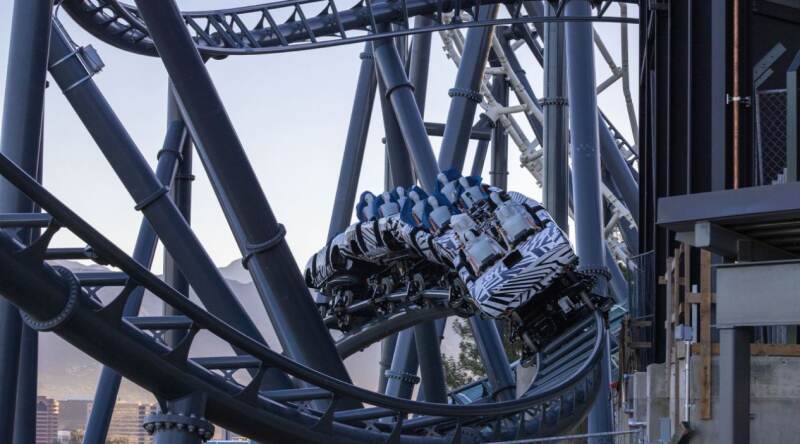
Universal Studios Hollywood announced Fast & Furious: Hollywood Drift as its first-ever high-speed outdoor roller coaster, opening in 2026. The headline stats and features Universal has publicly stated include:
Top speed: 72 mph (Universal calls it the fastest coaster in the Universal Destinations & Experiences portfolio)
Track length: 4,100 feet
Ride vehicles: individual vehicles with 360-degree rotation, designed to create the sensation of drifting cars while the coaster is in motion
Track/placement: an aerial track that winds over sections of the theme park, including the multi-level escalator connecting the Upper and Lower Lots
Sound reduction technology: Universal specifically calls out that the track is being built with sound reduction technology
Location: Upper Lot
Queue concept: an expansive garage-like structure
Ride vehicles themed to iconic cars: Universal says guests will settle into one of four ride vehicles designed to look like the iconic cars from the films, and notes a ride vehicle modeled after Dom Toretto’s 1970 Dodge Charger has been displayed at the park
That is already a lot more concrete than most “coming soon” coaster announcements, and it gives us enough to talk about what kind of experience this is trying to be.
What kind of coaster is Hollywood Drift trying to be?
Universal is not just building “a coaster.” They are building a coaster that behaves like a moving stunt sequence. The key phrase is the 360-degree rotation of the individual ride vehicles. That is not the same thing as a spinning coaster where the car rotates randomly based on weight distribution. Universal’s language strongly implies controlled rotation designed to match the drifting theme.
In other words: the coaster is trying to make you feel like you are in a car that is sliding sideways through turns, not just a train following a track.
If they nail this, it could be one of those rare coasters where the signature sensation is not airtime, not inversions, not even speed. It is orientation. Your body will be doing the normal coaster thing, but your eyes and inner ear will be getting a “car drifting” illusion layered on top.
72 mph at Universal Studios Hollywood is a big deal (and not just for bragging rights)
Universal Studios Hollywood is a compact, topography-heavy park with strict noise considerations and a lot of sightlines. A 72 mph coaster there is not the same as a 72 mph coaster on a giant, open Cedar Fair plot of land. It means:
They are confident in the engineering and the guest appetite. Universal is not a chain that builds extreme coasters casually. Their thrill rides tend to be heavily themed and broadly marketable. A 72 mph outdoor coaster is a statement that they want a true thrill anchor.
They are designing around noise and neighbors. Universal calling out sound reduction technology is not fluff. It is a clue that noise mitigation is a major design constraint. That usually affects wheel compounds, track profiling, support design, and how the ride interacts with the environment.
They are building a coaster that will be visible. Universal explicitly says the track winds over sections of the park and over the escalator. This is going to be a kinetic billboard. Even if you do not ride it, you will see it, hear it, and feel like the park has a new “center of gravity.”
4,100 feet of track: what that suggests about ride length and pacing
4,100 feet is substantial. It does not automatically mean a long ride time, because speed and layout matter, but it does suggest this is not a quick out-and-back. Universal is likely aiming for a multi-beat experience: build-up, speed, signature drifting moments, and a finale that feels like a chase sequence.
It also gives them room to do something Universal is good at: staging. Even outdoors, they can choreograph moments where the coaster interacts with the park, dives near structures, crosses pathways, and creates near-miss visuals that read as “stunt driving.”
The rotating vehicles: why this could be incredible, and why it could be divisive
This is the feature that will make or break the ride’s reputation.
Why it could be incredible:
If the rotation is controlled and synchronized with the track, Universal can create the illusion that you are drifting sideways through turns, snapping into alignment, and whipping around like a stunt car. That is a sensation most coaster fans have not experienced at this scale and speed, especially at a major destination park.
Why it could be divisive:
Rotation plus speed can be a motion sickness multiplier for some guests. Even people who love coasters sometimes struggle with spinning rides. Universal will probably try to keep the rotation “cinematic” rather than chaotic, but it is still something that will separate the audience into “this is the coolest thing ever” and “I need a bench and water.”
If you are writing for Coaster Me This readers, this is worth saying plainly: this might be a top-tier thrill ride, but it may not be friendly to everyone’s stomach.
Where it will be: the escalator factor
Universal specifically mentions the track winding over the multi-level escalator connecting the Upper and Lower Lots. That is not just a fun detail. That escalator is one of the most iconic pieces of infrastructure in any theme park. It is also a captive audience. People are on it for a while, and they cannot really go anywhere.
So Universal is basically guaranteeing that a huge percentage of guests will have a “whoa” moment with this coaster even if they never intended to ride it. That is smart park design. It turns transit time into hype time.
Queue and theming: the garage concept
Universal says guests will queue in an expansive garage-like structure. That fits the franchise, but it also fits a practical need: Hollywood’s weather is usually friendly, but heat management and crowd flow still matter. A large indoor queue gives Universal control over pacing, pre-show content, and the emotional ramp-up before you hit the platform.
They also mention four ride vehicles designed to look like iconic cars from the films, with Dom’s 1970 Dodge Charger being a highlighted example. That suggests the ride is leaning into “you are in the cars,” not “you are watching the cars.”
What we do not know yet (and what to watch for)
Universal’s announcement gives us speed, track length, rotating vehicles, location, and broad theming. Here is what is not confirmed in the NBCUniversal announcement, but will matter a lot once details drop:
Manufacturer and model specifics: Universal’s press language does not name the manufacturer in the announcement I’m citing here. Once the manufacturer is officially confirmed, it will tell us a lot about the ride system, reliability expectations, and how the rotation is controlled.
Launch vs lift: A 72 mph coaster could be launched, lifted, or a hybrid. The franchise screams “launch coaster,” but until Universal confirms the propulsion method, it is still an open question.
Height and layout elements: No official height, no inversion count, no element list in the announcement. That means we cannot responsibly claim things like “top hat,” “stall,” or “inversions” yet.
Restraints and comfort: This will matter because the ride is trying to be a mass-market Universal headliner while also being legitimately fast. The restraint style will affect both comfort and how intense the rotation feels.
Accessibility and rider requirements: Height requirement, loose article policy, and whether Universal offers any “less spin” seating or accommodations. For a rotating-vehicle coaster, this is a huge guest experience factor.
My honest prediction: what the first wave of reviews will focus on
When this opens, the early rider conversation will probably cluster around five questions:
1) Does it actually feel like drifting? If the rotation feels purposeful and choreographed, people will call it genius. If it feels random or underwhelming, people will call it a gimmick.
2) Is it smooth at 72 mph? Universal is not going to accept a headliner that rides rough, but new coaster systems can have early “dial-in” periods. Smoothness will be a major talking point.
3) Is it more intense than it looks? Rotating vehicles can make moderate elements feel intense because your body is not aligned the way you expect. People will argue about intensity constantly.
4) Does it make people nauseous? This is the big one. Expect a lot of “I loved it but…” comments. Universal will likely manage this with clear warnings and smart rotation programming, but it will still be part of the discourse.
5) Is it worth the wait? Universal crowds are a different beast. If this becomes the park’s new must-do, standby waits could be brutal. The ride’s capacity and dispatch efficiency will matter as much as the ride itself.
Advice for your first ride (based on what we know)
If you get motion sick easily: treat this like a spinning ride until proven otherwise. Do not make it your first attraction after a heavy meal. Hydrate, avoid alcohol beforehand, and consider motion sickness strategies you already know work for you.
If you are a coaster fan visiting USH mainly for this: plan your day like a rope-drop mission. Universal headliners can dominate wait times. If you want multiple rides, you will likely need to prioritize it early.
If you are nervous about speed: 72 mph sounds huge, but speed is often less scary than height. The bigger psychological trigger is usually exposure and airtime. Until we know the height and drop profile, do not assume it will feel like a traditional mega coaster. It may feel more like a high-speed chase with controlled orientation changes.
If you are going with a mixed group: set expectations early. This might be the ride that half the group loves and half the group skips. That is normal at Universal.
Bottom line: Hollywood Drift looks like Universal’s “we can do thrill too” moment
Universal Studios Hollywood has always been a park where the thrills are heavily packaged inside screens, sets, and story. Fast & Furious: Hollywood Drift is a shift toward a visible, physical, kinetic thrill icon. The confirmed stats alone put it in a new category for the park: 72 mph, 4,100 feet of track, and rotating vehicles designed to simulate drifting.
Until Universal releases more technical details, the smartest way to talk about it is as a confirmed concept: a high-speed outdoor coaster that uses controlled rotation to create a drifting sensation, built with noise reduction tech, and placed where the entire park will feel it.

Leave a Reply