If you ask ten theme park fans what the first flat ride ever was, you’ll get ten different answers, and at least three of them will be said with total confidence. That’s not because people are lying. It’s because “flat ride” is a modern category, and the earliest amusements were not designed to fit into the neat little boxes we use today.
I’m going to make a case for the most defensible “true first” that fits the way Coaster Me This uses the term: a standalone, non-coaster, non-transport ride that exists primarily as a repeatable amusement attraction. I’m also going to explain why I’m not satisfied with the lazier answers you’ll see floating around, even when they’re popular.
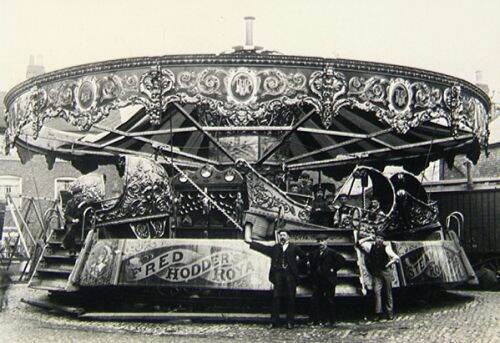
First, the Coaster Me This definition: what is a flat ride?
On this blog, a “flat ride” is a ride that does not rely on a track the way a coaster does, and it is not meant to move you from one place to another the way a transport ride does. It is a standalone machine (or mechanism) that cycles riders through a controlled motion experience: spinning, swinging, lifting, dropping, flipping, or some combination of those.
This post is not about roller coasters. It is not about trains, monorails, sky rides, or boats. It is also not about water rides like log flumes and rapids. We are talking about the earliest ancestor of what we now call the flat ride.
Why “the first flat ride” is so hard to define
Here is the core problem: humans have always built things that move for fun. Swings are ancient. Spinning games are ancient. People have been chasing that tiny stomach-lift feeling since the first time someone realized, “If I run faster and swing higher, it feels amazing.”
But those are not automatically “rides” in the theme park sense. A playground swing is thrilling, but it is not a commercial ride product. A festival game where people push a rotating platform is motion, but it is not necessarily a standardized attraction with a repeatable operating cycle.
So when we say “first flat ride,” we have to decide what kind of “first” we mean. In my opinion, there are only three definitions that are worth using, and only one of them produces an answer that feels both honest and useful.
First motion amusement humans ever built: this is basically unknowable and not very helpful, because it collapses into “swings and spinning existed forever.”
First documented ride that resembles modern amusement operations: this is more useful, but it risks privileging paperwork over reality. The first ride that got written down is not always the first ride that existed.
First mechanized, repeatable, pay-per-ride flat ride format that spread and became a recognizable industry template: this is the definition that actually explains how flat rides were born as a category.
That third definition is the one I’m going to use, because it’s the one that connects early history to the modern ride world without turning into mythology.
The strongest “true first” candidate: the mechanized roundabout (early carousel)
If you want the earliest flat ride format that is both recognizable and foundational, you keep circling back to one thing: the roundabout, which later becomes the carousel or merry-go-round in the form most people picture.
Now, I know what you might be thinking. A carousel does not feel like a “thrill ride.” It feels like a family ride, a nostalgia ride, a “my kid is finally tall enough to ride something” ride. That’s true in the modern context.
But here’s my opinion, and I’m going to say it plainly: the carousel is the flat ride industry’s original machine. It is one of the earliest examples of a ride that is designed to do one job well: move bodies in a controlled pattern, repeatedly, for entertainment, for money.
And once you look at it that way, it stops being “just a gentle classic” and starts being the blueprint.
Why not swings? Why not slides? Why not simple spinning games?
Swings are older than recorded history. Slides and gravity amusements existed in various forms. Human-powered spinning platforms existed. The issue is not whether they existed. The issue is whether they were a “ride” in the sense that matters for amusement history.
A lot of early motion amusements were informal. They were community-built. They were temporary. They were not standardized, and they were not necessarily operated as a commercial product with a repeatable cycle.
The roundabout is different because it becomes a format. It becomes a thing you can build again, improve, sell, and transport. That is the moment you start seeing the DNA of the modern flat ride industry.
The key turning point: mechanization (especially steam power)
Early roundabouts existed in human-powered forms. People pushed them. Animals pulled them. They were fun, but they were limited. They could not easily scale in speed, capacity, or consistency.
Steam power changes everything, and this is where the “first flat ride” argument gets much stronger.
A steam-powered roundabout does three things that matter more than people realize:
First, it makes the ride experience consistent. A powered system can run at a predictable speed and duration. That means the ride becomes something you can sell reliably, not just something that happens when enough people feel like pushing.
Second, it increases capacity and intensity. More power means heavier platforms, more riders, and faster rotation. Even if it still looks gentle compared to modern rides, the sensation difference between a slow hand-pushed spin and a powered rotation is not subtle. It is the difference between “cute” and “oh wow, this actually moves.”
Third, it creates a manufacturing pathway. Once a ride is mechanized, it becomes an engineering object. It can be replicated. It can be improved. It can be standardized. That is how you go from isolated amusements to an industry.
This is why, if you force me to plant a flag, I plant it here: the first true flat ride, in the sense of the first mechanized amusement ride format that becomes the template for the category, is the steam-powered roundabout (the early mechanized carousel).
But can we name a single inventor and a single year?
This is where the internet gets a little too confident.
You will often see claims pointing to early steam roundabouts in 19th-century England, sometimes crediting specific individuals and dates. Those claims may be directionally correct, but the deeper you go, the more you realize that “first” is often a shorthand for “first widely credited” or “first documented in a way modern writers can cite.”
My stance for Coaster Me This is: I’d rather be accurate than dramatic.
So here is the responsible version of the claim:
The carousel/roundabout format has older roots, but the mechanized steam era in the mid-1800s is the clearest defensible starting point for the flat ride as a repeatable commercial machine, because that is when the ride becomes industrialized, scalable, and widely adopted.
If you want me to tighten this further into a single named “first,” I can, but I would want to do it with proper citations from museum collections, fairground history references, or primary documentation, not just recycled web summaries. That’s the difference between a blog that sounds confident and a blog that stays confident after someone fact-checks it.
What did the “first true flat ride” feel like to riders?
This is the part I think gets lost in modern discussions, and it’s why I actually love writing about early rides.
Imagine you are a working-class visitor at a fair in the 1800s. You live in a world where most motion is walking, horses, carts, and maybe trains if you’re near a major line. Machines exist, but they are not intimate. They are not something you climb onto for fun.
Then you step onto a powered rotating platform. The world moves under you. Your body leans without you choosing to lean. You feel that tug outward. You feel the mild disorientation. You hear the machinery. You smell the steam and oil. You realize, in a very physical way, that you are trusting a machine with your body.
That is thrilling, even if it is not extreme by modern standards.
I think this is one of the most important points in ride history: thrill is relative to the era. The first flat ride did not need to be violent to be meaningful. It needed to be new, mechanical, and bodily.
How the first flat ride set the template for everything that came after
Once you have a mechanized roundabout, you have the basic building blocks of flat rides:
You have a central drive system. You have a platform designed for repeated loading and unloading. You have a cycle. You have an operator role. You have maintenance needs. You have the first hints of safety design, even if it’s primitive by today’s standards.
And you have the most important ingredient: you have a product people will pay for repeatedly.
From there, the evolution is almost inevitable. Builders realize they can change the sensation by changing the motion.
If rotation is fun, faster rotation is more fun. If a gentle up-and-down is charming, a bigger lift is exciting. If riders like the feeling of being pulled outward, you can design rides that amplify that. If people like the moment of weightlessness at the top of a swing, you can build machines that chase that moment on purpose.
That is the pathway from “first flat ride” to “thrill ride,” and it starts with the roundabout.
So what is the “true first flat ride,” in one sentence?
The most defensible “true first flat ride,” using a modern theme park definition, is the mechanized roundabout (early carousel), especially once steam power made it a repeatable commercial machine in the mid-1800s, because it is one of the earliest standardized, mechanized amusement ride formats that directly seeds the flat ride industry.

Leave a Reply