When a smaller, regional park announces a coaster from Rocky Mountain Construction, it is almost never a casual choice. RMC has a reputation that carries weight with enthusiasts, and it also carries a certain expectation: the ride will be modern, punchy, and designed with a very specific kind of thrill in mind.
That is why the recent news that Iowa’s Lost Island is planning its first RMC Wild Moose coaster is more than a simple “new ride coming” headline. It is a signal. It is a sign of where coaster design is going, what parks think guests will pay for, and how the industry is shifting away from the old mindset that bigger always equals better.
This post breaks down what this announcement likely means, what an RMC Wild Moose is in plain language, and why “family thrill” coasters are suddenly the most strategic investments in the business.
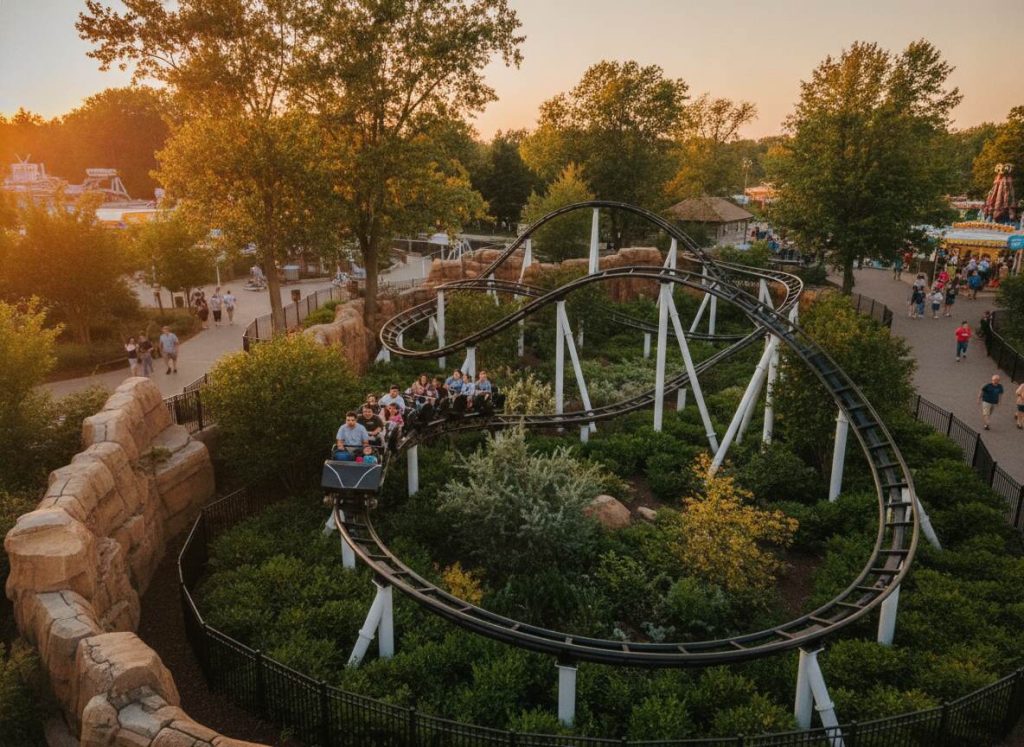
What Was Announced, and Why It’s a Big Deal
Lost Island, a park in Iowa that has been building its identity in a competitive regional market, is planning a new roller coaster from RMC using the Wild Moose model. Even without every final detail released publicly yet, the headline alone is meaningful for two reasons.
First, it is RMC. That name is associated with innovation, modern track systems, and rides that tend to become conversation pieces. When a park chooses RMC, it is often trying to create a “you have to come ride this” moment.
Second, it is a Wild Moose, which sits in a category that is becoming the most important category in the coaster world: family thrill. Not a kiddie coaster, not a tame family ride, not a record-breaking monster. A coaster meant to be exciting and re-ridable for a wide range of guests, and profitable for the park.
What “Family Thrill” Actually Means (and What It Does Not Mean)
“Family thrill” is one of those terms that gets used loosely, so it helps to define it clearly.
A family thrill coaster is designed to do three things at once:
- Feel genuinely exciting to teens and adults, including enthusiasts who normally chase bigger rides
- Be approachable enough that families will ride together, including cautious riders who are not ready for extreme coasters
- Operate efficiently and reliably, with high hourly capacity and low downtime compared to more complex mega-thrill rides
Family thrill is not the same as “kiddie coaster.” It is also not the same as “mild.” The best family thrill coasters are often intense in short bursts, just not intense in the ways that lock out large portions of the audience.
Instead of extreme height, extreme speed, or extreme inversions, family thrill rides tend to emphasize:
- Quick pacing and satisfying ride length
- Comfortable restraints and accessible height requirements
- Forces that feel exciting but not punishing
- Layouts that are fun to re-ride multiple times in a day
That is the sweet spot parks want right now. A ride that can be marketed as new and thrilling, but that does not scare away the majority of paying guests.
Who Is RMC, and Why Their Name Changes the Conversation
Rocky Mountain Construction started as a company known for wooden coaster work, retracking, and structural expertise. Then they became the company that rewrote the modern wooden coaster playbook. RMC’s track systems and design approach helped create an era where “wood” could mean smooth, aggressive, and engineered with modern precision.
For years, RMC’s public identity was tied to intense rides. The kind that enthusiasts treat like bucket-list experiences. But the industry has been evolving, and RMC has been evolving with it.
Models like Wild Moose represent a broader shift: manufacturers are building rides that keep the signature fun and modern design language, while aiming at a wider audience and a more sustainable operating model.
That matters because it means parks can buy into the RMC brand without buying into “this ride is only for thrill junkies.”
So What Is an RMC Wild Moose Coaster?
Think of Wild Moose as a modern family coaster concept that leans into agility, pacing, and repeatability. It is designed to feel lively and surprising without needing to be massive.
Even if you have not seen one in person yet, you can understand the intent through the name and the category. “Moose” suggests something big and powerful, but also something that can move quickly and unpredictably. “Wild” suggests energy and playfulness, not terror.
In practical terms, a coaster like this is likely to focus on:
- Compact footprint: easier to fit into smaller parks and themed areas
- High fun-per-minute: minimal dead time, lots of quick elements
- Approachable intensity: thrilling, but not extreme in height or force
- Strong operations: designed to cycle efficiently and keep lines moving
It is also the kind of coaster that can become a park’s “most-ridden ride,” not just its “most photographed ride.” That distinction matters more than people realize. A ride that guests ride multiple times drives satisfaction, word of mouth, and repeat visitation.
Why Lost Island Choosing This Model Makes Strategic Sense
If you are a smaller or mid-sized park, you do not have infinite opportunities to make a splash. Every major capital investment has to do multiple jobs. A coaster has to bring in new visitors, give locals a reason to return, and fit the park’s long-term identity.
A family thrill coaster from a respected manufacturer is one of the safest “big swings” a park can take, because it is not actually a swing at the narrowest audience. It is a swing at the broad middle.
Here is what Lost Island likely gains from this choice.
1) A Headline Attraction Without a “Too Scary” Problem
Extreme coasters can be marketing gold, but they can also create a weird reality: the ride becomes famous, but a large percentage of guests never ride it. That is not always a problem, but it can be if the park’s audience is heavily family-based.
A family thrill coaster can be marketed as exciting and new, while still being something many guests will actually ride.
2) A Coaster That Works for Iowa’s Regional Audience
Regional parks live and die by repeat visitation. They need rides that people will come back for, not just rides that people will do once for the bragging rights.
Family thrill coasters are built for re-ride value. They are fun in a way that does not exhaust you. They are approachable. They become part of your day, not the one thing you survive and then avoid.
3) A Strong Addition to a Growing Park Identity
Lost Island has been building a brand around theming and a distinctive atmosphere. A coaster model that can be integrated into a themed story, with a name, visuals, and a clear identity, fits that approach.
Some mega coasters dominate a park so completely that everything else becomes background. A compact, high-energy coaster can be a centerpiece without swallowing the rest of the experience.
The Bigger Trend: Why Parks Are Betting on “Smaller” Coasters Again
If you have been watching theme park announcements over the last few years, you have probably noticed something: the industry is not in a pure height race right now. Yes, big coasters still happen, but many parks are choosing rides that look more modest on paper and then overdeliver in real life.
There are several reasons for this shift.
1) Cost and Risk Management
Huge coasters are expensive, not just to build but to operate. They can require more specialized maintenance, more complex parts, and sometimes more downtime. They can also be more vulnerable to weather and operational constraints.
Family thrill coasters often offer a better balance of:
- capital cost
- operating cost
- capacity
- guest satisfaction
- marketing value
For many parks, that balance is the entire game.
2) The Audience Reality: Most Guests Are Not Enthusiasts
Enthusiasts are loud online, and they matter, but they are not the majority of ticket buyers. Most guests are families, mixed groups, and casual visitors. They want thrills, but they also want to feel safe and comfortable. They want to ride together. They want a day that feels fun, not intimidating.
A park that invests only in extreme rides can accidentally narrow its own appeal. A park that invests in family thrill rides can widen it.
3) Re-Ride Value Is Becoming a Business Metric
Parks pay attention to what guests actually do, not just what they say they want. A coaster that people ride once is not necessarily a failure, but it is not as valuable as a coaster that becomes a repeat experience.
Family thrill coasters often become the rides that people lap. That means more time spent in the park, more positive memories, and more likelihood of returning.
4) The Industry Is Getting Better at “Small but Mighty” Design
Manufacturers have gotten incredibly good at designing compact coasters that feel dynamic and modern. Better track shaping, better trains, better control systems, and better understanding of what forces feel fun rather than punishing have all contributed to this.
So a coaster does not need to be huge to feel like a headliner anymore. It just needs to be designed well.
What This Could Mean for 2027 and Beyond
If Lost Island is moving forward with an RMC Wild Moose, it suggests a few things about the next wave of coaster development.
More RMC Installations at Smaller Parks
If this model performs well, other smaller parks will notice. A successful installation becomes a proof point: you can buy a modern, marketable coaster without needing a mega-park budget.
More “Family Thrill” as the Default New Coaster Category
We may be entering a period where the default new coaster is not a record-breaker. It is a high-quality, broadly appealing ride that can be themed well and operated efficiently.
That is not boring. That is smart. And it can still be thrilling.
A Shift in What Enthusiasts Chase
Enthusiasts will always chase extremes, but the community also chases novelty and quality. If family thrill coasters become more inventive, enthusiasts will ride them, review them, and travel for them too. The difference is that families will also ride them, and that is the whole point.
What to Watch Next: The Details That Will Define the Story
Right now, the headline is the model and the manufacturer. The next wave of information is what will turn this into a full narrative.
- Name and theme: Will Lost Island tie it into the park’s lore and lands in a meaningful way?
- Location and footprint: Where it sits will shape crowd flow and how it feels in the park’s skyline.
- Height requirement: This will tell us how strongly it leans into “family” versus “thrill.”
- Ride experience details: element mix, pacing style, and whether it emphasizes airtime, turns, or a mix.
- Operations and capacity: how many trains, how fast it cycles, and how it handles peak days.
- Construction timeline: when vertical construction begins, when track arrives, and how the park markets milestones.
Conclusion: Lost Island Might Be Making One of the Smartest Coaster Moves in the Region
It is easy to get distracted by the biggest coasters in the world. But the coaster industry is not built only on record-breakers. It is built on rides that people love enough to ride again, and again, and again.
A planned RMC Wild Moose at Lost Island is exciting because it sits right at that intersection: modern design, strong branding potential, and broad guest appeal. It is the kind of coaster that can become a park signature, not because it is the tallest, but because it is the one everyone actually rides.
And if the late 2020s really do become the era of family thrill, this announcement is exactly the kind of early signal you want to pay attention to.

Leave a Reply