If you’ve ever stood at the entrance of a theme park, you’ve probably faced the classic dilemma: do you brave the rickety wooden giant or the sleek steel monster? The debate between steel and wooden roller coasters isn’t just about looks—it’s about ride experience, engineering, history, and even a little bit of park magic. Whether you’re a first-timer or a lifelong coaster fan, here’s everything you need to know about what sets these two types of thrill rides apart.
The Basics: What Are Wooden and Steel Coasters?
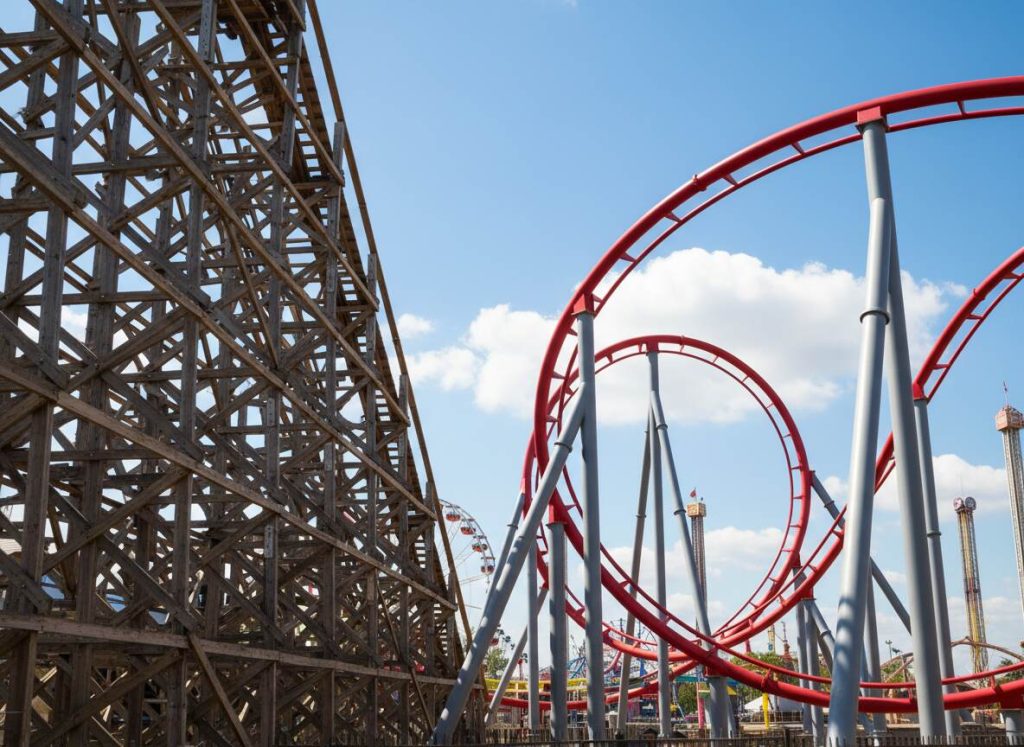
Wooden coasters are built primarily from layers of laminated wood, topped with a thin steel running rail. Their support structures are made almost entirely of timber, giving them a classic, lattice-like appearance.
Steel coasters use tubular steel track and steel support beams. This allows for much more flexibility in design, resulting in smooth, twisting layouts and gravity-defying elements.
History and Evolution
Wooden coasters are the originals—dating back to the late 1800s and the golden age of Coney Island. These rides were hand-built, noisy, and full of character. The invention of the upstop wheel in the early 1900s made steeper drops and wilder layouts possible, but the classic “rumble” and “clack” of a wooden coaster has never gone out of style.
Steel coasters burst onto the scene in the late 1950s, starting with Disneyland’s Matterhorn Bobsleds. Tubular steel opened the door for smooth loops, corkscrews, and record-breaking heights. Since then, steel coasters have dominated the world’s “tallest,” “fastest,” and “most inversions” lists.
Ride Experience: Feel, Sound, and Sensation
- Wooden Coasters: Expect a bumpy, unpredictable ride. The structure flexes with every train, so each trip can feel slightly different. Riders get strong airtime (those “weightless” moments), plenty of lateral forces, and the unmistakable soundtrack of wheels thundering over wooden planks. Some people love the nostalgia and rawness—others find them a bit rough!
- Steel Coasters: Known for their smoothness, steel coasters can twist, loop, and invert riders with precision. You’ll find higher speeds, taller drops, and a huge variety of ride types—flying, spinning, suspended, and more. The ride is usually quieter, and the shapes are only limited by imagination and engineering.
Design and Engineering
- Wooden Coasters: Built from thousands of wooden beams and planks, these rides have limited flexibility in shape. That means no tight loops or extreme banking (with a few modern exceptions). The track is topped with a steel strip for durability, but the main support is always wood.
- Steel Coasters: Tubular steel can be bent into almost any shape, allowing for wild elements—vertical loops, barrel rolls, heartline twists, and more. Steel tracks are manufactured in factories, then assembled on site, resulting in a precise and consistent ride.
Maintenance and Longevity
- Wooden Coasters: Require constant maintenance. Wood expands, contracts, and weathers over time. Parks often replace sections of track, realign supports, and keep a close eye on structural integrity. The upside? A well-maintained wooden coaster can last for generations.
- Steel Coasters: Easier to maintain day-to-day, but repairs can be more specialized and expensive. Steel is less affected by weather, but needs regular inspection for fatigue and corrosion. The result is a ride that can stay smooth and reliable for decades.
Famous Examples
- Wooden: The Cyclone (Coney Island, USA), The Beast (Kings Island, USA), Colossos (Heide Park, Germany), Balder (Liseberg, Sweden)
- Steel: Millennium Force (Cedar Point, USA), Steel Dragon 2000 (Nagashima Spa Land, Japan), Nemesis (Alton Towers, UK), Kingda Ka (Six Flags Great Adventure, USA)
Hybrids: The Best of Both Worlds?
In recent years, “hybrid” coasters have emerged—combining wooden supports with steel track (or vice versa). These rides, like Steel Vengeance (Cedar Point), offer the classic look and feel of wood with the wild elements of steel. They’re proof that you don’t have to choose sides to have a great ride.
Which Is Better?
There’s no right answer! Some riders crave the nostalgia and chaos of a wooden coaster, while others love the smooth, high-flying twists of steel. The best parks offer both, so you can chase every kind of thrill. If you’re new to coasters, try each type and see which one makes you want to ride again and again.
Conclusion
The difference between steel and wooden coasters is more than just materials—it’s about history, innovation, and the kind of experience you want to remember. Whether you love the classic rumble of wood or the futuristic rush of steel, both types have a place in the world’s greatest parks. Next time you visit, take a ride on both and decide for yourself: which side are you on?
