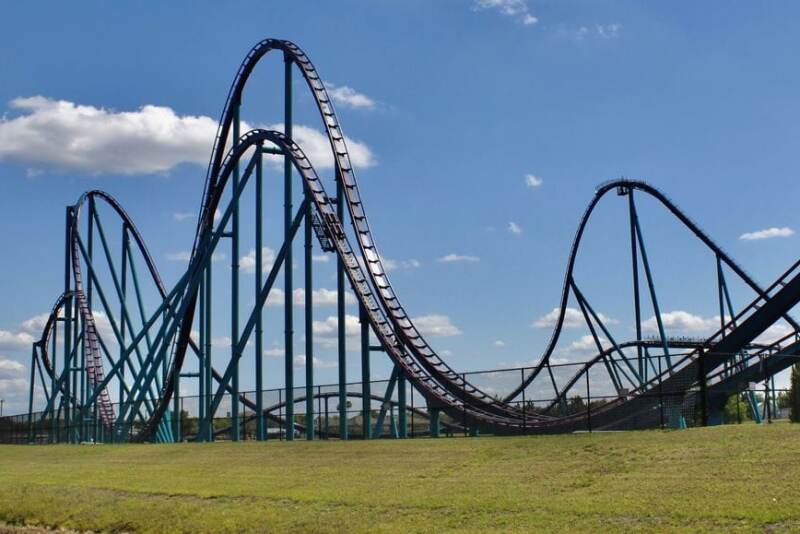
When SeaWorld Orlando opened Mako on June 10, 2016, the park introduced something that would redefine its identity as a thrill destination. Standing 200 feet tall, reaching speeds of 73 mph, and stretching nearly a mile of track, Mako became Orlando’s tallest, fastest, and longest roller coaster. But more importantly, it became a masterclass in hypercoaster design—a pure speed machine that delivers relentless airtime and the sensation of weightlessness that coaster enthusiasts crave.
Mako isn’t about inversions, loops, or gimmicks. It’s about the fundamental thrill of speed, the rush of airtime hills that lift you out of your seat, and the smooth, precise engineering that only Bolliger & Mabillard (B&M) can deliver. Themed around the mako shark—one of the fastest predators in the ocean—the coaster captures the essence of predatory speed and relentless forward momentum.
For SeaWorld Orlando, Mako represented a strategic shift. As the park navigated changing public sentiment about marine animal attractions, Mako signaled a commitment to world-class thrill rides and immersive experiences. It was a bold investment that paid off, establishing Mako as one of the most beloved hypercoasters in the country and a must-ride attraction for coaster enthusiasts visiting the Orlando area.
This post explores the history, engineering, ride experience, and legacy of Mako—a coaster that changed SeaWorld Orlando.
The History of Mako at SeaWorld Orlando
The Announcement: May 27, 2015
On May 27, 2015, SeaWorld Orlando made a significant announcement: the park would be adding a new hypercoaster called Mako. The announcement came with impressive specifications: 200 feet tall, 73 mph top speed, 4,760 feet of track. For context, this would make Mako Orlando’s tallest, fastest, and longest coaster—surpassing previous records held by coasters at Universal and Disney parks.
The announcement was strategic. SeaWorld had been facing increased scrutiny regarding its marine animal attractions, particularly following the 2013 documentary “Blackfish.” The company was actively working to reposition itself, emphasizing conservation efforts and expanding its thrill ride portfolio. Mako was part of this strategy—a world-class attraction that would draw crowds regardless of their interest in marine life.
The coaster community was excited. Bolliger & Mabillard (B&M) is widely regarded as the premier hypercoaster manufacturer, and the specifications suggested that Mako would be a serious contender for “best hypercoaster in the world.”
The Investment and Construction
SeaWorld Orlando invested significantly in Mako and the surrounding area. The coaster was part of a larger development called “Shark Wreck Reef,” a 2-acre themed land that would include the coaster, the existing Shark Encounter attraction, Sharks Underwater Grill restaurant, and themed shops and walkways.
Construction began in late 2015, with the coaster’s highest point topped off in January 2016. The construction timeline was aggressive—just over six months from announcement to opening. This rapid timeline reflected SeaWorld’s confidence in the project and its desire to open the attraction during the busy summer season.
The construction process was visible to park guests, with the coaster’s massive structure dominating the skyline. By spring 2016, the track was largely complete, and testing began on April 14, 2016. The soft opening occurred on June 2, 2016, with the official public opening on June 10, 2016.
The Opening and Reception
Mako’s opening was met with enthusiasm from both the coaster community and casual park visitors. The ride delivered on its promise—it was genuinely thrilling, smoothly engineered, and themed in a way that felt authentic to SeaWorld’s mission. The Shark Wreck Reef area provided immersive theming that elevated the experience beyond a simple coaster ride.
From day one, Mako became one of SeaWorld Orlando’s most popular attractions. Wait times were consistently long, and the ride maintained strong popularity even years after opening. For many visitors, Mako became the primary reason to visit SeaWorld Orlando—a world-class thrill ride that could compete with attractions at Universal and Disney parks.
A Decade of Success
Since opening in 2016, Mako has become an iconic part of Orlando’s coaster landscape. It’s consistently ranked among the best hypercoasters in the world by coaster enthusiasts. It’s the tallest coaster in Florida (a distinction it held until 2024 when Skyrush opened at Fun Spot America, though Mako remains the fastest in the state). It’s a must-ride for anyone visiting the Orlando area.
The ride has also proven to be reliable and well-maintained. B&M coasters are known for durability, and Mako has operated consistently with minimal downtime. The park’s maintenance team has kept the coaster in excellent condition, ensuring smooth operation and guest satisfaction.
The Theme: Mako Sharks and Shark Wreck Reef
The Shark Connection
Mako is named after the mako shark, one of the fastest sharks in the ocean. Mako sharks can reach speeds of up to 60 mph in short bursts, making them apex predators. The connection between the shark and the coaster is more than just thematic—it’s conceptual. The coaster captures the essence of predatory speed, the relentless forward momentum of a shark hunting its prey.
SeaWorld’s choice to theme Mako around sharks aligned with the park’s conservation mission. Mako sharks are threatened by overfishing and habitat loss, and SeaWorld used the coaster as an opportunity to educate guests about shark conservation. Throughout the Shark Wreck Reef area, signage and displays provide information about mako sharks and the importance of ocean conservation.
Shark Wreck Reef: A Themed Land
Shark Wreck Reef is a 2-acre themed area that surrounds Mako. The theming centers on a shipwreck in a coral reef, with the coaster representing a mako shark hunting through the wreckage. The queue winds through detailed theming that includes:
- Shipwreck elements (broken masts, cargo, debris)
- Coral and sea life decorations
- Themed signage and storytelling elements
- Detailed queue decorations that set the scene
The theming extends beyond the queue. The coaster’s trains are designed to resemble sharks, with pointed fronts and sleek profiles. The track is painted in colors that evoke the ocean. At night, specialty lights accent the coaster and surrounding area, creating the illusion of bioluminescence and fish being scattered by a hunting mako shark.
The Shark Wreck Reef area also includes the Shark Encounter attraction (a walk-through aquarium featuring live sharks), Sharks Underwater Grill (a restaurant with underwater views), and themed gift shops. This comprehensive theming creates an immersive experience that extends beyond the coaster itself.
Why This Theme Works
The mako shark theme works for several reasons. First, it’s authentic to SeaWorld’s mission and identity. The park is fundamentally about marine life, and theming a coaster around a real ocean predator feels natural. Second, the theme provides narrative context for the thrills. You’re not just experiencing speed and airtime; you’re experiencing the hunt of a mako shark. Third, the theme allows for educational opportunities. SeaWorld uses the coaster as a platform to educate guests about shark conservation.
This thematic approach is characteristic of SeaWorld’s design philosophy. The park consistently connects its attractions to marine life and conservation, creating a cohesive experience that educates while entertaining.
The Engineering: A B&M Hypercoaster Masterpiece
The Manufacturer: Bolliger & Mabillard
Bolliger & Mabillard (B&M) is a Swiss coaster manufacturer widely regarded as the best in the industry. The company specializes in smooth, precisely engineered coasters that deliver intense thrills without excessive forces. B&M coasters are known for their reliability, longevity, and guest satisfaction.
B&M’s hypercoasters are particularly renowned. The company pioneered the hypercoaster category in 1999 with Millennium Force at Cedar Point, and has continued to refine the design with coasters like Diamondback, Intimidator, and Mako. These coasters are designed for speed, airtime, and smooth operation.
Mako showcases B&M’s expertise. The coaster is smooth, the airtime is consistent, and the engineering is precise. Every element is designed to deliver specific sensations in a controlled, safe manner.
The Specifications
Let’s break down the technical specifications of Mako:
Height: 200 feet (61 meters)
Speed: 73 mph (117 km/h)
Track Length: 4,760 feet (1,450 meters)
Drop: 200 feet (vertical)
Inversions: 0 (hypercoasters don’t have inversions)
Trains: 3 trains with 12 seats each (24 riders per train)
Capacity: Approximately 1,200 riders per hour
Height Requirement: Minimum 48 inches
Restraints: Lap bars only (no over-shoulder harnesses)
G-Forces: Up to 3.5 Gs (moderate, typical for hypercoasters)
These specifications reveal important design choices. The lack of inversions means the coaster relies entirely on speed, airtime, and lateral forces to deliver thrills. The lap bar restraints (rather than over-shoulder harnesses) provide comfort and allow riders to feel the forces more directly. The moderate G-forces ensure the ride is thrilling without being overwhelming.
The Track Layout: Out-and-Back Design
Mako uses a classic “out-and-back” layout, which is the traditional design for hypercoasters. The coaster launches from the station, climbs a large lift hill, and then travels away from the station (the “out” portion). At the end of the out portion, the track turns around and returns to the station (the “back” portion).
The out-and-back design is ideal for hypercoasters because it allows for consistent speed throughout the ride. The coaster maintains high speeds on both the outbound and return portions, delivering continuous airtime and thrills.
The First Drop and Initial Airtime Hills: After climbing the 200-foot lift hill, riders experience a steep drop (approximately 200 feet, nearly vertical). This initial drop accelerates the train to 73 mph. Immediately after the drop, the coaster features a series of airtime hills—curved sections of track that create the sensation of weightlessness.
These initial airtime hills are the heart of Mako’s appeal. B&M designed them to deliver “floater” airtime—a gentle, sustained sensation of floating out of your seat. This is different from “ejector” airtime, where riders are forcefully ejected from their seats. Floater airtime is characteristic of B&M hypercoasters and is highly prized by coaster enthusiasts.
The Outbound Section: As the coaster travels away from the station, it maintains high speeds through a series of airtime hills and banked turns. The track winds through the Shark Wreck Reef area, with theming elements visible from the coaster. The layout includes:
- Multiple airtime hills of varying heights and angles
- Banked turns that create lateral forces
- A mid-course brake run that slows the train slightly before the return journey
- Continued airtime hills after the brake run
The outbound section is approximately 2,400 feet long, representing roughly half the coaster’s total track length.
The Return Section: After the mid-course brake run, the coaster turns around and heads back toward the station. The return section features similar elements to the outbound section—airtime hills, banked turns, and high speeds. However, the return section is slightly shorter and features different hill placements, creating a different experience.
The return section is crucial to the hypercoaster experience. Riders experience similar speeds and forces to the outbound section, but from a different perspective. The airtime hills feel different because you’re approaching them from the opposite direction. The banked turns create different lateral forces.
The Final Brake Run: As the coaster approaches the station, it enters a final brake run. Magnetic brakes slow the train to a safe speed for re-entry into the station. The braking is smooth and controlled, ensuring a comfortable stop.
The Airtime Experience
Airtime is the defining characteristic of hypercoasters, and Mako delivers it in abundance. The coaster features approximately 10-12 airtime hills, each designed to lift riders out of their seats.
Floater Airtime: Mako delivers primarily “floater” airtime, which is characteristic of B&M hypercoasters. Floater airtime is a gentle, sustained sensation of weightlessness. Riders feel like they’re floating out of their seats, suspended in space for a fraction of a second. This sensation is thrilling but not jarring.
The floater airtime on Mako is particularly smooth and consistent. B&M’s precise engineering ensures that each airtime hill delivers the intended sensation. Riders in the front of the train experience slightly different airtime than riders in the back, but all riders experience genuine airtime.
The Airtime Sequence: The airtime hills on Mako aren’t random; they’re carefully sequenced to create a specific experience. The first few hills are larger and more dramatic, establishing the sensation of airtime. Subsequent hills are smaller and more frequent, creating a relentless series of airtime moments. This sequencing keeps riders engaged throughout the ride and prevents the experience from becoming monotonous.
The Braking and Control Systems
Like all modern coasters, Mako relies on sophisticated braking and control systems. Magnetic brakes slow the train as it approaches the station, ensuring a smooth, controlled stop. Computer systems monitor train position, speed, and brake pressure in real time, automatically adjusting operations if any parameter falls outside safe ranges.
The mid-course brake run is particularly important on Mako. This brake run slows the train before the return journey, allowing the coaster to maintain consistent speeds on the return section. Without the mid-course brake, the train would lose too much speed on the return journey, reducing airtime and thrills.
The Trains and Restraints
Mako’s trains are designed specifically for the hypercoaster experience. Each train seats 24 riders in 12 rows of 2 seats. The seats are positioned to face forward, allowing riders to see the track ahead.
The restraint system consists of lap bars only—no over-shoulder harnesses. This is a deliberate design choice that allows riders to feel the airtime more directly. With lap bars only, riders can feel their bodies lifting out of the seats, creating a more intense sensation of weightlessness.
The lap bars are padded for comfort and are engaged by a ride operator before the train launches. They’re snug enough to provide security but not so tight as to be uncomfortable.
The Ride Experience: What It Feels Like
The Queue and Anticipation
Walking through the queue for Mako, you’re immersed in the Shark Wreck Reef theming. The queue winds through detailed decorations that evoke a shipwreck in a coral reef. You can see the coaster track overhead, watch trains launch and return, and hear the distinctive sounds of the coaster in operation.
The queue is typically long—Mako consistently has some of the longest wait times at SeaWorld Orlando—but it moves at a reasonable pace. The theming and views of the coaster help pass the time. As you get closer to the boarding area, anticipation builds. You can see the trains more clearly, hear the launches more distinctly, and feel the vibration of the coaster in the ground beneath your feet.
Boarding and Restraints
When you reach the boarding area, you’re directed to a seat in one of the trains. The seats are comfortable and face forward. A ride operator engages your lap bar, which is snug but not uncomfortable. You can feel the bar across your lap, but it doesn’t feel confining.
As the train pulls out of the station and toward the lift hill, you have a moment to take in the views. From the top of the lift hill, you can see much of the park, including the surrounding theme parks in the distance. There’s a moment of anticipation at the top of the lift, a brief pause where you know what’s coming next.
The First Drop
Then you’re over the top, and gravity takes over. The first drop is steep—nearly vertical—and accelerates you to 73 mph in just a few seconds. Your stomach drops. Your inner ear signals that you’re falling. The wind rushes past. The sensation is thrilling and intense.
The Airtime Hills
Immediately after the first drop, you encounter the first airtime hill. As the coaster crests the hill, you feel yourself lifting out of your seat. This is floater airtime—a gentle, sustained sensation of weightlessness. You feel like you’re floating, suspended above your seat, held only by the lap bar.
The sensation is thrilling but not jarring. Your body is pressed against the lap bar, but it doesn’t feel painful or uncomfortable. You’re experiencing genuine weightlessness, a sensation that most people rarely experience in their daily lives.
After the first airtime hill, you encounter another, and then another. The airtime hills come in rapid succession, creating a relentless series of weightless moments. Each hill is slightly different—different angles, different heights, different curves—but all deliver the same sensation of floating.
The airtime sequence is relentless. You barely have time to process one moment of weightlessness before the next one arrives. Your adrenaline is spiking. Your heart is racing. You’re experiencing the pure, unadulterated thrill of speed and weightlessness.
The Banked Turns
Between the airtime hills, the coaster features banked turns—sections of track that curve sharply while tilted at steep angles. As you enter a banked turn, you feel lateral forces pressing you against the side of your seat. The coaster is traveling at high speed, and the banking creates the sensation of being pushed outward by centrifugal force.
These banked turns are thrilling in a different way than the airtime hills. Instead of floating weightlessly, you’re being pressed against the side of your seat by lateral forces. The sensation is intense but controlled. B&M’s precise engineering ensures that the forces are thrilling without being overwhelming.
The banked turns also serve a functional purpose. They slow the coaster slightly while maintaining the sensation of speed. Without the banked turns, the coaster would lose speed too quickly, reducing the intensity of the airtime hills that follow.
The Mid-Course Brake Run
Approximately halfway through the ride, the coaster enters a mid-course brake run. Magnetic brakes engage, and the train slows from 73 mph to approximately 45 mph. This is a crucial moment in the ride experience.
The mid-course brake run serves several purposes. First, it slows the train enough to allow the return journey to maintain consistent speeds and airtime. Second, it provides a brief moment of relief—a chance to catch your breath and process the intense sensations of the outbound journey. Third, it creates anticipation for the return journey, which is about to begin.
For many riders, the mid-course brake run is a moment of realization: “Wow, that was intense, and I’m only halfway through!” This realization creates excitement for what’s to come.
The Return Journey
After the mid-course brake run, the coaster turns around and heads back toward the station. The return journey is similar to the outbound journey—more airtime hills, more banked turns, more intense sensations. However, the return journey feels different because you’re approaching the elements from the opposite direction.
The airtime hills on the return journey feel different because you’re approaching them from a different angle. The banked turns create different lateral forces. Your brain struggles to anticipate what’s coming next because you’re traveling in the opposite direction.
The return journey is slightly shorter than the outbound journey, but it feels longer because of the psychological element of traveling in the opposite direction. Time seems to stretch. Your adrenaline spikes again. By the time you reach the final brake run, you’re breathless and exhilarated.
The Final Brake Run and Return to Station
As the coaster approaches the station, it enters the final brake run. Magnetic brakes engage, and the train slows to a safe speed for re-entry into the station. The braking is smooth and controlled, ensuring a comfortable stop.
As the train pulls into the station and the lap bar is released, you’re left with a sense of exhilaration and accomplishment. You’ve experienced something genuinely thrilling. You’ve felt the sensation of weightlessness multiple times. You’ve experienced speeds of 73 mph. You’ve navigated through a themed environment that enhanced the experience.
The entire ride lasted approximately 2 minutes and 45 seconds, but it felt longer—packed with sensation and adrenaline. Many riders exit the station eager to ride again, a testament to the coaster’s appeal.
Why Mako Is Special
The Hypercoaster Experience
Mako represents the pinnacle of hypercoaster design. Hypercoasters are defined by their focus on speed, airtime, and smooth operation—not inversions or extreme forces. Mako delivers all of these elements in abundance.
The hypercoaster experience is fundamentally different from other coaster types. On a hypercoaster, you’re not experiencing inversions or extreme lateral forces. Instead, you’re experiencing sustained speed, multiple moments of weightlessness, and the sensation of flying over hills. This creates a unique thrill that appeals to a broad audience.
Hypercoasters are also known for their reliability and smoothness. B&M coasters are engineered to operate smoothly day after day, year after year. Riders don’t experience the jarring transitions or rough sections that characterize some other coaster types. This smoothness, combined with the intense thrills, is part of what makes hypercoasters so appealing.
The Airtime Focus
Mako’s primary appeal is its relentless delivery of airtime. The coaster features approximately 10-12 airtime hills, each designed to lift riders out of their seats. This is an extraordinary amount of airtime for a single coaster.
The airtime on Mako is also high-quality. B&M’s precise engineering ensures that each airtime hill delivers the intended sensation of floater airtime. Riders in different positions on the train experience slightly different airtime, but all riders experience genuine weightlessness.
For coaster enthusiasts, airtime is the holy grail of coaster design. A coaster that delivers consistent, high-quality airtime is considered exceptional. Mako delivers this in spades, which is why it’s so beloved by the coaster community.
Accessibility and Appeal
While Mako is an intense coaster, it’s more accessible than some other thrill rides. The lack of inversions makes it appealing to riders who are uncomfortable with being upside-down. The moderate G-forces (up to 3.5 Gs) make it intense but not overwhelming. The lap bar restraints make it feel less restrictive than over-shoulder harnesses.
This combination of intensity and accessibility gives Mako broad appeal. Experienced coaster enthusiasts love it for its airtime and speed. Casual riders appreciate the thrills without feeling overwhelmed. Families can ride together and experience genuine excitement.
The 48-inch height requirement is reasonable, making Mako accessible to teenagers and older children. This expands the ride’s appeal to families with younger teens.
The Theming Integration
While Mako is fundamentally a speed and airtime machine, the theming enhances the experience. The Shark Wreck Reef area provides a narrative context for the thrills. You’re not just experiencing speed; you’re experiencing the hunt of a mako shark. The shark-themed trains and track design reinforce this narrative.
The theming also creates a sense of place. The Shark Wreck Reef area is immersive and detailed, creating an environment that feels authentic to SeaWorld’s mission. The theming extends beyond the coaster itself, with the Shark Encounter attraction, Sharks Underwater Grill, and themed shops creating a comprehensive experience.
This integration of theming and thrills is characteristic of SeaWorld’s design philosophy. The park consistently connects its attractions to marine life and conservation, creating a cohesive experience that educates while entertaining.
The Engineering Excellence
Mako is a masterclass in coaster engineering. Every element is precisely designed to deliver specific sensations in a controlled, safe manner. The airtime hills are calculated to deliver the exact amount of lift. The banked turns are angled to create the desired lateral forces. The brake runs are timed to maintain consistent speeds.
This precision is the hallmark of B&M’s design philosophy. The company doesn’t rely on gimmicks or extreme forces; instead, it relies on precise engineering and careful calculation. The result is a coaster that’s thrilling, smooth, and reliable.
Mako in the Context of SeaWorld Orlando’s Coaster Lineup
How It Complements Other Coasters
SeaWorld Orlando has several coasters, but Mako is the flagship attraction. The park features coasters like Kraken (an inverted coaster), Manta (a flying coaster), and Shamu Express (a family coaster). Mako complements these attractions by offering a different type of thrill—speed and airtime rather than inversions or unique restraint systems.
For visitors interested in experiencing multiple coaster types, SeaWorld Orlando offers a diverse lineup. However, Mako is the clear standout—the coaster that draws crowds and creates lasting memories.
The Strategic Importance
For SeaWorld Orlando, Mako represented a strategic shift. As the park navigated changing public sentiment about marine animal attractions, Mako signaled a commitment to world-class thrill rides. The coaster demonstrated that SeaWorld could compete with Universal and Disney parks in terms of attraction quality and innovation.
Mako also helped diversify SeaWorld’s appeal. While the park is fundamentally about marine life, Mako attracted visitors who were primarily interested in thrill rides. This expanded the park’s market and helped drive attendance.
The success of Mako also validated SeaWorld’s investment strategy. The park continued to invest in thrill attractions, adding new coasters and attractions in subsequent years. Mako proved that these investments paid off in terms of guest satisfaction and park attendance.
Comparing Mako to Other Hypercoasters
vs. Millennium Force (Cedar Point)
Millennium Force, which opened in 2000, was the coaster that pioneered the hypercoaster category. It’s 310 feet tall, reaches speeds of 93 mph, and features a cable launch system. Millennium Force is more intense than Mako—taller, faster, and more extreme.
However, Mako is more accessible than Millennium Force. The lower height and speed make it less intimidating for riders who are nervous about coasters. Mako also features more airtime hills, which many coaster enthusiasts prefer to Millennium Force’s focus on speed and height.
Both coasters are exceptional, but they appeal to slightly different audiences. Millennium Force appeals to riders seeking the ultimate in height and speed. Mako appeals to riders seeking consistent, high-quality airtime.
vs. Diamondback (Kings Island)
Diamondback, which opened in 2009, is another B&M hypercoaster. It’s 230 feet tall, reaches speeds of 80 mph, and features excellent airtime. Diamondback is slightly taller and faster than Mako, but the two coasters are comparable in terms of overall experience.
Both Mako and Diamondback are considered among the best hypercoasters in the world. The choice between them often comes down to personal preference. Some riders prefer Mako’s slightly lower speed and more consistent airtime. Others prefer Diamondback’s greater height and speed.
vs. Intimidator (Kings Dominion)
Intimidator, which opened in 2010, is another B&M hypercoaster. It’s 232 feet tall, reaches speeds of 90 mph, and features excellent airtime. Intimidator is taller and faster than Mako, but the two coasters are similar in terms of overall experience.
Intimidator is known for its aggressive airtime, particularly in the back rows of the train. Mako’s airtime is more consistent across the entire train. Both coasters are exceptional, and the choice between them depends on personal preference.
Frequently Asked Questions About Mako
Q: When did Mako open? A: Mako opened on June 10, 2016, at SeaWorld Orlando.
Q: How tall is Mako? A: Mako is 200 feet tall, making it Orlando’s tallest coaster (as of the time of its opening).
Q: How fast does Mako go? A: Mako reaches speeds of 73 mph, making it Orlando’s fastest coaster (as of the time of its opening).
Q: How long is Mako’s track? A: Mako’s track is 4,760 feet long, making it Orlando’s longest coaster (as of the time of its opening).
Q: Does Mako have inversions? A: No, Mako does not have inversions. It’s a hypercoaster, which focuses on speed and airtime rather than inversions.
Q: How many airtime hills does Mako have? A: Mako features approximately 10-12 airtime hills, depending on how you count them.
Q: What’s the height requirement for Mako? A: The minimum height requirement is 48 inches.
Q: Who manufactures Mako? A: Mako was designed and built by Bolliger & Mabillard (B&M), a Swiss coaster manufacturer.
Q: How long does the ride last? A: The ride lasts approximately 2 minutes and 45 seconds from launch to return to the station.
Q: What are the G-forces on Mako? A: Mako features G-forces up to approximately 3.5 Gs, which is moderate for a hypercoaster.
Q: Is Mako suitable for first-time coaster riders? A: Mako is an intense coaster, but it’s more accessible than some other thrill rides. First-time riders who are comfortable with speed and airtime might enjoy it, but those nervous about coasters might want to start with a gentler ride.
Q: Can I ride Mako if I’m afraid of heights? A: Mako reaches heights of 200 feet, so it’s not ideal for riders with a fear of heights. However, the focus on speed and airtime might distract from the height for some riders.
Q: What makes Mako unique compared to other coasters? A: Mako is unique for its relentless delivery of high-quality airtime, its smooth B&M engineering, and its integration with the Shark Wreck Reef themed area. It’s a masterclass in hypercoaster design.
Q: Is Mako a good coaster for families? A: Mako is an intense coaster, so it’s best suited for families with teenagers and older children. Younger children might find it overwhelming.
Q: How does Mako compare to other coasters at SeaWorld Orlando? A: Mako is SeaWorld Orlando’s flagship coaster. It’s more intense than Shamu Express (a family coaster) but offers a different type of thrill than Kraken (an inverted coaster) or Manta (a flying coaster).
The Impact on SeaWorld Orlando and the Theme Park Industry
Revitalizing SeaWorld Orlando
Mako was a turning point for SeaWorld Orlando. The coaster demonstrated that the park could create world-class attractions that competed with Universal and Disney parks. It helped shift the park’s identity from primarily a marine animal park to a destination that offered both marine life experiences and world-class thrill rides.
Mako’s success also helped drive attendance and revenue for SeaWorld Orlando. The coaster became a must-ride attraction for visitors to the Orlando area, helping to justify a visit to SeaWorld alongside visits to other theme parks.
Influencing Other Parks
The success of Mako influenced other parks and manufacturers. It demonstrated that hypercoasters could be major draw attractions at theme parks. It also validated B&M’s hypercoaster design philosophy and encouraged other manufacturers to develop similar attractions.
Several parks have added hypercoasters in the years since Mako’s opening, inspired by its success. Mako proved that hypercoasters could attract crowds and create lasting memories.
The Evolution of B&M Hypercoasters
Mako represents an important chapter in the evolution of B&M hypercoasters. The company has continued to refine the hypercoaster design with subsequent coasters, but Mako remains one of the most beloved and well-regarded hypercoasters in the world.
The design elements that make Mako special—the relentless airtime, the smooth operation, the precise engineering—have become hallmarks of B&M’s approach to coaster design.
The Legacy of Mako
A Landmark Attraction
Mako has become a landmark attraction at SeaWorld Orlando. It’s the coaster that defines the park’s identity as a thrill destination. For many visitors, Mako is the primary reason to visit SeaWorld Orlando.
The coaster has also become iconic in the broader coaster community. It’s consistently ranked among the best hypercoasters in the world by coaster enthusiasts. It’s a must-ride for anyone serious about experiencing world-class coasters.
A Testament to B&M’s Excellence
Mako is a testament to Bolliger & Mabillard’s excellence in coaster design. The coaster showcases everything the company does best—smooth operation, precise engineering, consistent airtime, and reliable performance. Mako has helped establish B&M as the premier hypercoaster manufacturer.
A Turning Point for SeaWorld
For SeaWorld Orlando, Mako represented a turning point. The coaster demonstrated that the park could compete with the best theme parks in the world. It helped shift the park’s identity and attract a broader audience. It validated the park’s investment in thrill attractions.
Mako’s success also encouraged SeaWorld to continue investing in attractions. The park has added new coasters and attractions in subsequent years, building on the foundation that Mako established.
Conclusion: A Coaster That Redefined SeaWorld Orlando
Mako is more than just a roller coaster. It’s a masterclass in hypercoaster design. It’s a testament to Bolliger & Mabillard’s engineering excellence. It’s a turning point in SeaWorld Orlando’s evolution as a theme park destination.
When you ride Mako, you’re not just experiencing a mechanical thrill. You’re experiencing the result of careful planning, innovative engineering, and a commitment to creating world-class attractions. You’re experiencing the hunt of a mako shark—speed, power, and relentless forward momentum. You’re part of a story that extends beyond the coaster itself, connected to conservation and the importance of protecting our oceans.
For visitors to the Orlando area, Mako is a must-ride. For coaster enthusiasts, it’s a landmark attraction that deserves a place on any serious coaster bucket list. For SeaWorld Orlando, it’s the coaster that redefined the park and established it as a destination for world-class thrill rides.
Mako proved that you don’t have to choose between thrills and theming, between intensity and accessibility, between speed and smoothness. You can have all of these elements working together to create an unforgettable experience. And in doing so, it created one of the most beloved hypercoasters in the world.
