Yes, plus size people can ride roller coasters, and plenty do. But there is an honest catch: fit is not determined by a single number, and it is not determined by “weight” in the way most people assume. It is determined by whether the restraint system can close and lock exactly the way it was designed to, on your body, in that seat, on that ride.
If you have ever walked up to a coaster feeling excited, then suddenly felt that quiet panic of “what if I do not fit,” you are not alone. This guide is here to make the whole thing more predictable. We are going to talk about what matters, what does not, how test seats work, how to approach ride ops without embarrassment, and how to plan a day where you still have fun even if one or two rides are a no.
The Short Answer
Plus size guests can often ride many roller coasters, but fit depends on:
- Restraint type and geometry (lap bar, over the shoulder, vest, seat belt, combination systems)
- How your weight is carried (midsection, hips, chest, thighs, shoulders)
- Seat design (molded bucket seats, divider placement, thigh clearance, headrest shape)
- Whether the ride has a secondary restraint (seat belt length, buckle position, required clicks)
- Operator policy (some rides require a minimum closure position, specific indicator lights, or “two-check” confirmation)
There is no universal “plus size limit” for roller coasters. Two coasters at the same park can feel completely different.
First, Let’s Clear Up A Few Myths
Myth: Roller Coasters Have A Simple Weight Limit
Most roller coasters do not post a public “weight limit” the way a small carnival ride might. Parks focus on restraint closure, rider containment, and safe clearance. The practical limit is usually “does the restraint close and lock correctly,” not “are you over X pounds.”
Myth: If The Lap Bar Closes, You Are Automatically Fine
Not always. Many rides require the restraint to close to a certain position, or require a seat belt to buckle, or require a sensor to confirm a locked state. A lap bar that feels “down” is not the same thing as a restraint that is locked in the required position.
Myth: This Is About Shame Or Judgment
It should not be. This is about geometry and safety systems. A restraint is a piece of engineered equipment designed around a range of human shapes. When you do not fit, it is not a moral failure. It is a mismatch between body shape and hardware.
What Actually Determines Whether You Fit
1) Restraint Type Matters More Than Most People Realize
Lap Bars are often the most forgiving, but not always. A lap bar needs to come down far enough to lock. Where it contacts your body matters. Some lap bars press across the thighs, some press across the lap, some have a shaped “U” that sits differently depending on hip and thigh shape.
Over The Shoulder Restraints can be tougher for broad shoulders, larger chests, or certain upper body proportions. Some designs require the restraint to come down to a specific point on the torso.
Vests (common on some modern coasters) can feel more comfortable for many riders, but they can also be less flexible depending on chest and shoulder fit. Some vests have less “give” than people expect.
Seat Belts are often the deciding factor. On some rides, the lap bar might close, but the belt will not buckle. On others, the belt buckles but the lap bar does not reach the required position. If a belt is part of the restraint system, it is not optional.
2) Where You Carry Weight Changes Everything
Two people can wear the same clothing size and have completely different coaster experiences.
- Midsection-forward weight can affect lap bar closure and belt reach.
- Hip and thigh-forward weight can affect bucket seat fit, divider clearance, and lap bar angle.
- Chest and shoulder-forward weight can affect over the shoulder restraints and vests.
This is why online “I fit at size X” stories can be helpful emotionally, but unreliable practically. Your shape is the variable, not just your size.
3) Seat Design Can Be The Hidden Dealbreaker
Even before the restraint comes down, the seat itself can decide the outcome. Common issues include:
- Molded bucket seats that narrow at the hips
- Hard seat dividers that reduce usable width
- Raised side bolsters that push hips inward
- Thigh clearance that changes how the lap bar sits
Sometimes the restraint is not the problem. The seat is.
Measurement Guidance That Actually Helps (With A Reality Check)
Measurements can help you predict fit, but they are not magic. Parks rarely publish exact seat dimensions, and restraint designs vary widely. Still, if you want a practical approach, focus on measurements that relate to where restraints contact the body.
Useful Measurements To Know
- Waist (where you naturally bend)
- High Hip (around the top of the hip bones)
- Full Hip (widest point of hips and butt)
- Thigh Circumference (upper thigh, seated measurement is most relevant)
- Chest (fullest point, relevant for shoulder restraints and vests)
How To Use Those Measurements Without Getting Misled
If a ride has a posted guideline like “guests with a waist over X inches may have difficulty,” treat it as a warning sign, not a guarantee. If you see online fit guides, compare your measurements to the person’s measurements, not just their clothing size. Clothing sizes vary wildly. Tape measures do not.
Also, remember: seated measurements can be different than standing measurements. If you want the most realistic number, measure while seated for hips and thighs.
Test Seats: What They Are, Why They Exist, And How To Use Them
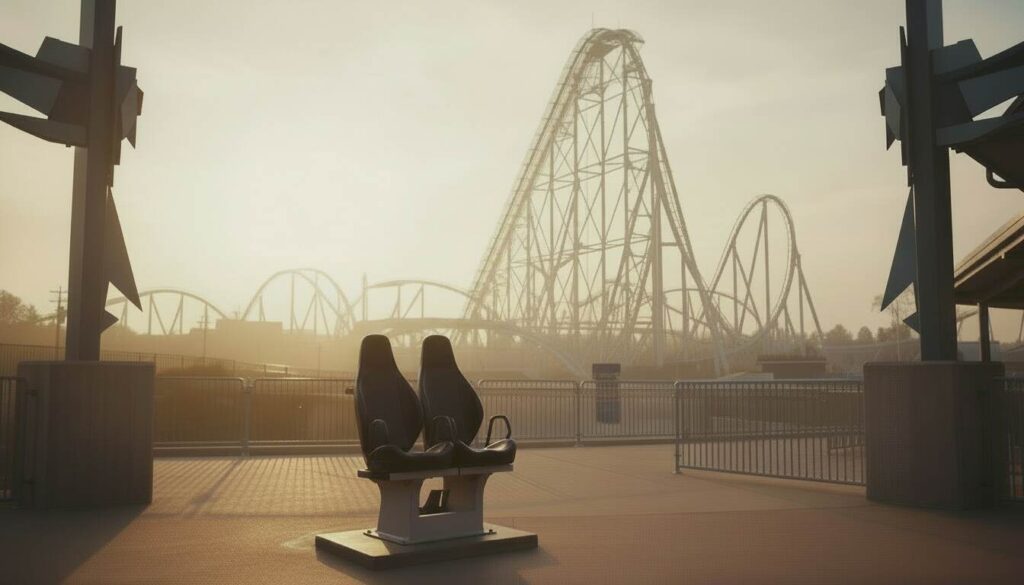
A test seat is a sample seat and restraint setup placed outside the ride entrance (or near the queue) so guests can check fit before waiting in line. It is there to save you time and stress, and it helps ride ops keep the loading platform moving.
How To Use A Test Seat The Right Way
- Take your time. You are allowed to check fit.
- Try it the way the ride requires. If the ride has a seat belt, buckle it. If the restraint needs to click or lock, make sure it reaches that position.
- Do not force it. If you have to slam, wrench, or contort to make it close, that is a sign the actual ride seat may not be safe or comfortable for you.
- Assume the real seat may be slightly different. Test seats are helpful, but the final authority is the actual ride seat and the operator’s safety check.
If there is no test seat, you can still ask politely at the entrance if there is a seat you can try, or if there is a row known to be more accommodating. Some rides have modified rows, but it varies.
How To Ask Ride Ops Without Feeling Awkward
Ride operators have heard this question. A calm, direct script helps.
Simple script: “Hey, quick question. Do you have a test seat, or is there a row that tends to fit broader hips or larger thighs better? I just want to check before I wait in line.”
If you are worried about holding up the line: “I can step aside. I just want to confirm fit without slowing you down.”
Good ops will appreciate that you are trying to be efficient and safe.
Accessibility Passes And Planning A Day That Still Feels Good
Some parks offer accessibility programs that can help reduce the stress of long lines, especially if you have mobility limitations, pain, or fatigue issues that make standing in queue difficult. Policies vary by park, and not every program is designed around body size alone. But if you have a qualifying condition, it can make the day much easier.
Even without an accessibility pass, you can plan smart:
- Start with rides that are more likely to be accommodating so you build confidence early.
- Use test seats before committing to long waits.
- Have a “yes list” of attractions you already know you can ride so the day never hinges on one coaster.
What To Do If You Do Not Fit On A Ride
This is the part nobody wants to talk about, but it is the part that can make or break the day emotionally.
- Do not argue with the operator. If they cannot confirm a safe lock, they have to say no.
- Do not internalize it. It is hardware and geometry. It is not a judgment.
- Step out calmly. If you can, smile and say “No worries, thanks for checking.”
- Pivot immediately. Have your next attraction ready so the moment does not linger.
If you are with friends or family, it helps to set expectations early: “Some rides might be a fit issue. If that happens, I’m good. We’ll just pivot.”
Plus Size Kids And Teens: A More Gentle Strategy
For kids and teens, the emotional stakes can be higher. If you are a parent, guardian, or older sibling, the best approach is to normalize test seats as a smart planning tool, not a “body check.”
- Frame it as saving time: “Let’s check the test seat so we do not waste our wait.”
- Avoid making it a big moment.
- Have a backup plan ready and exciting.
If a ride is a no, the goal is to protect dignity. The day should still feel fun, not like a series of public evaluations.
Safety Reality Check: If You Fit And The Restraint Locks, Is It Safe?
In general, yes. Roller coaster restraint systems are designed to secure riders across a range of body types. The key is that the restraint must close and lock as designed, and operators must be able to confirm that lock. If the restraint cannot reach the required position, the ride is not safe for that rider on that cycle.
This is also why it is important not to force a fit. A “barely closed” restraint that does not meet the ride’s required lock position is not a win. It is a risk.
Practical Tips That Improve Your Odds Of A Comfortable Fit
- Choose rows strategically when possible. Some rides have slightly different seat geometry by row, but it is not universal.
- Secure loose items early so you are not wrestling with a locker and a restraint check at the same time.
- Communicate calmly. “I need a second to settle in” is a reasonable request.
- Prioritize comfort. Even if you can technically fit, a painful restraint can ruin the experience.
Related Safety Reads On Coaster Me This
- Roller Coaster Accidents And Safety Statistics
- Roller Coaster Safety Technology Evolution
- Why Roller Coasters Have Different Restraints
- Unusual Safety Features On Roller Coasters
- What Happens If A Roller Coaster Gets Stuck?
FAQ
Do roller coasters have weight limits?
Some rides do, but many coasters do not publish a simple weight limit. Fit is usually determined by whether the restraint can close and lock correctly, plus any posted safety rules for the ride.
What if I fit in the test seat but not on the ride?
It happens. The real seat can feel slightly different, and operators must confirm the restraint locks in the required position. Treat the test seat as a strong indicator, not a guarantee.
Are lap bars better for plus size riders?
Often, but not always. Lap bars can be more forgiving than some shoulder restraints, but seat shape, belt length, and required closure position still matter.
Is it safe to ride if the restraint closes?
If the restraint closes and locks as designed and the operator can confirm it, it is generally considered safe. If it does not reach the required lock position, it is not safe for that cycle.
How can I avoid an embarrassing situation at the station?
Use test seats when available, ask ride ops a quick question before waiting, and choose a plan that includes plenty of attractions you already know you can ride.
Can I ask for a seat belt extender?
On roller coasters, extenders are generally not offered the way they are on airplanes because restraint systems are engineered and certified as a complete setup. Policies vary, but you should assume extenders are not available for coasters.

Leave a Reply