When you think about roller coaster safety, you probably think about the obvious features: restraints, brakes, and sensors. But the world of roller coaster engineering is full of creative and sometimes surprising safety innovations that you might never notice while riding. Some of these features are so unusual that they seem almost bizarre at first glance, but they all serve an important purpose: keeping riders safe while delivering thrilling experiences. From hydraulic systems that catch trains mid-air to sensors that monitor rider position in real-time, the engineering world has come up with some truly innovative solutions to safety challenges. Understanding these unusual safety features gives you a deeper appreciation for the incredible engineering that goes into modern roller coasters.
Catch Car Systems: Stopping Trains Mid-Course
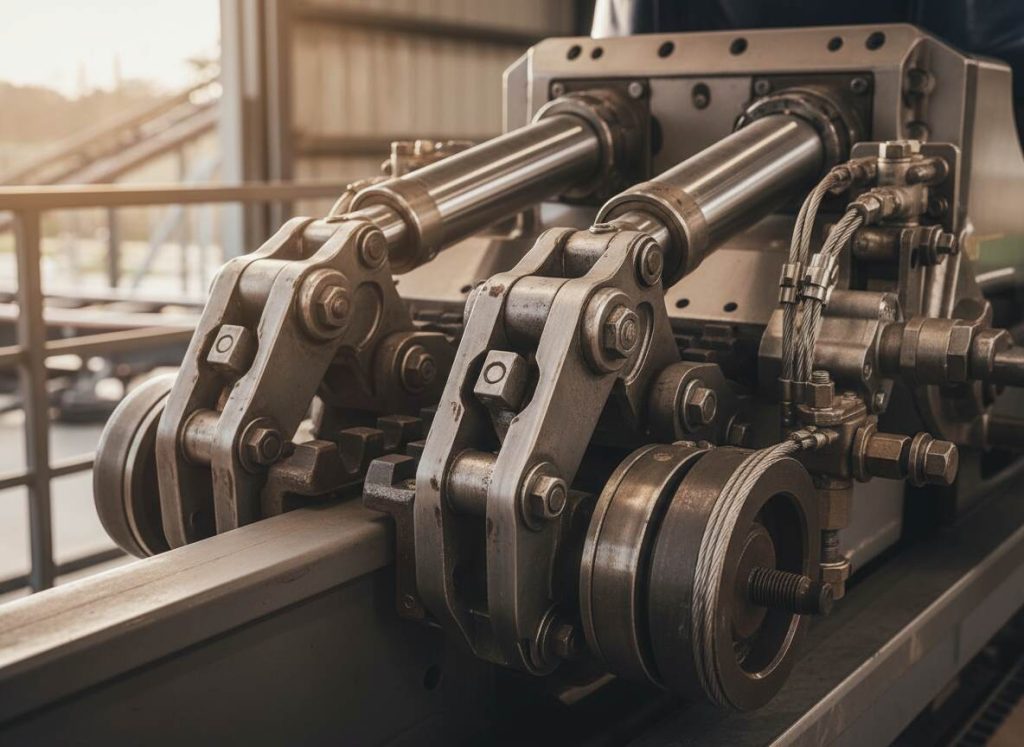
One of the most unusual safety features on some roller coasters is the catch car system, which is designed to stop a train if it’s moving too slowly through a section of the track. A catch car is a mechanical device that engages with the train if it falls below a certain speed threshold. If the train is moving too slowly, the catch car will engage and bring the train to a complete stop, preventing it from stalling on the track.
The catch car system is particularly important on coasters with lift hills or other sections where the train needs to maintain a certain speed to make it through safely. If a train loses power or encounters resistance that slows it down, the catch car system ensures that the train doesn’t get stuck in a dangerous location. Instead, the train is brought to a safe stop where it can be manually moved or restarted.
What makes the catch car system unusual is how it works. The catch car is typically a spring-loaded device that hangs beneath the train. If the train slows down below a certain speed, the catch car engages with a rail or track element, creating friction that slows the train further and brings it to a stop. It’s a passive safety system that doesn’t require any external power or sensors to function, which makes it incredibly reliable.
Magnetic Braking Systems: Stopping Without Contact
Magnetic braking systems are a relatively modern safety innovation that uses the power of magnetism to slow and stop roller coaster trains. Instead of using traditional friction brakes that rely on physical contact between brake pads and a brake fin, magnetic brakes use powerful magnets to create resistance that slows the train.
The way magnetic braking works is fascinating. The train has brake fins made of conductive material, and the track has powerful magnets positioned near these fins. As the train moves through the magnetic field, the magnets induce electrical currents in the brake fins, which create a magnetic force that opposes the train’s motion. This magnetic force slows the train without any physical contact between the brakes and the train.
What makes magnetic braking unusual is that it’s completely contactless. Because there’s no physical contact between the brakes and the train, there’s no wear and tear on the brake system. The brakes never need to be replaced due to friction or wear. Magnetic brakes are also incredibly precise, allowing for very accurate speed control throughout the coaster. They’re also very responsive, engaging instantly when needed.
Magnetic braking systems are particularly useful on coasters that perform multiple inversions or that have complex track layouts where precise speed control is critical. They’re also used on coasters that operate in wet or humid environments, where traditional friction brakes might be affected by moisture.
Wheel Assembly Redundancy: Multiple Wheels for Multiple Purposes
Modern roller coaster trains use a complex system of multiple wheels that serve different purposes. A typical coaster train has guide wheels that keep the train centered on the track, road wheels that support the weight of the train, and brake fins that interact with the braking system. What’s unusual about this system is the level of redundancy built in.
Each train typically has multiple sets of wheels, with each set serving as a backup for the others. If one wheel fails or becomes damaged, the other wheels can still support the train and keep it on the track. This redundancy ensures that a single wheel failure won’t cause a derailment or other catastrophic failure.
The wheel assembly system is also designed to handle multiple types of forces. The guide wheels are positioned on the sides of the track and keep the train from moving side to side. The road wheels are positioned on top of the track and support the weight of the train. The brake fins are positioned beneath the train and interact with the braking system. Together, these wheels create a system that can handle the extreme forces generated by inversions, high speeds, and sharp turns.
What makes this system unusual is how precisely engineered it is. Each wheel is designed to handle specific forces and to work in coordination with the other wheels. The spacing, size, and material of each wheel are carefully calculated to ensure that the train stays on the track and that forces are distributed evenly.
Sensor Networks: Real-Time Monitoring of Everything
Modern roller coasters are equipped with extensive sensor networks that monitor virtually every aspect of the ride in real-time. These sensors monitor train speed, position, acceleration, restraint status, brake function, wheel condition, and dozens of other parameters. What’s unusual about these sensor networks is how comprehensive and sophisticated they are.
Some coasters have sensors that monitor the position of individual riders within the train. These sensors can detect if a rider is sitting properly in their seat or if they’re leaning in an unusual way. If a sensor detects that a rider is in an unsafe position, the ride’s computer system can take corrective action, such as slowing the train or stopping it entirely.
Other sensors monitor the structural integrity of the track and the train. These sensors can detect microscopic cracks or damage to the track or train structure before they become serious problems. This allows maintenance staff to replace or repair components before they fail, preventing potential accidents.
Some coasters even have sensors that monitor the condition of the restraints in real-time. These sensors can detect if a restraint is loose or not properly secured, and they can alert ride operators to the problem so that the restraint can be adjusted before the ride starts.
Hydraulic Catch Systems: Catching Trains in Mid-Air
Some of the most unusual safety features are hydraulic catch systems, which are designed to catch and stop a train if it loses power or encounters a mechanical failure while on the track. A hydraulic catch system uses powerful hydraulic cylinders to engage with the train and bring it to a stop.
The way hydraulic catch systems work is that they’re positioned at strategic locations on the track. If a train approaches a catch system at too high a speed, or if it’s moving in an unexpected direction, the hydraulic cylinders engage and create resistance that slows and stops the train. The hydraulic system is designed to absorb the energy of the moving train and bring it to a safe stop without damaging the train or injuring riders.
What makes hydraulic catch systems unusual is how they work in conjunction with other safety systems. They’re not the primary braking system, but rather a backup system that engages if the primary brakes fail or if the train is moving in an unexpected way. They’re designed to be fail-safe, meaning that if the hydraulic system itself fails, the catch system will still engage and stop the train.
Lift Hill Safeties: Preventing Trains from Rolling Backward
Lift hills are a critical part of most roller coasters, and they require specialized safety systems to ensure that trains don’t roll backward if they lose power or encounter resistance. One of the most unusual safety features on lift hills is the anti-rollback system.
An anti-rollback system uses a series of mechanical devices, typically pawls or ratchets, that engage with the chain or cable that pulls the train up the lift hill. If the train loses power or encounters resistance, the anti-rollback system prevents the train from rolling backward down the hill. Instead, the train is held in place by the anti-rollback mechanism, which can then be manually controlled to lower the train safely.
What makes anti-rollback systems unusual is how simple yet effective they are. They’re purely mechanical devices that don’t require any external power or sensors to function. They engage automatically if the train tries to move backward, and they hold the train in place until it can be safely moved or restarted.
Some modern coasters use more sophisticated versions of anti-rollback systems that include sensors and hydraulic components. These systems can detect if the train is rolling backward and can automatically engage to stop it. They can also be controlled remotely by ride operators, allowing them to lower a stuck train safely.
Restraint Sensors with Redundancy: Multiple Checks for Safety
Modern restraint systems include multiple sensors that check whether restraints are properly secured. What’s unusual about these sensor systems is the level of redundancy built in. A typical restraint might have three or four different sensors that all check whether the restraint is locked.
This redundancy ensures that if one sensor fails, the other sensors will still detect if the restraint is not properly secured. If multiple sensors detect that a restraint is not locked, the ride won’t start. If some sensors detect that the restraint is locked but others don’t, the ride’s computer system will alert ride operators to the problem so that the restraint can be checked and adjusted.
Some coasters even have sensors that monitor whether a rider is trying to tamper with their restraint during the ride. If a sensor detects that a rider is trying to unbuckle or loosen their restraint, the ride can automatically slow or stop to prevent the rider from being injured.
G-Force Monitoring Systems: Protecting Riders from Excessive Forces
Some modern coasters are equipped with systems that monitor the G-forces that riders experience during the ride. These systems use accelerometers to measure the forces acting on riders in real-time. If the forces exceed safe levels, the ride’s computer system can take corrective action, such as slowing the train or adjusting the ride’s operation.
What makes G-force monitoring systems unusual is that they’re designed to protect riders from forces that might otherwise be safe but that could cause discomfort or injury to riders with certain medical conditions. By monitoring G-forces in real-time, the ride’s computer system can ensure that riders are never exposed to forces that exceed safe levels.
Proximity Sensors: Preventing Collisions Between Trains
On coasters that operate multiple trains on the same track, proximity sensors are used to prevent collisions between trains. These sensors detect the position of each train on the track and alert the ride’s computer system if two trains are getting too close to each other.
If a proximity sensor detects that two trains are approaching each other too quickly, the ride’s computer system can automatically slow one or both trains to prevent a collision. Some coasters use sophisticated proximity sensor systems that can track multiple trains simultaneously and manage their spacing automatically.
What makes proximity sensors unusual is how they work in conjunction with block zones and other safety systems. Together, these systems create a multi-layered approach to preventing collisions, ensuring that even if one system fails, other systems will still prevent an accident.
Emergency Descent Systems: Lowering Stuck Trains Safely
Some coasters, particularly tall coasters with high lift hills, are equipped with emergency descent systems that allow stuck trains to be lowered safely to the ground if they become stuck high in the air. These systems use mechanical or hydraulic systems to lower the train in a controlled manner.
What makes emergency descent systems unusual is that they’re designed to work even if the coaster’s primary power systems fail. They’re purely mechanical or hydraulic systems that can be operated manually by maintenance staff using hand pumps or other mechanical devices. This ensures that a stuck train can be lowered safely even if the coaster loses all electrical power.
Redundant Computer Systems: Backup Control Systems
Modern coasters are controlled by sophisticated computer systems that monitor and control virtually every aspect of the ride. What’s unusual about these computer systems is the level of redundancy built in. Most modern coasters have multiple computer systems that all monitor the ride simultaneously.
If one computer system fails or detects an anomaly, other computer systems are still monitoring the ride and can take corrective action. This redundancy ensures that a single computer failure won’t cause a dangerous situation. Some coasters even have completely separate backup computer systems that can take over control of the ride if the primary system fails.
The Reassuring Reality of Unusual Safety Features
The unusual safety features on modern roller coasters reflect the incredible sophistication and care that goes into designing these rides. Engineers don’t just rely on obvious safety systems like restraints and brakes. Instead, they implement multiple layers of safety systems, many of which are unusual or even invisible to riders.
These unusual safety features work together to create a multi-layered approach to safety. If one system fails, other systems are still in place to protect riders. This redundancy and sophistication is why modern roller coasters are incredibly safe, despite the extreme forces and speeds involved. Every unusual safety feature has been carefully engineered and tested to ensure that it works reliably and effectively.
