A strata coaster is a roller coaster that breaks a very specific height threshold. It’s not a style like “wooden” or “inverted.” It’s a size class, like calling a building a skyscraper.
In coaster terms, a strata coaster is generally defined as a roller coaster that is 400 feet tall or taller.
That one number is the whole point. If it hits 400 feet, it’s a strata coaster. If it does not, it isn’t, even if it feels huge.
The Curious Guest Version (The Quick, Clear Answer)
If you’ve ever heard people talk about “the 300 foot club” or “the 400 foot club,” this is that. The coaster world uses height-based categories because once you get into these extremes, the ride experience and the engineering problems change.
Here’s the simple breakdown:
- Hyper coaster: usually 200 feet or taller
- Giga coaster: usually 300 feet or taller
- Strata coaster: usually 400 feet or taller
Not every park uses these terms in marketing, but coaster fans use them constantly.
What Makes A Strata Coaster Feel Different?
Even if you do not care about the numbers, you will feel the difference. A strata coaster tends to have:
- A massive sense of scale (you can see it from far away)
- An extreme first drop that feels like the whole world tilts
- Very high speeds that change how wind, sound, and vibration feel
- A different kind of fear, more “height panic” than “inversion panic” for many people
If you are trying to understand the physics behind why that first drop feels so intense, this is a great companion read: How Roller Coasters Work (Engineering + Physics).
Are Strata Coasters Safe?
Yes. They are designed with the same core safety principles as other modern coasters, just scaled up. The forces and speeds are higher, but the engineering, testing, and operational systems are built to handle that reality.
If you like the “how is this even possible?” side of coaster safety and design, you might also like: Roller Coaster Safety Technology Evolution and How Do Roller Coasters Stay On The Tracks?.
Where Are The Strata Coasters? (The Short List)
There are only a few coasters that qualify as true strata coasters. That’s part of what makes the category feel legendary.
Top Thrill Dragster (Cedar Point, Ohio, United States)
Top Thrill Dragster is one of the most famous strata coasters ever built, and it helped define what “strata coaster” means in the public imagination. It’s also a good example of why these rides become cultural icons: they are not just tall, they look unreal.
If you’re planning Cedar Point and want to keep the day practical, this is useful: Cedar Point On A Budget (1-Day Plan).
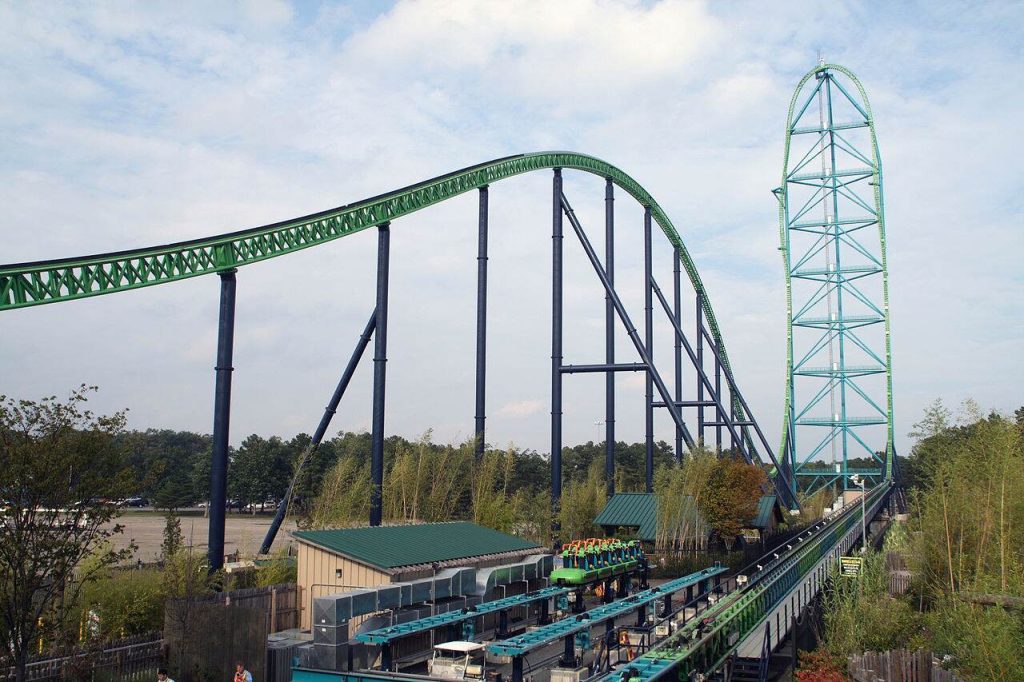
Kingda Ka (Six Flags Great Adventure, New Jersey, United States)
Kingda Ka is another foundational strata coaster, famous for being an extreme “record coaster” style ride. Even people who do not follow coaster news tend to know the name, because it represents the outer edge of what a roller coaster can look like.
Red Force (Ferrari Land, Spain)
Red Force is a strata coaster that leans heavily into the launch experience. It’s a different flavor than the U.S. strata coasters, with a more “rocket launch” identity. It’s also a reminder that strata coasters are not just about height, they are about how you get to that height.
Superman: Escape From Krypton (Six Flags Magic Mountain, California, United States)
This one is a little different because it’s an older style of extreme coaster design, but it still belongs in the strata conversation because it hits the height threshold. It’s a good example of how the industry experimented with “how do we make something that feels impossible” before the modern strata era fully locked in.
The Enthusiast Deep Dive (History, Definitions, And Why The Category Exists)
Strata Coaster Is A Fan Term, Not A Manufacturer Model
“Strata coaster” is a classification used by enthusiasts and the industry conversation, not a specific ride model. A strata coaster can be a launch coaster, a hydraulic launch, an LSM launch, a shuttle design, or a full circuit. The defining trait is the height threshold.
Why 400 Feet Matters
Four hundred feet is not just a nice round number. It’s a psychological and engineering milestone. Once you cross that line:
- Wind becomes a bigger operational factor
- Structural demands scale up fast
- Launch and braking systems have to manage higher energy states
- Evacuation and access planning becomes more complex because you are working at extreme height
If you want the “record coaster” context for why parks chase these thresholds in the first place, this topic pairs well with: Largest Roller Coaster In America and Highest Roller Coaster In The United States.
Strata Coasters And The Record Coaster Era
Strata coasters are closely tied to the record coaster era, when parks were competing for height and speed headlines in a way that was meant to be instantly legible to the public. You don’t have to explain a 400 foot coaster. The number does the marketing for you.
But the tradeoff is that these rides can be more sensitive to weather, maintenance, and operational complexity. That does not mean they are “unsafe.” It means they are extreme machines that demand extreme consistency.
Common Misunderstandings
Myth: A Strata Coaster Is A Specific Type Of Ride Like A Hyper Coaster
Hyper, giga, and strata are all height classes. They do not tell you whether the coaster is launched, whether it has inversions, or whether it is steel or wooden.
Myth: If It Feels Tall, It Must Be A Strata Coaster
Plenty of coasters feel enormous without hitting 400 feet. The category is strict. Either it crosses the threshold, or it does not.
Myth: Strata Coasters Are Only About Height
Height is the definition, but the experience is usually about the whole package: launch, speed, exposure, and the way the ride dominates the skyline.
.

Leave a Reply