Roller coasters have captivated audiences for centuries, evolving from simple ice slides in Russia to the cutting-edge engineering marvels we see in theme parks today. The history of roller coasters is a fascinating journey of innovation, daring, and human imagination. Whether you’re a casual theme park visitor or a dedicated coaster enthusiast, understanding how these thrilling rides came to be will deepen your appreciation for every loop, twist, and turn.
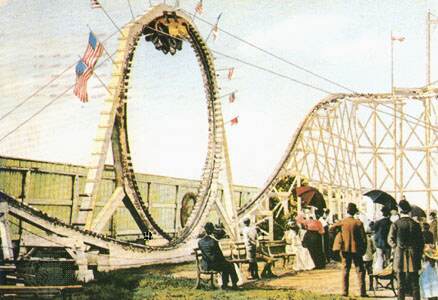
The Origins of Roller Coasters: Russian Ice Slides
The story of roller coasters begins not in America, but in 17th-century Russia. During harsh winters, Russians built massive wooden structures covered in ice, known as “Russian Mountains” or “Gora.” These weren’t rides in the modern sense—they were more like natural toboggan runs where people would slide down on wooden sleds or ice blocks.
These ice slides became popular entertainment, particularly among the Russian aristocracy. The thrill of racing down a steep, icy slope at breakneck speeds captured the imagination of thrill-seekers everywhere. What made these early attractions unique was their simplicity: gravity, ice, and human courage were all that was needed.
As winters became less reliable and ice slides melted away, engineers began thinking about how to recreate this experience year-round. This led to one of the most important developments in amusement park history.
The Birth of the Modern Roller Coaster: Paris, 1817
The first wheeled roller coaster, called “Les Montagnes Russes” (Russian Mountains), opened in Paris around 1817. This wooden structure featured wheeled carts that ran along a wooden track, mimicking the thrilling descent of the Russian ice slides. The ride was a sensation, attracting crowds of curious Parisians eager to experience the rush of speed and danger.
The Paris coaster proved that the concept could work without ice, opening the door for roller coasters to spread across Europe and eventually to America. The design was simple but revolutionary: gravity-powered carts on wooden tracks, with minimal safety features by today’s standards.
The American Revolution: Coney Island and Beyond
In the late 1800s, roller coasters found their true home in America. Coney Island, New York, became the epicenter of amusement park innovation, and roller coasters were at the heart of this revolution.
The Switchback Railway, built by John Miller in 1884 at Coney Island, is often credited as America’s first roller coaster. This wooden structure featured a simple up-and-down design that thrilled riders with its speed and drops. The Switchback was a massive success, proving that Americans had an insatiable appetite for thrilling rides.
Following the Switchback’s success, dozens of roller coasters were built across America. The Cyclone at Coney Island (1927) became legendary, and its design influenced coaster construction for decades. These early wooden coasters were engineering marvels for their time, built entirely from wood and relying on gravity and friction for control.
Interestingly, roller coasters were promoted as wholesome family entertainment and a way to keep people away from saloons and other vices. Parks marketed them as healthy outdoor activities that brought families together.
The Wooden Coaster Era: 1920s–1970s
The early-to-mid 20th century was dominated by wooden roller coasters. These rides became iconic symbols of American amusement parks, and many historic wooden coasters still operate today.
- The Cyclone (1927, Coney Island): Still operating and considered one of the greatest wooden coasters ever built
- The Thunderbolt (1925, Pittsburgh): Known for its unique design and thrilling drops
- The Wooden Roller Coaster at Kennywood (1927): A classic that continues to thrill riders
- The Leap-the-Dips (1902, Pennsylvania): The oldest continuously operating roller coaster in the world
Wooden coasters of this era were built by skilled craftsmen who understood wood, physics, and the psychology of fear. These rides were rough, unpredictable, and genuinely dangerous by modern standards—which is exactly why people loved them.
The Steel Revolution: 1959 and Beyond
The introduction of steel roller coasters in 1959 changed everything. The Disneyland Matterhorn Bobsleds, while technically a dark ride with coaster elements, paved the way for pure steel coasters. However, the real game-changer came with Arrow Development Company and other steel coaster designs in the 1960s.
Steel coasters offered advantages that wooden coasters couldn’t match:
- Smoother rides with more precise control
- Ability to create inversions (loops)
- Greater flexibility in track design
- Improved safety features
- Longer ride durations
The first modern steel loop coaster was the Corkscrew at Knott’s Berry Farm in 1975, which featured a full 360-degree inversion. This opened the floodgates for increasingly complex and thrilling coaster designs.
The Inversion Era: 1970s–1990s
Once engineers figured out how to safely invert riders, the race was on to create more loops, corkscrews, and inversions. The 1980s and 1990s saw an explosion of multi-inversion coasters that pushed the boundaries of what was possible.
- The Great American Scream Machine (1973): One of the first modern steel coasters with multiple inversions
- The Vortex (1987, Kings Dominion): Featured six inversions, a record at the time
- The Raptor (1994, Cedar Point): Pioneered the inverted coaster design where riders hang beneath the track
These coasters became increasingly complex, with designers competing to create the most inversions, the highest drops, and the most intense G-forces. Theme parks invested heavily in these attractions as centerpieces of their parks.
Technological Advancements: Engineering Innovation
Throughout the history of roller coasters, technological advancements have continuously pushed the boundaries of what’s possible:
- Magnetic Braking Systems: Allowed for more precise control and smoother stops
- Computer-Aided Design: Improved safety and performance by simulating rides before building them
- Hydraulic Launch Systems: Created intense thrills without massive lift hills
- Restraint Technology: Evolved from simple lap bars to sophisticated harness systems
- Track Materials: Advanced steel alloys and manufacturing techniques for durability and precision
Modern Era: Records and Innovation (2000s–Present)
The 21st century has seen roller coasters reach new heights—literally and figuratively. Modern coasters are engineering masterpieces that combine speed, height, inversions, and storytelling in ways that would have seemed impossible just decades ago.
- Kingda Ka (2005): Tallest roller coaster in the world at 456 feet
- Formula Rossa (2010): Fastest coaster at 149 mph
- Steel Dragon 2000 (2000): Longest coaster at over 8,000 feet
- Takabisha (2011): Steepest coaster with a 121-degree drop
Modern coasters also incorporate immersive theming, special effects, and interactive elements that blur the line between coaster and dark ride. Examples include:
- Expedition Everest (Disney): Combines coaster thrills with storytelling
- Transformers: The Ride 3D (Universal): Integrates motion simulation with coaster elements
- Hagrid’s Magical Creatures Motorbike Adventure (Universal): Features motorbike-style seating and animatronics
The Evolution of Coaster Design Philosophy
Over the decades, the philosophy behind coaster design has shifted. Early coasters focused purely on speed and drops. Mid-century coasters emphasized inversions and complexity. Modern coasters prioritize the complete experience—combining thrills with storytelling, theming, and accessibility.
- Rider Comfort: Engineered to minimize discomfort while maximizing thrills
- Accessibility: Designed to accommodate riders with disabilities
- Theming: Integrated into immersive themed lands
- Sustainability: Investment in eco-friendly coaster designs
- Unique Experiences: Each new coaster aims to offer something never done before
The Global Expansion of Roller Coasters
While America pioneered the modern roller coaster, the technology has spread worldwide. Today, some of the world’s most impressive coasters are found in:
- Japan: Known for innovative designs and record-breaking coasters
- Europe: Home to classic wooden coasters and cutting-edge steel designs
- China: Rapidly becoming a hub for new coaster construction
- Middle East: Featuring luxury theme parks with world-class attractions
This global expansion has created a worldwide community of coaster enthusiasts who travel internationally to experience new rides and historic classics.
Famous Historic Theme Parks
- Coney Island: The birthplace of American roller coasters
- Cedar Point: Home to numerous record-breaking coasters and a coaster enthusiast destination
- Kennywood: Operating since 1898 with a mix of historic and modern coasters
- Disneyland: Pioneered themed coaster experiences
- Six Flags Parks: Known for bold, innovative coaster designs
The Future of Roller Coasters
As we look ahead, the history of roller coasters continues to be written. Emerging technologies like virtual reality, augmented reality, and AI-controlled elements promise to revolutionize the coaster experience once again.
- Hybrid Coasters: Combining wooden and steel elements
- Personalized Experiences: Coasters that adapt to individual rider preferences
- Sustainable Design: Eco-friendly materials and energy-efficient systems
- Extreme Innovation: Coasters that challenge our understanding of what’s possible
Conclusion: A Thrilling Legacy
The history of roller coasters is a testament to human innovation, courage, and the desire to push boundaries. From Russian ice slides to modern engineering marvels, roller coasters have evolved into one of the world’s most beloved forms of entertainment.
Understanding this history helps us appreciate the incredible engineering, artistry, and vision that goes into every modern coaster. Whether you’re riding a historic wooden coaster that’s been thrilling riders for over a century or experiencing cutting-edge steel innovation, you’re participating in a tradition that spans hundreds of years.
The next time you’re at a theme park, take a moment to appreciate the coaster you’re about to ride. It’s the result of centuries of innovation, countless engineers’ dreams, and humanity’s endless quest for thrills.

Leave a Reply