Disability access passes are one of the most misunderstood parts of theme park planning. Some people assume they are “front of the line” passes. Others assume you need to bring a diagnosis letter and prove your disability. Both assumptions can lead to a stressful day, and in some cases, a denied request at Guest Relations.
This guide is international with a US tilt. I’m going to explain the common patterns most major parks use, then give a few examples of well-known programs (like Disney’s Disability Access Service and Universal’s accessibility services) so you can see how it looks in real life.
Important Note: Policies change often, sometimes with little warning. Always check the park’s official accessibility page before you travel. This article is general guidance, not legal advice, and not a guarantee of what any specific park will offer on your visit date.
The Quick Answer: What A Disability Access Pass Usually Is
In most major parks, a disability access pass is not a “skip the line” perk. It is usually one of these:
- A return-time system: you get a time to come back later, so you are not physically waiting in a long queue environment.
- An alternate entrance or alternate queue: used when the standard queue is not accessible for a mobility device, or when the queue has stairs or tight turns.
- A rider switch style accommodation: one person waits with someone who cannot queue, then they swap without losing the whole day.
- Communication accommodations: captioning, interpreters, visual alerts, or written instructions.
It is best to think of it as “a tool to make access possible,” not “a reward for having a disability.” Parks are trying to balance accessibility, fairness, and safety, and the rules reflect that.
Why Theme Parks Have Tight Rules Now
Most parks tightened disability access rules over the last decade for a few reasons:
- Abuse and resale culture: some people treated access programs like a cheat code.
- Capacity limits: if too many guests are routed into alternate systems, the system collapses for the people who truly need it.
- Better physical accessibility: many parks improved queue design, which means mobility alone often does not require a special pass.
- Privacy and legal constraints: parks often cannot, and should not, demand private medical details.
That last point matters. Most parks will not ask “what is your diagnosis?” They will ask something closer to: “What barrier prevents you from using the standard queue?” and “What accommodation would help?”
Common Accessibility Needs (And What Parks Usually Offer)
Different disabilities create different barriers. The best requests are specific to the barrier, not the label.
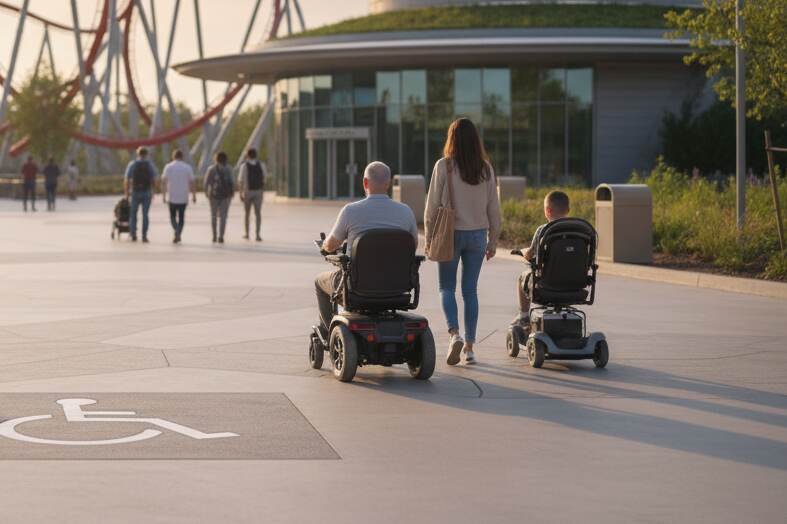
Mobility Devices (Wheelchairs, ECVs, Walkers)
Many guests assume wheelchair use automatically means a disability access pass. In many parks, it does not, because most modern queues are built to be wheelchair accessible.
What you may see instead:
- Accessible queue access: you use the standard queue, just like everyone else.
- Transfer requirements: some rides require you to transfer from an ECV to a manual wheelchair, or from a wheelchair to the ride vehicle.
- Alternate entrances: used if the queue has stairs, narrow turns, or other barriers.
Important reality: A mobility device solves “standing for long periods.” It does not always solve “tight sensory environments,” “panic triggers,” or “medical needs that require leaving a line quickly.” Parks often treat those as different categories.
Neurodivergence, Cognitive Disabilities, And Developmental Disabilities
This is one of the most common reasons guests request a return-time accommodation. The barrier is often the environment of the queue itself: tight spaces, unpredictable waits, sensory overload, and the inability to tolerate a long confined line without distress.
What parks often do:
- Return-time systems so you can wait elsewhere
- Clearer instructions, written guidance, or calmer check-in processes
- Limits on party size for the accommodation (so it is not used as a group perk)
Chronic Illness And Conditions That Require Quick Bathroom Access
Some guests cannot safely remain in a long queue without immediate access to a restroom, medication, cooling, or a place to sit or lie down.
Common accommodations include:
- Return-time systems
- Permission to leave and re-enter a queue (varies widely)
- Guidance on the best locations for first aid, restrooms, and quiet spaces
If your condition makes you prone to overheating or faintness, build your day around pacing and stability. Rope Drop Strategy Without Burning Out and Stay Hydrated At Theme Parks Without Constant Bathroom Breaks are genuinely useful even if you never request an access pass.
Hearing, Vision, And Communication Disabilities
Not every accessibility need is about waiting in line. Many parks provide:
- Captioning devices or captioning apps
- Assistive listening devices
- Sign language interpretation on a schedule (often by request)
- Printed or visual guides for attractions
These accommodations are often handled separately from any return-time system.
How The Process Usually Works (Step By Step)
Step 1: Check The Park’s Official Accessibility Page Before You Go
This is not optional anymore. Many parks require pre-registration, video calls, or third-party verification steps. Some require you to do it days in advance. Some do it same-day. You do not want to learn the rules at 10:30 a.m. while your group is waiting at the gate.
Step 2: Be Ready To Describe The Barrier, Not Your Diagnosis
Expect questions like:
- “What prevents you from waiting in a standard queue?”
- “What happens if you have to wait in a long line?”
- “What accommodation helps you access the attraction?”
You do not need to overshare. You do need to be clear.
Step 3: Learn The Rules For Party Size And Return Times
Most parks limit how many people can be included. Many parks also limit how many return times you can hold at once. This is normal. It is how programs stay functional.
Step 4: Understand That Some Rides Have Safety Limits No Pass Can Override
Accessibility passes do not override ride safety requirements. If a ride requires a transfer, a specific body position, or a restraint fit, the park may not be able to accommodate beyond what the ride system allows.
If you want a deeper explanation of why restraints and fit rules exist, read Why Roller Coasters Have Different Restraints and Are Lap Bars Safe?.
What Documentation Is And Is Not Allowed (General Guidance)
This varies by country and company, but these patterns show up often:
- Parks often do not want, and may not be allowed, to collect diagnosis letters. Many will refuse to look at detailed medical paperwork.
- Some parks use third-party systems that verify that you have a need for accommodations without sharing private details widely.
- Some parks accept certain disability ID cards depending on region, but many do not, because disability status does not automatically equal a queue accommodation need.
A widely used example of a third-party option is the IBCCES Accessibility Card, which some attractions use as part of their process. Always confirm whether your specific park uses it, because requirements can change.
Examples Of Major Programs (Policies Change, Always Verify)
Disney Disability Access Service (DAS)
Disney’s DAS is one of the most searched programs, and also one of the most misunderstood. The official explanation and current process are on Disney’s site, and you should treat that as the source of truth: Disability Access Service (DAS) at Walt Disney World and DAS at Disneyland.
General pattern: DAS is designed for guests who cannot tolerate a conventional queue environment. It is not a mobility device program, because most Disney queues are accessible. It typically functions as a return-time system.
Universal Accessibility Services
Universal publishes accessibility information for its parks, including mobility device guidance and attraction access notes. Official pages are the best reference point: Universal Orlando Accessibility Information and Universal Studios Hollywood Accessibility Information.
General pattern: Universal’s approach often separates “mobility access” (which may be handled through accessible queues and transfer procedures) from “additional assistance” needs that may involve return times or alternate processes.
Cedar Fair And Six Flags Park Accessibility Pages
Many regional chains publish park-specific accessibility pages, and they can differ from park to park. For example, Cedar Point’s accessibility hub is here: Cedar Point Accessibility.
General pattern: You will often see ride-by-ride accessibility guides, transfer requirements, and clear statements about what accommodations are available and what is not.
Service Animals: What To Expect
Service animal rules vary by country, but theme parks usually have a few consistent patterns:
- Service animals are generally allowed in the park, but not on most rides.
- Parks often have designated relief areas.
- Some attractions have a procedure for where the animal waits during the ride.
Always check the park’s official service animal policy before you go, because the details matter.
Ride Transfers And Mobility Device Rules (The Part People Miss)
Even when a queue is accessible, the ride vehicle might not be. Many parks require:
- Transfer from ECV to wheelchair for certain queues
- Transfer from wheelchair to ride seat
- Ability to maintain a specific posture or hold a restraint position
This is not a moral judgment. It is a mechanical and safety reality. The best way to avoid surprises is to read the park’s ride-by-ride accessibility guide before you arrive.
Common Reasons Requests Get Denied (And What To Do Instead)
- “I cannot stand in line” with no other barrier: many parks will suggest a wheelchair or ECV instead of a return-time pass.
- Request is too vague: describe the barrier clearly, not just “I have a disability.”
- Party size expectations: expecting a large group to be included is a common mismatch.
- Trying to use the program as a line skip: parks are trained to spot this, and it harms disabled guests most.
If you are denied, ask what alternatives exist. Some parks offer quiet spaces, rider swap options, or attraction-specific accommodations even if you do not qualify for a general pass.
Planning Tips That Make Access Easier (Even Without A Pass)
- Use pacing, not hero mode: build breaks into your day. This rope drop pacing strategy is useful even for experienced parkgoers.
- Hydrate and manage heat: it affects symptoms and tolerance. This hydration guide is built for real park days.
- Dress for comfort and regulation: overheating and sensory discomfort can be a trigger. What To Wear To A Theme Park helps.
- Pick lower intensity attractions strategically: if someone in your group is anxious, start gentle. Overcome Roller Coaster Phobia is a solid mindset and strategy piece.
FAQ: Disability Access Pass Rules
Is A Disability Access Pass A Front Of The Line Pass?
Usually no. Most modern programs are return-time systems designed to prevent someone from physically waiting in a queue environment that is not accessible for them.
Do I Need To Bring A Doctor’s Note?
Often no, and many parks do not want detailed medical paperwork. Some parks use third-party verification systems. The best move is to check the park’s official accessibility page before you go.
Can A Park Ask Me What My Disability Is?
Policies and laws vary by country. Many parks focus on the functional barrier and the accommodation needed, rather than collecting diagnosis details.
Does Using A Wheelchair Automatically Qualify Me For A Pass?
Not always. Many parks have accessible queues, and mobility needs may be handled through standard queue access and ride transfer procedures instead of a return-time pass.
What If Someone Abuses The System?
Abuse is one reason rules are strict. The best thing regular guests can do is not police disabled people in public. Let the park handle enforcement. Disabled guests deserve dignity, and you cannot identify someone’s needs by looking at them.

Leave a Reply