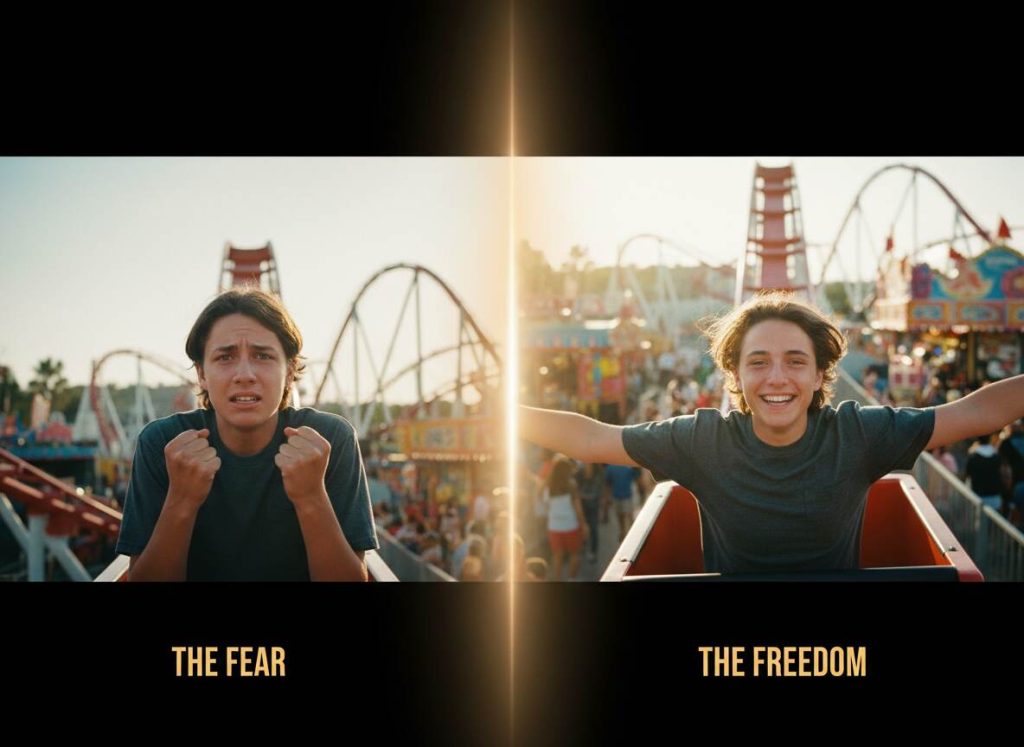
If the thought of boarding a roller coaster makes your palms sweat and your heart race, you’re not alone. Roller coaster phobia—sometimes called coasterphobia—is more common than you might think. Whether it’s the fear of heights, loss of control, or that stomach-dropping sensation, millions of people avoid coasters entirely, missing out on the thrill and joy that comes with the ride.
The good news? Fear of roller coasters is one of the most manageable phobias out there. With the right approach, understanding, and a little bit of courage, you can go from white-knuckling the safety bar to actually enjoying the experience. This guide walks you through the psychology behind coaster fear, practical strategies to overcome it, and real stories from people who’ve done it.
Understanding Roller Coaster Phobia: What’s Really Happening
Before you can overcome a fear, it helps to understand what’s actually going on in your body and mind. Roller coaster phobia isn’t about being weak or irrational—it’s a legitimate anxiety response triggered by real sensations and perceived threats.
When you’re on a coaster, your body experiences intense G-forces, rapid acceleration, sudden drops, and loss of control. Your brain interprets these sensations as danger, even though intellectually you know you’re safe. This disconnect between what you know and what you feel is what makes coaster anxiety so persistent.
The fear typically stems from one or more of these core anxieties: fear of heights, fear of losing control, fear of the unknown, claustrophobia from restraints, or previous negative experiences. Some people have a combination of these fears, which makes the anxiety more complex to untangle.
The Physical Response: What Your Body Is Doing
When you feel afraid on a roller coaster, your sympathetic nervous system kicks into overdrive. This is your body’s fight-or-flight response—the same mechanism that kept our ancestors safe from predators. Your heart rate spikes, adrenaline floods your system, and your muscles tense up.
The stomach-dropping sensation you feel during a coaster’s descent isn’t actually your stomach moving—it’s the sensation of weightlessness. Your inner ear, which controls balance and spatial awareness, sends signals to your brain that you’re falling. Combined with the visual input of the ground rushing away, your brain interprets this as genuine danger.
This physical response is automatic and involuntary. You can’t simply “think” your way out of it in the moment. But understanding that your body is doing exactly what it’s designed to do—protecting you—can help you reframe the experience. Your fear response is a feature, not a flaw.
The Psychology Behind Coaster Anxiety
Psychologically, coaster phobia often connects to deeper anxieties about control and safety. If you’re someone who likes to feel in control of your environment, the helplessness of being strapped into a moving machine can trigger significant anxiety. You can’t steer, you can’t stop, and you can’t escape—at least, not until the ride ends.
For some people, coaster fear is linked to past trauma or anxiety disorders. If you’ve experienced panic attacks or have generalized anxiety, coaster rides can feel like a trigger. The intense physical sensations mimic panic symptoms, which can reinforce the fear cycle.
There’s also the element of the unknown. If you’ve never ridden a coaster before, your imagination fills in the blanks with worst-case scenarios. You might catastrophize—imagining restraint failures, derailments, or other unlikely disasters. This anticipatory anxiety can be as intense as the actual ride experience.
Practical Strategies to Overcome Coaster Fear
The key to overcoming coaster phobia is gradual exposure combined with cognitive reframing. You’re essentially teaching your brain that coasters are safe, and that the intense sensations, while uncomfortable, aren’t dangerous.
Start Small with Non-Coaster Rides
If you’re terrified of coasters, don’t jump straight into a hypercoaster. Begin with gentler rides that provide some of the same sensations in a less intense way. A Ferris wheel, a log flume, or a spinning ride can help you acclimate to heights and motion without the intensity of a full coaster experience.
The goal here is to expose yourself to the sensation of being off the ground and moving in unexpected ways, but in a controlled, less frightening environment. This builds tolerance gradually.
Visit the Park Without Riding
Spend time at an amusement park just observing. Watch people ride coasters. Notice that they’re laughing, smiling, and exiting safely. Listen to the sounds of the ride. Familiarize yourself with the environment. This desensitization process helps reduce the anxiety that comes from the unknown.
Talk to people who’ve just ridden the coaster you’re considering. Ask them what it felt like. Most coaster enthusiasts are happy to share their experience, and hearing positive accounts can help reframe your expectations.
Learn the Mechanics
Understanding how coasters actually work can significantly reduce anxiety. Learn about the engineering, the safety systems, and the testing protocols. Coasters are engineered with multiple redundancies—if one system fails, others take over. Modern coasters are tested extensively before opening and regularly inspected.
Knowing that the restraint system is designed to keep you secure, that the track is engineered to withstand forces far greater than what the ride produces, and that operators are trained professionals can help your rational mind override your fearful mind.
Practice Breathing and Grounding Techniques
Before and during the ride, use breathing techniques to calm your nervous system. The 4-7-8 breathing method (inhale for 4 counts, hold for 7, exhale for 8) activates your parasympathetic nervous system, which counteracts the fight-or-flight response.
Grounding techniques—focusing on physical sensations like the feel of the seat beneath you or the texture of the safety bar—can help keep you present and reduce catastrophic thinking. When your mind starts spiraling into worst-case scenarios, anchor yourself to the present moment.
Reframe the Sensations
This is perhaps the most powerful strategy. Instead of interpreting the stomach-dropping sensation as danger, reframe it as excitement. The physical sensations of fear and excitement are nearly identical—the difference is in how you interpret them.
Before riding, tell yourself: “This feeling is excitement. My body is preparing me for something thrilling, not dangerous. I’m safe, and I’m about to experience something amazing.”
This cognitive reframing takes practice, but it’s remarkably effective. You’re not denying the fear; you’re redirecting it toward a more positive interpretation.
Choosing the Right Coaster for Your First Ride
If you’re ready to actually ride a coaster, choosing the right one is crucial. You want something that provides the coaster experience without being overwhelming.
Look for Wooden Coasters
Wooden coasters often feel less intense than steel coasters, even if their stats are similar. The track is wider, the restraints are often just lap bars (which feel less confining), and the ride has a more “human-scale” feel. Classic wooden coasters like the Thunderbolt or the Cyclone are iconic for a reason—they’re thrilling without being terrifying.
Avoid Hypercoasters and Giga Coasters for Your First Ride
Hypercoasters (over 200 feet) and giga coasters (over 300 feet) are designed for experienced riders. The drops are steeper, the speeds are higher, and the G-forces are more intense. Save these for after you’ve built confidence.
Consider Family Coasters
Family coasters are specifically designed to be thrilling without being overwhelming. They have smaller drops, lower speeds, and gentler turns. Rides like Big Thunder Mountain Railroad or Space Mountain are excellent gateway coasters—they’re fun, they’re safe, and they don’t feel like punishment.
Check the Height and Speed
Look at the coaster’s specifications. A coaster that’s 100 feet tall and goes 50 mph is very different from one that’s 300 feet tall and goes 120 mph. Start with something in the lower range and work your way up as your confidence grows.
The Day of Your First Ride: A Step-by-Step Guide
Arrive Early and Scope Out the Ride
Get to the park early and spend time near the coaster. Watch it operate. Notice the safety systems, the restraints, and the people riding. The more familiar it becomes, the less scary it will feel.
Eat a Light Meal
Don’t ride on an empty stomach, but also don’t eat a heavy meal right before. A light snack an hour or two before helps stabilize your blood sugar and reduces nausea risk.
Hydrate and Avoid Caffeine
Dehydration and caffeine can amplify anxiety. Drink water throughout the day, but avoid excessive caffeine, which can increase heart rate and jitteriness.
Use the Bathroom
Anxiety often manifests as needing to use the bathroom. Take care of this before you get in line. You don’t want to be stuck in a queue with a full bladder and racing thoughts.
Get in Line with a Supportive Person
Bring someone who’s ridden the coaster before or who’s supportive of your goal. Having someone to talk to during the wait can reduce anticipatory anxiety. Avoid people who’ll mock your fear or pressure you beyond your comfort level.
Practice Your Breathing as You Wait
As you get closer to the front of the line, start using your breathing techniques. Focus on slow, deep breaths. This activates your parasympathetic nervous system and reduces physical anxiety symptoms.
Communicate with the Operator
When you board, you can tell the operator that it’s your first ride. Many operators are understanding and can offer reassurance. They’ve seen nervous riders before, and they know the ride is safe.
Choose Your Seat Wisely
Front and back seats feel very different. The front seat has a clear view of the drop, which can increase anxiety. The back seat whips around more, which some people find more intense. Middle seats are often the most comfortable for first-timers—you get the experience without the extreme sensations.
Use Your Grounding Technique
Once you’re seated and restrained, use your grounding technique. Feel the seat beneath you. Notice the texture of the safety bar. Keep your eyes open (closing them often increases anxiety). Focus on your breathing.
Embrace the Experience
When the coaster starts moving, remind yourself: “I’m safe. This is exciting. I’m doing this.” Let yourself feel the sensations without fighting them. Tension and resistance make the experience feel worse.
What to Expect: The Sensations Explained
The Lift Hill
The coaster slowly climbs to the top. You’ll hear the chain mechanism and feel the steady climb. This is the anticipatory phase—your anxiety might peak here. Remember: this is normal. Your body is preparing itself.
The Drop
This is the moment that scares most people. As the coaster crests the hill and begins its descent, you’ll feel weightlessness. Your stomach will feel like it’s in your throat. This sensation lasts only seconds, but it can feel longer. Remember: this is the stomach-dropping sensation we discussed—it’s not dangerous, it’s just your inner ear responding to weightlessness.
The Turns and Inversions
As the coaster navigates turns and loops, you’ll feel G-forces pushing you into your seat. This can feel intense, but it’s the restraint system doing its job—keeping you secure. Your body is experiencing forces, but you’re completely safe.
The Brake Run
As the coaster approaches the station, the brakes engage and you’ll feel a gentle deceleration. This is the relief phase—your anxiety will likely drop significantly as you realize you’ve made it through.
After Your First Ride: Processing the Experience
Give Yourself Time to Process
After you exit the coaster, your adrenaline will still be elevated. Your legs might feel shaky, and your heart might still be racing. This is normal. Find a quiet spot, sit down, and let your nervous system settle.
Celebrate Your Accomplishment
You did it. You faced your fear and rode a coaster. That’s a significant achievement. Take a moment to acknowledge your courage. This positive reinforcement is important for building confidence for future rides.
Reflect on the Experience
Think about what you felt during the ride. Was it as bad as you’d imagined? What surprised you? What did you enjoy? This reflection helps your brain integrate the experience and update its threat assessment. Your brain learns: “I survived this, and it wasn’t as dangerous as I thought.”
Consider Riding Again
If you’re feeling good, consider riding again immediately. The second ride is often significantly less anxiety-inducing because you know what to expect. Many people find that their fear drops dramatically after the second or third ride.
Gradually Work Up to More Intense Coasters
Once you’ve conquered your first coaster, you can gradually work up to more intense rides. Each success builds confidence and reduces anxiety for the next challenge.
When to Seek Professional Help
For most people, the strategies outlined above are sufficient to overcome coaster phobia. However, if your anxiety is severe, if it’s connected to a broader anxiety disorder, or if you’re not making progress, consider seeking help from a mental health professional.
Cognitive-behavioral therapy (CBT) is particularly effective for phobias. A therapist can help you identify the specific thoughts and beliefs driving your fear and work with you to reframe them. Exposure therapy—gradually facing the feared situation in a controlled way—is also highly effective and can be tailored to your specific needs.
Some people benefit from short-term anti-anxiety medication to help them get through their first ride. If this is something you’re considering, talk to your doctor about your options.
Real Stories: People Who Overcame Coaster Phobia
Sarah’s Story: From Terrified to Thrill-Seeker
Sarah had avoided coasters her entire life due to a fear of heights. At 32, she decided she was tired of missing out on family trips to amusement parks. She started by riding a Ferris wheel, then a log flume, then a family coaster. Her first “real” coaster was the Thunderbolt at Kennywood. She was terrified, but she did it. Now, five years later, she’s ridden over 50 coasters and is planning a trip to Cedar Point specifically to ride the Millennium Force. “I realized my fear was bigger in my head than in reality,” she says. “Once I rode that first coaster, everything changed.”
Marcus’s Story: Overcoming Panic Disorder
Marcus has generalized anxiety disorder and panic attacks. Coasters terrified him because the physical sensations mimicked his panic symptoms. With the help of a therapist, he learned to reframe the sensations as excitement rather than danger. He started with gentle rides and gradually worked up. “The coaster became a way to prove to myself that I could handle intense sensations without catastrophizing,” he says. “It actually helped my anxiety overall.”
Jennifer’s Story: Conquering a Childhood Fear
Jennifer was traumatized by a coaster experience as a child and avoided them for 20 years. She finally decided to face her fear for her daughter, who wanted to ride coasters. She visited the park multiple times without riding, learned about coaster engineering, and practiced breathing techniques. Her first ride back was a family coaster, and she cried—not from fear, but from relief and joy. “I realized I’d let one bad experience define me for two decades,” she says. “I’m so glad I faced it.”
The Bigger Picture: Why Facing This Fear Matters
Overcoming coaster phobia isn’t just about riding a roller coaster. It’s about building confidence, challenging anxious thoughts, and proving to yourself that you can do hard things. The skills you develop—breathing techniques, cognitive reframing, gradual exposure—apply to other areas of your life where anxiety might be holding you back.
Many people who overcome coaster phobia report that it spills over into other areas. They feel more confident tackling other challenges. They’re less likely to avoid situations due to anxiety. They’ve learned that their fearful thoughts aren’t always accurate, and that facing discomfort leads to growth.
Coasters also offer something increasingly rare in modern life: a moment of pure presence. When you’re on a coaster, you can’t check your phone, you can’t think about work, you can’t worry about the future. You’re completely in the moment. For many people, that’s incredibly therapeutic.
Conclusion: Your Coaster Journey Starts Now
Roller coaster phobia is real, but it’s also one of the most conquerable fears out there. With understanding, practical strategies, and a little bit of courage, you can go from avoiding coasters to enjoying them.
Start small. Be patient with yourself. Celebrate your progress. And remember: millions of people have faced this fear and come out the other side. You can too. Your first coaster ride is waiting for you—and it’s going to be amazing.
