Theme park locker rules are one of those things that sound simple until you are standing at the entrance of a ride holding a backpack, a souvenir cup, sunglasses, and a phone you absolutely do not trust your pockets with. Then suddenly you are learning the park’s locker system in real time, under pressure, while the line keeps moving.
This guide is a mixture of the big patterns that apply almost everywhere, plus the most common “gotchas” you will run into at major parks. I’m splitting it into sections so you can skim based on what kind of park you’re visiting and what kind of rides you’re riding.
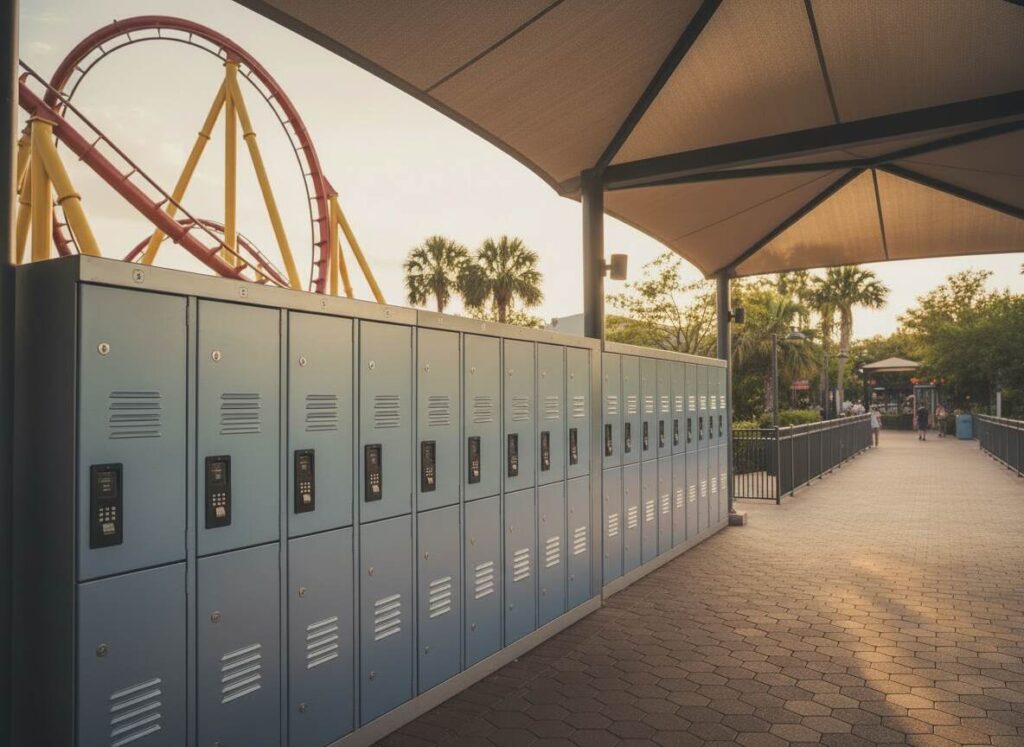
Quick Reality Check: Locker Rules Are Not About Being Annoying
Locker rules exist because loose items turn into projectiles, ride downtime, and injuries. Parks also hate retrieving phones from restricted areas, shutting down coasters for lost hats, and dealing with guests who insist their bag is “small enough” until it is not.
If you want the bigger context of how parks manage risk (and why “it’s never happened to me” is not a safety plan), it helps to understand the basics of coaster safety systems and incident prevention. This kind of context is why I wrote Accidents on Roller Coasters: Understanding Risk, Safety, and What Really Happens.
The Three Locker Systems You Will See Most Often
1) Optional Lockers Near The Front Gate Or Central Areas
This is the old-school model: you rent a locker for the day and use it like a home base. You will see this in a lot of parks, especially where guests bring towels, changes of clothes, or big bags.
Best for: families, water park days, souvenir-heavy days, people who hate carrying anything.
2) Ride-Adjacent Lockers For Specific Attractions
This is the modern “high-thrill” model: certain rides have strict loose-article rules, so lockers are placed right at the ride entrance. These are often the rides with:
– inversions and high speed
– aggressive transitions that shake pockets loose
– metal detectors (more on that below)
Sometimes these lockers are paid. Sometimes there is a free window (like a limited time period) and then it becomes paid if you exceed it. The exact details vary by park, but the pattern is consistent: the stricter the ride, the more likely you are to use a locker.
3) Free Bins Or Cubby Shelves (Usually For Milder Rides)
These are the “leave your bag on the side” setups. They are common on family rides, dark rides, and attractions where the risk of loose items is lower.
Important: bins are not lockers. They are not secure, and parks are not going to treat them like secure storage. Use them for low-value items only, or keep valuables on your body.
Common Locker Rules Across Most Major Parks
Loose Articles Are The Main Trigger
Most locker rules boil down to one sentence: if it can fall out, it cannot come with you. That includes:
– bags and backpacks
– hats and loose headwear
– sunglasses (unless secured)
– phones (on certain rides)
– keys, wallets, and coins if pockets are not secure
– souvenir cups and bottles
Even if a park allows phones on many rides, the stricter coasters often do not. The parks that enforce this hardest tend to be the ones that have had a lot of phone-loss incidents and downtime.
Metal Detectors Usually Mean “Nothing In Your Pockets”
If a ride has metal detectors, assume the rule is basically: you are riding with nothing but you. That means no phone, no keys, no wallet, no loose change, no power bank, no vape, no anything.
This is where people get mad because they are used to “zipper pockets are fine.” Some parks do not care. Others care a lot. If you see metal detectors, do not gamble. Just use the locker and move on with your life.
Locker Size Limits Are Real
Most parks offer multiple locker sizes, but the “cheap” or “free window” lockers are often small. If you are carrying a full-size backpack, you may need a larger paid locker even if small lockers are free.
Medical Exceptions Are Common, But Not Unlimited
Many parks allow certain medical items to remain with you or be handled differently, but you should expect to explain what you have and follow staff instructions. If you have medical needs, it is worth planning a little extra time for security and ride entry.
Universal-Style Locker Culture (High Enforcement, Ride-Adjacent)
Universal parks are famous for strict loose-article enforcement on certain rides. The big pattern: if the ride is intense and the park has had issues with phones flying, you will see a system that pushes you toward lockers.
What this means for you as a guest:
– you should expect to use ride-adjacent lockers for some headliners
– you should not plan on “just keeping my phone in my pocket” as a universal rule
– you should minimize what you carry so locker stops are fast
If you are going to Universal Orlando and you are trying to plan your day around crowds and time sinks, this Universal crowd calendar helps, because locker bottlenecks get worse when the park is slammed.

Disney-Style Locker Culture (More Optional, More Bag-Friendly)
Disney parks tend to be more bag-friendly overall, and you will see more guests carrying backpacks all day. That does not mean there are no rules, it just means the ride mix is different and the enforcement style is different.
What this means for you:
– you can often keep a small bag with you on many attractions
– you still need to secure loose items, especially on faster rides
– you may use lockers more as a convenience than a requirement
Even in bag-friendly parks, do not assume hats and sunglasses are safe. If you care about it, secure it or store it.
Six Flags And Cedar Fair Legacy Parks (Varies By Ride, Often Strict On Big Coasters)
These parks can be a mix. Some coasters will allow small items in secured zipper pockets. Some will push you toward lockers. Some will have bins. Some will have strict policies on specific rides that have a history of loose-article incidents.
The best approach in these parks is not “what does the park allow,” it is “what does this ride enforce.” If you are doing a coaster-heavy day, plan like you will need to store stuff at least a few times.
Water Parks And Water Ride Days (Lockers Are Not Optional If You Want To Stay Sane)
If you are doing water rides or a water park, lockers stop being a “maybe” and become a sanity tool. Wet phones, wet wallets, and wet car keys are not character-building. They are just annoying.
For water-heavy days, assume you will want:
– a locker for dry storage
– a waterproof pouch for essentials you keep on you
– a plan for towels, sandals, and a change of clothes
What To Bring: The Locker-Friendly Packing List
This is the stuff that makes locker rules easier instead of harder.
Bring A Small Crossbody Or Sling Instead Of A Full Backpack
A small sling bag is easier to fit in lockers, easier to manage in queues, and less likely to become a problem at ride entry. If you must bring a backpack, consider a packable one that compresses down.
Bring A Zipper Pouch For Pocket Items
This sounds silly until you are emptying your pockets into a locker and you drop a credit card under a bench. A small zipper pouch keeps keys, cards, and coins together so you are not juggling loose chaos.
Bring A Portable Charger, But Know When You Must Store It
Power banks are great, but they often count as loose articles. Plan to store it for stricter rides. Do not assume you can carry it everywhere.
Bring A Hair Tie Or Hat Clip If You Wear Loose Hair Or Hats
Loose hair whipping around can be distracting, and hats are one of the most commonly lost items in parks. If you are attached to your hat emotionally, secure it or store it.
Bring A Cheap Pair Of Sunglasses Or A Retainer Strap
If you wear expensive sunglasses, you have two choices: strap them down or accept that you might lose them. A retainer strap looks dorky, but it works.
Bring A Refillable Water Bottle, But Expect To Store It Sometimes
Hydration matters, especially if you are prone to dizziness or faint feelings after rides. If you want the physiology side of this, this post on why people faint on roller coasters connects the dots between heat, hydration, and feeling awful.
Just know that on stricter rides, bottles are usually not allowed in line or on the platform. You may need to finish it, stash it, or use a locker.
Bring A Waterproof Phone Pouch If You Are Doing Water Rides
This is one of the highest return-on-investment items you can buy. It saves your phone, your sanity, and your ability to take photos without living in fear.
What Not To Bring (Unless You Like Paying For Lockers And Losing Stuff)
– bulky backpacks packed like you are moving apartments
– loose hats you refuse to remove
– expensive sunglasses with no strap
– anything you cannot bear to lose, if you are not willing to store it
– lots of loose pocket items with no zipper pockets or pouch
The Locker Survival Strategy (So You Do Not Waste Your Whole Day)
1) Decide Your Carry Level Before You Enter The Park
Pick one:
Minimal carry: phone, card, ID, small battery, maybe a small bottle.
Medium carry: sling bag with essentials, small sunscreen, charger, meds.
Full carry: backpack with everything, plus a locker plan.
The more you carry, the more you should expect locker friction.
2) Use One “Home Base” Locker If You Have Bulk Items
If you have towels, changes of clothes, or big souvenirs, a central locker can save you from repeated ride-adjacent locker stops. Then you carry a small sling for the rest of the day.
3) Treat Metal Detector Rides Like A Separate Mode
When you hit a metal detector ride, switch modes: empty pockets, store everything, ride, then reload. Trying to half-commit is how you end up doing the walk of shame back to the lockers.
4) Plan For The “After Ride” Moment
After an intense ride, people are clumsy. That is when phones get dropped and wallets get left behind. Take five seconds at the locker to do a quick check: phone, keys, wallet, done.
FAQ: Theme Park Locker Rules
Do All Theme Parks Require Lockers For Roller Coasters?
No. Many coasters allow small items in secured pockets or allow bags in bins, but stricter rides and parks may require lockers, especially when metal detectors are used or when loose-article incidents are common.
Are Ride Lockers Free?
Sometimes. Some parks offer a free window for small lockers near certain rides, while others charge per use or per time period. The most reliable approach is to assume you may pay for lockers and plan your carry items accordingly.
What Should I Do With My Phone On Rides?
On many rides, a phone in a secure zipper pocket is fine. On stricter coasters, phones may be banned entirely and you will be required to store them in a locker. If you see metal detectors, assume your phone cannot come with you.
What Is The Best Bag For Theme Parks If Lockers Are Common?
A small sling or crossbody bag is usually the easiest. It fits in small lockers, it is easy to manage in lines, and it reduces the number of times you have to stop and reorganize your stuff.
Do Lockers Allow Medical Items?
Many parks make accommodations for medical needs, but the exact rules vary. If you rely on medical supplies, plan extra time at ride entry and follow staff instructions.

Leave a Reply