If you’ve ever stood at the entrance to a theme park, you know the feeling: the distant roar, the clickety-clack of a lift hill, and that split-second decision—do you go for the classic wooden beast or the sleek, twisting steel giant? For coaster fans, the debate isn’t just about comfort or speed—it’s about history, engineering, nostalgia, and what kind of thrill you’re chasing. Wooden and steel roller coasters are more than just rides; they’re two entirely different worlds, each with its own legends, quirks, and fan base.
In this deep dive, we’re going way beyond surface-level comparisons. We’ll explore the origins of both types, how they’re built, what makes them unique, and how they’ve shaped the modern amusement park. We’ll ride through the golden ages, the record-breakers, the underdogs, and even the hybrids that blur the lines. Whether you’re a die-hard woodie fan or a steel devotee, you’ll find plenty to argue, admire, and maybe even change your mind about.
Ready to settle the score? Let’s start at the very beginning—when roller coasters were just wild dreams and a lot of lumber.
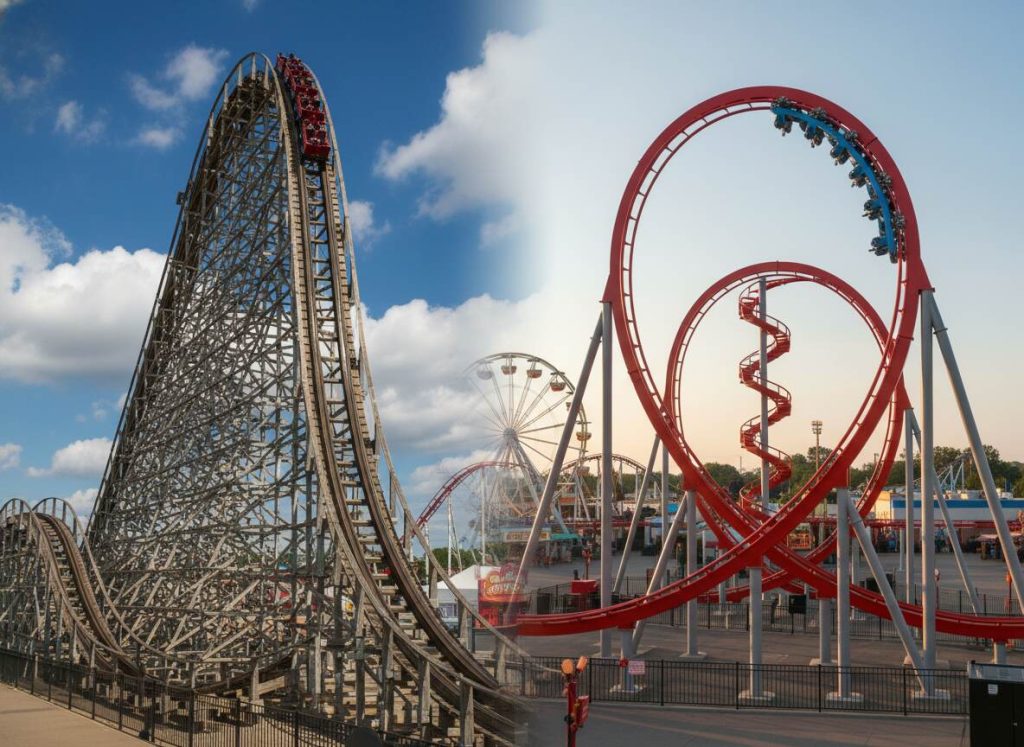
The Origins: From Lumber to Loops
The story of roller coasters begins, fittingly, with wood. The earliest thrill rides were Russian ice slides—huge wooden ramps slicked with ice, built for winter fun in 17th-century St. Petersburg. Riders would zoom down on sleds, and the idea quickly spread across Europe. By the early 1800s, the French were building “Russian Mountains” with wheels and tracks, the ancestors of today’s wooden coasters.
In America, wooden coasters exploded in popularity during the late 1800s and early 1900s. Parks like Coney Island became ground zero for coaster innovation. Designers like LaMarcus Thompson and John Miller introduced lift hills, safety ratchets, and new layouts, turning simple out-and-back rides into twisting, airtime-packed adventures. These woodies were built by hand, one plank at a time, and their creaks and groans became the soundtrack of summer for generations.
Steel, on the other hand, didn’t enter the scene in a big way until the 1950s. The Matterhorn Bobsleds at Disneyland (1959) was the first major tubular steel coaster, and it changed everything. Suddenly, designers could twist, loop, and spiral in ways wood never allowed. The age of steel had begun, and a new kind of thrill was unleashed.
But even as steel took over, wooden coasters never disappeared. Instead, they evolved—sometimes borrowing tricks from their steel cousins, sometimes doubling down on tradition. The result? Two very different coaster cultures, each with its own diehard fans.
Engineering and Construction: How They’re Built
The bones of a roller coaster tell you a lot about what kind of ride you’re in for. Wooden and steel coasters might share the same goal—give you a rush—but the way they get there couldn’t be more different.
Wooden Coasters: Tradition, Craft, and a Whole Lot of Nails
Building a wooden coaster is part carpentry, part art. The structure is made of thousands of pieces of lumber, nailed and bolted into a flexible lattice that sways and breathes with the wind and the weight of the train. The track itself is usually made of stacked layers of wood, topped with a thin steel strip (called a running rail) that the wheels ride on.
- Flexibility: Wood naturally flexes, so every ride feels a little different. That’s part of the charm—and the challenge for maintenance crews.
- Hand-Built: Most classic woodies were built almost entirely by hand, with crews working through all kinds of weather to get every curve just right.
- Sound & Feel: The famous “rumble” and “clack” of a wooden coaster come from those joints and connections. You feel every bump, and that’s the point.
Steel Coasters: Precision, Innovation, and Endless Possibilities
Steel changed everything for coaster builders. Tubular steel track can be bent, twisted, and welded into nearly any shape. Support structures are often made of steel beams, allowing for taller, thinner, and more complex designs.
- Smoothness: Steel track offers a glassy ride with fewer jolts and vibrations. That’s why you can have tight loops, corkscrews, and wild inversions without rattling your teeth out.
- Prefabrication: Many steel coasters are built in factories, shipped in pieces, and assembled on site—like a giant, high-stakes puzzle.
- Innovation: Magnetic launches, spinning cars, and 4D seats are all possible because of steel’s flexibility and strength.
At the end of the day, the difference comes down to feel. Wooden coasters are alive—they creak, they sway, they have personality. Steel coasters are precision machines, built for speed, smoothness, and pushing the limits of what’s possible.
The Ride Experience: What Sets Them Apart on the Track
For most riders, the real difference between wooden and steel coasters isn’t something you can see from the midway—it’s what you feel in your bones, your stomach, and maybe your knees. Here’s how the experience stacks up, from the first drop to the final brake run.
Wooden Coasters: Raw, Wild, and Unpredictable
Riding a wooden coaster is all about sensation. The structure flexes and sways, so every ride is a little bit different. You’ll hear the clatter of wheels on track, feel the train rattle through the curves, and maybe even catch a whiff of creosote from the lumber. There’s a reason fans call them “woodies”—they have personality.
- Airtime Galore: Many woodies are built for “airtime”—that stomach-dropping moment when you lift out of your seat. Classic layouts like out-and-back or double figure-eight are designed for maximum pops of weightlessness.
- Lateral Forces: Expect to be thrown side-to-side in the turns. Wooden coasters often have less banking, so you’ll feel those laterals in your ribs.
- Rough and Tumble: The ride can be bumpy, especially on older woodies. Some people call it “character,” others call it “bone-shaking”—either way, it’s unforgettable.
- Scenery and Setting: Woodies often weave through trees or hug the landscape, giving you a classic, organic feel you won’t get on a parking lot steel coaster.
Steel Coasters: Smooth, Fast, and Full of Surprises
Steel coasters are all about pushing boundaries—higher, faster, and wilder. The ride is usually silky-smooth, so designers can go bigger and bolder with inversions, launches, and crazy maneuvers.
- Inversions & Loops: Steel’s flexibility makes it possible to add corkscrews, zero-G rolls, and heartline twists that would snap a wooden track in half.
- Speed & Height: The tallest and fastest coasters in the world are all steel. Want to break a record? You need steel.
- Precision Elements: Expect perfectly engineered turns, snappy transitions, and special effects like magnetic launches or spinning seats.
- Variety of Experiences: Flying, standing, suspended, or even lying down—steel coasters let you ride in ways wood never could.
Whether you crave the old-school rumble or the futuristic smoothness, both types offer something you can’t get anywhere else. The real magic? You don’t have to choose—just ride them all.
Famous Examples: Legends of Wood and Steel
If you want to understand the best of both worlds, just look at the legends—those rides that have stood the test of time, broken records, or inspired a whole new generation of thrill seekers. Here are some of the most iconic wooden and steel coasters, each with a story as wild as the ride itself.
Wooden Coaster Icons
- Leap-the-Dips (Lakemont Park, USA): The oldest operating roller coaster in the world. Built in 1902, this National Historic Landmark is still running on nothing but gravity and tradition.
- The Cyclone (Coney Island, USA): Opened in 1927, the Cyclone is pure New York legend. Its sharp drops and relentless airtime have inspired countless imitations, but nothing matches the original.
- Colossos (Heide Park, Germany): One of the tallest and fastest woodies in Europe, Colossos is known for its massive drops and relentless pacing—a modern take on a classic design.
- The Beast (Kings Island, USA): Opened in 1979, the Beast is the world’s longest wooden coaster, famous for its epic length, night rides through the woods, and bone-rattling speed.
- Balder (Liseberg, Sweden): Praised for its smooth ride and insane airtime, Balder is a favorite among European coaster enthusiasts.
Steel Coaster Legends
- Matterhorn Bobsleds (Disneyland, USA): The world’s first tubular steel coaster, opened in 1959. It set the stage for every steel coaster that followed.
- Millennium Force (Cedar Point, USA): Broke records for height and speed in 2000 and is still considered one of the best steel coasters ever built. Its smooth ride and breathtaking views are legendary.
- Steel Dragon 2000 (Nagashima Spa Land, Japan): The longest coaster in the world, stretching over 8,100 feet. It’s a bucket-list ride for any serious fan.
- Intimidator 305 (Kings Dominion, USA): Known for its intense speed and relentless G-forces, this steel giant is not for the faint of heart.
- Nemesis (Alton Towers, UK): An inverted coaster that dives through trenches and tunnels, Nemesis is a masterpiece of layout and theming.
These rides are more than just statistics—they’re milestones in engineering, creativity, and pure, unfiltered fun. If you ever get the chance, seek out these legends and see why they’ve earned their place in coaster history.
Famous Examples: Legends of Wood and Steel
Some coasters are more than rides—they’re icons. Whether it’s the creaky legend that’s survived a century or the record-breaker that changed the game, these are the wooden and steel coasters that every fan should know (and ride, if you can).
Wooden Coaster Icons
- Leap-the-Dips (Lakemont Park, USA): The world’s oldest operating coaster, built in 1902, still running on gravity and nostalgia.
- The Cyclone (Coney Island, USA): Opened in 1927, this Brooklyn legend is all sharp drops, wild airtime, and New York attitude.
- The Beast (Kings Island, USA): Since 1979, the world’s longest wooden coaster has been terrifying and delighting riders with its epic, forest-hugging layout.
- Colossos (Heide Park, Germany): A modern woodie known for its massive airtime hills and relentless speed.
- Balder (Liseberg, Sweden): Praised for its smooth ride and powerful airtime, Balder is a must for European coaster fans.
Steel Coaster Legends
- Matterhorn Bobsleds (Disneyland, USA): The first tubular steel coaster, opened in 1959, set a new standard for coaster design.
- Millennium Force (Cedar Point, USA): Broke height and speed records in 2000, and still ranks among the best for its smooth ride and epic drops.
- Steel Dragon 2000 (Nagashima Spa Land, Japan): The world’s longest coaster at over 8,100 feet—a marathon of speed and airtime.
- Intimidator 305 (Kings Dominion, USA): Famous for its intense G-forces and relentless pacing, this one’s not for the faint of heart.
- Nemesis (Alton Towers, UK): An inverted masterpiece that twists through trenches and tunnels, setting the bar for themed steel coasters.
From century-old classics to cutting-edge steel monsters, these coasters are the reason fans travel the world. Each one tells a story of innovation, challenge, and the pure joy of a great ride.
Pros and Cons: The Real Differences for Riders and Parks
Wooden and steel coasters each have their diehard fans—and their fair share of critics. If you’re trying to decide which is right for you, or you just love a good debate, here’s an honest look at the upsides and downsides of each type, from the rider’s seat and the park’s perspective.
Wooden Coasters
- Pros:
- Unique Ride Experience: Every ride feels a little different, thanks to wood’s natural flexibility and movement.
- Classic Charm: The sound, the sway, and the nostalgia are unmatched. Riding a woodie feels like stepping back in time.
- Airtime and Laterals: Wooden layouts often deliver big pops of airtime and strong lateral forces you won’t find on most steel coasters.
- Blends with Nature: Woodies are often built into the landscape, weaving through trees and hugging the terrain.
- Cons:
- Rougher Ride: The bumps and rattles are part of the charm for some, but can be uncomfortable for others—especially on older or poorly maintained coasters.
- Maintenance-Heavy: Wood requires constant upkeep. Tracks can warp, supports can rot, and repairs are labor-intensive and expensive.
- Limited Elements: Tight loops and extreme maneuvers are tough (though not impossible) to pull off with wood.
- Weather Sensitive: Rain, heat, and cold can all affect how a woodie runs—and sometimes shut it down altogether.
Steel Coasters
- Pros:
- Smoothness: Glassy track and precise engineering mean fewer jolts and a more comfortable ride, even at extreme speeds and heights.
- Design Flexibility: Want loops, corkscrews, launches, or spinning cars? Steel can do it all, opening up endless creative possibilities.
- Lower Maintenance: Steel structures are more durable and easier to maintain than wood, making them appealing for parks looking to save on upkeep.
- Record-Breaking Potential: The world’s tallest, fastest, and most complex coasters are all steel.
- Cons:
- Can Feel “Sterile”: Some fans say steel lacks the character and unpredictability of wood. The ride is smooth—but sometimes, that means less personality.
- Heat and Sun: Steel structures can get blazing hot in the sun, making summer rides a little less comfy.
- Cost: While maintenance is lower, the initial investment for a massive steel coaster can be sky-high.
- Less Integration with Nature: Many steel coasters are built on open lots, which can feel less immersive than a woodie weaving through the woods.
There’s no “best” coaster—just the one that makes you smile the most. For some, it’s the classic rumble of wood; for others, it’s the smooth, head-spinning rush of steel. The real winner? Anyone who gets to ride both.
Pros and Cons: What Riders and Parks Really Notice
Both wooden and steel coasters have their loyalists, and both have their drawbacks. Here’s a side-by-side look at what makes each type shine—and where they sometimes fall short.
Wooden Coasters
- Pros:
- Unique Ride Every Time: The natural flex and slight imperfections in wood mean no two rides are identical. You get a little surprise every time you board.
- Classic Charm: There’s nothing like the sound, smell, and nostalgia of a real woodie. It’s a living piece of history.
- Airtime and Lateral Forces: Many woodies are famous for their pops of airtime and those wild, sideways turns that throw you into your seatmate.
- Blends with the Landscape: Woodies often snake through trees and hills, making the ride feel organic and connected to its surroundings.
- Cons:
- Rough Ride: The bumps and rattles are part of the experience for some, but can be too much for others—especially on older or poorly maintained coasters.
- High Maintenance: Wood warps, cracks, and rots, so constant repairs are a must. It’s labor-intensive and expensive for parks.
- Limited Elements: Big inversions, extreme banking, and wild layouts are harder to pull off with wood—though new technology is changing that.
- Weather Sensitive: Rain, heat, and cold can affect how a woodie runs and even force closures.
Steel Coasters
- Pros:
- Smooth as Glass: Steel track means fewer jolts and a more comfortable ride, even at breakneck speeds and wild angles.
- Design Freedom: Loops, launches, spinning seats, and even flying trains—steel lets designers dream big.
- Lower Maintenance: Steel structures are more durable and easier to keep in top shape, which makes them attractive to parks.
- Record Breakers: The tallest, fastest, and craziest coasters in the world are all steel.
- Cons:
- “Sterile” Feel: Some say steel coasters lack the personality and unpredictability of wood. The ride is smooth, but maybe a little less soulful.
- Heat: Steel can get blazing hot in the sun, making summer rides a sweaty affair.
- High Cost: Steel coasters often cost more to build, especially for big, record-breaking projects.
- Less Immersive: Many steel coasters are built on open lots, so you might miss the feeling of weaving through the woods or hugging the terrain.
The real answer? Ride both. The best parks have a mix, so you can chase nostalgia and break records—all in one day.
The Rise of Hybrid Coasters: Blurring the Lines
Just when you thought you had to pick a side, along came the hybrids—coasters that combine the best (and sometimes the wildest) features of both wood and steel. These rides have changed the game, winning over both traditionalists and thrill junkies with their inventive designs and unforgettable experiences.
What Is a Hybrid Coaster?
A hybrid coaster usually means a ride that uses a wooden support structure with a steel track, or vice versa. The most famous examples use steel track on wooden frames, letting designers add inversions, steep drops, and super-smooth rides to classic layouts.
Why Hybrids Matter
- Best of Both Worlds: You get the classic look and feel of a woodie, but with the smoothness and wild elements of a steel coaster.
- Innovation: Hybrids have pushed the boundaries of what’s possible—think 90-degree drops, barrel rolls, and airtime hills that would be impossible on traditional wood.
- Preservation: Many hybrids are built by retracking or renovating old wooden coasters, saving them from demolition and giving them a new lease on life.
Famous Hybrid Coasters
- Steel Vengeance (Cedar Point, USA): Built on the bones of the old Mean Streak, Steel Vengeance is a record-breaking hybrid with insane airtime, four inversions, and a reputation as one of the best coasters on the planet.
- Twisted Colossus (Six Flags Magic Mountain, USA): This California classic was transformed from a beloved woodie into a dueling hybrid with wild drops and a racing layout.
- Wicked Cyclone (Six Flags New England, USA): Once a rough old woodie, now a smooth, relentless hybrid with barrel rolls and powerful airtime.
- Iron Rattler (Six Flags Fiesta Texas, USA): Another wooden legend reborn with a steel track, featuring a dramatic cliffside plunge and smooth inversions.
Hybrids prove you don’t have to choose between old-school charm and new-school thrills. They’re a love letter to the past, a leap into the future, and—if you’re lucky—a chance to ride something truly unique.
Ready for more? Let me know if you want a section on ride maintenance, future trends, or a big conclusion!
The Rise of Hybrid Coasters: When Wood Meets Steel
The battle between wood and steel used to be pretty clear—until hybrid coasters crashed the party. These rides take the best of both worlds, mixing wooden support structures with steel track, or vice versa. The result? Some of the wildest, most creative coasters ever built.
What Makes a Hybrid?
The most famous hybrids use a wooden frame with a high-tech steel track, letting designers add elements—like inversions, steep drops, and ultra-smooth turns—that traditional woodies could never handle. Sometimes, it’s the other way around: steel supports with wooden track for a classic feel but modern reliability.
- Best of Both Worlds: Hybrids offer the look and rumble of a woodie with the smoothness and wild layouts of steel. It’s nostalgia and innovation in one ride.
- Saving Old Classics: Many hybrids are created by renovating aging wooden coasters—replacing rough, worn-out track with steel, and adding new tricks to keep the ride fresh.
- Record Breakers: Hybrids have set records for height, speed, and inversions, proving you don’t have to pick sides to push the limits.
Famous Hybrid Coasters
- Steel Vengeance (Cedar Point, USA): Built on the bones of the old Mean Streak, this coaster is a legend—packed with airtime, inversions, and relentless pacing.
- Twisted Colossus (Six Flags Magic Mountain, USA): A California icon reborn as a dueling hybrid, famous for its racing trains and wild drops.
- Wicked Cyclone (Six Flags New England, USA): Once a classic woodie, now a smooth, twisted hybrid with barrel rolls and wild airtime.
- Iron Rattler (Six Flags Fiesta Texas, USA): A wooden favorite transformed into a hybrid powerhouse, featuring a dramatic cliff dive and smooth inversions.
Hybrid coasters have changed the game—winning over fans of both wood and steel, saving classics from demolition, and proving that sometimes the best ride is the one that refuses to fit in a single box.
Maintenance and Longevity: What It Takes to Keep Them Running
Building a great coaster is only half the battle—the real test is keeping it running safely, smoothly, and thrillingly year after year. Wooden and steel coasters each have their own maintenance challenges, and what happens behind the scenes can make all the difference for riders and parks alike.
Wooden Coasters: Constant Care and Craftsmanship
Wood is a living material. It expands, contracts, warps, and weathers with every season. That means wooden coasters need near-constant attention. Crews walk the track every morning, checking for loose bolts, cracked boards, and signs of rot or wear. It’s not unusual for parks to replace hundreds—or even thousands—of feet of track every off-season.
- Trackwork: Boards wear out fast, especially on high-stress curves and drops. Skilled carpenters are essential for keeping the ride safe and fun.
- Structure: Supports can shift or settle over time. Parks monitor the foundation and frame, making adjustments as needed to keep everything aligned.
- Weather Woes: Rain, snow, and sun all take a toll. Some parks treat wood with preservatives or cover the track in the off-season, but there’s no way to stop Mother Nature completely.
Steel Coasters: Precision and Prevention
Steel is more predictable than wood, but it’s not maintenance-free. Welds, bolts, and joints need regular inspection for stress or fatigue. Paint is critical to prevent rust, especially in humid or coastal climates. Many parks use ultrasonic or X-ray inspections to catch problems before they become dangerous.
- Track and Supports: Steel can bend or crack under stress, especially on high-speed elements. Engineers keep a close eye on trouble spots and replace sections as needed.
- Train Upkeep: Modern trains are packed with sensors, computers, and moving parts. Keeping everything running smoothly means constant checks and high-tech diagnostics.
- Less Labor, Higher Tech: Steel coasters generally need less hands-on work than woodies, but repairs can be more specialized and expensive.
Whether it’s the daily ritual of track walking or the high-tech scans of a steel giant, maintenance is what keeps the thrills coming. The best parks invest heavily in both people and technology, because a great coaster is only as good as the care it receives.
The Future of Roller Coasters: Innovation, Nostalgia, and What Comes Next
The world of roller coasters is always evolving—sometimes in wild, unexpected ways. As technology advances and fans demand new experiences, the line between wooden and steel coasters keeps getting blurrier. So what’s next for these thrill machines? The answer is a mix of cutting-edge innovation, renewed appreciation for tradition, and a dash of pure imagination.
New Materials and Technologies
Engineers are experimenting with advanced composites, weather-resistant woods, and high-strength steels. Prefabricated wooden track (like Intamin’s plug-and-play system) allows for smoother, more intense rides with less maintenance. On the steel side, magnetic launches, spinning cars, and virtual reality overlays are pushing the boundaries of what’s possible.
- Prefab Woodies: Modern woodies like El Toro (Six Flags Great Adventure) use precision-cut track pieces for a ride that’s smoother and more reliable than ever.
- Launch Coasters: Steel coasters with magnetic launches (like Red Force or Kingda Ka) are replacing traditional lift hills for instant acceleration and new sensations.
- Interactive Experiences: From on-board audio to VR headsets, parks are finding ways to make every ride unique, immersive, and shareable.
Nostalgia and Preservation
As new records are set, there’s also a growing movement to save and restore classic coasters. Parks are investing in major refurbishments, retracking, and even rebuilding beloved rides from the past. Fans are more passionate than ever about preserving the unique magic of woodies and early steel coasters.
- Restoration Projects: Iconic rides like the Cyclone or Leap-the-Dips are being preserved for future generations, sometimes with modern upgrades that keep the spirit alive while improving safety and comfort.
- Hybrid Innovations: Companies like Rocky Mountain Construction are giving old woodies new life with steel track—combining history and high-tech thrills.
What Fans Want: Bigger, Wilder, and More Personal
Today’s coaster fans want it all: record-breaking stats, unique ride experiences, and a sense of connection to the past. Parks are responding with rides that break new ground while still honoring tradition. The future? Expect even taller, faster, and more creative coasters—and a renewed appreciation for the classics that started it all.
Whether you love the rumble of wood or the smooth rush of steel, one thing’s for sure: the roller coaster wars are far from over. And for fans, that means the best rides are still to come.
Conclusion: Why the Debate Still Matters (and Why It’s Okay to Love Both)
Wooden vs steel roller coasters isn’t just a technical question—it’s a matter of heart, nostalgia, and what you want from a thrill. Woodies rumble, sway, and remind us of summer days gone by. Steel coasters soar, twist, and show us what’s possible when imagination meets innovation. Both have their legends, their quirks, and their loyal fans. Both push us to laugh, scream, and sometimes conquer our fears.
The truth? You don’t have to pick a side. The best parks—and the best days—offer a little bit of everything: the wild unpredictability of a classic wooden coaster, the smooth, high-flying rush of a modern steel giant, and maybe even a hybrid that blurs the lines in the best way possible. Every ride tells a story, whether it’s the creak of century-old lumber or the whoosh of a magnetic launch.
So next time you’re standing at the crossroads—wood or steel—don’t stress about the “right” choice. Ride both. Celebrate the history, the engineering, and the pure joy that comes from strapping in and letting go. Because in the end, the real winner is anyone who loves the ride.
Whether you’re a die-hard traditionalist, a thrill-seeker chasing records, or just someone who loves the feeling of wind in your hair, there’s a coaster out there with your name on it. And that’s what makes this debate so much fun—it never really ends, and the best answer is always just one more ride away.
Got a favorite wooden or steel coaster? Share your stories, your bucket-list rides, or your wildest coaster memories in the comments. The debate lives on, and every fan’s voice makes the ride even better.
