There’s something about a retired roller coaster that keeps people talking decades after its final ride. Maybe it’s the nostalgia of a childhood memory, or the way a coaster became part of a park’s identity. Some rides were legendary for their innovation, others for their sheer audacity, and some simply left a mark on the hearts of everyone who experienced them. These are the coasters that didn’t just disappear; they became folklore.
Steeplechase Park’s Steeplechase: The Horse Race That Started It All
Steeplechase Park in Coney Island was unlike anything else in the early 1900s, and its namesake ride, the Steeplechase, was the crown jewel. Opened in 1897, this wasn’t your typical wooden coaster. Instead of a traditional train, riders sat on mechanical horses that raced down a track, creating the illusion of an actual horse race. The innovation was stunning for its time, and the ride became so iconic that the entire park was named after it.
What made the Steeplechase legendary wasn’t just the novelty; it was the experience. Riders felt like they were competing in a real race, and the mechanical horses added a playful, almost whimsical element that modern coasters rarely capture. The ride operated for decades, becoming a symbol of Coney Island’s golden age. When Steeplechase Park closed in 1964, the Steeplechase ride became a ghost of Coney Island’s past, but its influence on amusement park design never faded. People still talk about it as the ride that proved coasters could be more than just thrills; they could tell a story.
The Cyclone: A Wooden Legend That Defined a Generation
While the Cyclone still operates today at Coney Island, its original 1927 version holds a special place in coaster history. The original Cyclone was built during the golden age of wooden coasters, and it represented everything that made wooden coasters special: speed, airtime, and a raw, unfiltered thrill that no amount of modern engineering could replicate.
The original Cyclone’s structure was a masterpiece of wooden coaster design. Its first drop was steep and unforgiving, and its turns were sharp and aggressive. Riders experienced genuine airtime on nearly every hill, and the wooden structure creaked and groaned in a way that added to the thrill. The ride became a rite of passage for New Yorkers and a pilgrimage site for coaster enthusiasts from around the world.
Though the Cyclone was rebuilt and restored over the years, the original 1927 version is gone. What remains is a modern interpretation, but the legend of the original Cyclone lives on. People who rode it before the major reconstructions speak of it with reverence, describing an experience that felt dangerous, unpredictable, and absolutely unforgettable. It’s the coaster that set the standard for what wooden coasters could be.
Thunderbolt: The Coney Island Icon That Vanished
Thunderbolt was another Coney Island legend, and its story is one of decline and loss. Built in 1925, the Thunderbolt was a stunning wooden coaster that became synonymous with Coney Island’s amusement park culture. It wasn’t the tallest or the fastest, but it had character. The ride’s structure was elegant, its layout was creative, and it offered a unique experience that reflected the personality of the park.
The Thunderbolt operated for decades, surviving the Great Depression and the post-war decline of Coney Island. But by the 1980s, Coney Island was struggling, and the Thunderbolt fell into disrepair. The ride was eventually demolished in 2000, and with it went a piece of Coney Island’s soul. Enthusiasts and locals still mourn the loss of the Thunderbolt, and photographs of the ride in its heyday are treasured by coaster fans. It represents an era when Coney Island was the center of American amusement park culture, and its absence is felt to this day.
The Bobsled at Kennywood: A Unique Ride That Defined an Era
Kennywood near Pittsburgh had something special with the Bobsled, a ride that operated from 1938 to 2007. The Bobsled was a wooden coaster with a unique design that made it feel like you were actually riding in a bobsled down an icy mountain. The track was narrow, the turns were tight, and the ride had a playful, almost cartoonish quality that made it beloved by families and enthusiasts alike.
What made the Bobsled legendary wasn’t just its design; it was the way it made people feel. Riders described the experience as pure joy, a ride that captured the spirit of mid-century amusement parks. The Bobsled became a symbol of Kennywood’s charm and character, and when it was retired in 2007, the park lost something irreplaceable. People who grew up riding the Bobsled speak of it with genuine affection, and many consider it one of the greatest wooden coasters ever built. Its absence from Kennywood is a reminder that not all great rides last forever.
Verrückt at Dorney Park: The Coaster That Pushed Boundaries
Verrückt, which means “crazy” in German, was a unique steel coaster at Dorney Park in Allentown, Pennsylvania. Built in 1989, Verrückt was an Arrow Dynamics hypercoaster that featured an unusual suspended track design and innovative inversions. The ride was ahead of its time, offering a thrilling experience that felt genuinely different from anything else in the industry.
Verrückt operated for 18 years before being removed in 2007, but its legacy lives on in the minds of enthusiasts who rode it. The coaster was known for its intense airtime, its unique inversions, and the way it seemed to defy the laws of physics. People still debate whether Verrückt was ahead of its time or simply too ambitious for its era. What’s clear is that the ride pushed boundaries and inspired designers to think differently about what coasters could be.
The Grizzly at Kings Dominion: A Wooden Masterpiece
The Grizzly at Kings Dominion in Richmond, Virginia, was a wooden coaster that operated from 1982 to 2007. Designed by John Miller, the Grizzly was a masterpiece of wooden coaster engineering. It featured a unique out-and-back layout, massive airtime hills, and a raw, aggressive style that made it one of the most respected wooden coasters of its era.
The Grizzly was beloved by enthusiasts and casual riders alike. It had character, personality, and a sense of danger that modern coasters often lack. When the ride was removed in 2007, it was a shock to the coaster community. The Grizzly represented everything that made wooden coasters special: innovation, boldness, and a willingness to take risks. People who rode it still talk about the experience with reverence, and many consider it one of the greatest wooden coasters ever built.
Drachen Fire at Busch Gardens: The Coaster That Inspired Devotion
Drachen Fire at Busch Gardens Williamsburg was a steel inverted coaster that operated from 1992 to 2007. Built by Bolliger & Mabillard, Drachen Fire was a technical masterpiece that featured innovative inversions, tight turns, and a layout that challenged riders in unexpected ways. The ride wasn’t the most popular coaster at the park, but it had a devoted following among enthusiasts who appreciated its complexity and creativity.
Drachen Fire’s removal in 2007 sparked genuine mourning in the coaster community. The ride had a cult following, and people who loved it spoke of it as a misunderstood masterpiece. Enthusiasts still debate whether Drachen Fire was ahead of its time or simply too intense for mainstream audiences. What’s undeniable is that the coaster left an impression on everyone who experienced it, and its absence is felt by those who appreciated its unique design.
The Coney Island Cyclone’s Original Track: A Piece of History Lost
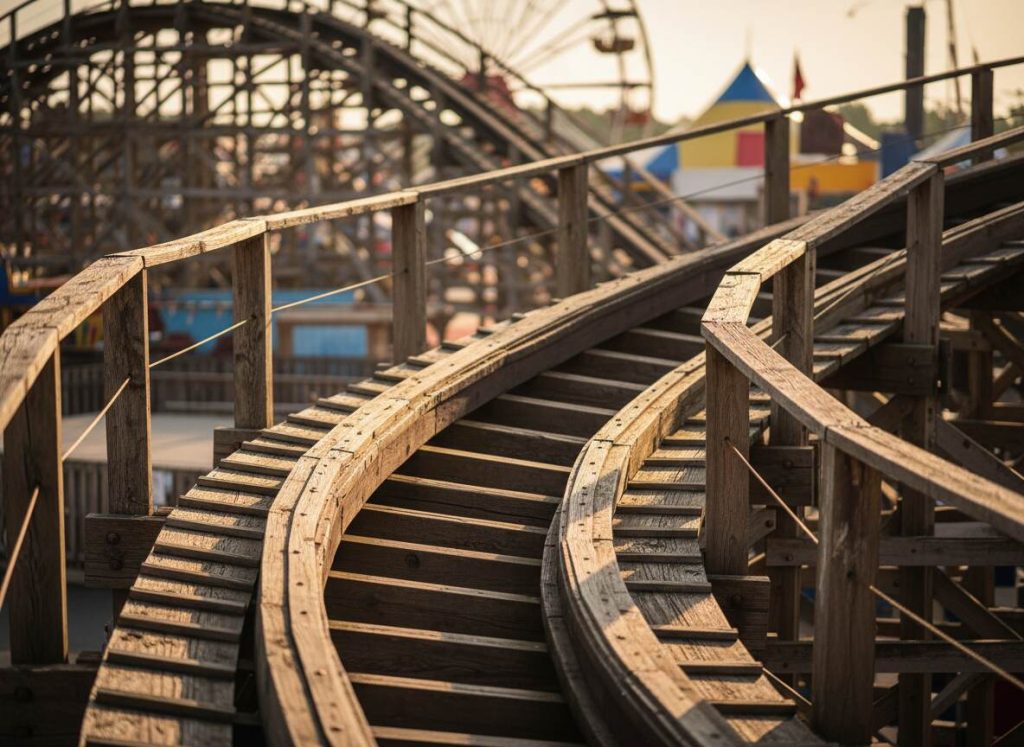
While the Cyclone still operates, the original wooden track from the 1927 ride is largely gone, replaced by modern materials and construction techniques. The original Cyclone’s structure was a marvel of engineering, built with a precision and craftsmanship that reflected the era. The wooden track was hand-built, and every joint and connection was carefully considered.
The loss of the original Cyclone’s track is symbolic of a larger trend in the amusement park industry: the replacement of vintage rides with modern reconstructions. While these reconstructions often preserve the spirit of the original ride, something is lost in the process. The original materials, the craftsmanship, and the historical authenticity are gone. People who rode the original Cyclone speak of a quality and character that the modern version, despite its excellence, cannot fully replicate.
Astroland’s Collection: An Entire Park’s Legacy
Astroland at Coney Island was home to several legendary coasters, including the Astroland Cyclone, the Tornado, and the Spaceman. When Astroland closed in 2008, it wasn’t just individual rides that were lost; it was an entire ecosystem of coasters that had defined Coney Island’s amusement park culture. The park had been operating since 1962, and its rides had become part of the fabric of New York City’s entertainment landscape.
The closure of Astroland was a watershed moment for the coaster community. It represented the end of an era, the loss of a place where generations of New Yorkers had made memories. The rides from Astroland are now scattered or demolished, but their legacy lives on in the hearts of those who experienced them. People still talk about Astroland with nostalgia and affection, remembering not just the individual coasters but the entire experience of the park.
Why We Still Talk About Defunct Coasters
Defunct coasters capture our imagination because they represent something more than just rides. They’re symbols of eras past, reminders of the way amusement parks used to be, and testaments to the creativity and boldness of earlier designers. When a coaster is removed, we lose not just a ride but a piece of history.
The coasters that people still talk about decades after their removal share certain qualities. They were innovative for their time, they had personality and character, and they created genuine emotional connections with riders. They weren’t just thrills; they were experiences. They told stories, they challenged expectations, and they pushed the boundaries of what was possible.
In an era when coasters are becoming increasingly standardized, when parks prioritize height and speed over creativity and character, defunct coasters remind us of a different approach to amusement park design. They remind us that the greatest rides aren’t always the tallest or the fastest; sometimes they’re the ones that feel the most alive, the most unpredictable, and the most human.
The Nostalgia Factor: Why Defunct Coasters Matter
There’s a powerful nostalgia attached to defunct coasters, especially for those who rode them during their operational years. A coaster isn’t just a mechanical ride; it’s a time machine. Riding a coaster can transport you back to a specific moment in your life, a specific era, a specific version of yourself. When that coaster is removed, that connection is severed.
This nostalgia is why defunct coasters continue to be discussed, photographed, and celebrated in the coaster community. Enthusiasts collect photographs of defunct coasters, document their histories, and share stories of their experiences. Online forums and social media groups dedicated to defunct coasters have thousands of members who gather to reminisce, share photographs, and discuss the rides they loved.
The nostalgia isn’t just personal; it’s cultural. Defunct coasters represent eras in American history, moments when amusement parks were at the center of entertainment culture. They remind us of the way things used to be, of a slower pace, of a different approach to fun and excitement. In a world that’s constantly changing, defunct coasters offer a connection to the past, a reminder of what we’ve lost and what we might be missing.
Preservation and Memory: Keeping Defunct Coasters Alive
While we can’t bring back defunct coasters, we can preserve their memory. Coaster enthusiasts have become archivists of amusement park history, documenting rides through photographs, videos, and written accounts. Museums and historical societies have begun to recognize the cultural significance of amusement park rides, and some have started collecting artifacts and documentation related to defunct coasters.
The internet has made it possible for coaster enthusiasts from around the world to connect and share their knowledge and passion. Online databases catalog defunct coasters, their specifications, their histories, and their significance. YouTube channels dedicated to coaster history have millions of views, introducing new generations to rides they’ll never experience firsthand.
This preservation effort is important because it keeps the memory of these rides alive. Future generations will be able to learn about the Steeplechase, the Thunderbolt, and the Grizzly, even if they never have the chance to ride them. They’ll understand the evolution of coaster design, the creativity of earlier engineers, and the cultural significance of amusement parks in American history.
The Future of Defunct Coaster Culture
As more classic coasters are retired and replaced with modern attractions, the culture surrounding defunct coasters will likely grow. Enthusiasts will continue to document, discuss, and celebrate the rides of the past. New technologies like virtual reality might eventually allow people to experience defunct coasters in digital form, creating a new way to connect with rides that no longer exist.
The conversation around defunct coasters also raises important questions about preservation and progress. Should parks preserve historic coasters, even if they’re no longer the most thrilling or profitable attractions? Should we prioritize innovation and new experiences, or should we value the preservation of cultural artifacts? These are questions that the amusement park industry and the coaster community will continue to grapple with.
What’s clear is that defunct coasters matter. They matter to the people who rode them, to the coaster enthusiasts who study them, and to the cultural history of amusement parks in America. They remind us that the greatest rides aren’t always measured in height or speed, but in the memories they create and the emotions they inspire. As long as people continue to talk about the Steeplechase, the Thunderbolt, and the Grizzly, these rides will never truly be gone.
