If you’ve ever crested a hill, felt that stomach-lift “float,” and noticed a little space between you and the lap bar, you’ve probably had the same thought a lot of riders have: wait, is this thing actually holding me in?
Yes. When they’re used correctly and you meet the ride’s fit requirements, lap bars are a safe, engineered restraint system on roller coasters. They’re not “safe because parks say so.” They’re safe because they’re designed around physics, human body positioning, redundant checks, and strict operating rules that prevent a train from dispatching if restraints aren’t secured.
Lap bars also feel different than people expect. They’re not always meant to pin you down like a vise. On many coasters, especially airtime-focused rides, the restraint is designed to contain you and keep you positioned correctly, even while you experience moments of weightlessness.
Let’s break down what lap bars actually do, how they lock, why they can feel “loose,” and what really matters for safety.
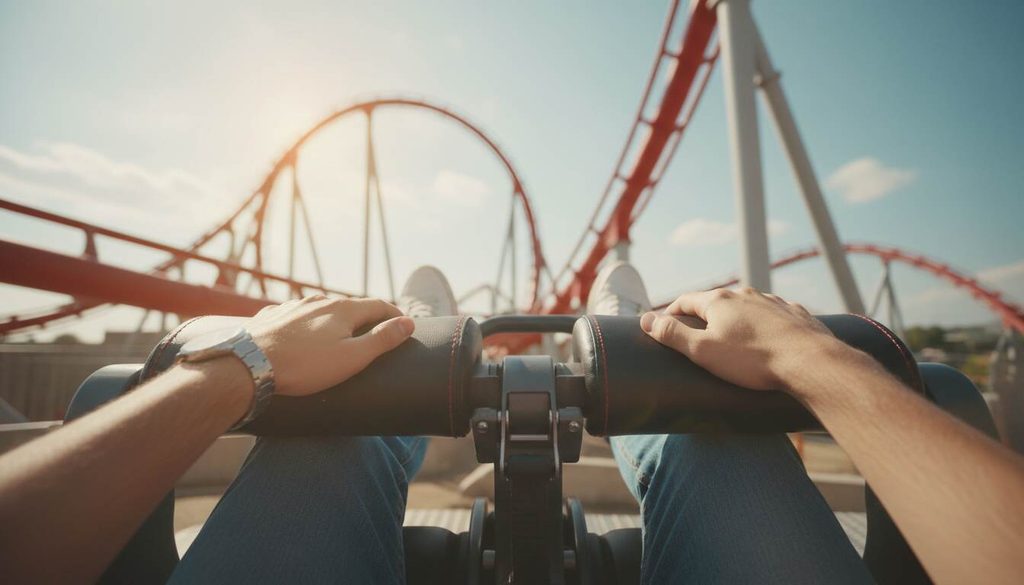
Quick Answer: Are Lap Bars Safe?
Lap bars are safe on roller coasters when:
- the restraint is fully engaged and verified by the ride’s safety system
- the rider meets the height and fit requirements
- the rider is seated properly (hips back, not slouching or perching)
- the ride is operated and maintained according to its procedures and inspection standards
A lap bar’s job is not to “hold you down by force.” Its job is to keep you inside the ride’s designed containment envelope during the forces the coaster is built to produce, including airtime (negative G forces), lateral forces in turns, and the repeated push of positive Gs in valleys.
If you want a broader overview of how coaster safety has evolved over time, this pairs well with roller coaster safety technology evolution, because modern restraints are part of a bigger safety stack, not a single point of failure.
What A Lap Bar Is Actually Designed To Do
When people picture restraint safety, they often imagine one simple idea: “If I’m not clamped down, I could fly out.” That’s not how coaster restraint engineering works.
On most coaster trains, your safety comes from a system working together:
- Seat geometry that positions your hips and legs in a stable way
- The lap bar shape that contacts your body in a specific region (typically hips and upper thighs)
- The locking mechanism that prevents the bar from opening during the ride
- Sensors and control logic that confirm restraints are in an acceptable locked state before dispatch
- Operating rules (height, posture, loose articles, rider behavior) that keep the system working as intended
Think of a lap bar less like a clamp and more like a containment gate that keeps your body in the correct place while the ride does what it’s designed to do.
If you like the “how does this even work” side of things, you might also enjoy how roller coasters work (engineering + physics) and how roller coasters stay on the tracks, because restraints make more sense once you understand the forces a train is designed to generate and withstand.
How Lap Bars Lock (And Why “Clicks” Aren’t The Point)
Different manufacturers use different hardware, but lap bars generally lock using one of a few common approaches. The details vary, but the goal is always the same: once the restraint is secured, it must not open under expected ride forces, and the ride must be able to confirm it’s secure.
Ratchet And Pawl (The “Clicking” Lap Bar)
This is the classic “click-click-click” system many riders recognize.
- The lap bar moves down in steps along a toothed track.
- A pawl engages those teeth so the bar can tighten further, but won’t rise back up.
- The ride checks that the bar is within an acceptable locked range.
Important: the number of clicks you hear is not a universal safety measure. Different rides have different tooth spacing, different ranges, and different “acceptable” locked positions.
Hydraulic Locking (Common On Many Modern Coasters)
Some lap bars are controlled by hydraulic cylinders. In simple terms, hydraulics use fluid pressure and valves to control movement. In restraint systems, hydraulic designs are engineered so the bar can be secured and resist opening once it’s in the locked position.
These systems are typically paired with sensors or confirmation systems that help ensure restraints are properly secured before dispatch.
Pneumatic (Air) Systems
Some restraint systems use compressed air rather than hydraulic fluid. The big takeaway for riders is the same: the restraint is part of a designed system, and the ride is not supposed to dispatch unless restraints are confirmed secure.
You don’t need to know which exact technology your coaster uses to understand the safety principle: the restraint is designed to stay closed under load, and the ride has checks to confirm it’s in a safe state.
For a bigger picture explanation of why different coasters use different restraint styles (and why that doesn’t automatically mean one is “safer” than another), see why roller coasters have different restraints.
Why Lap Bars Can Feel “Loose” And Still Be Safe
This is the part that makes people nervous, and it’s also where a lot of myths start.
On airtime hills, you can experience negative G forces, which is the “float” feeling. In that moment, your body is unloading from the seat. You might feel like you’re rising, because you are experiencing a reduction in the normal force holding you down.
That sensation can happen even when the lap bar is fully locked, because:
- the restraint is designed for containment, not crushing pressure
- padding compresses and can rebound slightly as forces change
- your posture shifts subtly during the ride (especially if you relax your core and slump)
- your body moves within the intended range of the seat and restraint geometry during airtime
In other words: “I felt space” is not the same thing as “the bar unlocked.”
If you’re an anxious rider, it can help to read how to overcome roller coaster phobia, because a lot of restraint fear is your brain trying to interpret unfamiliar physics as danger.
Where Lap Bars Hold You (And Why Hips Matter More Than Stomach)
A well-designed lap bar is meant to secure you at a strong, stable part of your body position: your hips and upper thighs.
If you’re seated properly, your pelvis is back in the seat, and the bar is down where it’s supposed to be, it’s much harder for your body to slide into a dangerous position.
This is also why operators care so much about posture. If a rider is:
- perching forward on the seat edge
- slouching with hips not fully back
- twisting sideways
- trying to hold the bar up, or refusing to sit normally
they’re changing the geometry the restraint system was designed around. That’s when the system can stop working as intended, and that’s why ride ops will correct posture or deny the ride.
Rider Fit: The Most Important Safety Factor Riders Underestimate
Lap bar safety depends heavily on fit, especially for kids, very small riders, and very large riders.
Restraints are engineered for a range of body sizes and shapes, but not infinite variation. Parks use a combination of:
- minimum height requirements
- maximum size or fit limitations (sometimes posted, sometimes enforced by test seats)
- operator checks and restraint indicators
If a rider can’t be positioned correctly, the ride can’t guarantee containment the way it was designed to.
Kids And Smaller Riders
With smaller riders, the concern is usually: can the lap bar contact the body in the correct place, and can the rider stay properly seated throughout the ride?
This is why height minimums exist even when a kid “looks fine.” Height is a proxy for a lot of things: leg length, hip position, torso proportions, and how the restraint interfaces with the body.
If you’ve ever wondered why “small but brave” still doesn’t qualify, you might like can infants ride roller coasters? It’s a good reality check on why coaster forces and restraint geometry are not designed for tiny bodies.
Larger Riders
With larger riders, the concern is often whether the restraint can close into the required locked range. This isn’t about shaming or comfort policing. It’s about whether the restraint can do its job in the engineered envelope.
If you’re close to the limit, a test seat can save you a lot of frustration. It’s not a “maybe.” It’s a practical check: either the restraint reaches the safe locked position or it doesn’t.
Myth Busting: The Stuff People Say In The Station (That’s Usually Wrong)
Myth: “If I Only Got Two Clicks, It’s Not Safe”
Click counts are not a universal safety measurement. Different rides have different restraint designs, different ratchet spacing, and different acceptable locked ranges.
What matters is whether the restraint is secure and confirmed by the ride’s system and operator checks.
Myth: “If It Feels Loose, It Must Be Unlocking”
A “loose” sensation is often a combination of airtime physics, padding compression, and body movement within the normal operating range of the restraint.
That does not automatically mean the restraint is opening. Feeling float is the point on many coasters.
Myth: “The Seatbelt Is The Real Thing Holding You In”
On some rides, seatbelts are secondary, redundant, or position-assisting. On others, they’re part of the restraint system’s overall design. It depends on the ride.
What you should take from this as a rider is simple: use every restraint exactly as instructed. Don’t assume one part is “just for show.”
Myth: “I Can Tell It’s Safe Because I Heard A Certain Sound”
Sounds can be misleading. Some restraints click loudly. Some barely click. Some don’t click at all in a way you’d notice. The ride’s safety confirmation is not based on your ears, it’s based on the restraint’s locked state and the system’s checks.
Why Operators Push Down On Lap Bars (And Why You Should Let Them)
That firm push from the operator is typically about:
- making sure the restraint is fully engaged
- confirming you’re seated back correctly
- ensuring the restraint is within the required locked range
If you’re tempted to “hold it up a little because it hurts,” that’s the wrong move. If a restraint is uncomfortable, tell the operator before dispatch. Don’t try to self-adjust in a way that changes the intended safety position.
What Actually Causes Restraint Incidents (The Patterns That Matter)
When restraint-related incidents happen, they’re usually not because lap bars are “weak.” They tend to involve one or more of these factors:
- rider not meeting fit requirements (including improper seating position)
- rider behavior (standing up, attempting to defeat restraints, extreme posture changes)
- operator error (procedures not followed)
- maintenance or inspection failures (rare, but part of why inspection standards matter)
If you want a deeper, numbers-and-definitions look at how coaster incidents are tracked and discussed, this is a good companion read: roller coaster accidents and safety statistics.
What You Can Do As A Rider (Practical, Not Paranoid)
If you want the most practical lap bar safety checklist, it’s this:
- Sit all the way back, hips back, shoulders back.
- Let the lap bar come down naturally, don’t try to “save room.”
- Keep your posture consistent during the ride, especially over airtime hills.
- Follow height and fit rules, and use the test seat if you’re unsure.
- If something feels truly wrong (not just scary), tell an operator before dispatch.
If your fear spirals into physical symptoms (nausea, dizziness, feeling faint), it can help to plan your day around your body, not just the ride list. Two posts that pair well here are how to prevent passing out on rides and cheapest days to visit theme parks (because lower crowds can mean less heat stress, less rushing, and fewer “I forgot to eat” moments).
Safety Standards And Oversight (The Boring Part That Actually Matters)
Roller coasters aren’t designed in a vacuum. The industry uses formal standards and safety frameworks for design, manufacturing, inspection, and operation. In the United States, a major standards body for amusement rides is ASTM International’s Committee F24, which publishes widely used standards for amusement ride safety and design practice.
If you want to see the standards ecosystem explained in plain language, the American National Standards Institute has a helpful overview of ASTM F2291, a widely referenced design practice standard for amusement rides and devices: ASTM F2291 overview.
For a consumer-facing view of how safety standards connect to oversight, the U.S. Consumer Product Safety Commission has a page explaining how it works with voluntary standards for amusement rides and attractions: CPSC voluntary standards overview.
And if you want a broader “how the industry thinks about safety reporting,” IAAPA publishes annual fixed-site amusement ride safety reports. Here are two recent report pages you can reference: 2024 North America fixed-site amusement ride safety report and 2023 North America fixed-site amusement ride safety report.
One more good standards explainer, especially if you want to emphasize that coaster safety is built on decades of formalized learning, is ASTM’s overview of how amusement ride standards evolved: the evolution of amusement ride standards.
Bottom Line
Lap bars are safe because they’re designed as a containment system, not a comfort clamp. They work with the seat, your posture, and the ride’s locking and verification systems to keep you positioned correctly through the forces the coaster is built to produce.
The two biggest things riders can control are fit and posture. Meet the requirements, sit properly, and let the system do what it was engineered to do. Airtime can feel wild, but that “float” is usually a sign the ride is doing exactly what it’s supposed to.

Leave a Reply