Theme park food is fun, but it’s also one of the fastest ways to blow up your budget, your stomach, or both. So the question comes up constantly, especially for families and anyone with dietary needs: can you bring your own food into theme parks?
Usually, yes, you can bring at least some outside food into many theme parks, but it depends on the park, the security setup, and what you’re trying to bring in. The most common pattern is this: small snacks and sealed drinks are often allowed, while hard coolers, glass, alcohol, and large “picnic style” setups are often restricted.
Because policies change and can vary by park, the safest approach is to treat this as a two-step plan: know the common rules, then confirm the specific park’s policy before you pack.
Quick Answer
Yes, many theme parks allow outside food in some form, especially small snacks and items needed for dietary or medical reasons. The most common restrictions are:
- no glass containers
- no alcohol
- no hard-sided coolers (or strict size limits)
- no loose ice (gel packs are often preferred)
- no large meals that look like you’re bringing in a whole picnic
If you’re planning for cost control, this pairs perfectly with cheapest days to visit theme parks, because the cheapest day plus packed snacks is how you turn a “pricey day” into a manageable one.
Why Theme Parks Restrict Outside Food (It’s Not Just Greed)
Yes, parks want to sell food. That’s real. But outside food rules are also tied to:
- security (screening bags quickly, limiting containers that can hide prohibited items)
- food safety (hot foods sitting in the sun, leaking containers, spoilage)
- pest control and cleanliness (open food attracts birds, insects, and rodents)
- guest flow (large coolers slow down security and clog walkways)
- liability (especially around alcohol and glass)
So even when parks allow snacks, they often draw a hard line at the stuff that creates mess, risk, or slowdowns.
The Most Common Outside Food Rules You’ll See
Even though every park is different, these are the patterns that show up again and again.
Snacks Are Usually Fine
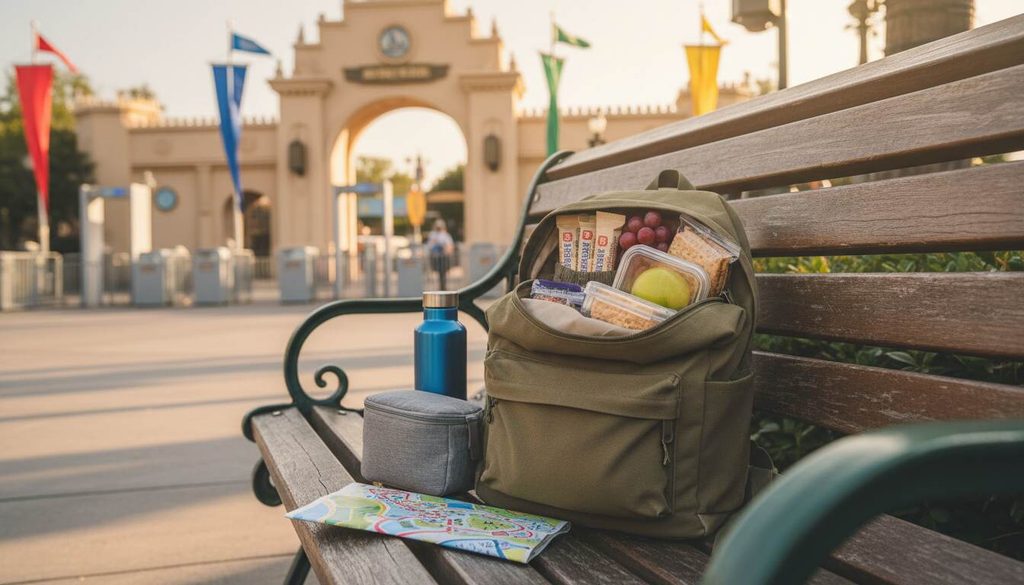
Granola bars, crackers, fruit snacks, trail mix, and similar “bag food” is commonly allowed, especially if it’s not messy and doesn’t require heating or refrigeration.
If you want snack ideas that actually work for park mornings, I’d pair this with your own post on hidden gem snacks at Epcot for the “buy one fun thing, pack the rest” strategy.
Sealed Bottled Water Is Often Allowed (But Not Always)
Many parks allow sealed water bottles. Some allow empty reusable bottles you can fill inside. Some restrict outside drinks more aggressively. This is one of those areas where you really do want to check the park’s current policy, because it changes.
Glass Is Commonly Prohibited
Glass is a safety hazard in crowded environments. Even parks that are relaxed about snacks often ban glass outright.
Hard-Sided Coolers Are Often Restricted
Hard coolers are bulky, slow down security, and can cause crowding. Soft-sided coolers are more likely to be allowed, but even then, there may be size limits.
Loose Ice Is Often Restricted
Loose ice melts, leaks, and makes a mess. Many parks prefer sealed gel packs. If you’re packing anything that needs to stay cool, plan around that.
Alcohol Is Usually Not Allowed From Outside
If a park serves alcohol, they almost always control it inside the park for safety and compliance reasons.
What About Dietary Restrictions, Allergies, And Medical Needs?
This is where parks are often more flexible, even if they’re strict about outside food in general.
If you have:
- food allergies
- medical dietary requirements
- blood sugar needs
- sensory or safe-food limitations
- baby food or toddler-specific food needs
you’re much more likely to be allowed to bring what you need, especially if it’s clearly packaged and reasonable in quantity for a day.
Practical tip: keep medically necessary items easy to identify and separate in your bag so security can check them quickly without turning your whole backpack into a crime scene.
How To Pack Outside Food So It Actually Works In A Theme Park
Theme parks are not the same as a road trip. Your food needs to survive heat, movement, and time. It also needs to be easy to eat while standing, walking, or waiting.
Use “Bag-Safe” Foods
Good theme park foods are:
- non-messy
- not strongly scented
- stable at room temperature for a few hours
- easy to portion
If you want a full list of foods that hold up for hours and don’t wreck your stomach before rides check out best portable breakfasts for park mornings.
Bring Wipes And A Trash Plan
This sounds small, but it’s the difference between “we saved money” and “we spent the afternoon sticky and annoyed.” Pack:
- a small pack of wipes
- a couple of zip bags for trash or leaking wrappers
Keep It Compact
If your bag looks like you’re moving into the park, security is going to treat it like a problem. Compact snacks are less likely to trigger issues and they’re easier on you, too.
Where You’ll Run Into Trouble (Even If Food Is Allowed)
Even when outside food is technically allowed, these are the situations that can cause friction:
- you bring a full meal setup (multiple containers, big cooler, utensils, heavy drinks)
- your food needs refrigeration or heating
- your bag is huge (security bottleneck)
- you bring prohibited containers (glass, hard coolers, etc.)
Basically: snacks and practical needs are one thing. A picnic is another.
Theme Park Reality Check: Eating Before Rides Matters
Even if you’re allowed to bring food, you still want to pack smart for your body. Heavy, greasy, or overly sugary snacks can make coaster nausea worse, especially if you’re doing intense rides back to back.
If you’re prone to dizziness or feeling faint, it’s worth reading how to prevent passing out on rides because food timing and hydration are a huge part of that.
A Practical “Yes, But” Summary
Yes, you can often bring your own food into theme parks.
But you should expect restrictions on glass, alcohol, coolers, and anything that looks like a big meal setup.
And the best strategy is usually: pack stable snacks, bring water smartly, and then buy one or two fun in-park items you actually care about, instead of panic-buying every time someone gets hungry.

Leave a Reply