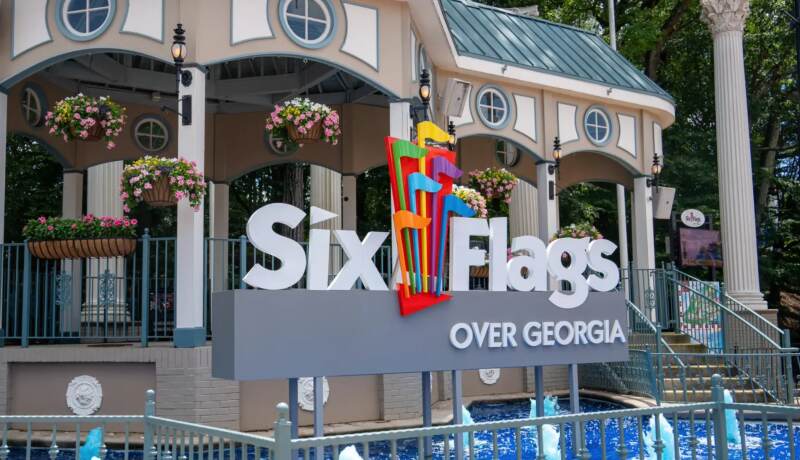
A fatal incident at Six Flags Over Georgia is under investigation after a 42-year-old man died on Monday, October 12, 2026. Multiple outlets report that police believe the man was ejected from the ride, and that other guests were injured during the incident.
This is a developing story, and the most responsible way to cover it is to separate confirmed statements from early witness accounts. Below is what has been reported so far by major outlets, what Six Flags and authorities have said publicly, and a coaster-nerd explainer on how hypercoasters and restraint systems typically work.
What We Know So Far (Based On Police Statements And Multiple Outlets)
Authorities have identified the man who died as Hassan Jihad Ibn Kariem, 42, of Atlanta, according to reporting from NBC News and the BBC. NBC News reports Cobb County Police said the incident happened at about 4 p.m. Monday at Six Flags Over Georgia, and that officers found Kariem unresponsive beneath the ride.
Police preliminary information indicates Kariem was ejected from the ride, struck other patrons, and then fell beneath the attraction, according to NBC News and the BBC. Several other people were injured, but officials have not released details on how many or their conditions, according to NBC News and the Guardian.
While police did not publicly name the ride in the initial statement quoted by some outlets, multiple witnesses told local media the incident involved Goliath, and BBC reporting notes that aerial footage showed the Goliath roller coaster stopped mid-course with riders being evacuated.
What Six Flags Has Said (And What The State Is Doing)
Six Flags said it was “deeply saddened” by the incident and offered condolences to the victim’s family, friends, and loved ones, according to NBC News and the BBC.
The Cobb County Police Department’s Major Crimes Unit is investigating, according to NBC News and the Guardian. The BBC also reports that Georgia’s Office of the Commissioner of Insurance and Safety Fire, which enforces amusement ride rules and standards in the state, said it is reviewing the incident to ensure compliance with policies and procedures.
In the immediate aftermath, Six Flags temporarily closed nine roller coasters across multiple parks in the US and Canada as a precaution, according to the BBC and the Associated Press. The Associated Press reports the company did not specify why those specific rides were shut down or what would be done before they reopen.
What Witnesses Have Described (Important, But Not Yet Verified)
Several outlets include witness accounts that describe a chaotic and traumatic scene. The BBC reports one witness said the coaster returned with an empty seat and a loose safety bar, and that there was hysteria among riders. NBC News reports witnesses told a local Atlanta station that they saw the man strike parts of the ride as he fell, and that the fall may have been captured in a souvenir ride photo.
The Associated Press includes additional witness descriptions, including a guest who said it looked like the man was “hovering” above the car before falling. These accounts may help investigators build a timeline, but they are not the same thing as a confirmed mechanical finding. Investigators typically reconcile witness statements against ride system logs, restraint checks, physical evidence, and operator procedures.
What Kind Of Roller Coaster Is Goliath (And Why That Matters)
Goliath at Six Flags Over Georgia is widely described as a hypercoaster, a type of steel roller coaster built for speed, airtime, and big hills rather than inversions. The BBC reports the ride opened in 2006 and reaches about 200 feet in height and up to 70 mph, citing the park’s own information.
Hypercoasters are designed to deliver repeated moments of negative g-force (that floaty “airtime” feeling), which makes restraint design and containment strategy a central part of the engineering conversation. If you want a deeper, non-incident-specific breakdown of why different coasters use different restraint styles, start here: why roller coasters have different restraints.
How Restraints Usually Work On Hypercoasters (And Why “No Shoulder Harness” Is Not Automatically A Red Flag)
Many hypercoasters use lap bars rather than over-the-shoulder harnesses. The Associated Press reports that Goliath does not use seat belts and instead uses lap bars that pull down over a rider’s legs and waist.
It is tempting to assume that an over-the-shoulder restraint would automatically prevent every possible ejection scenario, but coaster safety is not that simple. Different restraint systems are engineered around different ride forces, rider comfort, evacuation realities, and redundancy layers. The real question investigators will focus on is not “lap bar vs shoulder harness,” but whether the restraint system functioned as designed and whether every layer of operational procedure worked the way it was supposed to.
If you want a broader look at how coaster safety has evolved over time (and why modern systems are built around multiple layers of protection), this guide gives helpful context: roller coaster safety technology evolution.
What Investigators Will Likely Examine Next
Even when early reporting mentions a “restraint issue,” investigators typically work through a long checklist before reaching conclusions. Based on how serious ride investigations usually proceed, the next phase often focuses on:
- Restraint function and locking behavior: whether the restraint locked properly at dispatch and remained locked throughout the ride cycle
- Ride control system data: any fault codes, sensor readings, or abnormal events recorded by the ride
- Operator procedure: restraint checks, dispatch checks, and any reported anomalies before the train left the station
- Maintenance and inspection records: recent work orders, adjustments, and inspection documentation
- Physical inspection: restraint hardware, train components, and any signs of damage or unusual wear
If you want a plain-English breakdown of how rare serious incidents are, and how safety risk is usually discussed in the industry, this post can help frame the bigger picture without minimizing what happened: roller coaster accidents and safety statistics.
Why Similar Rides Were Closed Elsewhere
After a major incident, it is common to see precautionary closures, especially if the ride type, manufacturer, or restraint philosophy is shared across multiple parks. The Associated Press reports that Six Flags temporarily shut down nine rides across six parks, including coasters such as Nitro, Raging Bull, and a different Goliath at Six Flags Magic Mountain, along with major coasters at Carowinds and Canada’s Wonderland.
This does not automatically mean investigators have identified a single defect across all of them. It often means parks are preserving evidence, reviewing procedures, and checking for any immediate risk while investigators work to establish the facts.
A Note On Respect, Speculation, And What Comes Next
When something like this happens, coaster fans and casual guests alike want answers immediately. But early details can shift, especially when they come from witness accounts rather than official findings. The most responsible approach is to stick to what authorities and multiple outlets can support, and to wait for investigators to clarify what happened and why.
This story will likely develop as the investigation continues, and as the state oversight agency and law enforcement release more information.
Related Coaster Safety Reading: If you want to understand the kinds of “backup layers” ride designers build into modern coasters, this deep dive is a good companion piece: unusual safety features on roller coasters. And if you’ve ever wondered what it means when a train stops mid-course and guests are evacuated, this guide explains the basics: what happens if a roller coaster gets stuck.

Leave a Reply