Some roller coasters announce themselves with a skyline. GhostRider announces itself with sound. Even from outside the ride area, you can usually pick it out by that unmistakable wooden-coaster roar, the kind that feels like it is coming from the ground as much as the track. At Knott’s Berry Farm, that noise is part of the park’s identity. GhostRider is not just a big coaster sitting in the corner. It is a headline attraction woven right into the park’s most iconic setting, towering over Ghost Town like it has always belonged there.
It also has one of the more interesting “two lives” stories in modern coaster history. GhostRider opened as a major late-1990s wooden coaster, earned a reputation as a must-ride, then hit the point every wooden coaster eventually faces: the ride was still great, but the track and trains needed a serious reset. Knott’s did not just patch it. They committed to a full-scale refurbishment that effectively reintroduced GhostRider to a new generation of guests.
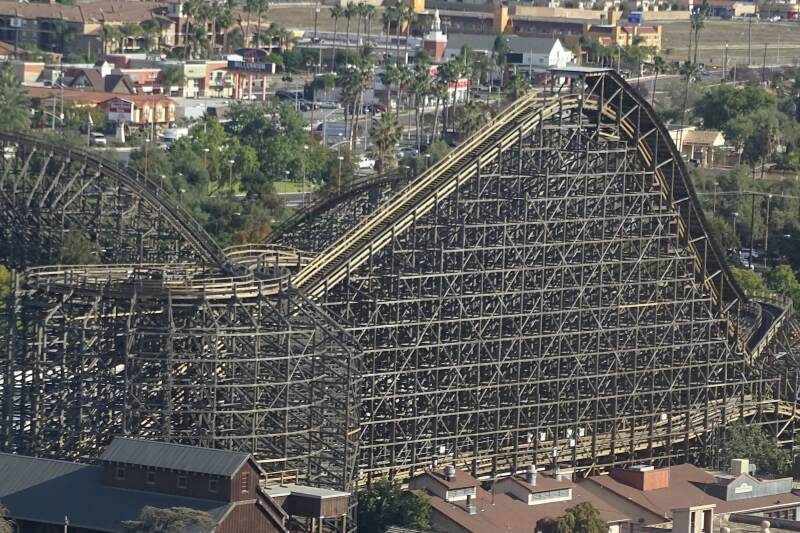
What GhostRider Is (In Plain English)
GhostRider is Knott’s Berry Farm’s signature wooden roller coaster. It is marketed by the park as the West Coast’s longest, tallest, and fastest wooden coaster, and it is positioned as the park’s largest attraction. The ride experience is built around classic wooden coaster strengths: speed that feels faster than the number on paper, aggressive lateral movement, and airtime moments that hit harder because the structure feels so close.
Knott’s official ride description leans into the theme: riders enter a mysterious mine, board mining cars, and then tear through more than 4,500 feet of track with 14 hills over a ride time of nearly three minutes. That is a very specific promise. It tells you GhostRider is not a quick out-and-back. It is a long, sustained run where the coaster has time to build rhythm and keep escalating.
Why The Setting Matters: Ghost Town Is Not Just Backdrop
GhostRider’s placement over Ghost Town is a big part of why it feels so “Knott’s.” A lot of parks have a wooden coaster, but not many have one that looms directly over the most historic, story-heavy land in the park. Ghost Town is where Knott’s personality lives, and GhostRider is literally built into that atmosphere.
That matters for guest perception. A wooden coaster over a themed street feels more alive than a wooden coaster behind a fence line. At night, it is even better. Knott’s explicitly recommends riding after dark, when the layout becomes harder to read and every turn feels like it comes out of nowhere. That is not marketing fluff. Darkness changes how you experience pacing, especially on a wooden coaster where the structure itself is part of the visual intensity.
The 1998 Opening And The “Best Wooden Coaster” Reputation
GhostRider opened in 1998, and it quickly became one of those coasters that shows up in “best wooden coaster” conversations again and again. Knott’s notes that since opening, it has been routinely featured on lists of the best wooden coasters in the world. That kind of reputation does not happen just because a ride is big. It happens because the coaster has a personality. GhostRider’s personality is speed, length, and relentlessness. It feels like it is always doing something.
There is also a timing factor. Late-1990s wooden coasters often aimed for scale and intensity in a way that feels different from many modern family-focused additions. GhostRider is from an era where parks were still comfortable building wooden coasters that were unapologetically forceful, especially in the way they delivered laterals and rapid direction changes.
The Reality Of Wooden Coasters: Great Rides Get Rough
Wooden coasters are living structures. They expand and contract with temperature, they respond to moisture, and they take a beating from trains cycling all day. Even when a wooden coaster is maintained well, it will gradually change. Sometimes that change is charming. Sometimes it crosses the line into “this needs major work.”
This is where a lot of guests get confused, because “rough” can mean different things. It can mean the track is genuinely in need of replacement in certain sections. It can also mean the ride is doing what wooden coasters do, delivering a more physical ride than steel. The key is whether the ride is rough in a way that feels uncontrolled, or rough in a way that feels like intensity.
If you want the bigger picture on why some coasters feel “different” even when they are safe, it helps to understand how ride systems and maintenance decisions shape the guest experience. That is why roller coaster safety technology evolution is not just about restraints and sensors. It is also about how parks keep rides running in a way that feels good for guests.
The Big Refurbishment: Late 2015 Through Spring 2016
Knott’s describes GhostRider’s major refurbishment in very direct terms. From late 2015 through spring 2016, the ride underwent a complete track refurbishment. The park says this improved the ride experience with a smoother track and new trains.
That phrasing is important. Parks use “refurbishment” for a lot of things, but “complete track refurbishment” is not a minor tune-up. It signals a major commitment to keeping GhostRider as a flagship attraction rather than letting it slide into “historic coaster you ride once for nostalgia.”
New trains matter, too. Train design changes how a wooden coaster feels, especially in how it tracks through turns and how the restraints position your body. If you are curious why two coasters with similar layouts can feel wildly different, why roller coasters have different restraints is the best way to understand how comfort and perceived intensity are often restraint and train stories, not just track stories.
What GhostRider Feels Like Today (And Why People Still Love It)
When GhostRider is running well, it hits a sweet spot that is hard to manufacture. It feels classic without feeling outdated. It feels intense without relying on inversions or gimmicks. It is long enough that you get that “full meal” coaster satisfaction, where you do not step off thinking, “Wait, that was it?”
It also has a rhythm that good wooden coasters have. The best ones do not feel like a collection of disconnected elements. They feel like a chase scene. GhostRider’s length gives it room to build that chase scene feeling, especially when the train is warmed up and moving with confidence.
And because it is at Knott’s, it is surrounded by a park that still values atmosphere. That matters. A great coaster in a sterile environment is still a great coaster, but a great coaster in a place that feels like a real “world” tends to stick in your memory longer.
Night Rides: The Version Of GhostRider People Brag About
Knott’s specifically calls out night rides as the ultimate thrill, and that tracks with how wooden coasters tend to behave in guest memory. Darkness removes your ability to anticipate. You stop bracing for the next turn because you cannot see it. The ride becomes more about sensation than sight, and that can make a coaster feel faster and more chaotic in the best way.
If you are planning a trip and you want the “best possible” GhostRider ride, a night ride is usually the move. The only tradeoff is that nighttime is also when lines can spike, especially on weekends and event nights.
Practical Tips For Riding GhostRider Comfortably
GhostRider is a wooden coaster, so comfort is partly about how you ride it. A few simple choices can make a big difference:
- Ride when you feel fresh. If you are already dehydrated or wiped out, a wooden coaster’s physical ride can feel harsher.
- Secure loose items ahead of time. Knott’s notes that loose articles cannot be left on the platform and should be left with a non-rider or stored in lockers.
- Pay attention to posted safety guidance. If you ever wonder what the warnings are really telling you, ride warning signs and what they mean is a helpful decoder.
- Plan your day so you are not sprinting coaster to coaster. If you want a pacing strategy that keeps you from burning out before your must-rides, rope drop strategy without burning out is the mindset that makes a long park day feel doable.
Is GhostRider Worth Prioritizing?
If you like wooden coasters, GhostRider is absolutely worth prioritizing. It is one of the rare wooden coasters that feels like a true flagship in a major park, not a supporting attraction. It is long, it is fast in a way that feels even faster, and it has the kind of presence that makes it feel like part of the park’s identity.
If you do not usually love wooden coasters because you associate them with discomfort, GhostRider is still worth considering, especially post-refurbishment. It is the kind of ride that can change someone’s mind about what a wooden coaster can be when a park invests in keeping it running at its best.
GhostRider In The Bigger Coaster Conversation
GhostRider is a good reminder that “legend status” does not always come from breaking records. Sometimes it comes from being the coaster that a park does not let fade away. The refurbishment era is part of GhostRider’s story now, and honestly, that is a good thing. It means the ride is not just surviving. It is being actively protected as a centerpiece.
And if you are the kind of coaster fan who loves rides with history and reputation, it is worth exploring the broader idea of why certain rides stay in the conversation for decades. defunct roller coasters people still talk about captures that same emotional thread, the way coaster stories become part of the culture even when the hardware changes or disappears.

Leave a Reply