Roller coaster brakes are one of those things you only notice when they do their job. You feel the train slow down, you hear a hiss or a clunk, and then you move on. But under the hood, coaster braking is a whole ecosystem of different systems, each used for a specific reason: comfort, capacity, safety margins, and control.
This guide is split into two parts. First, a curious guest explanation that keeps it simple and visual. Then an enthusiast section that gets more technical, with the real terms and the “why this system here” logic.
If you want a quick primer on the physics behind why coasters move the way they do, this pairs nicely with: How Roller Coasters Work (Engineering + Physics) and How Do Roller Coasters Stay On The Tracks?.
The Curious Guest Version (No Engineering Degree Required)
Think of a roller coaster like a train that is constantly switching between “free rolling” and “carefully controlled.” Most of the ride is free rolling. Brakes are the moments where the coaster says: okay, now we need to be precise.
Coasters use brakes for a few main reasons:
- To stop the train at the station so people can load and unload safely
- To keep trains spaced out so multiple trains can run without bunching up
- To fine-tune speed so a train does not hit a section too fast (especially in bad weather)
- To control the ride experience so it feels consistent from morning to night
The Big Idea: The Train Has A “Fin” And The Track Has “Hands”
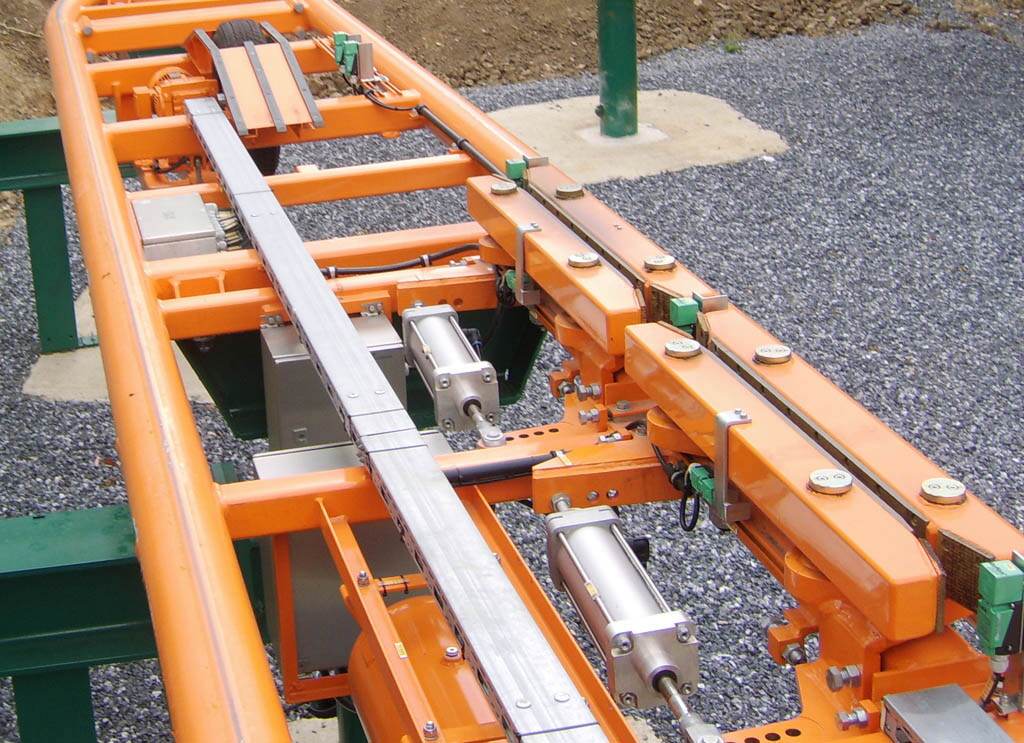
Most modern coasters have a metal blade on the train called a brake fin (sometimes called a brake blade). On the track, there are devices that can squeeze that fin, or slow it down magnetically, or both. That’s the basic relationship: the train brings the fin, the track brings the braking hardware.
Major Brake Types You’ll Actually Encounter
1) Friction Brakes (The “Squeeze It” Brakes)
This is the most intuitive kind. The track has brake calipers or brake pads that clamp onto the brake fin. It’s like a bike brake, but built for a heavy train and repeated use all day.
You’ll often hear a sharp sound when these engage. They are great for stopping a train fully, especially in stations and final brake runs.
2) Magnetic Brakes (The “Slow It Without Touching” Brakes)
Magnetic brakes are the smooth ones. They use magnets to create drag on the brake fin as it passes through. The key thing to know as a guest is this: magnetic brakes can slow a train down very predictably and comfortably, and they do it with less wear than friction brakes.
They are common on modern coasters because they are consistent and low-maintenance compared to pure friction braking.
3) Trim Brakes (The “Not A Stop, Just A Speed Adjustment” Brakes)
Trim brakes are brakes placed mid-ride to shave off a little speed. They are not there to stop the train. They are there to keep the ride running in a safe, controlled speed range.
If you have ever ridden a coaster and felt it slow down briefly on a hill or before a big element, that was probably a trim brake doing its job.
4) Block Brakes (The “Traffic Lights” Of Roller Coasters)
Block brakes are part of how coasters run multiple trains. The track is divided into sections called blocks. The coaster’s control system makes sure only one train is allowed in a block at a time.
Some blocks have brakes that can stop a train completely if needed. This is how coasters can run efficiently without trains stacking up on each other.
5) Drive Tires (The “Little Wheels That Push The Train”)
Drive tires are not brakes in the “slow you down” sense, but they are part of the same control toolkit. They are motorized rubber tires along the track that can push or pull a train at controlled speeds.
You’ll see them in stations, transfer tracks, and sometimes on lift hills or launch areas where precise movement matters.
6) Anti-Rollback (The “Click Click Click” Safety Device)
This is not a brake that stops you at the end. It’s a device that prevents a train from rolling backward on a lift hill. That classic clicking sound on chain lifts is the anti-rollback system engaging.
It’s there so if the lift stops, the train does not slide backward down the hill.
7) Water Brakes (Common On Water Coasters And Some Specialty Rides)
Some rides use water to slow down a boat or a coaster vehicle. This is more common on water coasters and certain hybrid systems. The sensation can feel very smooth, and it often pairs with a final splashdown or a controlled glide into a stop.
Why Some Coasters Feel Like They “Hit The Brakes Hard”
That sensation usually comes down to two things:
- Where the brakes are placed (a sudden stop feels sharper than a long, gradual slowdown)
- What type of brakes are doing the final stop (friction brakes can feel more abrupt than magnetic slowdown)
Also, coasters are constantly adjusting to conditions. Temperature, wind, rain, train load, and wheel wear all change how fast a train runs. Brakes help keep the ride within its intended operating window.
The Enthusiast Deep Dive (Terms, Systems, And Why They’re Used)
Now for the more technical version. I’m going to keep this practical and coaster-focused, not textbook mechanical engineering.
The Core Components: Brake Fin, Brake Unit, And Control Logic
Most coaster braking systems revolve around:
- Brake fin (blade): mounted to the train, passes through brake units
- Brake unit: mounted to the track, contains magnets and/or calipers
- Sensors: detect train position and speed (varies by manufacturer and ride)
- PLC/control system: the ride’s logic controller that decides when to apply trims, release blocks, and manage dispatch
Brakes are not just “on” or “off.” On many rides, there are multiple stages and multiple brake types working together. A common pattern is: magnetic slowdown for consistency, then friction clamp for a full stop and holding.
Friction Brakes (Pneumatic Or Hydraulic Clamp Systems)
Friction brakes typically use calipers that clamp onto the brake fin. The actuation is often pneumatic (compressed air) or hydraulic, depending on the ride and manufacturer. These brakes are excellent for:
- Full stops (stations, final brakes, holding in blocks)
- Positive holding (keeping a train parked without creeping)
- Emergency stopping (as part of a block system)
They also create wear. Pads and fins can wear over time, and the system needs inspection and maintenance. That is one reason magnetic braking became so popular for the “slowdown” portion of braking.
Magnetic Brakes (Eddy Current Braking)
Most coaster magnetic brakes are eddy current brakes. Here’s the clean explanation: when a conductive metal fin passes through a magnetic field, it induces currents in the fin. Those currents create an opposing magnetic field that resists motion. The result is drag.
Why enthusiasts love this system:
- It is smooth, especially at higher speeds
- It is consistent across many operating conditions
- It reduces mechanical wear compared to pure friction braking
A key behavior: eddy current braking force is generally stronger at higher speeds and weaker at lower speeds. That is why you often see magnetic brakes used to slow a train down, then friction brakes used to bring it to a complete stop and hold it.
Trim Brakes: Ride Tuning, Not Just Safety
Trim brakes are often framed as “they’re slowing the ride down,” which is true, but the deeper reason is: trims are how a park keeps the ride experience within a target range.
Coasters run differently based on:
- Ambient temperature (wheel compounds behave differently)
- Wind (headwinds can dramatically reduce speed on exposed layouts)
- Rain and moisture (changes rolling resistance and can change how a train carries speed)
- Train load (weight distribution and total mass)
Trims let the ride operate safely and consistently without needing to run one-train operations every time conditions change.
Block Brakes And Block Zones: Capacity Meets Control
Block systems are where braking becomes inseparable from operations. A block zone is a section of track designed to contain one train. The control system prevents a train from entering an occupied block.
That means certain brake runs are designed as block brakes, capable of stopping a train completely if the next block is not clear. This is one of the reasons you can have multiple trains on a coaster without them “catching up” to each other.
If you want more operations context, this is a good companion read: What Happens If A Roller Coaster Gets Stuck?.
Drive Tires, Boosters, And Controlled Movement
Drive tires are often used in stations, transfer tracks, and other areas where you need slow, precise movement. They can also be used as boosters on certain rides to help trains clear a section reliably.
Enthusiast takeaway: drive tires are part of the “coaster is a controlled transportation system” reality. The train is not always just rolling freely. Sometimes it is being guided, staged, held, and released in a very deliberate sequence.
Anti-Rollback Devices (Chain Lifts And Beyond)
On chain lifts, anti-rollback is typically a ratchet and pawl system. The train has a device that engages with a ladder-like structure on the lift. If the chain stops, the train can only move forward, not backward.
Not every lift system sounds the same. Some modern lifts are quieter, and some use different approaches, but the core goal is the same: prevent rollback.
Water Brakes And Splashdown Braking
Water braking can be used to slow vehicles by forcing them through water resistance. On some rides, the final splashdown is not just for show. It can be part of the ride’s speed control and stopping behavior, depending on the system.
Why Brakes Are Placed Where They Are
Brake placement is a mix of engineering and guest experience. Designers place brakes where they can:
- Control speed before high-stress elements
- Create block zones that support multiple trains
- Stop trains in predictable, accessible locations
- Manage comfort (avoid whiplash stops when possible)
And if you want a broader safety context for how modern coasters manage risk over time, this is a good background piece: Roller Coaster Safety Technology Evolution.
Common Myths About Coaster Brakes
Myth: The Brakes Are Always On And They Release To Let You Go
Some systems do use fail-safe logic where a loss of power results in a safe state, but operationally, trains are not just “held back” by brakes the entire ride. Braking is applied in specific zones for specific reasons.
Myth: Magnetic Brakes Can Stop A Train Instantly
Magnetic brakes are excellent at smooth deceleration, but they are not magic. They behave differently at different speeds, and they are usually paired with friction brakes for a full stop and hold.
Myth: If You Feel A Hard Stop, Something Went Wrong
Not necessarily. Some brake runs are designed to stop trains decisively, especially when they are holding for block clearance or station timing. Comfort varies by ride design and by how much speed the train is carrying into the brake run.

Leave a Reply