If you’ve been seeing people say Millennium Force “lost a part” or “dropped metal into the midway,” here’s what we actually know right now, based on Cedar Point’s own statement as reported by local news: a small bracket became dislodged from a ride vehicle and landed in a guest area. No one was hit, and no injuries were reported. The ride was taken out of service immediately and is expected to remain closed pending an internal review and additional state inspection before it reopens.
This kind of story spreads fast because it hits a very specific nerve: a ride part ending up where guests can be. Even when nobody is hurt, it feels personal, because it’s not “something happened on the track,” it’s “something crossed the boundary into the guest space.” So in this post, I’m going to do two things: lay out the facts that have been reported, and explain what parks typically do after an incident like this, so the closure makes sense in context.
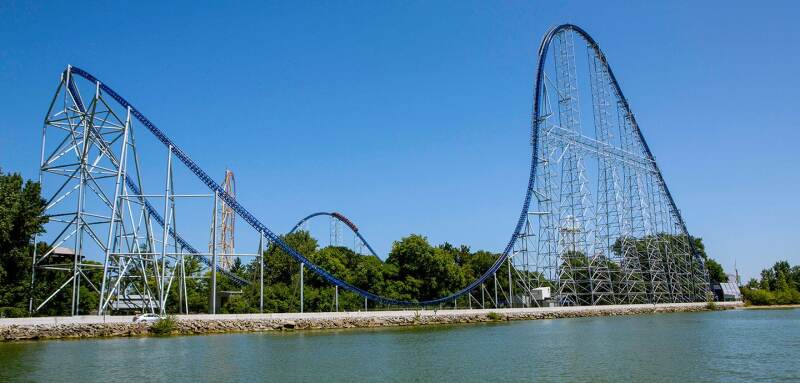
What Happened (Quick Summary)
According to Cedar Point’s statement as reported by FOX 8 Cleveland and WKYC, a small bracket became dislodged from a Millennium Force ride vehicle and landed in a guest area. Cedar Point said no guests or team members were struck and no injuries were reported. The ride was immediately taken out of service and is expected to remain closed pending an internal review and additional state inspection to ensure safety before reopening.
Was Anyone Injured?
As of the reporting currently available, Cedar Point’s statement says no guests or team members were struck and no injuries were reported.
That detail matters. It changes the story from “injury incident” to “component/foreign-object incident that triggered shutdown-and-inspect protocols.” Both are serious, but they are not the same category of event.
What Does “A Bracket Became Dislodged” Actually Mean?
When a park says a bracket became dislodged, it generally means a piece of hardware that is normally secured to the ride vehicle came loose. That can happen for a lot of reasons, and it’s important not to fill in blanks that haven’t been confirmed publicly. A bracket can be part of:
- a trim piece or cover
- a mounting point for a component
- a retention or alignment piece
- a hardware assembly that supports another part
The key point is not the word “bracket.” The key point is where it landed. A part landing in a guest area is treated as a hard stop, because even a small object can be dangerous if it falls from height or ends up where people are walking or waiting.
If you want a deeper, non-alarmist look at how coaster safety has changed over time (and why modern parks are so procedural about shutdowns), this pairs well with Roller Coaster Safety Technology Evolution.
Timeline: When Millennium Force Closed (Oct 2026)
Based on Cedar Point’s statement and local reporting, the timeline looks like this:
- Friday, Oct 16, 2026: Cedar Point confirms a small bracket became dislodged from a Millennium Force ride vehicle and landed in a guest area.
- Immediately after: The ride was taken out of service in accordance with established protocols.
- After the shutdown: Cedar Point indicates the ride will remain closed pending an internal review and additional state inspection before reopening.
- At time of reporting: No reopening date had been announced.
Why Parks Close Rides After A Part Falls (Even If Nobody Is Hurt)
From the outside, it can look like an overreaction: “If nobody got hurt, why not just pick it up and keep running?” But this is one of those moments where the safety culture is supposed to be visible. The shutdown is part of the safety system doing its job.
When a component ends up in a guest area, parks have to assume three things until proven otherwise:
- It could happen again (and the next time might not be a clean miss).
- The cause might not be isolated (if one fastener loosened, others might be at risk).
- The risk is not just on-ride (it’s about the boundary between ride envelope and guest space).
In other words, the closure is not a statement that the ride is “unsafe forever.” It’s a statement that the ride is not returning to service until the park can show the problem is understood, corrected, and verified.
If you’ve ever wondered what “out of service” can look like operationally (and why downtime is not always quick), you might also like What Happens If A Roller Coaster Gets Stuck? It’s a different scenario, but the same basic idea applies: parks default to procedure, documentation, and verification.
What Inspections And Checks Typically Happen Before Reopening
Every park and jurisdiction has its own procedures, but when a part dislodges and lands in a guest area, the playbook usually looks like a layered checklist, not a single glance from maintenance.
Here’s what “taken out of service pending review and inspection” often means in real life:
- Secure the area and recover the part: retrieve the object, document it, and confirm where it came from.
- Inspect the specific vehicle: check the mounting point, fasteners, surrounding assemblies, and anything that could have been stressed or loosened.
- Inspect other vehicles for the same issue: if one train or one car had a failure mode, parks typically check the rest for similar wear or looseness.
- Corrective action: replace the part, replace hardware, add retention, adjust torque specs, or revise maintenance intervals, depending on what the investigation finds.
- Test cycles: run the ride empty, then with test weight (varies), then monitored operation before returning to normal cycling.
- Additional inspection/approval: if the park says a state inspection is part of the reopening path, that usually means the ride will not reopen until that step is completed.
That list is why closures can feel “long” even when the part is described as small. The size of the part is not the point. The point is proving the system is stable again.
For a broader, data-driven view of how rare serious outcomes are (and how incidents get categorized), you can also read Roller Coaster Accidents And Safety Statistics.
What This Does (And Doesn’t) Say About Roller Coaster Safety
It’s normal to feel rattled by a story like this. It’s also normal for the internet to jump straight to “How could this happen?” and “Are coasters getting less safe?”
Here’s the grounded way to think about it:
- This does not automatically mean the ride was close to a catastrophic failure. A dislodged component can be serious without being structural in the way people imagine.
- This does mean the park is treating the boundary between ride hardware and guest space as a zero-compromise issue. That’s exactly what you want to see.
- The most meaningful safety detail so far is procedural: the ride was taken out of service immediately, and reopening is tied to review and inspection.
If you’re the kind of person who likes understanding the “why” behind ride design choices, this is also a good moment to revisit how rides physically stay secure during operation, including the basics of wheels and track geometry: How Do Roller Coasters Stay On The Tracks?
What To Do If You’re Visiting Cedar Point And Millennium Force Is Closed
If you’re planning a Cedar Point day and Millennium Force is a must-do, a closure like this can throw off your whole plan. A few practical options:
- Don’t build your entire day around one ride. If Millennium Force is down, pivot early instead of waiting and bleeding time.
- Check for official updates. Parks will usually communicate ride status through their official channels and in-park signage.
- Make peace with “not today.” If a ride is closed for inspection, it’s not the kind of downtime you can out-wait in line.
If you’re trying to salvage your day strategically, two Cedar Point-specific guides that can help you re-plan on the fly are Best Time To Visit Cedar Point (2026 Crowd Calendar) (so you’re not fighting the worst crowd patterns) and Cedar Point On A Budget (1-Day Plan) (because closures have a way of turning “quick day” into “we just spent money wandering”).
It’s not fun, but it’s also a sign that the park is taking the situation seriously.
FAQ: Millennium Force Closure (Oct 2026)
Why Is Millennium Force Closed?
Cedar Point said a small bracket became dislodged from a ride vehicle and landed in a guest area. The ride was taken out of service and is expected to remain closed pending an internal review and additional state inspection before reopening.
What Fell Off Millennium Force?
Reporting cites Cedar Point’s statement describing the object as a “small bracket” that became dislodged from a ride vehicle.
Did Anyone Get Hit Or Hurt?
According to Cedar Point’s statement as reported, no guests or team members were struck and no injuries were reported.
When Will Millennium Force Reopen?
At the time of reporting, no reopening date had been announced. Cedar Point indicated reopening would follow an internal review and additional state inspection.
Is It Safe To Ride Millennium Force After It Reopens?
The practical answer is that rides typically reopen only after the park completes corrective action and verification steps, and after any required inspections are completed. If you’re uneasy, it’s okay to skip it, but a reopening generally means the issue has been addressed to the satisfaction of the park and inspectors.

Leave a Reply