The Great Depression and World War II were two of the most challenging periods in American history. Millions of people lost their jobs, their homes, and their savings. Young men were drafted into the military, leaving families behind. Rationing made everyday goods scarce. The economy was in free fall, and the future seemed uncertain.
Yet somehow, in the midst of this chaos and hardship, theme parks not only survived but thrived. While many businesses went bankrupt and closed their doors forever, amusement parks found ways to adapt, innovate, and continue serving their communities. The story of how theme parks survived the Great Depression and World Wars is a story of resilience, creativity, and the enduring human need for escape and entertainment.
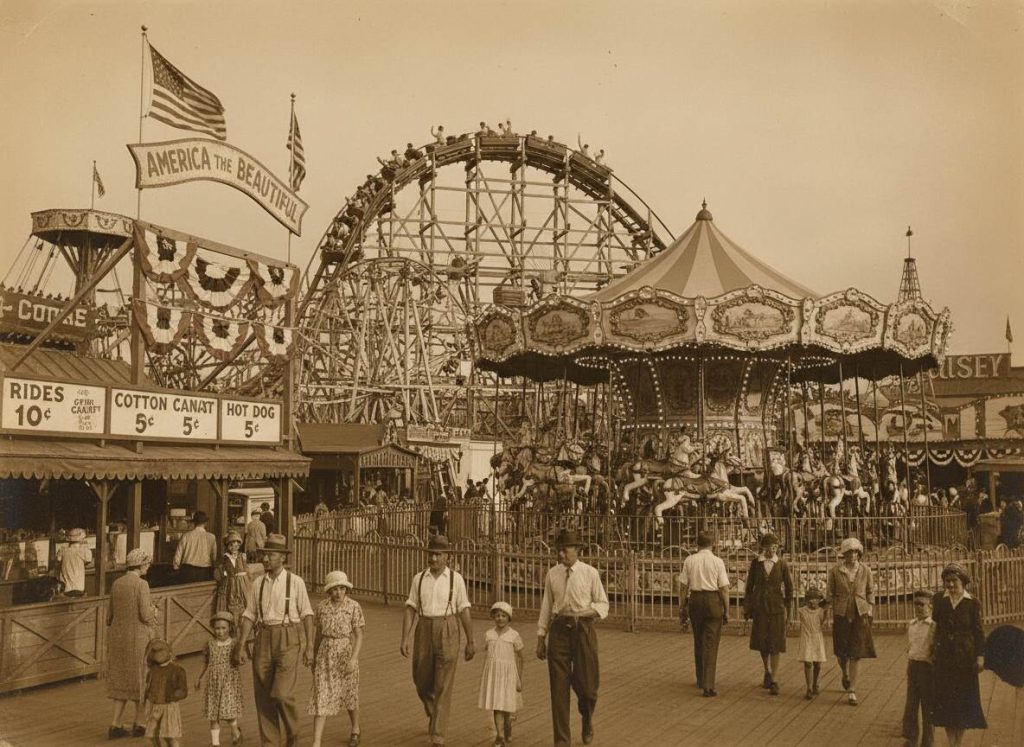
The Great Depression Hits: The Crisis Begins
When the stock market crashed on October 29, 1929, it triggered an economic catastrophe that would last for the entire decade. By 1933, unemployment had reached 25 percent. Families that had been comfortable middle class were suddenly homeless and hungry. Savings that people had accumulated over decades were wiped out in days. The psychological impact was as devastating as the financial impact.
For many businesses, the Great Depression was a death sentence. Factories closed. Banks failed. Construction projects were abandoned. Luxury goods became impossible to sell. The entire American economy seemed to be collapsing.
But theme parks, particularly the iconic parks of Coney Island, faced a unique situation. On one hand, they were vulnerable. People had less money to spend on entertainment. Families that might have visited the park several times a year could no longer afford to do so. The parks’ revenue plummeted.
On the other hand, theme parks had something that many other businesses didn’t have: they were affordable. While wealthy people could no longer afford expensive vacations or luxury entertainment, they could still afford a nickel or a dime to spend at an amusement park. This fundamental affordability became the key to survival.
The Nickel Empire: Affordable Entertainment During Hard Times
During the 1920s and 1930s, Coney Island became known as the “Nickel Empire.” This wasn’t a term of respect; it was a description of the economic reality. The parks that survived the Great Depression were the ones that embraced low prices and high volume.
Steeplechase Park, Luna Park, and Dreamland had all been built as luxury destinations in the early 1900s. They charged relatively high admission prices and catered to middle and upper class visitors. But during the Great Depression, this business model became impossible. People simply didn’t have the money.
The parks that survived adapted by lowering their prices dramatically. A nickel could get you into the park. A dime could get you a ride. A quarter could buy you lunch. These prices were so low that even unemployed workers could afford to visit occasionally. Families could pool their resources and have a day at the park without breaking the bank.
This strategy was brilliant because it solved a fundamental problem: people needed escape and entertainment more than ever during the Depression, but they had almost no money. By making entertainment affordable, the parks tapped into a massive market of desperate people looking for a few hours of relief from their troubles.
The Psychology of Escapism
The Great Depression wasn’t just an economic crisis; it was a psychological crisis. People were depressed, anxious, and desperate. They needed to escape their reality, even if just for a few hours. Theme parks provided that escape.
A day at the park could transport you away from your worries. You could ride a roller coaster and forget about your job loss. You could enjoy the company of family and friends without spending much money. You could experience thrills and excitement that your daily life no longer offered. For many people during the Depression, a visit to the park was one of the few bright spots in an otherwise bleak existence.
This psychological need for escapism was so strong that it kept people coming to the parks even when they had very little money. The parks understood this, and they catered to it. They invested in new attractions, maintained their parks, and created an atmosphere of fun and excitement that was a stark contrast to the grim reality outside the park gates.
Survival Strategies: How Parks Adapted
The parks that survived the Great Depression didn’t just lower their prices and hope for the best. They implemented a variety of strategies to adapt to the new economic reality.
Maintenance and Cleanliness
One of the most important strategies was to maintain the parks at a high standard. While many businesses cut corners and reduced maintenance during the Depression, the successful parks continued to invest in keeping their attractions clean, safe, and well-maintained. This was crucial because it signaled to visitors that the park was a well-run, trustworthy place where they could safely spend their limited money.
New Attractions and Entertainment
Another strategy was to continue investing in new attractions and entertainment. This might seem counterintuitive during an economic crisis, but it was actually crucial. The parks that survived were the ones that kept their attractions fresh and exciting. They added new rides, new shows, and new entertainment options. This kept people coming back and gave them reasons to visit even if they had visited before.
Diversified Revenue Streams
The parks also diversified their revenue streams. While admission and ride tickets were important, the parks also made money from food and beverage sales, games, and other attractions. By offering a variety of ways to spend money, the parks maximized their revenue from each visitor. A family might spend a nickel to get in, but then spend several more nickels and dimes on rides, food, and games.
Community Events and Promotions
The parks also hosted special events and promotions to attract visitors. They might have special days for different groups (children’s days, ladies’ days, etc.). They might offer discounts for large groups. They might host concerts or other entertainment. These events created reasons for people to visit and helped spread the word about the park.
World War II: A New Crisis, New Opportunities
Just when the theme parks were beginning to recover from the Great Depression, World War II created a new set of challenges. The United States entered the war in December 1941, and suddenly the entire economy was mobilized for war production.
Young men were drafted into the military, leaving families behind. Women entered the workforce in record numbers to support the war effort. Rationing was implemented for food, gasoline, rubber, and other essential materials. Metal was collected for scrap drives. The entire country was focused on winning the war.
For theme parks, this created a complex situation. On one hand, the war created new economic opportunities. With more women in the workforce and rationing creating a sense of scarcity, people were actually spending more money on entertainment. The parks were busier than they had been in years.
On the other hand, the war created new challenges. Metal was being collected for the war effort, which meant that the parks had to be careful about how they maintained and upgraded their attractions. Young men who worked at the parks were being drafted into the military. Gasoline rationing made it harder for people to travel to the parks. The parks had to adapt to a wartime economy.
Supporting the War Effort
One of the ways that theme parks adapted to World War II was by actively supporting the war effort. Many parks hosted scrap metal drives, where visitors could bring metal items to be collected for war production. Some parks allowed visitors to throw scrap metal at targets or busts of Hitler as a form of entertainment.
The parks also hosted bond drives, where visitors could purchase war bonds. They organized patriotic events and celebrations. They displayed patriotic messages and symbols. By aligning themselves with the war effort, the parks demonstrated their patriotism and their commitment to the community.
Maintaining Morale
Another important role that theme parks played during World War II was maintaining morale. With young men fighting overseas and families separated, people needed entertainment and escape more than ever. The parks provided a place where families could gather and enjoy themselves, even in the midst of war.
The parks also provided employment for women and older men who couldn’t serve in the military. This was important both economically and psychologically. People felt like they were contributing to the war effort, even if they weren’t serving in the military.
Specific Examples: How Individual Parks Survived
Different parks adapted to the Great Depression and World War II in different ways. Let’s look at some specific examples.
Steeplechase Park
Steeplechase Park was one of the most iconic parks of Coney Island. It had been built in 1897 and had been a major attraction for decades. During the Great Depression, Steeplechase adapted by embracing the “Nickel Empire” model. It lowered its prices dramatically and focused on high volume. The park continued to invest in new attractions and maintained high standards of cleanliness and safety.
Steeplechase survived the Great Depression and World War II, but it eventually declined in the 1960s and was demolished in 1964. However, its survival through the Depression and the war years demonstrated the importance of adaptation and affordability.
Luna Park
Luna Park was another iconic Coney Island park. It had been built in 1903 and was known for its elaborate architecture and innovative attractions. During the Great Depression, Luna Park struggled more than some of its competitors. The park was foreclosed on twice during the Depression, indicating the financial stress it was under.
However, Luna Park survived by adapting its business model. Like Steeplechase, it lowered its prices and focused on affordable entertainment. It continued to invest in new attractions and maintained its status as a major destination. Luna Park continued to operate through World War II and beyond, though it eventually declined in later decades.
Cedar Point
Cedar Point, located in Sandusky, Ohio, provides an interesting example of a park that survived the Great Depression and World War II through careful management and adaptation. Cedar Point was built in 1870 and had been a successful park for decades. During the Great Depression, Cedar Point adapted by maintaining affordable admission prices and continuing to invest in new attractions.
Cedar Point also benefited from its location. As a regional park in the Midwest, it served a large population area. By maintaining high standards and offering affordable entertainment, Cedar Point was able to attract visitors from a wide geographic area. The park survived the Depression and World War II and went on to become one of the most successful theme parks in America.
The Broader Economic Context
To understand how theme parks survived the Great Depression and World War II, it’s important to understand the broader economic context.
During the Great Depression, the government implemented various programs to stimulate the economy and provide relief to unemployed workers. These programs, collectively known as the New Deal, put money into people’s pockets. While this money wasn’t much, it was enough to allow people to afford small luxuries like a visit to the park.
During World War II, the economy actually recovered. With the entire economy mobilized for war production, unemployment disappeared. Women entered the workforce, and wages increased. While rationing made some goods scarce, people actually had more money to spend on entertainment. This created a boom for theme parks.
The parks also benefited from the fact that they were labor-intensive businesses. During both the Depression and the war, the parks employed large numbers of workers. This made them important to their communities, and it meant that they had political support for their operations.
The Lessons of Survival
The story of how theme parks survived the Great Depression and World War II offers several important lessons.
Adaptability is Key
The parks that survived were the ones that adapted to changing circumstances. They lowered their prices, diversified their revenue streams, and continued to invest in their attractions. They didn’t try to maintain the old business model; they evolved.
Affordability Matters
The parks that survived were the ones that understood that affordability was crucial. By making entertainment accessible to people with limited money, they tapped into a massive market. This lesson is still relevant today.
Community Matters
The parks that survived were the ones that were deeply embedded in their communities. They supported local causes, hosted community events, and provided employment. They were seen as important institutions, not just profit-making enterprises.
Entertainment is Essential
Even during the worst economic crisis in American history, people wanted entertainment and escape. The parks understood this and provided it. This demonstrates the fundamental human need for entertainment and the resilience of the entertainment industry.
Conclusion: Resilience and the Power of Fun
The Great Depression and World War II were devastating periods in American history. Millions of people suffered, and many businesses failed. Yet theme parks not only survived but thrived during these difficult times.
The parks survived because they understood something fundamental about human nature: people need entertainment and escape, especially during difficult times. By making entertainment affordable and accessible, the parks tapped into a deep human need. They provided a place where families could gather, where people could experience thrills and excitement, and where they could temporarily escape their troubles.
The story of theme parks during the Great Depression and World War II is ultimately a story of resilience and adaptation. It’s a story about how businesses can survive and even thrive during difficult times by understanding their customers’ needs and adapting to changing circumstances. It’s a story about the power of affordable entertainment to bring joy and relief to people in crisis.
Today, as we face our own economic and social challenges, the theme parks of the Great Depression and World War II era offer an important reminder: the need for entertainment, for escape, and for community is fundamental to human experience. The businesses and institutions that understand this and adapt to serve these needs are the ones that will survive and thrive, no matter what challenges they face.
