The history of roller coaster safety is a fascinating story of innovation, tragedy, and human ingenuity. From the wooden coasters of the late 1800s that regularly injured riders to the sophisticated, computer-controlled steel coasters of today that can safely handle extreme speeds and inversions, roller coasters have undergone a remarkable transformation in how they protect the people who ride them.
This evolution wasn’t driven by altruism or regulatory mandates alone. It was driven by a combination of factors: accidents that forced the industry to rethink safety, technological advances that made new safety features possible, competitive pressure to build bigger and faster coasters while maintaining safety, and a growing understanding of the physics and engineering principles that govern coaster safety.
Modern roller coasters are safer than they feel because today’s rides are engineered with redundancy, tested hard before they ever open, and monitored constantly while they run. The sensation of danger comes from speed, height, and forces, not because the ride is “barely holding together.” Safety has basically evolved from “hold on and hope” to systems that assume something could go wrong and prevent it anyway.
Key Takeaways
- Modern coaster safety is built on redundancy: restraints, wheels, brakes, and control systems all have backups.
- The teardrop loop (variable radius) is why looping coasters came back without wrecking people’s necks.
- Computer control systems and block zones help prevent trains from being in the same section of track at the same time.
- Standards like ASTM F24 helped turn “park-by-park rules” into more consistent safety expectations.
If you’re here because you saw a scary headline, you might also like this breakdown of the actual risk: odds of dying on a roller coaster.
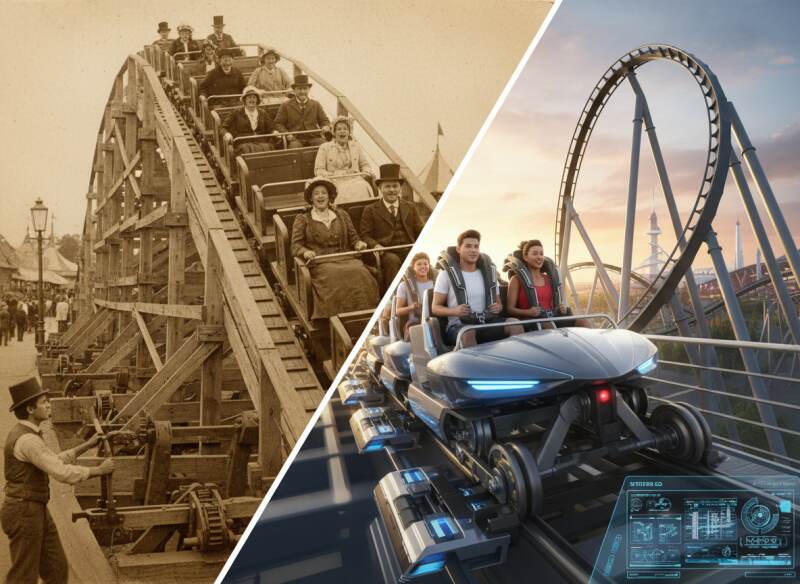
The 5 Biggest Safety Changes
- Restraints evolved from basic lap bars to secure, sensor-verified systems.
- Wheel assemblies changed to “hold the train” from multiple directions, making derailment far less likely.
- Braking systems became redundant and more precise (including magnetic braking).
- Computer control and block zones reduced collision risk and improved monitoring.
- Industry standards and inspection practices became more formal and consistent over time.
The Early Days: Wooden Coasters and the Wild West of Amusement Parks
The earliest roller coasters were crude affairs by modern standards. The Flip Flap Railway, which opened in 1888, featured a single circular loop that regularly threw riders around with such force that people were injured. The ride was designed by Lina Beecher, a pioneering female engineer, but the technology simply wasn’t sophisticated enough to create a safe looping experience.
Early wooden coasters were built with minimal understanding of the forces involved in coaster design. Engineers didn’t have computers to model the physics. They didn’t have sophisticated materials testing. They didn’t have standardized safety regulations. Instead, they built coasters through trial and error, learning from accidents and injuries what worked and what didn’t.
The restraint systems on early coasters were minimal. Many riders were held in place only by lap bars or simple over-shoulder harnesses that were often loose and uncomfortable. Some coasters had no restraints at all, relying on the rider to hold on. Falls from coasters were not uncommon, and injuries were frequent.
The parks themselves had little incentive to prioritize safety. Liability laws were weak, and companies could often escape responsibility for injuries. The attitude was often that if you were injured on a ride, it was your own fault for being careless. This lack of accountability meant there was little pressure to improve safety.
However, even in these early days, some engineers and park operators understood that safety was important. They began to develop better restraint systems. They began to study the physics of coaster design. They began to learn from accidents and make improvements. This early work laid the foundation for the safety improvements that would come later.
The Gap: Why Looping Coasters Disappeared for 80 Years
One of the most interesting aspects of roller coaster safety history is the 80-year gap between the Flip Flap Railway in 1888 and the next successful looping coaster in 1968. Why did it take so long to build another looping coaster?
The answer is safety. The circular loop design of the Flip Flap Railway was inherently unsafe. The constant radius of the circular loop meant that riders experienced extreme G-forces at the top of the loop. The human body simply couldn’t handle these forces without injury. After the Flip Flap Railway proved to be dangerous, the industry abandoned looping coasters entirely.
For 80 years, coaster designers focused on building wooden coasters with hills, turns, and drops, but no inversions. These coasters were much safer than looping coasters because they didn’t subject riders to the extreme forces of an inversion. The industry had learned a hard lesson: sometimes the safest design is the one that avoids the most dangerous elements entirely.
This 80-year gap demonstrates an important principle in safety engineering: sometimes the best solution is to avoid the problem altogether rather than trying to solve it. The industry could have spent decades trying to make circular loops safe, but instead, they recognized that the problem was fundamentally unsolvable with the technology available at the time, and they moved on to other designs.
If you want a broader timeline view (not just safety), roller coaster history is a solid quick read.
The Teardrop Loop Breakthrough: Engineering Innovation Meets Safety
The breakthrough that finally made looping coasters safe came in 1968 with the introduction of the teardrop loop. The teardrop loop has a variable radius, meaning the curve is tighter at the bottom and looser at the top. This design distributes the G-forces more evenly throughout the loop, preventing the extreme forces that made circular loops so dangerous.
The teardrop loop was developed through careful mathematical analysis and computer modeling. Engineers could now calculate exactly what shape a loop needed to be to keep G-forces within safe limits. This was a revolutionary advance in coaster design because it meant that engineers could design inversions that were both thrilling and safe.
The introduction of the teardrop loop opened up a whole new era of coaster design. Suddenly, designers could build coasters with multiple inversions, each one carefully engineered to keep riders safe while providing an intense experience. The teardrop loop became the standard design for coaster loops, and it remains the most common loop design today.
The teardrop loop breakthrough demonstrates how technological advances can solve safety problems. The problem of circular loops wasn’t solved by making them stronger or adding more restraints. It was solved by fundamentally rethinking the design based on a better understanding of physics and the ability to model and test designs before building them.
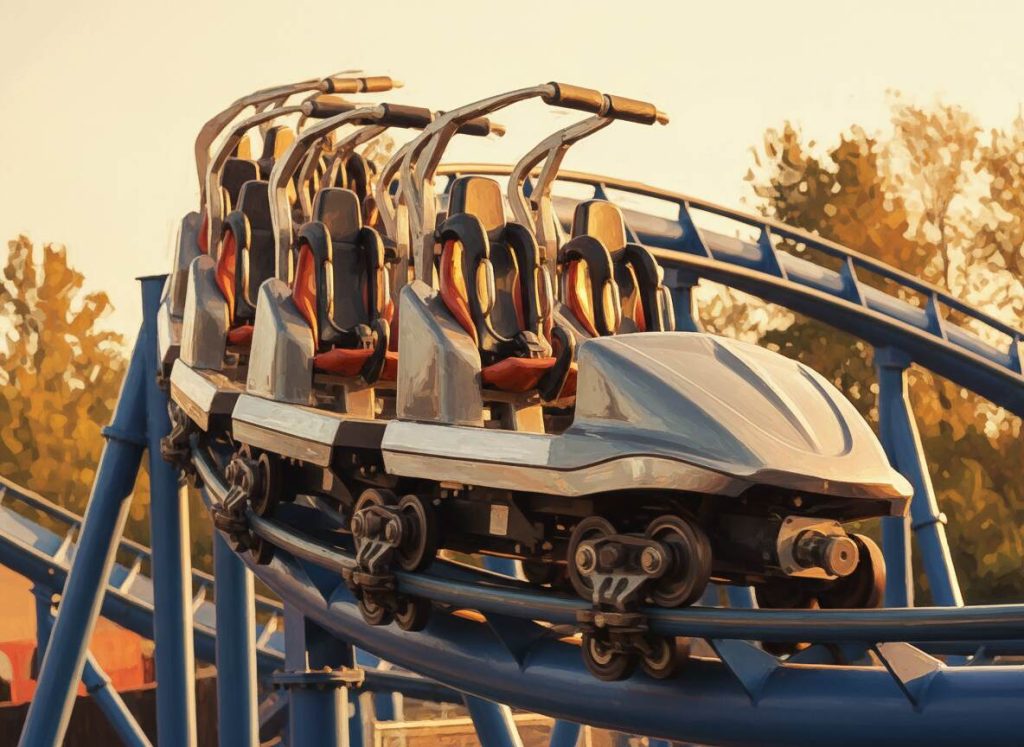
Restraint Systems: From Lap Bars to Over-Shoulder Harnesses
One of the most visible aspects of roller coaster safety evolution has been the development of restraint systems. Early coasters used simple lap bars that held riders in place from the waist down. These lap bars were often loose and uncomfortable, and riders could sometimes slip out of them.
As coasters became faster and more intense, engineers realized that lap bars alone weren’t sufficient. Riders needed to be held in place more securely, especially during inversions when the forces could throw a rider upward and out of their seat.
The solution was the over-shoulder harness. These harnesses hold riders in place from both the waist and the shoulders, preventing them from being thrown out of their seats. Modern over-shoulder harnesses are sophisticated pieces of engineering, designed to be comfortable while still providing secure restraint.
The development of over-shoulder harnesses required careful engineering to balance safety with comfort and accessibility. Harnesses needed to accommodate riders of different sizes and body types. They needed to be easy to fasten and unfasten. They needed to be comfortable enough that riders could wear them for the duration of the ride without experiencing pain or excessive pressure.
Modern harnesses use padding and ergonomic design to distribute pressure evenly across the rider’s body. They use quick-release mechanisms that allow riders to exit quickly in case of emergency. They use sensors to verify that harnesses are properly fastened before the ride begins.
The evolution of restraint systems demonstrates how safety improvements often come from a combination of engineering innovation and attention to human factors. It’s not enough to simply hold riders in place. You need to do it in a way that’s safe, comfortable, and accessible to a wide range of people.
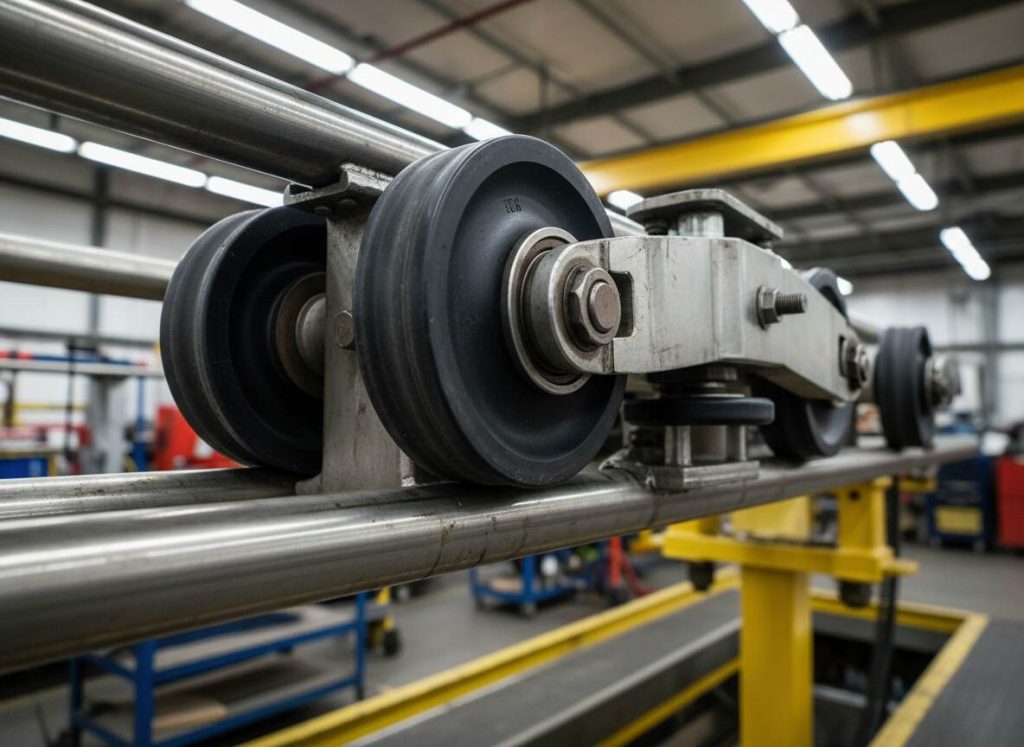
Wheel and Braking Systems: The Foundation of Coaster Safety
While restraint systems get most of the attention, the real foundation of roller coaster safety lies in the wheel and braking systems. These systems are responsible for keeping the coaster on the track and controlling its speed.
Early wooden coasters used simple wheels that ran on top of the track. These wheels could sometimes derail if the coaster went too fast or if the track wasn’t perfectly smooth. As coasters became faster, engineers realized they needed a more sophisticated wheel system.
The breakthrough came with the development of the three-wheel system used on modern steel coasters. These coasters have three sets of wheels: guide wheels that run on top of the track, guide wheels that run on the sides of the track, and guide wheels that run underneath the track. This three-wheel system means that the coaster is held onto the track from all sides, making derailment virtually impossible.
The three-wheel system was revolutionary because it allowed engineers to build coasters that could safely handle extreme speeds, sharp turns, and inversions. The coaster couldn’t fall off the track no matter what forces were applied to it. This fundamental safety improvement opened up a whole new era of coaster design.
Braking systems have also evolved dramatically. Early coasters used friction brakes that relied on brake shoes pressing against the track to slow the coaster down. These friction brakes were effective but could wear out quickly and were sometimes unreliable.
Modern coasters use a combination of braking systems. Magnetic brakes use powerful magnets to slow the coaster without any physical contact, eliminating wear and providing precise control. Hydraulic brakes provide additional stopping power when needed. Some coasters use eddy current brakes, which use electromagnetic induction to slow the coaster down.
The sophistication of modern braking systems means that coasters can be brought to a stop with extreme precision. This is critical for safety because it ensures that the coaster stops exactly where it’s supposed to, preventing collisions and ensuring smooth operation.
If you want the nerdy but readable version of the physics behind all this, here’s my explainer on how roller coasters work (engineering and physics).
Computer Control Systems: The Digital Revolution in Coaster Safety
One of the most significant advances in roller coaster safety came with the introduction of computer control systems. Early coasters were entirely mechanical, relying on gravity and the skill of the ride operator to control their operation. Modern coasters are controlled by sophisticated computer systems that monitor every aspect of the ride’s operation.
Computer control systems monitor the speed of the coaster at every point on the track. If the coaster is going too fast, the system can automatically engage brakes to slow it down. If the coaster is going too slow, the system can adjust the ride to compensate. This constant monitoring ensures that the coaster operates within safe parameters at all times.
Computer systems also monitor the condition of the coaster’s mechanical systems. Sensors check that wheels are properly aligned, that brakes are functioning correctly, and that restraints are secure. If any system is not functioning properly, the computer system can alert operators and prevent the ride from operating until the problem is fixed.
Computer systems also manage block zone systems, which divide the coaster track into sections. The computer ensures that only one coaster train is in each section at any given time, preventing collisions between trains. Block zone systems allow parks to run multiple trains on the same track, increasing capacity while maintaining safety.
The introduction of computer control systems represented a fundamental shift in how coaster safety is managed. Instead of relying on mechanical systems and human operators, modern coasters rely on digital systems that can monitor and respond to conditions in real time. This has made coasters dramatically safer and more reliable.
Related post: Cheapest Days to Visit Dorney Park
Materials Science and Engineering: Building Stronger, Safer Coasters
As coasters have become faster and more intense, the materials used to build them have become increasingly sophisticated. Early wooden coasters were built from wood, which is strong but can rot, warp, and deteriorate over time. Early steel coasters were built from basic steel, which can rust and fatigue.
Modern coasters are built from advanced materials that are stronger, more durable, and more resistant to fatigue and corrosion. High-strength steel alloys are used for track and structural components. These materials can withstand the extreme stresses of modern coaster operation without degrading.
Engineers use sophisticated materials testing to ensure that every component of a coaster can safely handle the stresses it will experience. Computer modeling allows engineers to predict how materials will behave under extreme conditions. This allows them to design coasters that are not just strong enough, but strong enough with a significant safety margin.
The science of fatigue is particularly important in coaster design. Every time a coaster operates, its components experience stress. Over time, this repeated stress can cause materials to weaken and eventually fail. Modern coaster design takes fatigue into account, using materials and designs that can handle millions of cycles without failure.
Corrosion resistance is another critical aspect of modern coaster materials. Coasters are exposed to weather, moisture, and salt air (especially at coastal parks). Modern materials and coating systems are designed to resist corrosion and maintain their strength over decades of operation.
CAD and Finite Element Analysis: Computer-Aided Design Revolution
Before the advent of computer-aided design (CAD) and finite element analysis (FEA), coaster designers had to rely on physical models and intuition to design coasters. They would build scale models and test them. They would use mathematical calculations to estimate forces and stresses. But they couldn’t precisely model how a full-size coaster would behave under all conditions.
The introduction of CAD and FEA changed everything. Engineers can now create detailed digital models of coasters and simulate their operation under various conditions. They can model the forces that riders will experience at every point on the track. They can identify potential problems before the coaster is built. They can optimize designs to maximize safety while minimizing cost and material usage.
FEA is particularly powerful because it allows engineers to analyze the stress distribution throughout a coaster’s structure. They can identify weak points and reinforce them. They can ensure that every component is strong enough to handle the forces it will experience. This level of precision was impossible before computer modeling.
CAD and FEA have made coaster design faster and more efficient. Designers can iterate quickly, testing different designs and optimizing them for safety and performance. This has led to coasters that are not only safer but also more innovative and exciting.
Inspection and Maintenance: Keeping Coasters Safe Over Time
Building a safe coaster is only half the battle. Keeping it safe over its entire operational life is equally important. Modern coasters require rigorous inspection and maintenance schedules to ensure they remain safe.
Daily inspections check for obvious problems: loose bolts, damaged track, worn wheels, and malfunctioning brakes. These inspections are performed by trained technicians who understand what to look for and how to identify potential problems.
Weekly and monthly inspections are more thorough, checking components that don’t need to be inspected as frequently. Seasonal inspections are performed before the park opens for the season, checking for damage from weather and wear.
Annual inspections are comprehensive, involving detailed examination of the entire coaster. Track is inspected for cracks and wear. Wheels are checked for damage. Brakes are tested. Restraints are examined. Structural components are inspected for corrosion and fatigue.
Modern parks keep detailed maintenance records, documenting every inspection, every repair, and every component replacement. These records allow parks to track the condition of their coasters over time and identify patterns that might indicate developing problems.
Maintenance is not just about fixing problems when they occur. It’s about preventing problems from occurring in the first place. Regular maintenance, proper lubrication, and timely replacement of worn components all contribute to keeping coasters safe and reliable.
Standards and Regulations: Industry-Wide Safety Guidelines
For much of coaster history, there were no industry-wide safety standards. Each park and each manufacturer had their own standards, or sometimes no standards at all. This led to inconsistency and meant that some coasters were safer than others.
The development of industry standards has been a major factor in improving coaster safety. Organizations like ASTM International have developed detailed standards for coaster design, construction, operation, and maintenance. These standards are based on decades of experience and engineering knowledge.
ASTM Committee F24 on Amusement Rides and Devices is the committee responsible for amusement ride safety standards. This committee includes engineers, manufacturers, park operators, and safety experts. They develop and update standards based on the latest technology and best practices.
Regulatory oversight varies by location. Some states and countries have strict regulations governing coaster design and operation. Others have minimal regulations. However, most major parks follow industry standards even if they’re not required to by law, because they understand that safety is good for business.
Standards cover everything from design and construction to operation and maintenance. They specify how coasters should be designed to handle certain forces. They specify how often inspections should be performed. They specify how operators should be trained. They specify how accidents should be investigated and reported.
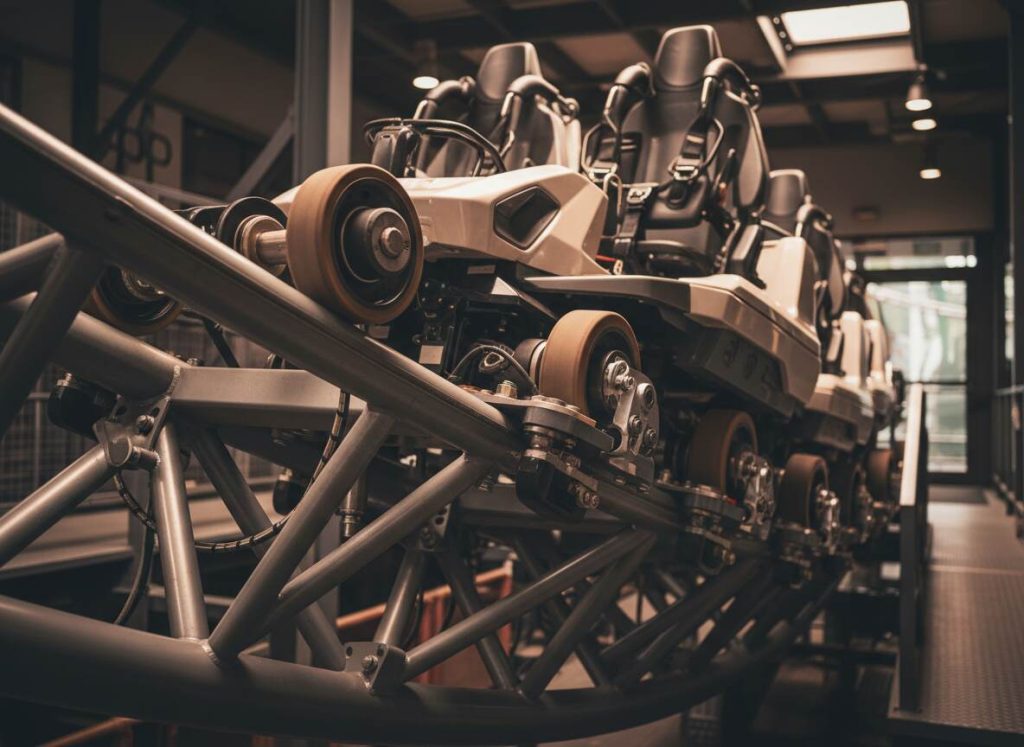
Learning from Accidents: How Failures Drive Innovation
Sadly, coaster accidents have played a significant role in driving safety improvements. Nearly every major advance in coaster safety has come after an accident that exposed a weakness in the existing design or procedures.
The Flip Flap Railway accidents led to the abandonment of circular loops for 80 years. Accidents on early wooden coasters led to the development of better restraint systems. Accidents involving derailments led to the development of the three-wheel system. Accidents involving brake failures led to the development of redundant braking systems.
When accidents occur, they are thoroughly investigated. Engineers and safety experts examine what went wrong, why it went wrong, and how to prevent it from happening again. These investigations often lead to design changes that make coasters safer not just for the park where the accident occurred, but for the entire industry.
This process of learning from accidents is sometimes called “safety through failure.” It’s not the ideal way to improve safety, but it’s often how real-world improvements happen. The industry learns from mistakes and implements changes to prevent similar mistakes from happening again.
If you want the stats-heavy version of this topic, I’ve got a separate breakdown on roller coaster deaths, statistics, and safety.
Redundancy and Fail-Safe Design: Building in Multiple Layers of Safety
Modern coasters are designed with redundancy and fail-safe principles in mind. This means that critical safety systems have backups, and if one system fails, another system takes over to ensure safety.
Braking systems are a good example of this principle. Modern coasters typically have multiple braking systems: magnetic brakes, hydraulic brakes, and sometimes mechanical friction brakes. If one braking system fails, the others can still stop the coaster. This redundancy ensures that the coaster can always be stopped safely, even if one system malfunctions.
Restraint systems also use redundancy. Modern harnesses have multiple attachment points and locking mechanisms. If one attachment point fails, the others still hold the rider in place. This redundancy ensures that riders are always securely restrained, even if one component fails.
Block zone systems use redundancy to prevent collisions. Multiple sensors monitor the position of coaster trains. If one sensor fails, others provide backup information. The computer system uses this information to ensure that trains don’t collide, even if one sensor is malfunctioning.
Fail-safe design means that if a system fails, it fails in a safe way. For example, if a magnetic brake loses power, it defaults to stopping the coaster, not allowing it to continue. This ensures that failures don’t lead to unsafe conditions.
I also put together a separate guide on what coaster accidents usually involve, and what people assume vs what’s actually happening: roller coaster accidents and safety statistics.
Human Factors Engineering: Designing for People, Not Just Physics
Modern coaster safety design takes into account human factors. This means designing coasters not just to be physically safe, but to be safe in the context of how humans actually use them.
Restraint design must account for the fact that people come in different sizes and shapes. A restraint system that works perfectly for an average adult might not work for a very small person or a very large person. Modern restraints are designed to accommodate a wide range of body types while still providing secure restraint.
Operator training and procedures are designed to minimize human error. Operators are trained to perform specific procedures before each ride. Checklists ensure that nothing is forgotten. Automated systems verify that procedures have been followed correctly.
Queue design and loading procedures are designed to minimize accidents. Queues are designed to keep people moving safely. Loading procedures are designed to be clear and easy to follow. Operators are trained to help riders load safely and to ensure that restraints are properly fastened.
Signage and instructions are designed to be clear and easy to understand. Height restrictions, age restrictions, and health warnings are clearly posted. Instructions for fastening restraints are clear and easy to follow. This helps ensure that riders understand what’s expected of them and can follow safety procedures.
The Future of Coaster Safety: Technology and Innovation
Coaster safety continues to evolve as new technologies emerge. Artificial intelligence and machine learning are being explored as ways to predict maintenance needs and identify potential problems before they occur. Sensors are becoming more sophisticated, allowing for more detailed monitoring of coaster operation.
Virtual reality and augmented reality are being integrated into some coasters, but safety remains a top priority. Any new technology must be thoroughly tested to ensure that it doesn’t compromise safety.
Materials science continues to advance, with new materials being developed that are stronger, lighter, and more durable. These materials will allow for even more innovative coaster designs while maintaining or improving safety.
The fundamental principle that will guide future coaster safety improvements is the same principle that has guided them for over a century: the pursuit of thrills and the pursuit of safety are not mutually exclusive. With proper engineering, careful design, and rigorous testing, coasters can be both incredibly exciting and incredibly safe.
Conclusion: A Century of Innovation and Learning
The evolution of roller coaster safety is a remarkable story of human innovation and learning. From the dangerous circular loops of the Flip Flap Railway to the sophisticated, computer-controlled coasters of today, the industry has made tremendous progress in making coasters safer while making them more thrilling.
This progress has come through a combination of technological advances, engineering innovation, regulatory development, and learning from accidents. It has come through the dedication of engineers and safety experts who understand that safety is not a constraint on innovation, but an enabler of it. Safer coasters allow for more daring designs and more intense experiences.
The story of coaster safety is also a story about how industries can improve over time. It demonstrates that even in industries where accidents have occurred, systematic improvements can be made. It demonstrates that learning from failures, investing in research and development, and maintaining high standards can lead to dramatic improvements in safety.
Today’s coasters are safer than ever before. The risk of serious injury on a modern coaster is extremely low. This is not because coasters have become boring or tame. It’s because engineers have learned how to make coasters that are both thrilling and safe. And that’s a remarkable achievement.
FAQ: How Roller Coasters Safety Evolved
Are modern roller coasters safer than older wooden coasters?
Generally, yes, especially in terms of monitoring, restraint verification, and automated control systems. That said, “wood vs steel” isn’t the whole story, maintenance quality and operating standards matter a lot more than material alone.
If coasters are so safe, why do accidents still happen?
Because “safe” doesn’t mean “impossible.” When serious incidents happen, they’re often tied to human behavior, medical events, rule-breaking, or rare mechanical issues, not the normal day-to-day operation of a modern ride.
What’s the biggest safety improvement of all time?
It’s hard to pick one, but automated control systems plus restraint sensors are up there. They reduce the number of things that rely on a human noticing a problem in the moment, and they add layers of prevention before a train ever leaves the station.

Leave a Reply