There’s nothing quite like the thrill of a roller coaster, but the oldest coasters in the world offer something even more special: a direct link to the roots of theme park history. These rides have survived wars, weather, and decades of changing tastes. They’re not just attractions—they’re living museums, carrying generations of riders through time. In this deep dive, we’ll explore the world’s oldest roller coasters, the stories behind their survival, and what makes them true legends of the amusement world.
1. The Birth of the Roller Coaster: From Russian Ice Slides to Switchback Railways
The story of roller coasters begins long before steel track and high-tech launches. In 17th-century Russia, thrill-seekers would climb massive wooden towers in winter, then race down ice-covered slopes on sleds. These “Russian Mountains” were the world’s first thrill rides, and their popularity quickly spread across Europe. By the early 1800s, the French adapted the idea, adding wheels and tracks to create the “Les Montagnes Russes à Belleville” in Paris—often credited as the first wheeled coaster.
The real revolution came in America in 1884, when LaMarcus Thompson opened the Switchback Railway at Coney Island. Riders would board a bench-like car and roll down a gentle, undulating track—then workers would push the car back to the start for another go. It was simple, but it launched a global obsession with ever-bigger, faster, and wilder rides.
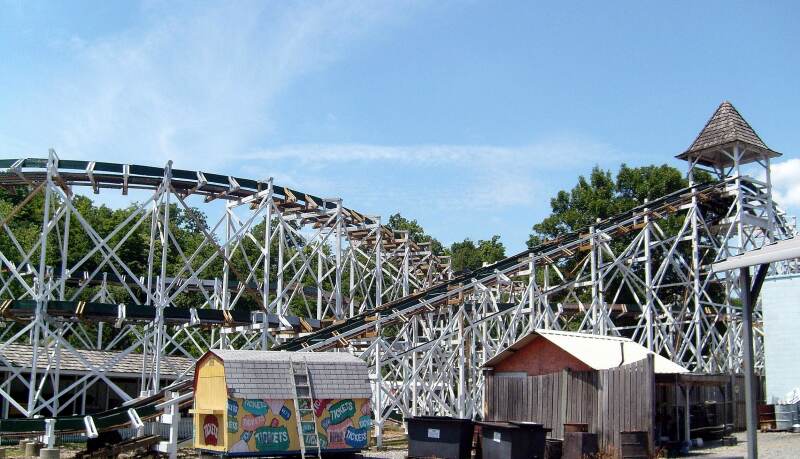
2. Leap-the-Dips (Lakemont Park, Pennsylvania, USA) – 1902
Why it matters: Leap-the-Dips is officially recognized as the world’s oldest operating roller coaster. Built in 1902 and designated a National Historic Landmark, this classic “figure-eight” coaster is a living piece of American amusement history.
Ride experience: Don’t expect modern thrills—Leap-the-Dips is gentle, with no seat belts, lap bars, or upstop wheels. The cars coast along a rickety wooden track, offering a glimpse into the earliest days of coaster design.
Survival story: After decades of operation, Leap-the-Dips closed in 1985 due to disrepair. But thanks to a passionate group of local preservationists, it was restored and reopened in 1999. Today, it’s a must-ride for coaster historians and nostalgia fans alike.
3. Scenic Railway (Luna Park, Melbourne, Australia) – 1912
Why it matters: The Scenic Railway at Luna Park is the oldest continuously operating roller coaster in the Southern Hemisphere. Built in 1912, it’s one of only a handful of coasters worldwide that still require a brakeman to ride along and control the speed by hand.
Ride experience: The Scenic Railway offers sweeping views of Port Phillip Bay and the city skyline. Its gentle hills and turns are more about scenery than speed, but the rumble of the wooden track and the presence of a live brakeman make it a one-of-a-kind experience.
Survival story: Despite fires, storms, and changing park fortunes, the Scenic Railway has operated nearly every year since opening. Its continued existence is a testament to the dedication of Luna Park’s staff and the love of Melbourne locals.
4. Rutschebanen (Tivoli Gardens, Copenhagen, Denmark) – 1914
Why it matters: Rutschebanen (simply “The Roller Coaster”) is one of the oldest wooden coasters still running in its original form. Built in 1914, it’s a crown jewel of Tivoli Gardens, one of the world’s oldest amusement parks.
Ride experience: Like the Scenic Railway, Rutschebanen uses an onboard brakeman to control speed. The ride winds through tunnels, over hills, and around sharp curves, all within Tivoli’s lush gardens.
Survival story: Rutschebanen has survived two World Wars, modernization, and multiple park renovations. Its status as a Danish cultural treasure has helped ensure its preservation for future generations.
5. Roller Coaster (Great Yarmouth Pleasure Beach, UK) – 1932
Why it matters: Simply named “Roller Coaster,” this seaside classic is the oldest operating coaster in the UK and one of the last in the world to use a brakeman. Built in 1932, it’s a beloved fixture of Great Yarmouth’s Pleasure Beach and a prime example of British amusement history.
Ride experience: The ride features a series of gentle dips, sweeping turns, and a few surprising drops, all with the unmistakable clatter and sway of a vintage woodie. The brakeman stands in the middle of the train, manually controlling speed throughout the ride.
Survival story: Despite storms, World War II, and changing tastes, Roller Coaster has endured thanks to careful maintenance and a devoted local following. Its continued operation is a tribute to the value placed on preservation and nostalgia in the UK’s coastal towns.
6. Giant Dipper (Santa Cruz Beach Boardwalk, USA) – 1924
Why it matters: The Giant Dipper is a California icon and one of the most famous wooden coasters in the United States. Opened in 1924, it’s a National Historic Landmark and a living link to the golden age of American boardwalks.
Ride experience: The Giant Dipper is known for its tunnel start, sweeping ocean views, and a relentless series of drops and curves. It’s fast, thrilling, and surprisingly smooth for its age—proof that classic engineering can stand the test of time.
Survival story: The Boardwalk has faced earthquakes, storms, and the threat of redevelopment, but local support and a commitment to tradition have kept the Giant Dipper running for nearly a century.
7. Jack Rabbit (Kennywood Park, USA) – 1920
Why it matters: Jack Rabbit is one of the oldest operating coasters in the world and a Pittsburgh treasure. Built in 1920 by legendary designer John A. Miller, it’s famous for its “double dip” drop and its use of Miller’s upstop wheel innovation.
Ride experience: Jack Rabbit delivers classic wooden coaster thrills—sharp turns, quick airtime, and a layout that hugs the natural terrain. The “double dip” is a rite of passage for coaster fans, producing a moment of true weightlessness.
Survival story: Kennywood’s status as a National Historic Landmark and the park’s commitment to preservation have ensured Jack Rabbit’s survival through changing park ownership and the rise of modern thrill rides.
8. Thunderhawk (Dorney Park, USA) – 1924
Why it matters: Thunderhawk is one of the oldest operating coasters in the United States and a testament to classic out-and-back design. Built in 1924, it has delighted generations of riders with its simple yet thrilling layout.
Ride experience: Thunderhawk’s ride is all about airtime and lateral forces. Its wooden track and compact footprint pack a punch, offering a nostalgic thrill that stands out amid Dorney Park’s modern attractions.
Survival story: Thunderhawk has survived multiple renovations, ownership changes, and the threat of demolition. Its continued operation is a result of passionate fans and a park that values its history.
9. The Wild One (Six Flags America, USA) – 1917 (Relocated)
Why it matters: Originally built as “The Giant Coaster” at Paragon Park in Massachusetts in 1917, The Wild One was relocated to Six Flags America in Maryland in 1986. It’s one of the oldest operating coasters in the world, with a unique history of survival and adaptation.
Ride experience: The Wild One features a classic out-and-back layout with big drops and fast turns—a true throwback to early 20th-century coaster design.
Survival story: When Paragon Park closed in the 1980s, fans and preservationists rallied to save the coaster, leading to its relocation and restoration. Today, it continues to thrill new generations of riders in a new home.
10. Other Notable Survivors Around the Globe
- Montaña Suiza (Parque de Atracciones Monte Igueldo, Spain) – 1928: Spain’s oldest coaster, still running with a brakeman and offering stunning views of the Bay of Biscay.
- Big Dipper (Blackpool Pleasure Beach, UK) – 1923: A British classic, famous for its double drops and lively ride experience.
- Roller Coaster (PNE Playland, Canada) – 1958: The oldest in Canada, beloved for its airtime and classic woodie feel.
These coasters are more than just rides—they’re living history, offering a tangible connection to the earliest days of amusement parks. Their survival is a testament to the dedication of preservationists, fans, and park operators who understand the value of tradition and nostalgia.
The Technology and Craftsmanship Behind Survival
What keeps a roller coaster running for a century or more? It’s not just luck—it’s the result of thoughtful engineering, dedicated craftsmanship, and a willingness to adapt. The oldest coasters in the world are living case studies in how to blend tradition with innovation.
Hand-Built Structures and Skilled Labor
Early wooden coasters were crafted almost entirely by hand, using thousands of individual beams, bolts, and planks. Each piece was measured, cut, and fitted on site, often by teams of skilled carpenters. This hands-on approach means that every historic coaster is a little bit unique, with its own quirks and personality. Modern maintenance teams must be equally skilled, using both traditional carpentry and new technologies to keep these rides safe and smooth.
Brakemen: The Human Element
On the oldest coasters—like Scenic Railway and Rutschebanen—a brakeman rides along in the train, manually controlling speed with a large lever. This requires experience, intuition, and a deep understanding of the ride’s layout and condition. The role is part engineer, part performer, and it’s a tradition that’s all but vanished from modern coasters, making these rides even more special.
Upstop Wheels and Safety Innovations
One reason so many early coasters survived is the invention of the upstop wheel by John A. Miller in 1912. Before this, coasters could only go as fast as gravity and friction would allow, since there was nothing to keep the train from lifting off the track on hills. Upstop wheels clamp underneath the rail, making steeper drops and faster speeds possible—and dramatically improving safety.
Material Upgrades and Sensitive Restorations
Many historic coasters have been carefully upgraded over time. Original wood may be replaced with stronger, weather-resistant lumber. Steel running rails are swapped out as they wear, and modern fasteners replace aging bolts. The goal is always to preserve the “feel” and layout of the original ride, while ensuring safety and reliability for new generations of riders.
Modern Technology Meets Vintage Thrills
Today, even the oldest rides benefit from modern tools. Laser-guided alignment, ultrasonic testing, and digital design models help pinpoint structural issues before they become problems. Parks use these technologies to plan repairs, monitor wear, and keep the ride experience as close to the original as possible.
The Cultural Impact of Historic Coasters
These rides are more than just amusement—they’re woven into the fabric of their communities. For many, a ride on the local wooden coaster is a rite of passage, a family tradition, or a beloved memory passed down through generations. Historic coasters often serve as symbols of resilience, having survived wars, economic downturns, and changing tastes.
In some cities, the fight to save a classic coaster has united communities and inspired new generations of fans. Preservation efforts—whether through fundraising, volunteer work, or passionate advocacy—show just how deeply people care about these living pieces of history.
Preservation: Keeping the Past Alive
The survival of these rides is never guaranteed. Weather, age, and economics all take a toll. But thanks to the dedication of park owners, local governments, and fans, many of the world’s oldest coasters have been restored and protected for the future.
- National Historic Landmarks: In the U.S., rides like Leap-the-Dips and the Giant Dipper have received official recognition, making it easier to secure funding and support for restoration.
- Community Fundraising: Many preservation projects are driven by local fans who raise money, volunteer, and lobby for the coaster’s survival.
- International Cooperation: In Europe and Australia, historic coasters are often protected by heritage laws, ensuring they remain part of the cultural landscape.
These efforts are about more than nostalgia—they’re about honoring the craftsmanship, creativity, and joy that these rides have brought to millions. As long as there are fans willing to fight for them, the world’s oldest roller coasters will keep thrilling riders for generations to come.
What It’s Like to Ride the Oldest Roller Coasters Today
Riding a century-old roller coaster is a unique experience—part thrill, part time travel. Unlike modern steel giants, these classic rides offer a direct connection to the past. The sights, sounds, and sensations are unlike anything you’ll find on a new coaster, and every bump or rattle tells a story.
The Sights and Sounds of History
As you board, you might notice the hand-carved woodwork, the retro signage, and the original station architecture. The trains themselves often have a vintage look, with open sides and bench seating. When the ride starts, the clatter of wheels on wood, the sway of the structure, and the whoosh of air feel almost theatrical—reminding you that you’re riding a piece of living history.
Gentle Thrills and Surprising Airtime
Don’t expect the intensity of a modern launch coaster, but don’t underestimate these old rides either. Many feature sudden drops, quick turns, and moments of genuine airtime. The lack of over-the-shoulder restraints and the presence of a brakeman add to the authenticity. Each ride feels slightly different, depending on the weather, the train, and even the skill of the operator.
Shared Experience and Community
What makes these rides truly special is the sense of community and tradition. You’ll often find families who’ve been riding the same coaster for generations, swapping stories and sharing tips. Local fans may point out their favorite seat or explain a bit of the ride’s history as you wait in line. For many, riding a historic coaster is a way to connect with loved ones and make new memories while honoring the past.
FAQs: Visiting and Riding the Oldest Coasters
- Are they safe? Yes—parks invest heavily in maintenance, safety checks, and modern upgrades to ensure these rides meet current standards.
- Are there height or health restrictions? Most historic coasters have similar restrictions to modern rides. Always check park policies before you visit.
- Can I ride with young children? Many of these coasters are family-friendly, with gentle speeds and lower height requirements, but always check with the park.
- How can I support preservation? Ride often, share your experiences, and consider donating to preservation groups or volunteering for local projects.
Conclusion: Why These Coasters Matter
The oldest roller coasters in the world are more than just rides—they’re living testaments to creativity, resilience, and the simple joy of a shared thrill. They connect us to the past, inspire future generations, and remind us that sometimes the best adventures are the ones that have stood the test of time. Whether you’re a lifelong coaster fan or a first-time rider, don’t miss the chance to experience these historic marvels. Each ride is a celebration of survival, community, and pure, timeless fun.
Got a favorite historic coaster or a story to share? Leave a comment and join the conversation—because as long as we keep riding and remembering, these legends will never fade.
