If you have ever ridden a coaster and immediately thought, “okay, but what if the drop was ten feet taller, and the airtime hill was shaped like a sharper camelback, and the turnaround had a little more snap,” then you already understand the emotional appeal of NoLimits 2.
NoLimits 2 is not a theme park management game. It is not trying to be cute. It is not trying to distract you with mascots and food stalls and a million tiny UI popups. It is a roller coaster simulation and design tool that basically says: here is the track, here is the train, here is the physics, now go make something that either feels like a real coaster or feels like your personal fever dream.
And that is why it has survived in the coaster community as a kind of “serious hobbyist” staple. People use it to build fantasy coasters, recreate real rides, test layouts, and, honestly, to scratch the itch when they cannot get to a park.
If you want a broader foundation for how coaster forces work (and why certain shapes feel smooth or violent), this pairs well with How Roller Coasters Work: Engineering And Physics. NoLimits 2 gets way more fun when you understand what you are actually designing.
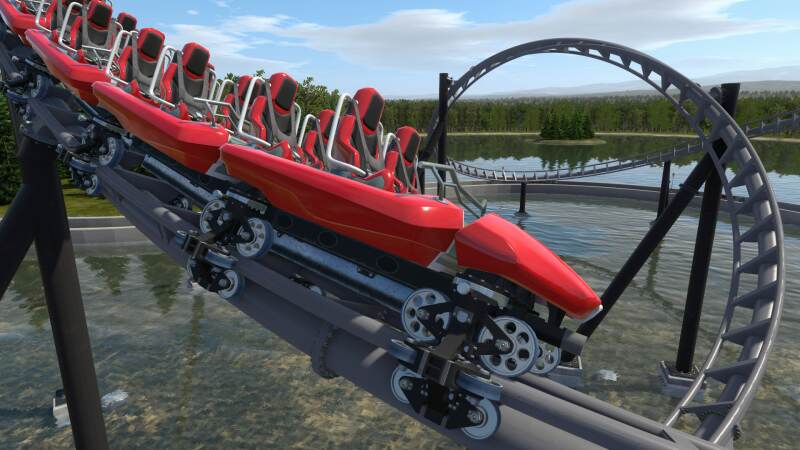
What NoLimits 2 Actually Is (And What It Is Not)
Let’s get the “wrong expectations” out of the way first, because this is where people bounce.
NoLimits 2 is a coaster simulator and editor. The core loop is building track, choosing coaster types, shaping elements, and then riding your creation from multiple camera views, including first-person. It is about the ride experience and the design process.
NoLimits 2 is not a park builder. You can create scenery and environments, and people do some genuinely gorgeous work, but the game is not built around managing guests, pricing, staffing, or running a profitable park. If your brain wants “build a park, watch guests, optimize money,” you are usually looking for a different genre.
That distinction matters because it explains the vibe. NoLimits 2 feels like a workshop. It is you, the track, and the consequences of your choices.
Why NoLimits 2 Feels So Different From Most Coaster Games
Most coaster games are designed to make you feel like a theme park owner. NoLimits 2 is designed to make you feel like a coaster designer, or at least like someone obsessively tweaking a layout at 2 AM because the transition into the roll is “almost” right.
Here is a little anecdote that will feel familiar if you have ever messed with it: you build a coaster that looks perfect from a distance. The silhouette is gorgeous. The pacing looks great. You hit play, you ride it, and then you realize the ride is trying to remove your spine at the bottom of the first drop. So you go back to the editor, adjust one curve, ride again, and suddenly it is better, but now the next hill feels dead. So you adjust that. And then you realize you have been doing tiny edits for an hour and you have not even touched the second half of the layout.
That is NoLimits 2. It teaches you, very quickly, that “looking like a coaster” and “riding like a coaster” are not the same thing.
The Big Selling Point: You Can Build Coasters That Ride Like Coasters
NoLimits 2 has built its reputation on realism. Not “perfect engineering simulator” realism in the professional sense, but realism in the way coaster fans mean it: the ride feels plausible. The forces feel like forces. The pacing feels like pacing. If you build something ridiculous, it will feel ridiculous.
And when you build something that is shaped well, it can feel shockingly good. You can get that “float” over a hill, that snap into a turn, that sustained pressure in a helix that makes your brain go quiet for a second.
If you are the kind of person who loves the language of coaster sensations, you will probably also enjoy Hangtime, Airtime, And Weightlessness Explained. NoLimits 2 is basically a playground for that concept. You can design airtime on purpose, then ride it, then adjust it until it hits the exact flavor you wanted.
Editor Life: The Learning Curve Is Real (But It Is Also The Point)
NoLimits 2 is not hard because it is badly designed. It is hard because coaster design is hard. Even a “simple” coaster is a chain of decisions that all affect the next decision.
Here is what most people learn in the first few days:
- Smoothness is not optional. If your transitions are rough, the ride will feel rough.
- Speed management matters. If you do not control speed, the second half of your ride will either crawl or become chaos.
- Element sequencing matters. A good element in the wrong place can feel bad.
- Restraints and ride style matter. The same layout can feel “fun” on one coaster type and “why would you do this to people” on another.
That last point is why restraint discussions never die in coaster fandom. If you want a practical breakdown of why restraints differ and how they change the ride experience, here is my post: Why Roller Coasters Have Different Restraints.
VR: The Feature That Turns It From “Cool” To “Oh No, This Is Intense”
NoLimits 2 is famous in VR circles for a reason. A coaster that feels “fine” on a monitor can feel genuinely intense in VR, because your brain is suddenly getting the visual cues it uses to judge height, speed, and proximity.
This is also where you learn something funny about yourself: your tolerance for coasters in real life does not always map perfectly to your tolerance in VR. Some people who love real coasters get motion sick in VR. Some people who are nervous in real life can handle VR because they know they can stop at any time.
If you are curious about why people feel faint, woozy, or overwhelmed on coasters, and what is actually happening in the body, you might like Why Do People Faint On Roller Coasters?. It is not the same as VR motion sickness, but the “your brain and body are negotiating forces” theme overlaps.
Recreating Real Coasters: The Love Letter Side Of The Community
One of the most charming parts of NoLimits 2 is how many people use it as a love letter to real rides. They recreate coasters that no longer exist. They rebuild coasters they rode as kids. They obsess over details that most guests never notice, like the way the track banks into a mid-course, or the specific rhythm of a bunny hill run.
This is also where NoLimits 2 becomes a little museum. Theme parks change constantly. Coasters get removed, retracked, re-themed, relocated, or simply age into a different personality. A good recreation captures a moment in time.
If you want the bigger picture of why rides disappear, and why “beloved” does not always mean “safe from removal,” this post connects directly: Why Roller Coasters Get Removed: The Real Reasons Rides Disappear.
So Is NoLimits 2 Worth It In 2026?
It depends on what you want.
If you want a casual park builder where you can throw down track pieces and giggle at guests, NoLimits 2 can feel too serious. It will not hold your hand. It expects you to care about shaping.
If you want a coaster-focused tool where you can build, ride, iterate, and learn, it is still one of the most satisfying options out there. It is the kind of software that rewards obsession. If you are the type of person who reads coaster engineering articles for fun, you will probably get your money’s worth.
And if you are a creator, NoLimits 2 is also content fuel. You can build a coaster concept, record POVs, compare coaster types, and basically turn your design process into a series. The community around it is part of the value.
Tips For Getting Into NoLimits 2 Without Getting Overwhelmed
- Start small. Build a short out-and-back coaster before you try to build a 2 minute masterpiece.
- Ride constantly while you build. Do not wait until the end to test. Test every section.
- Study real coasters. Watch POVs and pay attention to pacing and transitions.
- Chase one feeling at a time. “I want floaty airtime” or “I want whip” is a better goal than “I want the best coaster ever.”
If you want a broader list of coaster games and where each one fits, you can also check out Best Games To Build Roller Coasters In. NoLimits 2 is usually the “serious simulation” pick in that lineup.

Leave a Reply