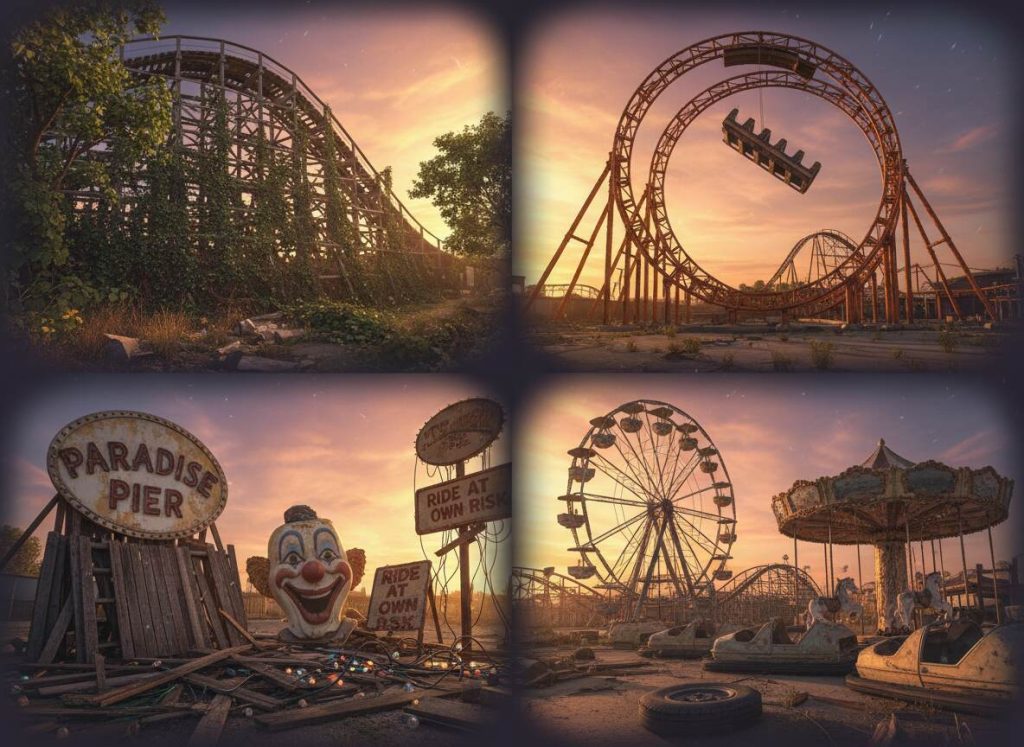
Roller coasters have always been at the heart of theme park excitement, but not all legendary rides stand the test of time. Some of the most influential coasters in history are now lost to the ages—yet their legacy lives on in the rides we enjoy today. This is the story of the forgotten coasters: defunct rides that shaped theme park history, revolutionized engineering, and left an indelible mark on thrill-seekers across generations.
Why Coasters Disappear: The Nature of Defunct Rides
The world of amusement parks is constantly evolving. Rides are replaced, parks rebrand, and new technologies make old attractions obsolete. But every retired coaster has a story—sometimes of innovation, sometimes of risk, and often of both. Why do so many iconic rides vanish? The reasons are as varied as the coasters themselves:
- Technological Progress: New materials and engineering make older rides less competitive or safe.
- Changing Tastes: Guests crave bigger, faster, and more immersive experiences, pushing parks to update their offerings.
- Maintenance Costs: Classic wooden coasters and early steel rides are expensive to maintain and repair.
- Land Use: Parks expand or redevelop, sacrificing older attractions for new ones.
- Accidents and Safety: Some coasters close after high-profile incidents, even if the ride itself wasn’t at fault.
- Financial Struggles: Park closures or bankruptcies often spell the end for beloved rides.
Why Forgotten Coasters Matter
Defunct roller coasters aren’t just relics—they’re milestones in engineering and pop culture. Many introduced first-of-their-kind elements, inspired generations of designers, and set records that stood for decades. Their stories help us understand how the thrills of today were built on the risks and dreams of the past.
Historic Highlights: Pioneering Coasters Now Lost
Let’s journey through some of the most influential defunct coasters from around the world—each with a unique story and a powerful legacy.
The Flip-Flop of Fate: The Crystal Beach Cyclone (1927–1946)
One of the most infamous and influential defunct coasters in history, the Crystal Beach Cyclone in Ontario, Canada, was a ride that struck both awe and terror into the hearts of riders. Designed by legendary engineer Harry G. Traver, the Cyclone was part of the notorious “Terrifying Triplets”—three nearly identical coasters known for their brutal intensity.
- Engineering Innovations: The Cyclone used steel-framed wooden construction, allowing for sharper turns and steeper drops than traditional all-wood coasters. Its layout featured rapid-fire airtime hills, wild lateral forces, and a signature “flip flop” inversion that threw riders sideways.
- Legacy: Despite its short lifespan, the Cyclone inspired generations of designers to push the boundaries of coaster intensity and engineering. It is often cited as one of the most extreme rides ever built.
- Why It Closed: The ride was expensive to maintain and had a reputation for being dangerously rough. After nearly two decades of operation—and countless injuries—it was dismantled in 1946.
The Tragic Tale: The Bat at Kings Island (1981–1983)
The Bat at Kings Island, Ohio, was the world’s first modern suspended roller coaster. Opened in 1981, it was a marvel of innovation—but plagued by technical problems from day one.
- Engineering Innovations: The Bat’s cars swung freely beneath the track, offering a flight-like, swooping sensation. This concept inspired future hits like Arrow’s Suspended Coaster series and B&M’s Inverted Coasters.
- Legacy: Though The Bat lasted only two seasons, its daring design paved the way for successful suspended and inverted coasters worldwide.
- Why It Closed: Mechanical issues, high maintenance costs, and frequent downtime doomed The Bat. The ride was dismantled, but its legacy lives on in every swinging or inverted coaster built since.
Europe’s Lost Legend: The Scenic Railway at Dreamland Margate (1920–2008)
The Scenic Railway at Dreamland in Margate, England, was one of Europe’s oldest and most beloved wooden coasters. Opened in 1920, it thrilled generations before a devastating fire in 2008 left it in ruins.
- Engineering Innovations: The ride was operated by a “brakeman” who manually controlled speed, a throwback to early coaster design. Its gentle hills and scenic views set the standard for family-friendly wooden rides.
- Legacy: The Scenic Railway inspired the preservation movement for classic wooden coasters and is fondly remembered by coaster enthusiasts across Europe.
- Why It Closed: A major fire destroyed much of the structure in 2008. Although a restoration effort began, the original ride was lost to history.
Coming Up Next
In the next part, we’ll explore more legendary defunct coasters from the U.S., including the record-breaking Son of Beast and the mysterious Zippin Pippin. Ready to continue?
The Record-Breaker: Son of Beast at Kings Island (2000–2009)
Son of Beast at Kings Island, Ohio, was a ride that made headlines around the world. When it opened in 2000, it was the tallest and fastest wooden roller coaster ever built—and the only one with a vertical loop. Its massive structure dominated the park’s skyline, promising an unprecedented thrill.
- Engineering Innovations: Son of Beast was the first wooden coaster to feature a 214-foot drop and a vertical loop, thanks to advanced engineering and new construction techniques. It was designed to push the boundaries of what a wooden coaster could do.
- Legacy: The ride’s ambition inspired a new era of “mega-woodies” and hybrid coasters, blending steel and wood for bigger thrills. It remains a legend among coaster fans, despite its short life.
- Why It Closed: Plagued by structural issues, rough rides, and a series of high-profile injuries, Son of Beast was closed in 2009 and demolished in 2012. Its loop was removed in 2006 after an accident, marking the end of an era.
The Elvis Connection: Zippin Pippin (1923–2005)
Zippin Pippin was a classic wooden coaster that thrilled generations at Libertyland in Memphis, Tennessee. Most famous for being Elvis Presley’s favorite ride—he once rented out the park for a private night of riding—it became a local legend.
- Engineering Innovations: Built in 1923, Zippin Pippin was a traditional out-and-back wooden coaster with airtime hills and a lively, rickety feel. It was typical of the early 20th-century American coaster boom.
- Legacy: The ride’s fame, especially with Elvis fans, helped spark nostalgia for classic wooden coasters and inspired preservation efforts elsewhere. After Libertyland closed, the ride was relocated and rebuilt in Green Bay, Wisconsin, where it continues to operate in a new form.
- Why It Closed: Libertyland’s closure in 2005 meant the end for the original Zippin Pippin, but the ride’s spirit lives on in its Green Bay reincarnation.
The Space Age Marvel: The Rocket at San Antonio’s Playland Park (1947–1980)
The Rocket was a pioneering wooden coaster designed by the legendary John C. Allen. It thrilled riders in San Antonio, Texas, for over three decades before the park closed in 1980.
- Engineering Innovations: The Rocket featured Allen’s signature smooth drops and fast, flowing layout—a major leap forward in ride comfort and excitement.
- Legacy: After Playland Park closed, The Rocket was carefully dismantled and moved to Kemah Boardwalk near Houston, TX, where it became the Boardwalk Bullet, preserving a piece of coaster history for new generations.
- Why It Closed: The closure of Playland Park spelled the end for The Rocket in its original location, but its design and spirit live on at Kemah Boardwalk.
Next Up
In the next part, we’ll look at even more legendary lost coasters, including the terrifying Drachen Fire and the mysterious Thunderbolt. Want to keep going?
The Dragon’s Last Breath: Drachen Fire at Busch Gardens Williamsburg (1992–1998)
Drachen Fire was one of the boldest steel coasters of the early 1990s. Built by Arrow Dynamics, it debuted at Busch Gardens Williamsburg with a striking blue and yellow track, sharp transitions, and a unique, twisted layout that challenged both riders and engineers.
- Engineering Innovations: Drachen Fire featured a “cobra roll” inversion, tight corkscrews, and a rare “batwing” element. Its layout was a showcase of Arrow’s ambition to compete with European ride designers.
- Legacy: The ride became infamous for its intense, sometimes uncomfortable transitions. While it was only open for six seasons, Drachen Fire is remembered for pushing the limits of what Arrow coasters could do—and for foreshadowing the end of the classic Arrow era.
- Why It Closed: Persistent complaints about roughness and a lack of popularity led to its closure in 1998. The coaster was dismantled and sold for scrap, but it remains a cult favorite among coaster historians.
The Thunderbolt Mystery: Thunderbolt at Savin Rock (1925–1938)
Thunderbolt at Savin Rock Amusement Park in Connecticut was a wooden legend shrouded in mystery. Designed by Harry G. Traver, it was notorious for its speed and intensity, earning a fearsome reputation among early thrill-seekers.
- Engineering Innovations: Thunderbolt was part of Traver’s “Giant Cyclone Safety Coaster” series, known for their brutal lateral forces, sharp curves, and relentless pacing.
- Legacy: Though it only lasted 13 years, Thunderbolt’s design influenced generations of intense wooden coasters. Its legend lives on in the stories of those who dared to ride it—and in the cautionary tales told to future designers.
- Why It Closed: The ride’s extreme forces led to frequent maintenance issues and a reputation for being too intense. It was eventually demolished in 1938, but its myth endures in coaster lore.
Lost to Time: The Jumbo Jet at Various Parks (1970s–1990s)
Jumbo Jet was a portable steel coaster model built by Schwarzkopf that appeared at various parks and fairs throughout the 1970s and 1980s. With its spiral lift and compact, twisting track, it was a marvel of engineering that brought big thrills to small spaces.
- Engineering Innovations: The spiral lift hill was a unique feature, allowing the coaster to fit in tight footprints. Its smooth ride and sharp turns made it a hit at parks lacking space for larger attractions.
- Legacy: Many Jumbo Jet coasters have been relocated, modified, or lost entirely. Their legacy endures in the popularity of portable steel coasters and the nostalgia they evoke among enthusiasts who chased them from park to park.
- Why It Closed: As parks modernized and sought permanent, high-capacity attractions, many Jumbo Jets were retired or sold. Few original models exist today, but their influence is still felt in modern compact coaster design.
Looking Ahead
In the next part, we’ll explore more forgotten classics—including the Fire in the Hole at Silver Dollar City and the legendary Texas Cyclone. Ready for more coaster history?
Fire in the Hole: Silver Dollar City’s Indoor Classic (1972–2023)
Fire in the Hole at Silver Dollar City in Branson, Missouri, was one of the earliest and most beloved indoor roller coasters in America. Combining dark ride storytelling with coaster thrills, it became a family favorite for over fifty years.
- Engineering Innovations: Fire in the Hole blended traditional coaster elements with animatronics, special effects, and themed sets, pioneering the hybrid dark ride/coaster concept.
- Legacy: Its mix of narrative and thrills inspired countless modern indoor coasters and dark rides, including Disney’s Space Mountain and Universal’s Revenge of the Mummy.
- Why It Closed: After decades of operation and several refurbishments, Fire in the Hole closed in 2023 to make way for a new, updated version, preserving the spirit but retiring the original.
The Texas Cyclone: Houston’s Wooden Giant (1976–2006)
Texas Cyclone at Astroworld in Houston was a legendary wooden coaster modeled after Coney Island’s original Cyclone. It was known for its intense airtime, fast turns, and relentless pacing.
- Engineering Innovations: Designed by William Cobb, Texas Cyclone featured steep drops and a compact, twisted layout that delivered non-stop thrills.
- Legacy: It’s widely regarded as one of the best wooden coasters ever built, inspiring similar designs worldwide. Its closure is still mourned by coaster enthusiasts.
- Why It Closed: The closure of Astroworld in 2005 led to the ride’s dismantling. Attempts to relocate the coaster failed, and its parts were scrapped, making it a true lost legend.
The Corkscrew at Knott’s Berry Farm (1975–1989)
Corkscrew at Knott’s Berry Farm was the world’s first modern steel coaster to send riders upside-down through a double corkscrew inversion. Its debut in 1975 marked a turning point in coaster engineering.
- Engineering Innovations: The Corkscrew’s steel tubular track and smooth inversions set a new standard for thrill rides and inspired a wave of looping coasters globally.
- Legacy: After its removal in 1989, the Corkscrew was relocated to Silverwood Theme Park in Idaho, where it still operates, but its original installation at Knott’s remains historic.
- Why It Closed: Knott’s removed the Corkscrew to make room for new attractions, but its legacy as a world first is secure.
What’s Next?
In the next part, we’ll explore rare international classics and some of the most unusual defunct coasters ever built. Want to keep going?
Schwarzkopf’s Shuttle Loop: A Global Icon (1977–various)
The Shuttle Loop was a groundbreaking steel coaster designed by Anton Schwarzkopf and installed at parks worldwide from the late 1970s onward. Its simple, thrilling launch and vertical loop made it a favorite—and many have since vanished.
- Engineering Innovations: The ride featured a launch system that shot the train out of the station, through a vertical loop, then up a spike before reversing the journey. This compact design made it ideal for parks with limited space.
- Legacy: Shuttle Loops inspired a generation of launched coasters and are beloved by enthusiasts for their punchy, intense ride experience. Some have been relocated or preserved, but most are now gone.
- Why It Closed: Age, maintenance costs, and the desire for higher-capacity rides led to the removal of many Shuttle Loops, though their influence is still seen in modern launch coasters.
Blackpool’s Wild Mouse: A British Treasure (1958–2017)
The Wild Mouse at Blackpool Pleasure Beach in England was a classic wooden mouse coaster, famous for its tight turns, abrupt drops, and the feeling that you might fly off the track at any moment.
- Engineering Innovations: The Wild Mouse’s compact, stacked layout and sharp corners delivered a thrilling, out-of-control sensation. It was one of the last remaining wooden wild mouse coasters in the world.
- Legacy: Its closing in 2017 marked the end of an era for classic British coaster design. The ride is still celebrated by fans for its unique character and wild ride experience.
- Why It Closed: The aging structure and high maintenance needs made it unsustainable, and it was quietly removed to make way for new attractions.
Japan’s Moonsault Scramble: The World’s Tallest Loop (1983–2000)
Moonsault Scramble at Fuji-Q Highland in Japan was a steel shuttle coaster that boasted the world’s tallest vertical loop at the time of its debut—an imposing, record-breaking sight.
- Engineering Innovations: The ride’s massive loop and shuttle layout pushed the boundaries of what was possible in coaster design, inspiring a wave of record-chasing rides in the 1980s and 90s.
- Legacy: Moonsault Scramble’s boldness helped put Fuji-Q Highland on the map and showed the world that Asia was a new frontier for extreme coaster design.
- Why It Closed: The ride was eventually removed to make space for newer attractions, but it lives on in the memories of those who braved its massive loop.
Up Next
In the next part, we’ll dive into the stories of some of the strangest and most unique defunct coasters, including the Bat Coaster at Wiener Prater and the infamous VertiGo at Cedar Point. Want to continue?
The Bat Coaster at Wiener Prater: The World’s First Suspended Thrill (1980–1982)
The original Bat Coaster at Wiener Prater in Vienna, Austria, was a one-of-a-kind prototype and a true oddity. The ride featured cars suspended beneath the track, swinging freely as they navigated sharp turns and drops—decades ahead of its time.
- Engineering Innovations: The Bat’s swinging design foreshadowed the success of later suspended and inverted coasters, but it was plagued by technical issues and maintenance headaches.
- Legacy: Though it operated for only a short time, the Bat’s concept inspired future hits like Arrow Dynamics’ Suspended Coaster series and B&M’s Inverted Coasters. It’s remembered as a fascinating “what if?” in coaster history.
- Why It Closed: Persistent reliability problems and high repair costs led to its removal after just two seasons, but its influence is clear in the evolution of thrill rides worldwide.
VertiGo at Cedar Point: The Towering Experiment (2001–2002)
VertiGo at Cedar Point in Ohio was an experimental ride that blurred the line between coaster and thrill tower. Riders were launched skyward on cables, reaching dizzying heights before bouncing back down in a controlled, bungee-style descent.
- Engineering Innovations: VertiGo’s unique launch system and vertical experience were unlike anything else in the park, attracting thrill-seekers and curiosity-seekers alike.
- Legacy: While short-lived, VertiGo contributed to the trend of extreme, non-traditional thrill rides and helped spark interest in hybrid coaster/tower attractions.
- Why It Closed: After a structural failure during the off-season, the ride was removed for safety reasons. Its brief existence left a lasting impression on those who experienced it.
The Spiral Lift Wonders: Toboggan Coasters (1960s–1990s)
Toboggan Coasters were compact, portable steel rides that featured a vertical spiral lift inside a metal tower, followed by a twisting, spiraling descent. Popular at fairs and small parks, these rides offered a unique thrill in a small footprint.
- Engineering Innovations: The vertical spiral lift was a marvel of compact design, allowing the ride to be set up nearly anywhere and providing a distinct, memorable experience.
- Legacy: The Toboggan’s popularity in the mid-20th century paved the way for other portable and space-efficient coaster designs. Many enthusiasts remember them fondly as a quirky piece of amusement history.
- Why It Closed: As parks modernized, Toboggans fell out of favor, and most were scrapped or retired by the 1990s. A few survive in private collections or as nostalgic relics at smaller parks.
Next Up
In the next part, we’ll look at the legacy of these defunct rides and how their spirit lives on in modern coasters. Want to see the conclusion?
The Legacy of Forgotten Coasters
While these legendary rides may be gone, their influence is everywhere. Every new record-breaker, innovative launch, or themed experience owes something to the risk-takers and dreamers behind defunct coasters. Their stories are more than just nostalgia—they’re a roadmap for the future of thrill rides.
- Engineering Lessons: Many safety standards, design improvements, and creative breakthroughs in today’s coasters come directly from the successes—and failures—of rides now lost to history.
- Cultural Impact: Defunct coasters are celebrated in documentaries, enthusiast communities, and even in the design of new “retro” rides. Parks pay tribute to their past with museum exhibits, commemorative merchandise, and sometimes even spiritual successors.
- Preservation Efforts: Groups like the American Coaster Enthusiasts and European Coaster Club work to document, preserve, and sometimes even relocate endangered rides, ensuring that their stories aren’t forgotten.
Why We Remember
There’s a reason fans still talk about the Crystal Beach Cyclone, Son of Beast, or Blackpool’s Wild Mouse. These rides weren’t just attractions—they were milestones in design, symbols of their era, and sources of unforgettable memories. By studying their history, we keep their spirit alive and inspire the next generation of thrill seekers.
Final Thoughts
The world’s greatest coasters are always evolving, but the heart of the industry is built on the dreams—and lessons—of the past. Whether you’re a dedicated enthusiast or a casual park-goer, the story of defunct coasters is a reminder that every ride, no matter how brief its run, can change the landscape of theme park history forever.
Further Reading & Resources
- American Coaster Enthusiasts (aceonline.org)
- Roller Coaster Database (rcdb.com)
- Documentaries: “Great Coasters of the Past,” “Lost Parks of America”
- Books: “The Incredible Scream Machine” by Robert Cartmell, “Roller Coaster: Wooden and Steel Coasters, Twisters and Corkscrews” by David Bennett
Thanks for the Ride
If you’ve ever screamed down a drop, laughed through a loop, or marveled at the engineering of a coaster, you’re part of this ongoing story. Here’s to the forgotten coasters—and to those yet to come.

Leave a Reply