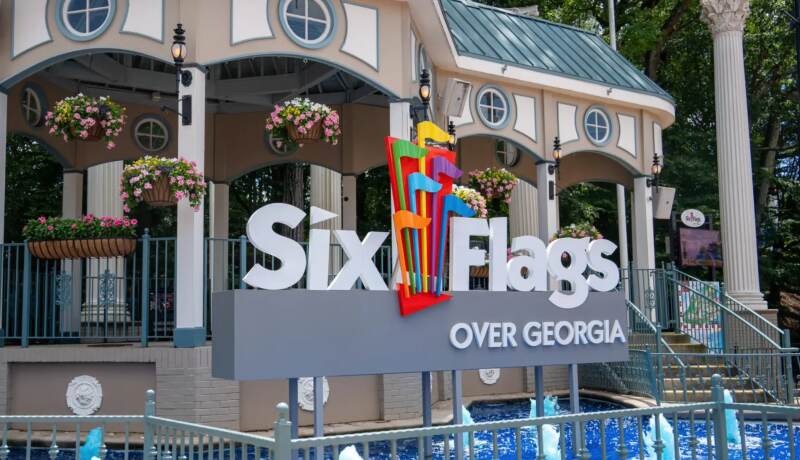
Six Flags Over Georgia has reopened following the death of a guest who fell from the park’s Goliath roller coaster on October 12, according to multiple reports. The reopening is happening while authorities continue to investigate what happened, and as the wider theme park world watches closely for any operational changes, regulatory findings, or new details that clarify whether this was a restraint issue, a rider behavior issue, a procedural breakdown, or some combination of factors.
In the days after a fatal incident, it can feel jarring to see a park resume normal operations quickly. But in the theme park industry, reopening is often part of a familiar pattern: secure the scene, cooperate with investigators, preserve evidence, review procedures, and (in many cases) reopen the park while the specific ride involved remains closed or restricted. That doesn’t mean the situation is “over.” It usually means the next phase is beginning, and it can take weeks or months for the public to learn what investigators ultimately conclude.
For background on the initial reports and early timeline, see our coverage of the Fatal Goliath Incident (Six Flags Over Georgia): What Happened.
What We Know So Far (And What’s Still Unclear)
Early reporting indicates the fatality involved a fall from Goliath at Six Flags Over Georgia. Beyond that basic fact, the most important details are still the ones that typically take time to confirm: exactly how the rider exited the ride vehicle, what restraint position and lock status were documented, what dispatch checks were performed, what the ride’s sensors recorded (if applicable), and whether any guest behavior or medical factors played a role.
This is where it’s worth slowing down. In the immediate aftermath of a tragedy, the internet tends to fill in blanks with confident claims. A responsible approach is to separate three buckets:
- Confirmed facts (what credible outlets and official statements agree on)
- Reported but not fully verified details (often based on early witness accounts)
- Speculation (which may later prove wrong, even if it “sounds plausible”)
As of today, the most widely reported confirmed points are that a guest died after falling from Goliath, and that the park has reopened on schedule. Some coverage also points to additional rides being shut down as authorities investigate, which is not unusual during an active inquiry, especially if investigators want to compare procedures, review maintenance logs, or examine similar restraint systems across a park.
Why Parks Reopen Quickly After Major Incidents
Reopening a park after a fatal incident can look cold from the outside. But from an operations standpoint, it often reflects a mix of practical constraints and standard safety process, not a decision to “move on.” Here are the most common reasons parks reopen while investigations continue:
- The investigation is ride-specific, not park-wide. If the incident is tied to one attraction, investigators may allow the rest of the park to operate while the ride in question remains closed, sealed, or restricted.
- Evidence preservation happens early. The critical first steps (securing the ride, preserving logs, locking out systems, documenting the scene) typically happen quickly. The deeper analysis takes longer, but it doesn’t always require the entire park to be closed.
- Staffing and guest safety still matter for the rest of the property. Parks have to manage crowds, security, and guest movement. A full closure can create its own safety and logistical problems, especially if thousands of guests are already on site.
- Financial and contractual realities are real. This part is uncomfortable, but it’s true. Parks operate on tight seasonal calendars, and closures can have major ripple effects on employees, vendors, and local tourism. That does not excuse anything, but it helps explain why “closed until the final report is published” is rare.
None of this guarantees that reopening is the “right” choice in every case. It just explains why it happens often, and why the public shouldn’t treat reopening as proof that the incident was minor or that responsibility has been determined.
What “The Next Phase” Usually Looks Like
After a fatal incident, the public usually sees a few visible changes first: a ride closure, a statement, and then a reopening. Behind the scenes, the next phase is typically more methodical and documentation-heavy. While each state and jurisdiction is different, investigations commonly involve:
- Ride system review: restraint design, sensor systems, interlocks, and fault logs (if available)
- Maintenance and inspection records: recent work orders, daily checklists, and any reported anomalies
- Operations procedures: dispatch checks, restraint verification steps, staffing levels, and training records
- Witness interviews: ride operators, supervisors, guests, and first responders
- Video review: security footage (when available) and any guest-recorded clips that can be verified
Sometimes, the outcome is a clear mechanical failure. Sometimes, it’s a procedural breakdown. Sometimes, it’s guest behavior that the ride system was not designed to accommodate, or that staff could not reasonably prevent. And sometimes, it’s a layered chain of small failures that only looks obvious in hindsight.
If you want a broader look at how coaster safety systems have evolved over time, including how redundancy and restraint design have changed, you may also like Roller Coaster Safety Technology Evolution.
Why “Other Coasters Shut Down” Is a Big Deal (Even If It’s Temporary)
One of the more significant threads in the reporting is the suggestion that additional roller coasters were shut down as authorities investigated the fatal fall. That can mean a few different things, and the difference matters:
- Precautionary shutdowns: a temporary pause while procedures are reviewed or while investigators gather baseline information
- Comparative inspections: checking other rides with similar restraint types, manufacturers, or operational procedures
- Documentation holds: keeping certain rides offline until logs, checklists, or maintenance records are reviewed
It’s tempting to interpret “more coasters shut down” as proof of a systemic problem. Sometimes it is. But often, it’s simply what a thorough investigation looks like when the priority is to eliminate unknowns. In other words: if investigators are doing their job, you may see more closures, not fewer, at least in the short term.
For readers who are trying to understand how restraints work and why different rides use different systems, Why Roller Coasters Have Different Restraints is a helpful explainer to keep the conversation grounded in the basics.
What Guests Should Watch For Right Now (Without Jumping to Conclusions)
If you’re a regular park guest, a fatal incident can shake your confidence, even if you’ve ridden the same coaster a hundred times. The best way to respond is not panic, and not blind trust. It’s informed caution. Here are a few practical, non-dramatic things to watch for in the coming days and weeks:
- Clear, consistent messaging: parks that communicate clearly tend to have stronger internal processes overall
- Visible procedural tightening: more deliberate restraint checks, slower dispatches, additional supervisors on platforms
- Ride closures that last longer than expected: not proof of guilt, but often a sign that the review is detailed
- Policy changes: updated rider requirements, stricter loose article rules, new signage, or revised health warnings
If you’ve ever wondered what happens when a ride stops unexpectedly and how parks handle evacuations, What Happens If A Roller Coaster Gets Stuck? covers the basics of how ride stoppages and evacuations typically work.
The Bigger Story: Trust, Transparency, And the “Normal” That Returns Too Fast
Theme parks run on a kind of managed normalcy. Music plays. Characters wave. Guests buy photos. Rides cycle. Even after a tragedy, that normalcy often returns quickly, because the business model depends on it. But the emotional reality for guests and staff is different. A fatal incident doesn’t vanish just because the gates open again.
This is why the “what happens next” part matters as much as the breaking news. The public deserves to know what investigators find, what changes are made, and whether those changes address a rare one-off scenario or reveal a broader vulnerability. And the industry, whether it likes it or not, is judged not only by engineering, but by how it communicates when something goes wrong.
For a data-driven look at how rare serious incidents are (and how safety is usually measured), Roller Coaster Accidents And Safety Statistics can add useful context, especially when social media makes every incident feel constant and everywhere.
What We’ll Be Watching Next
In the short term, the key signals to watch are straightforward:
- Official findings from relevant authorities, including any preliminary statements that clarify the mechanism of the fall
- Goliath’s operational status (whether it remains closed, reopens, or reopens with visible procedural changes)
- Any confirmed changes to restraint-check procedures, staffing, or rider policies
- Whether additional rides remain closed and why, as documented by credible reporting
Until those details are confirmed, the most responsible posture is patience. The need for answers is real, but the first answers are not always the correct ones.

Leave a Reply