If you’ve been looking up “Smoky Mountains alpine roller coaster,” you’re probably trying to answer one simple question: which one should I ride, and what’s it actually like? The Smokies have become one of the biggest alpine coaster hotspots in the U.S., with multiple rides clustered around Pigeon Forge and Gatlinburg.
This guide breaks down what an alpine coaster is, what makes the Smoky Mountains versions special, how to choose the right one for your group, and how to plan your visit so you spend more time riding and less time stuck in traffic or lines.
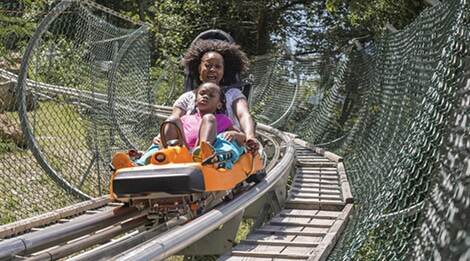
Quick answer: what is an alpine roller coaster?
An alpine roller coaster is a gravity-driven coaster on a track (usually a metal rail system) where you ride in a small sled-like cart. You typically control your own speed with a hand brake. The track is fixed, but your pace is not.
That’s the magic of it: it’s part coaster, part scenic ride, part “I’m going to prove I’m brave” moment.
In the Smoky Mountains area, alpine coasters are usually:
- Single- or double-rider carts (sometimes with a child riding with an adult)
- A lift hill that pulls you up the mountain
- A long downhill run with turns, dips, and occasional small drops
- A brake system that can slow you down if you go too fast or get too close to the cart ahead
Why the Smoky Mountains are basically the alpine coaster capital
The Smokies are perfect for alpine coasters for a few reasons:
- Natural elevation changes: you get long downhill runs without needing huge structures.
- Tourist infrastructure: Pigeon Forge and Gatlinburg already have the roads, parking, and visitor flow.
- Family travel culture: lots of multi-generation trips where people want something thrilling but not extreme.
- Night riding: many coasters run after dark, and the Smokies do “glow” and lighting really well.
What the ride experience feels like (step-by-step)
If you’ve never done one, here’s the typical flow.
1) Queue and loading
You’ll usually line up outside. Some places have shaded queue areas, but not all, so in summer it can feel like standing in a warm parking lot with your excitement slowly evaporating.
At the station you’ll:
- Get seated in a cart
- Pull down a lap bar or restraint system
- Receive a quick safety briefing (or watch a short video)
2) The lift hill
The lift is a slow, steady climb. This is where you notice the scenery and also where your brain starts doing that thing where it whispers, “So… we’re really doing this?”
In the Smokies, the lift can be one of the best parts because you’re climbing into the trees and getting views you don’t always see from the main Parkway.
3) The downhill run
This is where your personal style shows.
- Speed demons: hands off the brake, leaning into turns.
- Scenic cruisers: gentle braking, soaking in the view.
- First-timers: braking a lot at first, then slowly realizing it’s safe and getting bolder.
Most alpine coasters in the Smokies have a mix of:
- Banked turns
- S-curves
- Small dips
- A few “surprise” moments where the track drops just enough to make you laugh
4) Braking zones and spacing
If you catch up to the cart ahead, the system may slow you down automatically.
This is the #1 reason people leave disappointed: they expected a fast run, but they got stuck behind someone riding like they’re transporting a wedding cake.
Don’t worry, I’ve got tips for reducing that risk later.
5) Return to station
You roll back into the station, unload, and immediately think, “Okay, again.”
How to choose the best Smoky Mountains alpine coaster for your trip
There isn’t one single “Smoky Mountains alpine roller coaster.” There are several, and your best choice depends on what you care about.
Choose based on thrill level
Ask yourself:
- Do you want speed and intensity?
- Do you want long scenic runs?
- Do you want family-friendly, low-stress?
A good rule of thumb:
- If the marketing focuses on “fastest,” “longest,” “steep,” “extreme”: expect more thrill.
- If it focuses on “scenic,” “family,” “views,” “relaxing”: expect a gentler vibe.
Choose based on location (Pigeon Forge vs Gatlinburg)
- Pigeon Forge: easier parking, more spread-out attractions, heavy traffic but generally less “tight.”
- Gatlinburg: beautiful, walkable core, but traffic can bottleneck hard and parking can be pricey.
If you’re staying in one area, it often makes sense to ride the coaster closest to your lodging to avoid spending your day in stop-and-go traffic.
Choose based on night riding
Night rides are a whole different experience.
- Cooler temperatures
- Lighting effects
- More “thrill” feeling because you can’t see as far ahead
If you’re traveling in summer, night riding can be the most comfortable way to do it.
Choose based on your group
- With small kids: look for clear height requirements, tandem seating, and a reputation for smooth operations.
- With teens: pick something marketed as fast/steep and plan for at least two rides.
- With older adults: prioritize smooth track, easy loading, and shorter walking distances.
Safety: what to know before you ride
Alpine coasters are designed to be family-friendly, but you still want to treat them like real rides, not playground equipment.
Common rules you’ll see
- Minimum height to ride (and sometimes a different minimum height to ride alone)
- No loose items (phones, hats, drinks)
- Keep hands and feet inside the cart
- No intentional bumping or tailgating
Who should be cautious
You should consider skipping or asking staff first if you have:
- Back or neck issues
- Recent surgery
- Pregnancy
- Conditions that make sudden turns or jolts risky
What “you control the speed” really means
Yes, you control the brake. But:
- You’re still on a track.
- There are still automatic systems.
- You can still get a fast ride if conditions are right.
Think of it like driving a go-kart on rails: you have control, but within a safe, managed system.
Best times to ride (and how to avoid the slow-cart problem)
If you want a fast run, timing matters.
Best times for shorter lines
- Weekdays (especially Tuesday–Thursday)
- Early afternoon on school days
- Rainy days after the rain stops (people hesitate to come back)
Best times for faster rides
You want:
- Lower crowd levels (less chance of catching up to someone)
- Dry track (better traction and normal operations)
Try:
- Right at opening
- Late night (last 60–90 minutes before close)
Pro tip: ride twice
If your budget allows, plan for two rides:
- First ride: learn the track and get comfortable.
- Second ride: go for speed (or go for photos and scenery).
A lot of people only ride once and accidentally use their one ride as a “practice run.”
What to wear and bring (so you’re not stressed)
- Closed-toe shoes: always the safest choice.
- Secure pockets or a zip bag: phones love to try escaping.
- Hair ties: wind + long hair = chaos.
- Light layer at night: Smoky evenings can cool off fast.
If you wear a hat, make it a snug one or be ready to lose it.
Weather, seasons, and what the Smokies add to the experience
The Smokies aren’t just a backdrop. They’re part of the ride.
Spring
- Fresh green leaves
- Comfortable temps
- Rain can be frequent
Summer
- Lush, dense scenery
- Hot in the queue
- Night rides are elite
Fall
- Peak leaf color can be unreal
- Crowds can be intense during leaf season
Winter
- Fewer crowds (sometimes)
- Cold air makes speed feel faster
- Some coasters have limited hours
Pairing your alpine coaster with nearby attractions
If you’re building a day plan, alpine coasters pair well with:
- Scenic drives (Newfound Gap Road when conditions allow)
- Short hikes (choose something easy if you’re with a mixed group)
- Dinner shows in Pigeon Forge (if you want a classic tourist night)
- Anakeesta or Ober Mountain (if you want more mountain views)
The key is to avoid stacking too many traffic-heavy stops back-to-back.
FAQs people ask when they search “Smoky Mountains alpine roller coaster”
Are alpine coasters scary?
They’re “fun scary,” not “I regret my choices” scary for most people. You can brake as much as you want, and the ride is designed for a wide range of comfort levels.
Can kids ride?
Usually yes, but rules vary by coaster. Some allow kids to ride with an adult at a lower height, and require a higher height to ride alone.
Do you get stuck if you brake too much?
You generally won’t stop completely on the downhill unless there’s a spacing issue. If you ride very slowly, you may get slowed further by the system or be asked to keep moving at a safe pace.
Is it worth it if I’m not a coaster person?
Honestly: alpine coasters are often the gateway ride for people who “don’t do coasters.” The control element makes it feel less intimidating.
My honest take: how to make it a great experience
If you only do one thing, do this: treat it like a mini-event, not a throwaway attraction. Pick a good time, commit to two rides if possible, and go at night if your group can handle it.
The Smokies are crowded, loud, and busy. An alpine coaster is one of the rare attractions that gives you a few minutes of actual mountain feeling, even if you’re surrounded by tourist chaos five minutes before and after.
