When you step onto a roller coaster that’s been thrilling riders for over a century, you’re not just experiencing a ride. You’re connecting with history. You’re standing on the same track that countless generations have ridden before you. You’re trusting in engineering that has proven itself over more than 100 years of continuous operation. The oldest operating roller coasters in the world are more than just attractions; they’re living monuments to the golden age of amusement park design, engineering ingenuity, and the timeless human desire for thrills.
These coasters have survived economic depressions, world wars, changing technology, and shifting entertainment trends. They’ve been maintained, restored, and carefully preserved by dedicated teams who understand their historical significance. They represent a direct link to the earliest days of roller coaster design, when engineers were still learning what was possible and what riders could endure. Riding one of these historic coasters is like stepping back in time, experiencing the thrills that captivated audiences a hundred years ago.
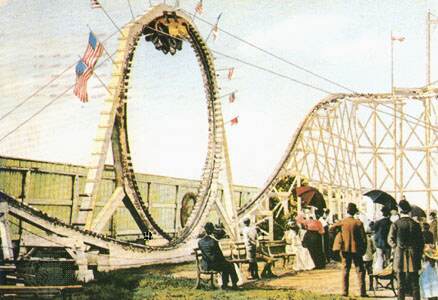
The Great Scenic Railway: The World’s Oldest Continuously Operating Coaster
When you visit Luna Park in Melbourne, Australia, you’re visiting the home of the world’s oldest continuously operating roller coaster. The Great Scenic Railway opened on December 13, 1912, and has been thrilling riders ever since. That’s over 110 years of continuous operation, making it a true legend in coaster history.
Designed by legendary coaster engineer LaMarcus A. Thompson, the Great Scenic Railway is a wooden coaster that still operates much as it did in 1912. The ride is 2,440 feet long and features a maximum height of 80 feet. It’s a relatively gentle coaster by modern standards, with a top speed of around 40 miles per hour, but in 1912, it was cutting-edge technology.
What makes the Great Scenic Railway truly unique is that it’s one of only five remaining roller coasters in the world that requires a brake operator. That’s right: the coaster doesn’t have automatic brakes. Instead, a skilled operator rides along with the passengers and manually operates the brakes using a hand lever. This is a direct connection to the earliest days of coaster design, when all braking was manual. Watching the brake operator work is like watching a master craftsman at work, applying just the right amount of pressure at just the right moment to slow the train as it approaches the station.
The Great Scenic Railway has been meticulously maintained over its 110+ year history. The track has been carefully preserved, and the trains have been restored to keep them in safe operating condition. The ride has survived the Great Depression, two world wars, and the rise of modern steel coasters. Yet it continues to operate, drawing thousands of visitors each year who want to experience what a 1912 roller coaster ride was really like.
Leap-the-Dips: The Oldest Standing Roller Coaster
While the Great Scenic Railway holds the record for the oldest continuously operating coaster, Leap-the-Dips at Lakemont Park in Altoona, Pennsylvania, holds the record for the oldest standing roller coaster. Opened in 1902, Leap-the-Dips predates the Scenic Railway by a full decade.
Leap-the-Dips is a side-friction coaster, a type of design that was common in the early 1900s but is now virtually extinct. Of the nearly 400 figure-eight side-friction coasters that were built in the early twentieth century, Leap-the-Dips is the last surviving example. This alone makes it an invaluable piece of coaster history.
A side-friction coaster works differently from modern coasters. Instead of having wheels that grip the track from multiple angles, side-friction coasters use wheels that run on the sides of the track. The train is held in place by friction between the wheels and the track, rather than by mechanical gripping. This design was eventually abandoned because it was less reliable and less safe than modern wheel systems, but in the early 1900s, it was state-of-the-art technology.
Leap-the-Dips is 1,300 feet long and features a maximum height of 60 feet. The ride’s figure-eight layout was typical of side-friction coasters of the era. The coaster has a unique charm that modern coasters simply don’t have. Riding it is like stepping into a time machine and experiencing what coaster design was like in 1902.
For many years, Leap-the-Dips was the oldest continuously operating coaster in the world. However, the ride was closed for restoration in 2015 and didn’t reopen until 2023. This closure, though necessary for preservation, meant that the Great Scenic Railway took over the title of oldest continuously operating coaster. But Leap-the-Dips remains the oldest standing coaster and is still operating today, continuing its legacy of over 120 years.
Jack Rabbit at Kennywood: America’s Oldest Operating Coaster
If you’re looking for the oldest continuously operating roller coaster in the United States, look no further than the Jack Rabbit at Kennywood in West Mifflin, Pennsylvania. Opened in 1920, the Jack Rabbit has been thrilling riders for over 100 years.
The Jack Rabbit was designed by the legendary team of John A. Miller and Harry C. Baker, two of the most important figures in roller coaster design history. Miller is credited with inventing the underfriction wheel system that became standard on modern coasters. Baker was a master designer who created some of the most iconic coasters of the golden age. Together, they created a masterpiece.
The Jack Rabbit is 2,132 feet long and features a maximum height of 70 feet. The ride is known for its airtime hills, which give riders the sensation of being lifted out of their seats. In the 1920s, this was a thrilling and somewhat dangerous sensation. Riders would grip the lap bar for dear life as they crested each hill. Today, airtime is a prized feature of coaster design, and the Jack Rabbit is recognized as one of the first coasters to intentionally design for this effect.
What’s remarkable about the Jack Rabbit is how well it has aged. The ride still operates much as it did in 1920, with the same basic track layout and train design. Over the decades, the coaster has been carefully maintained and restored, but the essential character of the ride has been preserved. Riding the Jack Rabbit today is about as close as you can get to experiencing what a 1920s coaster ride was really like.
Rutschebanen at Tivoli Gardens: Europe’s Oldest Operating Coaster
If you travel to Copenhagen, Denmark, you can ride the Rutschebanen at Tivoli Gardens, which opened in 1914 and is the oldest continuously operating roller coaster in Europe. The name “Rutschebanen” is Danish for “the roller coaster,” a fitting name for this historic ride.
The Rutschebanen is a wooden coaster that’s 2,185 feet long with a maximum height of 80 feet. Like the Great Scenic Railway, it was designed during the golden age of coaster design and has been carefully preserved over its 110+ year history. The ride is known for its smooth, flowing layout and its charming vintage aesthetic.
What makes the Rutschebanen particularly interesting is that it’s located in Tivoli Gardens, one of the oldest amusement parks in the world. Tivoli opened in 1843 and has been operating continuously ever since. The Rutschebanen is part of this living history, a coaster that has been thrilling visitors to Tivoli for over a century.
The Cyclone at Luna Park: An American Icon
The Cyclone at Luna Park in Coney Island, New York, is one of the most famous roller coasters in the world. Opened in 1927, it’s not quite as old as some of the other coasters on this list, but it’s still nearly 100 years old and remains one of the most iconic coasters ever built.
The Cyclone was designed by Harry C. Baker and Vernon Keenan, and it’s a masterpiece of wooden coaster design. The ride is 2,520 feet long and features a maximum height of 85 feet. It’s known for its intense, out-of-control feeling, with sharp turns, steep drops, and plenty of airtime. When it opened, the Cyclone was considered one of the most thrilling coasters in the world.
The Cyclone has been designated a New York City landmark and is protected by the Landmarks Preservation Commission. This recognition reflects the ride’s historical and cultural significance. The Cyclone has been featured in countless films, photographs, and cultural references. It’s more than just a coaster; it’s an icon of American popular culture.
Giant Dipper at Santa Cruz Beach Boardwalk: California’s Historic Coaster
On the California coast, the Giant Dipper at Santa Cruz Beach Boardwalk has been thrilling riders since 1924. Designed by Frank Prior and Frederick Church, the Giant Dipper is a classic wooden coaster that’s 2,175 feet long with a maximum height of 70 feet.
The Giant Dipper is located on the Santa Cruz Beach Boardwalk, one of the oldest amusement parks in the United States. The boardwalk has been operating continuously since 1868, and the Giant Dipper has been a centerpiece attraction since 1924. The ride is known for its smooth, flowing layout and its beautiful seaside location.
Like many historic coasters, the Giant Dipper has been carefully maintained and restored over the decades. The ride was closed for a major restoration in 2002 and reopened in 2003 with updated safety systems while maintaining its historic character. Today, the Giant Dipper continues to delight riders with the same thrills it provided nearly 100 years ago.
Why Historic Coasters Matter
Historic roller coasters are more than just old rides. They’re important pieces of cultural and engineering heritage. They represent the creativity and ingenuity of early coaster designers who were pushing the boundaries of what was possible. They show us how coaster design has evolved over more than a century. And they provide a tangible connection to the past, allowing us to experience what thrills were like for people a hundred years ago.
These coasters have also proven to be remarkably durable. The fact that coasters built in the early 1900s are still operating today speaks to the quality of their design and construction. The engineers who built these coasters understood their craft, and they built them to last. Modern coasters, with all their sophisticated technology and computer systems, may not have the same longevity. We won’t know for another 50 or 100 years whether modern coasters will still be operating in the year 2100 or 2120.
Historic coasters also provide valuable lessons about maintenance and preservation. The teams that maintain these coasters have developed expertise in preserving wooden structures and mechanical systems that are over a century old. This knowledge is valuable not just for coaster preservation, but for the preservation of other historic structures and machines.
The Challenge of Preserving Historic Coasters
Maintaining a roller coaster that’s over 100 years old is a significant challenge. Wooden coasters are particularly vulnerable to weather, rot, and decay. Steel coasters can suffer from corrosion and metal fatigue. Both types require constant inspection and maintenance to ensure they remain safe and operational.
Many historic coasters have undergone major restorations over the years. These restorations are expensive and time-consuming, requiring specialized knowledge and craftsmanship. Park operators must balance the need to preserve the historic character of the coaster with the need to update safety systems and replace worn components.
Some historic coasters have been lost over the years. Parks have closed, coasters have been demolished, and irreplaceable pieces of history have been lost. This makes the survival of coasters like the Great Scenic Railway and Leap-the-Dips even more remarkable. These coasters have survived when so many others have not.
Experiencing Historic Coasters
If you want to experience a piece of coaster history, you have several options. The Great Scenic Railway at Luna Park Melbourne is the most accessible option for visitors to Australia. Leap-the-Dips at Lakemont Park in Pennsylvania is accessible to visitors in the eastern United States. The Jack Rabbit at Kennywood is also in Pennsylvania and is easily accessible. The Cyclone at Luna Park in Coney Island is one of the most famous coasters in the world and is a must-visit for any coaster enthusiast.
Riding a historic coaster is a unique experience. These coasters may not have the height, speed, or intensity of modern coasters, but they have something that modern coasters often lack: character and history. You’re riding on the same track that countless people have ridden before you. You’re experiencing the same thrills that captivated audiences decades ago. You’re connecting with history in a way that’s both tangible and profound.
The Future of Historic Coasters
The future of historic roller coasters is uncertain. As parks age and coasters require increasingly expensive maintenance, some parks may decide that it’s not worth the cost to keep historic coasters operating. Some coasters may be demolished to make room for new attractions. Others may be preserved as static exhibits, no longer operational but still standing as monuments to the past.
However, there’s also a growing appreciation for historic coasters and amusement park heritage. Organizations like the American Coaster Enthusiasts and the National Association for the Preservation of Old Amusement Parks work to document and preserve coaster history. Parks are increasingly recognizing the value of their historic attractions and investing in restoration and preservation.
The Great Scenic Railway, Leap-the-Dips, the Jack Rabbit, and the other historic coasters on this list are survivors. They’ve endured for over a century because people have cared enough to maintain them and keep them operating. As long as there are people who appreciate coaster history and are willing to invest in preservation, these coasters will continue to thrill riders for generations to come.
Conclusion: A Living Connection to the Past
The oldest operating roller coasters in the world are more than just rides. They’re time machines that transport us back to the golden age of amusement parks. They’re testaments to the skill and creativity of early coaster designers. They’re proof that good engineering can last for over a century. And they’re reminders of why people have always been drawn to roller coasters: the simple, primal thrill of speed, height, and the sensation of flying through the air.
Every time someone rides the Great Scenic Railway, Leap-the-Dips, the Jack Rabbit, or any of the other historic coasters, they’re participating in a tradition that stretches back over a hundred years. They’re experiencing the same thrills that their great-grandparents experienced. They’re connecting with history in a way that’s both personal and profound.
These coasters deserve our respect and appreciation. They deserve to be maintained and preserved for future generations. And they deserve to be ridden and enjoyed by anyone who wants to experience a piece of coaster history. The oldest operating roller coasters in the world are living legends, and their story is far from over.
