Roller coasters are among the most expensive attractions that theme parks can build. A single coaster can cost anywhere from a few million dollars to over $200 million, depending on the type, size, and complexity of the design. For parks considering adding a coaster to their lineup, the cost is a major factor in the decision-making process.
Understanding coaster costs requires looking at multiple factors: the type of coaster, the height and speed, the complexity of the design, the manufacturer, the location, and numerous other variables. It also requires understanding the different cost categories: design and engineering, manufacturing and construction, installation, and ongoing maintenance and operation.
This post provides a comprehensive breakdown of roller coaster costs, from the smallest family coasters to the largest hypercoasters and giga coasters. We’ll examine what drives costs, how different coaster types compare, what factors affect pricing, and how parks justify these massive investments.
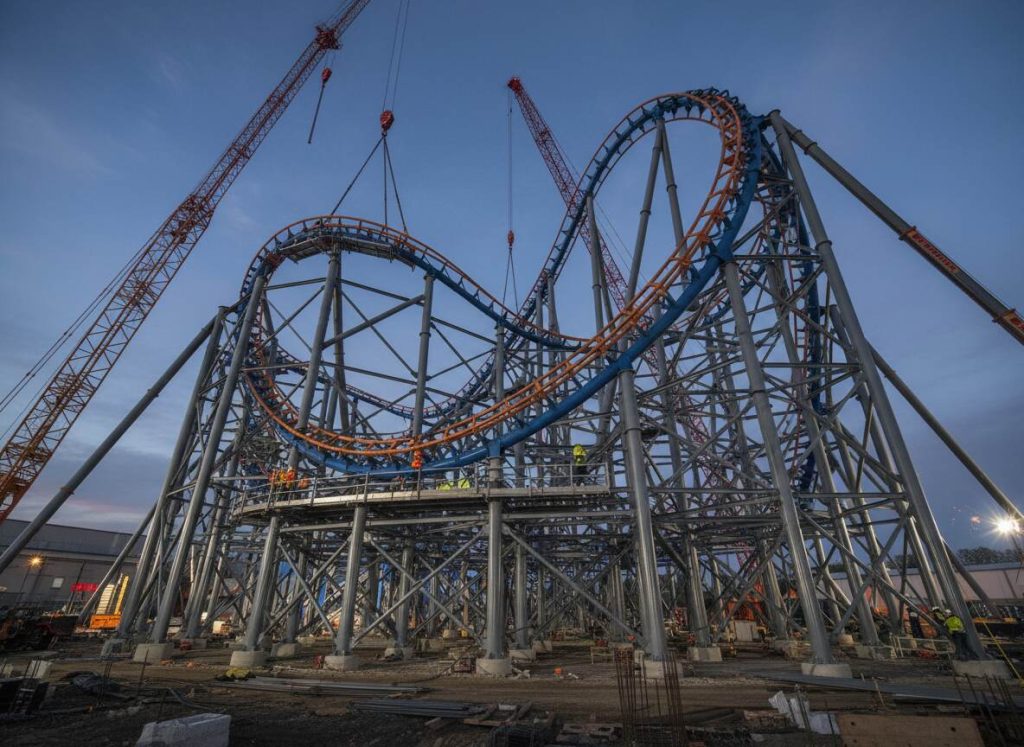
The Range of Coaster Costs
Roller coaster costs vary dramatically depending on the type and size of the coaster. To understand the range, it’s helpful to look at specific examples and cost categories.
Budget Family Coasters: $5-15 Million
The smallest and simplest coasters—typically wooden or small steel family coasters—can cost as little as $5-15 million. These are coasters designed for younger children or for parks with limited budgets.
Examples in this category might include small wooden coasters at regional parks or simple steel coasters designed for family audiences. These coasters typically have modest heights (under 100 feet), moderate speeds (under 50 mph), and simple layouts with few inversions or complex elements.
A $10 million family coaster might be 60-80 feet tall, have a speed of 35-45 mph, and include basic elements like a few hills and maybe one or two turns. The design is relatively simple, and the construction is straightforward.
Mid-Range Coasters: $15-50 Million
Mid-range coasters—including larger wooden coasters, moderate steel coasters, and coasters with moderate inversions or complexity—typically cost $15-50 million.
Examples in this category might include a typical hypercoaster (a steel coaster with a height of 200-300 feet), a large wooden coaster with multiple airtime hills, or a steel coaster with 3-4 inversions.
A $30 million coaster might be 200 feet tall, have a speed of 70 mph, include 4-5 inversions, and have a complex layout with multiple lift hills or launch sections. The design is more sophisticated, and the construction is more complex.
Premium Coasters: $50-100 Million
Premium coasters—including large hypercoasters, giga coasters (coasters over 300 feet tall), and coasters with cutting-edge technology or innovative designs—typically cost $50-100 million.
Examples in this category might include a 300+ foot tall giga coaster, a coaster with multiple launches, a coaster with unique or innovative design elements, or a coaster with advanced computer control systems.
A $75 million coaster might be 350 feet tall, have a speed of 120 mph, include 5-6 inversions, and feature innovative design elements or technology. The design is highly sophisticated, and the construction is complex and requires specialized expertise.
Ultra-Premium Coasters: $100+ Million
The most expensive coasters—including the tallest and fastest coasters, coasters with the most complex designs, and coasters with cutting-edge technology—can cost $100-200+ million.
Examples in this category might include the world’s tallest or fastest coasters, coasters with multiple innovative features, or coasters built in expensive locations or with expensive materials.
A $150 million coaster might be 450+ feet tall, have a speed of 150+ mph, include multiple launches, feature innovative design elements, and incorporate cutting-edge technology. The design is extremely sophisticated, and the construction requires world-class engineering expertise.
Factors That Drive Coaster Costs
Multiple factors influence the cost of a roller coaster. Understanding these factors helps explain why some coasters are much more expensive than others.
Height and Speed
Height and speed are among the primary drivers of coaster cost. Taller and faster coasters require stronger materials, more robust engineering, and more complex construction.
A coaster that is 100 feet tall costs less than a coaster that is 300 feet tall. The taller coaster requires more track, more support structure, and more sophisticated engineering to handle the greater stresses.
Similarly, a coaster that reaches 50 mph costs less than a coaster that reaches 120 mph. The faster coaster requires more powerful launch or lift systems, more robust braking systems, and more sophisticated control systems.
As a general rule, costs increase non-linearly with height and speed. Doubling the height or speed doesn’t double the cost—it increases the cost by a larger factor because of the exponential increase in engineering complexity and material requirements.
Track Length
Track length directly affects cost. More track means more materials, more labor, and more time to construct. A coaster with 5,000 feet of track costs more than a coaster with 3,000 feet of track.
Track length is typically measured in feet, and coaster manufacturers often charge per foot of track. A typical cost might be $500-$1,500 per foot of track, depending on the type of coaster and the complexity of the design.
A 4,000-foot coaster at $1,000 per foot would cost $4 million just for the track. Add in the support structure, the train, the control systems, and installation, and the total cost quickly reaches $20-30 million or more.
Number of Inversions
Inversions add complexity and cost to a coaster. Each inversion requires precise engineering to ensure safe, comfortable forces. More inversions mean more complex track geometry and more sophisticated design.
A coaster with no inversions might cost $20 million. A similar coaster with 4 inversions might cost $30-35 million. The inversions add complexity and require more sophisticated engineering.
Launch vs. Lift Hill
The type of lift or launch system affects cost. A traditional chain lift hill is relatively inexpensive. A hydraulic launch system or a linear synchronous motor (LSM) launch system is much more expensive.
A coaster with a traditional chain lift might cost $25 million. A similar coaster with a hydraulic launch system might cost $35-40 million. The launch system adds significant cost.
Multiple launches are even more expensive. A coaster with two or three launches might cost significantly more than a coaster with a single launch.
Chain Lift Cost
A traditional chain lift system might cost $500,000 to $2 million, depending on the length and complexity of the lift hill.
Hydraulic Launch Cost
A hydraulic launch system might cost $3-10 million, depending on the power required and the sophistication of the system.
LSM Launch Cost
A linear synchronous motor launch system might cost $5-15 million or more, depending on the acceleration profile and the sophistication of the system.
Wooden vs. Steel Construction
Wooden and steel coasters have different cost structures. Generally, wooden coasters are less expensive to build than steel coasters of similar size and complexity.
A large wooden coaster might cost $25-40 million. A similar-sized steel coaster might cost $35-60 million. The steel coaster is more expensive because steel construction requires more precision and more sophisticated engineering.
However, this is not a universal rule. Some wooden coasters are very expensive, and some steel coasters are relatively inexpensive. The specific design, materials, and complexity of the coaster matter more than the basic material type.
Innovative or Unique Design Elements
Coasters with innovative or unique design elements cost more than traditional coasters. Innovation requires more engineering, more testing, and more risk.
A coaster with a new type of restraint system, a new type of train, a new type of inversion, or other innovative elements will cost more than a traditional coaster. The manufacturer must invest in research and development, and the park must accept some additional risk.
For example, when winged coasters were first introduced, they were significantly more expensive than traditional coasters because the design was new and required additional engineering. As the design became more common, costs decreased.
Location and Site Preparation
The location where a coaster is built affects cost. A coaster built on flat, open ground costs less than a coaster built on hilly terrain, in an urban area, or in a location with challenging environmental conditions.
Site preparation can be very expensive. If the ground is soft or unstable, extensive foundation work might be required. If the coaster must be built around existing structures or terrain, the construction becomes more complex and expensive.
A coaster built in a remote area with stable ground might cost $30 million. A similar coaster built in an urban area with challenging terrain might cost $40-50 million due to additional site preparation and construction complexity.
Local Labor Costs and Regulations
Labor costs vary significantly by location. A coaster built in a location with high labor costs will be more expensive than a similar coaster built in a location with lower labor costs.
Regulations also vary by location. Some jurisdictions have strict building codes, environmental regulations, or other requirements that increase construction costs. Other jurisdictions have fewer regulations and lower costs.
A coaster built in the United States or Western Europe will typically cost more than a similar coaster built in Asia or Eastern Europe, partly due to higher labor costs and stricter regulations.
Manufacturer and Reputation
Different coaster manufacturers charge different prices. Established manufacturers with strong reputations might charge premium prices. Newer or less-established manufacturers might charge lower prices.
Major coaster manufacturers include Bolliger & Mabillard (B&M), Intamin, Rocky Mountain Construction (RMC), Vekoma, Gerstlauer, and others. B&M and Intamin are among the most expensive manufacturers, known for high-quality, innovative designs. Smaller manufacturers might charge less.
A coaster from a premium manufacturer might cost 20-30% more than a similar coaster from a less-established manufacturer.
Customization and Design Complexity
Coasters that are highly customized or have complex designs cost more than standard designs. A manufacturer might have a standard “family coaster” design that can be built for $15 million. A completely custom design might cost $25-30 million.
Customization requires more engineering, more design work, and more testing. The manufacturer must invest more time and resources in the project, which increases cost.
Cost Breakdown: Where the Money Goes
Understanding how coaster costs are distributed helps explain where the money goes.
Track and Support Structure: 30-40% of Cost
The track and support structure typically account for 30-40% of the total coaster cost. This includes the steel or wooden track, the support beams and columns, and the foundation.
For a $30 million coaster, $9-12 million might go toward the track and support structure.
Train and Restraint Systems: 10-15% of Cost
The train (the vehicle that carries riders) and the restraint systems typically account for 10-15% of the total cost. This includes the train structure, wheels, bearings, seats, and restraints.
For a $30 million coaster, $3-4.5 million might go toward the train and restraint systems.
Lift/Launch Systems: 10-20% of Cost
The lift hill or launch system typically accounts for 10-20% of the total cost. This includes the motors, chains, hydraulic systems, or linear motors that move the train.
For a $30 million coaster with a traditional chain lift, $3-6 million might go toward the lift system. For a coaster with a hydraulic launch system, this percentage might be higher.
Braking and Control Systems: 5-10% of Cost
The braking systems and computer control systems typically account for 5-10% of the total cost. This includes the brake systems, sensors, control computers, and software.
For a $30 million coaster, $1.5-3 million might go toward the braking and control systems.
Design and Engineering: 5-10% of Cost
Design and engineering services—including the initial design, computer modeling, finite element analysis, and engineering support during construction—typically account for 5-10% of the total cost.
For a $30 million coaster, $1.5-3 million might go toward design and engineering.
Installation and Construction: 15-25% of Cost
Installation and construction labor, equipment, and materials typically account for 15-25% of the total cost. This includes the labor to install the track, assemble the train, install the control systems, and test the coaster.
For a $30 million coaster, $4.5-7.5 million might go toward installation and construction.
Permits, Inspections, and Contingency: 5-10% of Cost
Permits, inspections, testing, and contingency funds typically account for 5-10% of the total cost. This includes the costs of obtaining permits, paying for inspections, conducting safety tests, and a contingency fund for unexpected costs.
For a $30 million coaster, $1.5-3 million might go toward permits, inspections, and contingency.
Specific Coaster Examples and Costs
Looking at specific coasters helps illustrate the relationship between coaster characteristics and cost.
Millennium Force (Cedar Point)
Millennium Force is a giga coaster (over 300 feet tall) built in 2000. It was one of the first giga coasters and was extremely expensive for its time.
Estimated cost: $25-30 million (in 2000 dollars, equivalent to $40-50 million in 2026 dollars)
Characteristics: 310 feet tall, 93 mph, 2 inversions, 6,595 feet of track
Millennium Force was expensive because it was a new type of coaster (giga coaster) with cutting-edge technology. The design was innovative, and the engineering was complex.
Kingda Ka (Six Flags Great Adventure)
Kingda Ka is a strata coaster (over 400 feet tall) built in 2005. It was the tallest coaster in the world when it opened.
Estimated cost: $25-30 million (in 2005 dollars, equivalent to $35-45 million in 2026 dollars)
Characteristics: 456 feet tall, 128 mph, 1 inversion, 3,118 feet of track
Kingda Ka was expensive because of its extreme height and speed. The engineering required to safely build and operate a 456-foot tall coaster is extremely complex.
Steel Vengeance (Kennywood)
Steel Vengeance is a hybrid coaster (combining wooden and steel elements) built in 2018. It’s a retrack of an older wooden coaster.
Estimated cost: $30-40 million
Characteristics: 205 feet tall, 75 mph, 27 airtime hills, 5,843 feet of track
Steel Vengeance was expensive because of its innovative hybrid design and the complexity of retrofitting an existing structure. The retrack required extensive engineering and custom design work.
Verrückt (Various Parks)
Verrückt is a hypercoaster model from Bolliger & Mabillard, one of the most expensive coaster manufacturers. Multiple parks have built Verrückt coasters.
Estimated cost: $35-50 million
Characteristics: 200+ feet tall, 80+ mph, multiple inversions, 4,000+ feet of track
Verrückt coasters are expensive because they come from a premium manufacturer known for high-quality, innovative designs.
Expedition GeForce (Holiday Park, Germany)
Expedition GeForce is a hypercoaster built in 2001. It was one of the first hypercoasters with extreme airtime.
Estimated cost: $20-25 million (in 2001 dollars, equivalent to $35-40 million in 2026 dollars)
Characteristics: 213 feet tall, 75 mph, 0 inversions, 6,561 feet of track
Expedition GeForce was expensive because of its innovative design focused on airtime and the complexity of the track layout.
Top Thrill Dragster (Cedar Point)
Top Thrill Dragster is a strata coaster built in 2003. It was the tallest and fastest coaster in the world when it opened.
Estimated cost: $25-30 million (in 2003 dollars, equivalent to $40-50 million in 2026 dollars)
Characteristics: 420 feet tall, 120 mph, 1 inversion, 2,800 feet of track
Top Thrill Dragster was expensive because of its extreme height and speed, and because of the innovative hydraulic launch system that accelerates the coaster from 0 to 120 mph in 3.8 seconds.
Fury 325 (Carowinds)
Fury 325 is a hypercoaster built in 2014. It’s considered one of the best hypercoasters ever built.
Estimated cost: $30-40 million
Characteristics: 325 feet tall, 95 mph, 0 inversions, 6,602 feet of track
Fury 325 was expensive because of its extreme height, the complexity of the track layout, and the innovative design that emphasizes airtime and speed.
Operating and Maintenance Costs
The initial construction cost is only the beginning. Coasters require ongoing maintenance and operation, which adds significant costs over the life of the coaster.
Annual Maintenance Costs
A typical coaster requires $500,000 to $2 million in annual maintenance, depending on the size and complexity of the coaster. This includes routine maintenance, replacement of worn parts, and inspections.
A large, complex coaster might require $2-3 million in annual maintenance. A smaller coaster might require $500,000-$1 million.
Maintenance costs typically increase over time as the coaster ages and more parts need replacement.
Wheel and Bearing Replacement
Coaster wheels and bearings wear over time and must be regularly replaced. A typical coaster might have 50-100+ wheels, and each wheel costs $1,000-$5,000 or more.
Replacing all the wheels on a coaster might cost $100,000-$500,000. Wheels typically need replacement every 3-7 years, depending on usage.
Track Maintenance and Repair
The track must be regularly inspected and maintained. Cracks or damage must be repaired. The track surface must be cleaned and maintained.
Track maintenance might cost $50,000-$200,000 per year, depending on the size and condition of the coaster.
Brake System Maintenance
Brake pads wear and must be regularly replaced. Brake systems must be inspected and tested. A coaster might have multiple brake systems, and maintaining all of them is expensive.
Brake system maintenance might cost $50,000-$150,000 per year.
Control System Updates and Maintenance
Computer control systems must be maintained and occasionally updated. Software must be updated, sensors must be calibrated, and systems must be tested.
Control system maintenance might cost $50,000-$200,000 per year, depending on the sophistication of the system.
Structural Inspection and Repair
The support structure must be regularly inspected for cracks, corrosion, or other damage. Any damage must be repaired.
Structural inspection and repair might cost $100,000-$300,000 per year, depending on the age and condition of the coaster.
Lifetime Maintenance Costs
Over the 30-50 year lifespan of a coaster, maintenance costs can be substantial. A coaster that costs $30 million to build might cost $15-30 million in maintenance over its lifetime.
This means the total cost of ownership—initial construction plus maintenance—can be $45-60 million or more for a mid-range coaster.
Return on Investment: How Parks Justify Coaster Costs
Given the enormous costs of building and maintaining coasters, how do parks justify the investment? The answer lies in the return on investment.
Increased Attendance
A new coaster can significantly increase park attendance. A major new coaster might increase annual attendance by 10-30%, depending on the park’s size and the coaster’s appeal.
A park that normally attracts 2 million visitors per year might see attendance increase to 2.2-2.6 million visitors with a major new coaster. This increase in attendance generates additional revenue.
Increased Per-Capita Spending
Visitors to parks with new coasters often spend more money. They might visit more frequently, stay longer, or spend more on food, merchandise, and other amenities.
A new coaster might increase per-capita spending by 5-15%, generating additional revenue beyond the increased attendance.
Ticket Price Increases
Parks with new, popular coasters can often increase ticket prices. Visitors are willing to pay more for access to the newest attractions.
A park might increase ticket prices by $5-15 per ticket with a major new coaster, generating significant additional revenue.
Revenue Calculation
Let’s look at a specific example. A park with 2 million annual visitors builds a $30 million coaster.
The coaster increases attendance by 20% to 2.4 million visitors. Each visitor spends an additional $10 on average (through increased spending and higher ticket prices). This generates $4 million in additional annual revenue.
After accounting for the additional operating costs of the coaster (staffing, maintenance, utilities), the net additional revenue might be $2-3 million per year.
At $2.5 million per year in net additional revenue, the $30 million coaster pays for itself in approximately 12 years. After that, it continues to generate profit for the park.
Payback Period
The payback period for a coaster—the time it takes for the additional revenue to equal the initial investment—typically ranges from 8-15 years, depending on the size of the coaster and the park.
A smaller coaster in a large, popular park might pay for itself in 8-10 years. A larger coaster in a smaller park might take 12-15 years or longer.
Long-Term Value
Over a 30-50 year lifespan, a coaster can generate hundreds of millions of dollars in additional revenue. Even accounting for maintenance costs, the return on investment is substantial.
This is why parks continue to invest in new coasters despite the enormous upfront costs. The long-term financial return justifies the investment.
Non-Financial Benefits
Beyond the direct financial return, coasters provide other benefits to parks:
Brand building: A new, innovative coaster can enhance a park’s brand and reputation, attracting visitors who might not otherwise visit.
Competitive advantage: Parks compete with each other for visitors. A new coaster can give a park a competitive advantage over nearby parks.
Media attention: Major new coasters generate media coverage and publicity, which can drive attendance.
Guest satisfaction: Visitors enjoy new attractions, and a new coaster can increase overall guest satisfaction and loyalty.
Financing Coaster Construction
Given the enormous costs of coaster construction, how do parks finance these projects?
Internal Funding
Large, profitable parks might use internal cash reserves to fund coaster construction. A park that generates $100 million in annual revenue might allocate $30-50 million for a new coaster.
Debt Financing
Many parks finance coaster construction through debt—borrowing money from banks or other lenders. The park repays the debt over time using revenue generated by the coaster and other park operations.
A park might borrow $30 million for a coaster at an interest rate of 4-6%, repaying the debt over 10-15 years. The interest costs add to the total cost of the project.
Parent Company Funding
Parks that are part of larger companies (like Six Flags, Cedar Fair, or Disney) might receive funding from the parent company. The parent company allocates capital across its portfolio of parks based on expected returns.
Public Funding
Some parks, particularly those operated by municipalities or public agencies, might receive public funding for coaster construction. This might come from tax revenue, bonds, or other public sources.
Partnership and Sponsorship
Some parks partner with sponsors or other companies to fund coaster construction. A sponsor might fund part of the coaster in exchange for naming rights or other benefits.
Coaster Costs by Manufacturer
Different manufacturers charge different prices for coasters. Understanding manufacturer pricing helps explain cost variations.
Bolliger & Mabillard (B&M)
B&M is a Swiss manufacturer known for high-quality, innovative designs. B&M coasters are among the most expensive on the market.
Typical B&M coaster cost: $40-80 million
B&M specializes in smooth, well-engineered coasters with innovative designs. Their coasters are known for excellent pacing and rider experience.
Intamin
Intamin is a Swiss manufacturer known for innovative, extreme coasters. Intamin coasters are also expensive.
Typical Intamin coaster cost: $30-70 million
Intamin specializes in tall, fast coasters with innovative launch systems and extreme elements.
Rocky Mountain Construction (RMC)
RMC is an American manufacturer known for innovative hybrid coasters and wooden coaster reracks. RMC coasters are moderately expensive.
Typical RMC coaster cost: $25-50 million
RMC specializes in innovative designs that often involve retrofitting or reimagining existing coasters.
Vekoma
Vekoma is a Dutch manufacturer known for reliable, well-engineered coasters. Vekoma coasters are moderately priced.
Typical Vekoma coaster cost: $20-40 million
Vekoma specializes in a wide range of coaster types, from family coasters to extreme coasters.
Gerstlauer
Gerstlauer is a German manufacturer known for compact, innovative coasters. Gerstlauer coasters are often less expensive than coasters from larger manufacturers.
Typical Gerstlauer coaster cost: $10-30 million
Gerstlauer specializes in family coasters and compact designs that fit in limited spaces.
Wooden Coaster Manufacturers
Wooden coaster manufacturers include GCI (Great Coasters International), Intamin (wooden coasters), and others. Wooden coasters typically cost less than steel coasters from premium manufacturers.
Typical wooden coaster cost: $15-40 million
Regional Cost Variations
Coaster costs vary significantly by region due to differences in labor costs, regulations, and other factors.
United States
Coaster costs in the United States are relatively high due to high labor costs and strict regulations. A typical mid-range coaster costs $25-50 million.
Europe
Coaster costs in Europe are comparable to or slightly higher than in the United States, depending on the specific country. Western European countries have high labor costs and strict regulations. Eastern European countries have lower costs.
Asia
Coaster costs in Asia are often lower than in Western countries due to lower labor costs. A coaster that costs $40 million in the United States might cost $25-30 million in Asia.
Theme Park Location
Coasters built in urban areas or in areas with challenging terrain are more expensive than coasters built in rural areas or on flat ground. A coaster in an urban area might cost 20-30% more than a similar coaster in a rural area.
Hidden Costs and Contingencies
Beyond the direct construction costs, there are often hidden costs and contingencies that increase the total project cost.
Permit and Approval Costs
Obtaining permits and approvals from government agencies can be expensive and time-consuming. Costs might include application fees, engineering reviews, and legal fees.
Permit costs might range from $100,000 to $1 million or more, depending on the complexity of the project and the jurisdiction.
Environmental Impact Studies
Many jurisdictions require environmental impact studies before approving major construction projects. These studies can be expensive and time-consuming.
Environmental study costs might range from $50,000 to $500,000 or more.
Community Engagement and Public Relations
Parks often invest in community engagement and public relations to build support for new coaster projects. This might include public meetings, media relations, and advertising.
Community engagement costs might range from $100,000 to $500,000 or more.
Design Changes and Contingencies
During construction, design changes or unexpected problems might arise, requiring additional costs. Most projects include a contingency fund (typically 5-10% of the project cost) to cover unexpected expenses.
For a $30 million coaster, the contingency fund might be $1.5-3 million. If the project goes smoothly, this money might not be needed. If problems arise, it covers the additional costs.
Delays and Cost Overruns
Construction delays can increase costs due to extended labor, equipment rental, and other factors. Weather delays, supply chain issues, or other problems can cause projects to run over budget.
Many coaster projects experience some cost overruns. A project budgeted at $30 million might end up costing $32-35 million due to delays or unexpected issues.
Coaster Costs Over Time: Historical Trends
Coaster costs have increased significantly over time due to inflation, increasing complexity, and the pursuit of new records and innovations.
1990s Coaster Costs
In the 1990s, a typical mid-range coaster cost $15-25 million. Hypercoasters were new and expensive, often costing $20-30 million.
Millennium Force, built in 2000, cost approximately $25-30 million, which was considered extremely expensive for a giga coaster at that time.
2000s Coaster Costs
In the 2000s, coaster costs increased as parks pursued taller, faster coasters. A typical mid-range coaster cost $20-40 million. Extreme coasters cost $30-50 million or more.
Kingda Ka, built in 2005, cost approximately $25-30 million. Top Thrill Dragster, also built in 2003, cost approximately $25-30 million.
2010s Coaster Costs
In the 2010s, coaster costs continued to increase. A typical mid-range coaster cost $25-50 million. Extreme coasters cost $40-70 million or more.
Steel Vengeance, built in 2018, cost approximately $30-40 million. Fury 325, built in 2014, cost approximately $30-40 million.
2020s Coaster Costs
In the 2020s, coaster costs have continued to increase due to inflation and the increasing complexity of new designs. A typical mid-range coaster costs $30-60 million. Extreme coasters cost $50-100+ million.
The average cost of a new coaster has roughly doubled since the 1990s, accounting for inflation and the increasing size and complexity of modern coasters.
Inflation Adjustment
When comparing coaster costs over time, it’s important to adjust for inflation. A coaster that cost $25 million in 2000 would cost approximately $40-45 million in 2026 dollars.
In real (inflation-adjusted) terms, coaster costs have increased, but not as dramatically as nominal costs suggest. Much of the increase in nominal costs is due to general inflation rather than coasters becoming more expensive in real terms.
Cost-Benefit Analysis: Is a New Coaster Worth It?
Parks must carefully analyze whether building a new coaster is financially justified. This involves comparing the costs to the expected benefits.
Factors Parks Consider
When deciding whether to build a new coaster, parks consider:
Current attendance and revenue: Parks with strong attendance and revenue are better positioned to invest in new coasters.
Competition: Parks in competitive markets might need to invest in new attractions to remain competitive.
Park capacity: Parks that are operating near capacity might benefit from a new attraction that increases capacity or spreads crowds.
Guest satisfaction: Parks with declining guest satisfaction might invest in new attractions to improve satisfaction.
Available capital: Parks must have access to capital (either internal reserves or financing) to fund the project.
Expected return on investment: Parks estimate the expected increase in attendance and revenue and compare it to the cost.
Break-Even Analysis
Parks conduct break-even analysis to determine how long it will take for a coaster to pay for itself. This analysis compares the initial investment to the expected annual net revenue increase.
A coaster that costs $30 million and generates $2.5 million in annual net revenue will break even in 12 years. After 12 years, the coaster continues to generate profit.
Most parks consider a break-even period of 10-15 years acceptable for a major coaster investment.
Sensitivity Analysis
Parks also conduct sensitivity analysis to understand how changes in assumptions affect the financial projections. For example, if attendance increases by 15% instead of 20%, how does this affect the payback period?
Sensitivity analysis helps parks understand the risks and uncertainties in their financial projections.
Financing Challenges and Constraints
Building a new coaster is a major financial undertaking, and parks face several challenges and constraints.
Capital Constraints
Many parks, particularly smaller regional parks, have limited access to capital. They might not have sufficient internal reserves to fund a major coaster project, and they might have difficulty borrowing money at reasonable interest rates.
Capital constraints limit the size and frequency of new coaster projects for many parks.
Debt Service
Parks that finance coaster construction through debt must service that debt—making regular payments of principal and interest. This reduces the net revenue available for other purposes.
A park that borrows $30 million at 5% interest over 12 years will make annual debt service payments of approximately $3 million. This is a significant obligation.
Economic Downturns
Economic downturns can reduce park attendance and revenue, making it difficult for parks to service debt or fund new projects. Parks that invested heavily in coasters during good economic times might struggle during recessions.
Changing Consumer Preferences
Consumer preferences change over time. A coaster that is extremely popular when it opens might become less popular over time as visitors become familiar with it or as preferences shift.
Parks must carefully consider whether a new coaster will remain popular over its 30-50 year lifespan.
Smaller and Budget Coasters
Not all coasters are mega-projects costing tens of millions of dollars. Smaller parks often build smaller, less expensive coasters.
Family Coasters
Family coasters designed for younger children or for parks with limited budgets can cost as little as $5-15 million. These coasters are typically 50-100 feet tall, have speeds of 25-45 mph, and have simple layouts.
A $10 million family coaster might be 70 feet tall, have a speed of 35 mph, and include 2-3 hills and a few turns.
Compact Coasters
Compact coasters designed to fit in limited spaces can cost $10-25 million. These coasters might be designed by manufacturers like Gerstlauer that specialize in compact designs.
Used and Relocated Coasters
Some parks acquire used coasters that have been relocated from other parks. A used coaster might cost $5-15 million, significantly less than a new coaster.
However, used coasters require extensive refurbishment and might not offer the same appeal as a brand-new coaster.
Wooden Coaster Reracks
Some parks retrack existing wooden coasters with new steel track. This can cost $15-40 million, less than building a completely new coaster but more than leaving the coaster as-is.
Retracking can extend the life of an older coaster and give it a new appeal.
The Economics of Coaster Ownership
Understanding the economics of coaster ownership helps explain why parks make the investments they do.
Revenue Generation
A coaster generates revenue in several ways:
Increased attendance: A new coaster attracts new visitors to the park.
Increased per-capita spending: Visitors spend more money on tickets, food, merchandise, and other amenities.
Premium pricing: Parks can charge premium prices for access to new attractions.
Extended visits: Visitors stay longer at parks with more attractions, spending more money.
Cost Structure
The costs of operating a coaster include:
Labor: Operators, maintenance staff, and other employees.
Maintenance: Regular maintenance, replacement parts, inspections.
Utilities: Electricity for motors, lights, and control systems.
Insurance: Liability insurance and other insurance costs.
Debt service: If the coaster was financed through debt.
Profit Margins
After accounting for all costs, a coaster might generate a profit margin of 30-50%. This means that if a coaster generates $5 million in additional annual revenue, the net profit might be $1.5-2.5 million after accounting for operating costs.
These profit margins are attractive enough to justify the initial investment, even accounting for the long payback period.
Future Trends in Coaster Costs
Several trends are likely to affect coaster costs in the future.
Increasing Complexity
As coaster technology advances and designers push the boundaries of what’s possible, coasters are becoming more complex. More complex coasters are more expensive to design, build, and maintain.
Future coasters might incorporate advanced technology like AI-driven control systems, VR integration, or other innovations that increase costs.
Sustainability Considerations
As environmental concerns grow, parks might invest in more sustainable coasters. Sustainable features (like solar power or regenerative braking) might increase initial costs but reduce operating costs over time.
Inflation
General inflation will continue to increase coaster costs. A coaster that costs $40 million today might cost $50-60 million in 10 years, accounting for inflation.
Labor Cost Increases
Labor costs are rising in many parts of the world. This will increase both construction costs and operating costs for coasters.
Material Cost Fluctuations
Steel and other materials used in coaster construction are subject to price fluctuations. Rising material costs will increase coaster construction costs.
Innovation and Technology
New technologies and innovations might increase or decrease coaster costs. Advanced manufacturing techniques might reduce costs, while new features and technologies might increase costs.
Conclusion: The Massive Investment Behind the Thrill
Roller coasters are among the most expensive attractions that theme parks can build. A typical mid-range coaster costs $25-50 million, and the largest coasters can cost $100-200+ million or more.
These enormous costs are driven by multiple factors: the height and speed of the coaster, the complexity of the design, the materials and engineering required, the location, and numerous other variables.
Despite the enormous upfront costs, parks continue to invest in new coasters because the long-term financial return justifies the investment. A coaster that costs $30 million might generate $2-3 million in additional annual net revenue, paying for itself in 10-15 years and continuing to generate profit for decades.
Beyond the financial return, coasters provide parks with competitive advantages, brand building, and increased guest satisfaction. These non-financial benefits, combined with the strong financial returns, explain why parks continue to invest in new coasters despite the enormous costs.
The next time you ride a coaster, remember that you’re experiencing the result of tens of millions of dollars of investment, years of engineering and design, and a commitment by the park to provide thrilling, safe entertainment. The coaster you’re riding is a testament to human engineering, innovation, and the desire to create experiences that thrill and delight.
