What Are Dual Roller Coasters?
Dual roller coasters are coasters with two parallel tracks that operate simultaneously, allowing riders on each track to experience the coaster together. The two tracks are usually identical or very similar, and they run side by side, creating a sense of competition and shared experience.
Dual coasters are designed to enhance the thrill by creating a competitive element. Riders on one track can see and feel the presence of riders on the other track, which adds a psychological dimension to the experience. It’s not just about the coaster itself—it’s about the race against the other coaster.
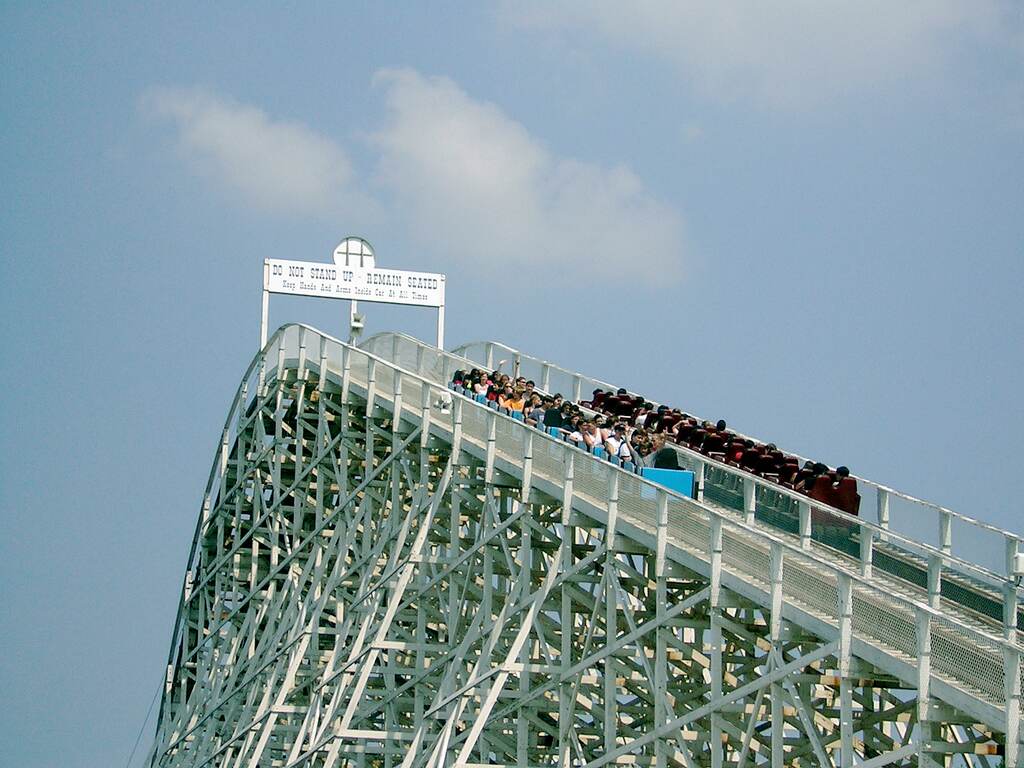
The Appeal of Dual Coasters: Why Parks Build Them
Dual coasters are more expensive to build than single-track coasters, so why do parks invest in them? There are several reasons.
The Competitive Element
The primary appeal of dual coasters is the competitive element. Riders on one track can see riders on the other track, creating a sense of competition. “Did we win?” is a common question after riding a dual coaster.
This competitive element adds a psychological dimension to the experience. Even though the races are determined by factors beyond riders’ control (weight distribution, wind, etc.), the perception of competition makes the ride more exciting.
The Shared Experience
Dual coasters create a shared experience between riders on different tracks. Riders can see and hear each other, creating a sense of community and connection. This is particularly appealing for groups of friends or families who want to ride together.
The Visual Impact
Dual coasters are visually impressive. Two coasters running side by side create a dramatic visual spectacle that’s appealing to both riders and spectators. The visual impact helps attract guests to the coaster.
The Capacity Advantage
While dual coasters are more expensive to build, they can handle more riders per hour than single-track coasters. Two tracks operating simultaneously means more trains running at the same time, which increases capacity.
The Novelty Factor
Dual coasters are less common than single-track coasters, which makes them novel and appealing. Guests are drawn to unique attractions, and dual coasters are definitely unique.
Famous Dual Coasters Around the World
Several famous dual coasters exist around the world. Here are some of the most notable.
Space Mountain at Magic Kingdom and Tokyo Disneyland
Space Mountain at Walt Disney World’s Magic Kingdom has two separate tracks that operate independently. While they’re not perfectly parallel, they’re both indoor dark ride coasters that create a shared experience.
Tokyo Disneyland’s Space Mountain is similar, with two tracks that weave through the same indoor space.
Big Thunder Mountain Railroad at Disney Parks
Big Thunder Mountain Railroad at various Disney parks has two separate tracks that operate independently. The tracks are themed around a runaway mine train, and the dual-track design creates a sense of competition.
Dueling Dragons (now The Incredible Hulk Coaster and Doctor Doom’s Fearfall) at Universal Orlando
Dueling Dragons was a famous dual coaster at Universal Orlando that featured two inverted coasters that appeared to collide but never actually touched. The coaster was themed around dragons fighting each other.
The coaster was reimagined in 2016, with the two tracks becoming separate attractions: The Incredible Hulk Coaster and Doctor Doom’s Fearfall.
Racer at Kings Dominion
Racer is a classic wooden dual coaster that opened in 1975. It features two identical wooden coaster tracks running side by side, creating a head-to-head racing experience.
Racer is one of the oldest dual coasters still operating and remains a beloved classic among enthusiasts.
Gemini at Cedar Point
Gemini is a classic wooden dual coaster at Cedar Point that opened in 1978. It features two identical wooden coaster tracks running side by side, creating a racing experience.
Gemini is known for its speed and airtime, and the dual-track design adds to the excitement.
Dueling Coasters at Various Parks
Several parks have dual coasters with different themes. Some are designed to race head-to-head, while others are designed to appear to collide or interact in some way.
The Engineering of Dual Coasters: How They Work
Building a dual coaster requires careful engineering to ensure that both tracks operate safely and reliably while maintaining the sense of competition.
Track Alignment and Spacing
The two tracks must be precisely aligned and spaced to create the visual effect of racing side by side. The spacing must be close enough to create the sense of competition but far enough apart to ensure safety.
Modern dual coasters use computer-aided design (CAD) to ensure precise alignment. The tracks are engineered to be identical or nearly identical, so the two coasters have similar ride experiences.
Lift Hill Synchronization
For dual coasters to feel like they’re racing, the lift hills should be synchronized. Both trains should reach the top of the lift hill at approximately the same time.
This requires careful engineering of the lift hill systems. Both lift hills must operate at the same speed and with the same timing to ensure synchronization.
Brake Zone Synchronization
Similarly, the brake zones at the end of the coaster should be synchronized so both trains arrive at the brake zone at approximately the same time.
This requires careful engineering of the brake systems and the track layout. Modern magnetic brake systems can be precisely controlled to ensure synchronization.
Station Design
Dual coasters typically have two separate stations, one for each track. The stations must be designed to load and dispatch trains at the same time to maintain the sense of racing.
The stations are usually mirror images of each other, with identical loading procedures and dispatch timing.
Support Structure
The support structure for a dual coaster is more complex than for a single-track coaster. The supports must hold up two tracks instead of one, and they must be engineered to handle the forces created by both tracks operating simultaneously.
Dual coasters often feature distinctive support structures that are part of the visual appeal of the coaster.
Types of Dual Coasters: Different Approaches to the Concept
Not all dual coasters are designed the same way. There are several different approaches to dual coaster design.
Identical Twin Coasters
Identical twin coasters have two tracks that are exactly the same. Both coasters have the same layout, the same elements, and the same ride experience. Examples include Racer at Kings Dominion and Gemini at Cedar Point.
Identical twin coasters create a true racing experience, where the outcome is determined by factors like weight distribution and wind rather than by different layouts.
Mirrored Coasters
Mirrored coasters have two tracks that are mirror images of each other. One track goes left while the other goes right, creating a symmetrical design.
Mirrored coasters create a visually appealing design and can create interesting interactions between the two tracks.
Interacting Coasters
Some dual coasters are designed to appear to interact with each other. They might appear to collide, weave around each other, or create other dramatic interactions.
Dueling Dragons was a famous example of an interacting coaster, where the two inverted coasters appeared to collide but never actually touched.
Different-Layout Dual Coasters
Some dual coasters have different layouts on each track. While both coasters have similar heights and speeds, they might have different elements or different pacing.
This approach allows parks to create variety while maintaining the dual-coaster concept.
The Psychology of Dual Coasters: The Competitive Element
The appeal of dual coasters goes beyond the physical experience. There’s a psychological element that makes dual coasters special.
The Competitive Instinct
Humans are naturally competitive. Even though the outcome of a dual coaster race is largely determined by factors beyond riders’ control, the competitive instinct kicks in. Riders want to “win” the race.
This competitive element makes the ride more exciting and memorable. Riders remember whether they won or lost, and they want to ride again to try to win next time.
The Shared Experience
Riding a dual coaster with friends or family creates a shared experience. Riders can see and hear each other, creating a sense of connection and community.
This shared experience is particularly appealing for groups. Friends can ride together and compare their experiences afterward.
The Illusion of Control
Even though the outcome of a dual coaster race is determined by factors beyond riders’ control, riders feel like they have some control. They might think “if I lean forward, I’ll go faster” or “if I sit in the back, I’ll win.”
This illusion of control makes the experience more engaging and memorable.
The Bragging Rights
Winning a dual coaster race gives riders bragging rights. “I beat you on the coaster” is a fun boast to make to friends or family.
This competitive element keeps riders coming back for more rides, trying to win again.
The Physics of Dual Coaster Racing: Why One Train Wins
If both coasters are identical and both trains are dispatched at the same time, why does one train usually win the race?
Weight Distribution
The primary factor that determines the winner is weight distribution. A heavier train will accelerate faster on the lift hill and maintain more speed throughout the ride.
If one train is fully loaded and the other is partially loaded, the heavier train will likely win the race.
Wind and Weather
Wind and weather can affect the outcome of a dual coaster race. A train riding into a headwind will be slowed down, while a train riding with a tailwind will be accelerated.
On windy days, the outcome of the race might be determined more by wind than by any other factor.
Friction and Maintenance
Even tiny differences in friction between the two tracks can affect the outcome. If one track is slightly more lubricated than the other, that train will be faster.
Regular maintenance is important to ensure that both tracks have similar friction characteristics.
Rider Positioning
The positioning of riders on the train can affect the outcome. Riders sitting in the front of the train create more wind resistance than riders sitting in the back.
If one train has riders distributed differently than the other, that can affect the outcome of the race.
The Randomness Factor
Ultimately, the outcome of a dual coaster race is somewhat random. Small differences in weight, wind, and other factors can determine the winner. This randomness is part of what makes dual coasters fun—you never know who will win.
Famous Dual Coaster Moments: Iconic Interactions
Some dual coasters are famous for specific moments where the two coasters interact in dramatic ways.
Dueling Dragons’ “Near-Miss” Inversions
Dueling Dragons was famous for its inversions where the two coasters appeared to collide but never actually touched. These near-miss moments created dramatic visual effects and added to the excitement.
The engineering required to create these near-miss moments was complex and precise. The two coasters had to pass within feet of each other without actually touching.
Racer’s Head-to-Head Racing
Racer at Kings Dominion is famous for its head-to-head racing experience. The two identical wooden coasters run side by side for the entire ride, creating a sustained sense of competition.
Riders on Racer often remember whether they won or lost the race, and many riders want to ride again to try to win next time.
Gemini’s Dual Lift Hills
Gemini at Cedar Point features two lift hills that operate side by side. Watching the two trains climb the lift hill simultaneously is a dramatic visual moment.
The synchronized lift hills create a sense of drama and anticipation as both trains climb toward the first drop.
The Challenges of Building Dual Coasters
While dual coasters are appealing, they present significant engineering and operational challenges.
Cost
Dual coasters are significantly more expensive to build than single-track coasters. You’re essentially building two coasters instead of one, which doubles the cost of track, supports, and other components.
The additional cost limits the number of parks that can afford to build dual coasters.
Space Requirements
Dual coasters require more space than single-track coasters. You need space for two parallel tracks, two stations, and two sets of supports.
Many parks don’t have enough available space to build a dual coaster.
Synchronization
Keeping two coasters synchronized is challenging. Both lift hills must operate at the same speed, both brake zones must operate at the same timing, and both trains must be dispatched at the same time.
Any deviation in synchronization can ruin the dual coaster experience.
Maintenance
Maintaining two coasters instead of one requires more maintenance staff and more resources. Both tracks must be inspected regularly, both brake systems must be maintained, and both lift hill systems must be serviced.
The additional maintenance requirements increase the operational costs of dual coasters.
Capacity vs. Cost Trade-off
While dual coasters can handle more riders per hour than single-track coasters, the additional cost might not be justified by the additional capacity. A park might be able to build two separate single-track coasters for the same cost as one dual coaster, and the two separate coasters might handle more riders.
The Evolution of Dual Coasters: From Wooden to Steel
Dual coasters have evolved significantly over the decades.
The Early Days: Wooden Dual Coasters
The earliest dual coasters were wooden coasters. Racer at Kings Dominion (1975) and Gemini at Cedar Point (1978) were among the first dual coasters and helped establish the concept.
Wooden dual coasters are still popular today, and many parks still operate classic wooden dual coasters.
The Steel Era: Steel Dual Coasters
As steel coaster technology advanced, parks began building steel dual coasters. Steel coasters allowed for more complex layouts, more inversions, and more dramatic interactions between the two tracks.
Dueling Dragons was a famous steel dual coaster that featured two inverted coasters with dramatic near-miss moments.
Modern Dual Coasters
Modern dual coasters incorporate advanced technology like computer control systems, magnetic braking, and LSM launch systems. These technologies allow for more precise synchronization and more dramatic interactions between the two tracks.
The Future of Dual Coasters
As technology advances, dual coasters might become more common. Advanced computer control systems could allow for more complex interactions and more dramatic moments. Virtual reality integration could add a digital layer to the dual coaster experience.
Dual Coasters vs. Single-Track Coasters: Which Is Better?
Is a dual coaster better than a single- track coaster? That depends on what you value in a coaster experience.
The Dual Coaster Advantage
Dual coasters offer a competitive element and a shared experience that single-track coasters don’t provide. The sense of racing against another coaster adds a psychological dimension that makes the ride more memorable.
Dual coasters are also visually impressive. Two coasters running side by side create a dramatic spectacle that’s appealing to both riders and spectators.
The Single-Track Coaster Advantage
Single-track coasters can be more innovative in their design. Without the constraint of having to match another track, designers have more freedom to create unique layouts and dramatic elements.
Single-track coasters are also less expensive to build and maintain, which allows parks to invest in more coasters or more dramatic coaster elements.
The Verdict
Both dual coasters and single-track coasters have their appeal. Dual coasters offer a unique competitive experience, while single-track coasters offer more design freedom and innovation. The best coaster is the one that matches your preferences.
The Social Aspect of Dual Coasters: Riding With Friends and Family
One of the biggest appeals of dual coasters is the social aspect. Dual coasters allow friends and family to ride together and experience the coaster simultaneously.
Experiencing the Ride Together
On a single-track coaster, riders on the same train experience the ride together, but riders on different trains don’t. On a dual coaster, riders on different trains can see and hear each other, creating a shared experience.
This shared experience is particularly appealing for groups of friends or families who want to ride together but might not fit on the same train.
Comparing Experiences
After riding a dual coaster, riders can compare their experiences. “Did you win?” “Did you feel that drop?” “That was crazy!” Dual coasters create conversation and connection between riders.
Creating Memories
Dual coasters create memorable moments that riders will remember and talk about for years. The competitive element and the shared experience make dual coasters more memorable than many single-track coasters.
Building Relationships
Riding a dual coaster with friends or family strengthens relationships. Shared experiences create bonds, and the fun and excitement of a dual coaster ride creates positive memories that strengthen those bonds.
Dual Coasters Around the World: A Global Perspective
Dual coasters exist in parks around the world, each with its own unique characteristics.
North America
North America has several famous dual coasters, including Racer at Kings Dominion, Gemini at Cedar Point, and the former Dueling Dragons at Universal Orlando.
North American dual coasters tend to be either classic wooden coasters or modern steel coasters with dramatic interactions.
Europe
Europe has several dual coasters, including some unique designs that emphasize theming and storytelling.
European parks often integrate dual coasters into themed lands, creating immersive experiences that go beyond just the coaster itself.
Asia
Asian parks have embraced dual coasters as a way to create unique attractions. Some Asian parks have built dual coasters with innovative designs and dramatic interactions.
Asian dual coasters often emphasize visual spectacle and technological innovation.
The Technology Behind Dual Coaster Synchronization
Keeping two coasters perfectly synchronized requires sophisticated technology.
Computer Control Systems
Modern dual coasters use computer control systems to manage the lift hills, brake zones, and dispatch timing. These systems monitor the position of both trains and adjust the timing to keep them synchronized.
If one train falls behind, the control system can slow down the other train to keep them together. If one train is ahead, the control system can speed up the other train.
Sensor Networks
Dual coasters use extensive sensor networks to monitor the position and speed of both trains. Sensors on the track detect when trains pass specific points, allowing the control system to adjust timing as needed.
Magnetic Braking Systems
Modern magnetic braking systems can be precisely controlled to adjust the speed of trains. This allows for fine-tuning of the synchronization between the two coasters.
LSM Launch Systems
For dual coasters with launch systems, LSM (linear synchronous motor) systems can be precisely controlled to launch both trains at exactly the same speed and timing.
The Thrill Factor: How Dual Coasters Compare to Other Coasters
How do dual coasters compare to other coasters in terms of thrill factor?
Speed and Intensity
Dual coasters can be just as fast and intense as single-track coasters. The thrill comes from the speed, inversions, and airtime, not from the fact that there are two tracks.
Some of the fastest and most intense coasters in the world are single-track coasters, not dual coasters.
The Psychological Thrill
Dual coasters add a psychological thrill that comes from the competitive element. The sense of racing against another coaster adds excitement beyond the physical sensations of the ride.
This psychological thrill can make a dual coaster feel more thrilling than a single-track coaster with similar speed and intensity.
The Visual Thrill
Dual coasters provide a visual thrill from seeing the other coaster racing alongside. This visual element adds to the overall excitement of the experience.
The Overall Experience
The overall thrill factor of a dual coaster depends on the combination of physical sensations, psychological elements, and visual spectacle. A well-designed dual coaster can be more thrilling than a single-track coaster, even if the physical forces are similar.
Dual Coasters and Park Design: How Parks Use Them
Dual coasters serve specific purposes in park design and marketing.
Iconic Attractions
Dual coasters are often iconic attractions that define a park’s identity. Gemini at Cedar Point and Racer at Kings Dominion are iconic coasters that many enthusiasts travel to ride.
Capacity Solutions
Parks use dual coasters to increase capacity in a specific area. Instead of building two separate coasters in different locations, a park can build one dual coaster that handles the same number of riders.
Marketing and Promotion
Dual coasters are excellent marketing tools. The competitive element and the visual spectacle make dual coasters appealing to both enthusiasts and casual visitors.
Parks often promote dual coasters as unique attractions that offer something different from other coasters.
Theming Opportunities
Dual coasters offer theming opportunities. Parks can theme the two coasters around competing concepts—dragons fighting, teams competing, etc.
The theming adds narrative depth to the coaster experience.
The Future of Dual Coasters: Innovation and Evolution
What’s the future of dual coasters? How will they evolve?
Virtual Reality Integration
Future dual coasters might integrate virtual reality, allowing riders to experience a digital narrative while riding the physical coaster. VR could enhance the competitive element by showing riders a digital representation of the race.
Advanced Synchronization
As technology advances, dual coasters might achieve even more precise synchronization. Advanced computer control systems could create more dramatic interactions and more precise timing.
Innovative Layouts
Future dual coasters might feature more innovative layouts that create new types of interactions. Designers might create coasters that weave around each other in new ways or create new types of near-miss moments.
Sustainability
As environmental concerns grow, future dual coasters might be designed to be more energy-efficient. Advanced braking systems and launch systems could reduce energy consumption.
The Hybrid Approach
Future parks might build hybrid attractions that combine elements of dual coasters with other attractions. A dual coaster might be combined with a dark ride, a water ride, or other elements to create a unique experience.
Why Dual Coasters Matter: The Bigger Picture
Dual coasters might seem like a niche topic, but they represent something important in the coaster world.
Innovation and Creativity
Dual coasters represent innovation and creativity in coaster design. They show that designers are willing to take risks and try new approaches to create unique experiences.
Community and Connection
Dual coasters emphasize the social and community aspects of coaster riding. They create shared experiences and connections between riders.
The Evolution of Thrills
Dual coasters represent the evolution of what constitutes a “thrill.” Modern thrills aren’t just about speed and inversions—they’re about psychological elements, social experiences, and visual spectacle.
The Art of Coaster Design
Dual coasters showcase the art of coaster design. Creating two synchronized coasters that interact in dramatic ways requires precision, creativity, and engineering expertise.
Conclusion: The Enduring Appeal of Dual Coasters
Dual roller coasters represent a unique approach to coaster design that emphasizes competition, shared experience, and visual spectacle. From classic wooden coasters like Racer and Gemini to modern steel coasters with dramatic interactions, dual coasters have captured the imagination of coaster enthusiasts and casual visitors alike.
The appeal of dual coasters goes beyond the physical sensations of the ride. The competitive element, the shared experience with riders on the other track, and the visual drama of two coasters operating simultaneously create a unique psychological and social experience.
While dual coasters are more expensive and more complex to build and maintain than single-track coasters, they offer something that single-track coasters cannot: the thrill of racing against another coaster and the joy of sharing that experience with friends and family.
As technology advances, dual coasters will continue to evolve. Virtual reality integration, advanced synchronization systems, and innovative layouts will create new possibilities for dual coaster design. But the core appeal will remain the same: the thrill of competition and the joy of shared experience.
If you haven’t experienced a dual coaster, seek one out. Whether it’s a classic wooden coaster like Racer or a modern steel coaster with dramatic interactions, a dual coaster offers a unique experience that you won’t forget. And if you ride with friends or family, you’ll create memories that will last a lifetime.
The next time you’re at a theme park and you see two coasters racing side by side, don’t just watch—ride one. Experience the thrill of competition, the joy of shared experience, and the excitement of dual coaster racing. You’ll understand why dual coasters hold a special place in the hearts of coaster enthusiasts around the world.
