Lightning Rod is one of those rare roller coasters that people talk about like a legend and a cautionary tale at the same time. Even if you have never been to Dollywood, you have probably heard the same two sentences repeated in different forms: it is incredible when it is running, and it has had a complicated relationship with reliability.
That tension is exactly what makes Lightning Rod worth a deep dive. It is not just a great ride, it is a case study in how far a park and a manufacturer can push a concept, what happens when the real world pushes back, and how a coaster can change without losing the thing people loved about it in the first place.
In this guide, I am going to explain what Lightning Rod is, why it was such a big deal when it opened, what the ride experience feels like, and why Dollywood ultimately made the decision to replace its launch with a high-speed chain lift for the 2024 season.
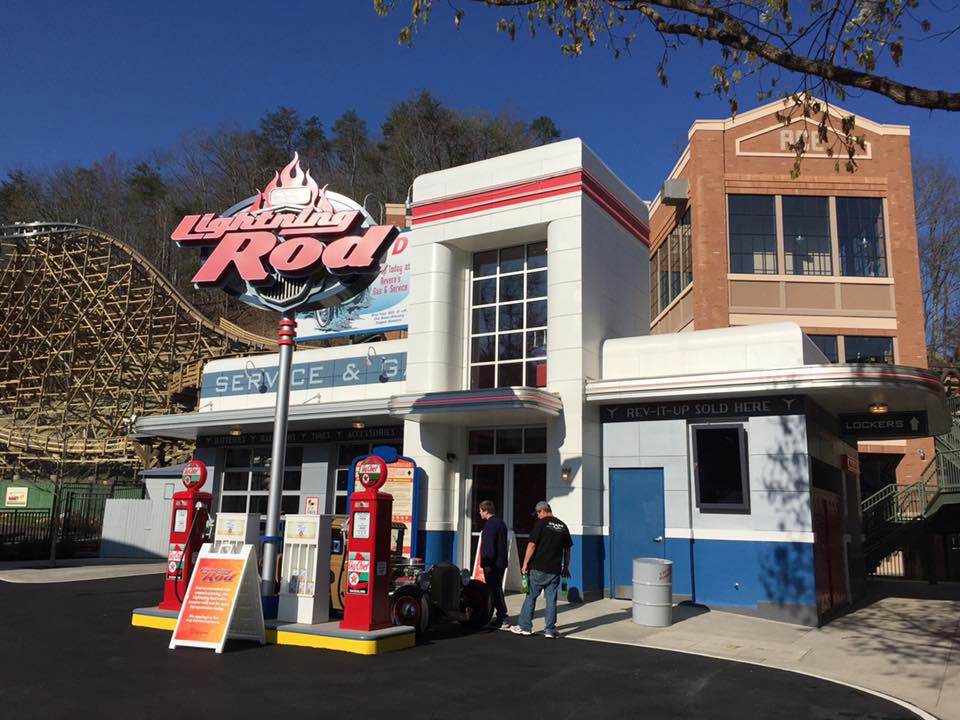
What Lightning Rod Is (And Why It Was A Big Deal)
Lightning Rod is a Rocky Mountain Construction coaster at Dollywood in Tennessee, built on the idea that a wooden coaster could feel modern, aggressive, and completely different from the classic chain lift formula. When it opened in 2016, it was famous for a feature that was almost unheard of on a wooden coaster: a launch that pulled you up to the top rather than a traditional lift hill.
That concept mattered for two reasons. First, it changed the pacing. Instead of the slow climb where you have time to look around and brace yourself, Lightning Rod tried to throw you into the ride’s first big moment immediately. Second, it was a technical flex. Launch systems are demanding even on steel coasters, and doing something launch-driven on a ride with a wooden structure and a very aggressive profile was always going to be ambitious.
If you like the bigger story of how coaster technology evolves, it helps to zoom out and remember that coasters have always been a tug-of-war between what is possible and what is practical. That is part of why roller coaster safety technology evolution is such a fascinating topic, because it shows how the industry adapts when new ideas create new operational realities.
The Ride Experience: Why People Fell In Love With It
Lightning Rod’s appeal is not just that it was unusual. It is that the ride delivers a specific kind of thrill that is hard to replicate. It has the speed and aggression many people associate with steel coasters, but it still has that wooden coaster personality, the sense of being close to the structure and the terrain, with a ride feel that is more physical and alive.
When Lightning Rod is running well, it is the kind of coaster that makes people come off the platform talking with their hands. It is fast, it is punchy, and it has that “how is this still going” energy that great airtime machines have when the pacing never really lets up.
It also sits in a region where a lot of guests are not hardcore coaster travelers. That matters. Dollywood is a destination park, but it is also a park where families show up for atmosphere, food, shows, and mountain vibes. Lightning Rod is a statement coaster in a place that does not feel like it is trying to be a coaster arms race park. That contrast makes the ride feel even more special.
Why Lightning Rod Struggled With Reliability (The Practical Version)
Lightning Rod’s operational history is part of its identity. It is not the only coaster in the world that has had downtime, but it is one of the most talked-about because the downtime became a pattern, and because the ride’s original concept was so bold.
When a coaster has frequent closures, it is usually not one single issue. It is more often a combination of systems that are each operating close to their comfort zone. Lightning Rod’s original launch concept added complexity, and complexity is the enemy of high uptime. Launch components, control systems, and the demands of consistent performance can create a situation where the ride is safe, but not stable enough to run all day without interruptions.
Guests tend to interpret downtime emotionally. If you traveled for this coaster and it is closed, it feels personal. If you are a local and it is down again, it feels like the ride is unreliable by nature. Both reactions make sense. And if you have ever wondered what “down for maintenance” can actually mean in coaster terms, what happens if a roller coaster gets stuck is a useful way to understand why parks sometimes choose to pause operations rather than push through a day with repeated resets.
The Launch Was Not Static, It Changed Over Time
One of the most important details in the Lightning Rod story is that the launch you read about in early reviews is not necessarily the launch people experienced later. Over the years, the ride’s launch behavior was adjusted in an effort to improve reliability. That is a normal part of coaster life when a ride is pushing boundaries, but it can change the personality of the experience.
According to a 2023 report summarizing Dollywood’s public update, the launch had already been altered over time, including changes that significantly reduced how aggressively the train crested the top before the first drop. The ride still delivered strong airtime and a great layout, but the launch did not hit with the same punch as the earliest version.
The Big Change: A High-Speed Chain Lift For The 2024 Season
In late 2023, Dollywood confirmed that Lightning Rod’s launch would be replaced with a high-speed lift hill for the 2024 season. The park framed the decision as a reliability move, and the reasoning is easy to understand. A lift hill is a simpler, more proven way to get trains to the top consistently, and consistency is what parks need if they want more guests to actually experience the ride.
A detailed summary of Dollywood’s announcement described the park’s leadership acknowledging that they were “very aggressive” when the ride was built, and that the new approach was meant to fix an ambitious but flawed operational reality. The same summary also notes that the rest of the ride would remain, and that the ride’s top speed would not change, with the lift intended to match the speed the ride was already hitting in its slowed launch configuration.
This is the part of the story where coaster fans split into camps. Some people mourn the loss of the original identity, because a launched wooden coaster was the whole point. Others are simply relieved, because a coaster you can ride is better than a coaster you can only talk about.
From a guest perspective, the trade is straightforward. You lose some of the “this is insane” novelty at the start, and you gain a higher chance that the ride is actually open when you are standing in front of it.
New Trains, Too (And Why That Matters)
Alongside the lift hill change, Dollywood also announced new trains for Lightning Rod. Train design matters more than most guests realize. It affects comfort, perceived intensity, restraint feel, and how the ride tracks through elements.
If you have ever had a coaster experience where the layout was great but the ride felt uncomfortable, that is often a restraint and train design story. It is why why roller coasters have different restraints is not just trivia, it is one of the best ways to understand why two rides with similar forces can feel completely different on your body.
Does Lightning Rod Still Count As Lightning Rod Without The Launch?
This is the emotional question hiding under the technical one. When you remove the launch from a coaster that was famous for being a launched wooden coaster, are you preserving the ride or replacing it?
My take is that Lightning Rod’s identity was always two things at once: the novelty of the launch, and the quality of the layout. If the layout is still delivering the same aggressive pacing and airtime, the ride can still be a top-tier coaster even if the first minute feels more traditional.
It also helps to remember that coaster history is full of rides that evolved. Some changes are small, some are dramatic, and some are the difference between a ride that becomes a maintenance headache forever and a ride that becomes a reliable anchor attraction. If you enjoy the broader theme of rides changing over time, removed or banned roller coasters is a reminder that the alternative to “modified” is sometimes “gone.”
What Lightning Rod Teaches About Innovation In Coaster Design
Lightning Rod is a reminder that innovation is not just about coming up with a wild idea. It is about making that idea work every day for thousands of guests. A coaster can be safe and still be operationally difficult. It can be brilliant and still be too temperamental to run the way a park needs it to run.
That is not a failure, it is part of how the industry learns. The rides that push boundaries teach manufacturers and parks what to do next, what to avoid, and what to redesign. Lightning Rod’s story is not “launch coasters are bad” or “wooden coasters cannot do this.” It is “this was hard, and the solution had to match the reality of day-to-day operations.”
How To Plan A Lightning Rod Attempt (So You Actually Ride It)
If Lightning Rod is on your must-ride list, the best strategy is to treat it like a high-demand attraction that can have downtime, even in its updated form. Ride it earlier in the day when possible, and do not save it for the last hour as your one big goal.
It also helps to build a day plan that keeps your energy stable, because nothing is worse than finally getting a ride window when you are already wiped out. If you want a practical approach to pacing a full day, rope drop strategy without burning out is exactly the kind of planning mindset that makes weather delays and downtime feel less like a disaster.
And if you are the kind of person who gets a little shaky when plans change, it is worth remembering that downtime is normal at parks. Even a “perfect” day includes holds, delays, and shifting priorities. A flexible plan is the difference between a frustrating day and a great one.
Lightning Rod Vs Other “Legend” Coasters
Lightning Rod sits in a special category of coaster reputation. It is not just “a great ride.” It is “a great ride with a story.” Coasters like that tend to live longer in the community’s memory, because the conversation is not only about airtime or speed, it is about what the ride represents.
If you enjoy that kind of coaster lore, defunct roller coasters people still talk about captures the same energy: rides that became bigger than their stats because they left a mark on the people who rode them.
Lightning Rod Safety And Guest Restrictions
Lightning Rod follows the same basic safety logic as other major coasters: height requirements, health warnings, restraint checks, and loose article rules. If you are ever unsure what a posted warning is actually telling you, ride warning signs and what they mean is the most useful way to decode the language parks use to keep guests safe.
And if you are someone who worries about coaster safety in general, it can be reassuring to understand how layered modern coaster safety is. roller coaster accidents and safety statistics puts risk into perspective in a way that is more calming than most social media conversations about “dangerous rides.”

Leave a Reply