Every coaster fan has one. The ride you still talk about like it was a person. The one that made you fall in love with the hobby, or the one you rode with your dad every summer, or the one that scared you so badly you swore you would never do it again, and then immediately got back in line because your brain was buzzing.
And then one day you open your phone and see the words you never want to see: “permanently closed.” “Removed.” “Making way for something new.”
When a coaster disappears, the internet usually picks a single villain. The park is greedy. The chain is cheap. The manufacturer is cursed. The ride was “too intense for families.” People will even say it like it is a moral failure, like the park woke up and chose violence.
Most of the time, the real reason is less dramatic and more frustrating: roller coasters are machines that live outdoors, run hard, age in public, and take up some of the most valuable land in the park. A coaster can be beloved and still be a bad business decision, a maintenance nightmare, or an operational bottleneck. Sometimes it can be all three at once.
This post is the honest breakdown. Not the PR version, not the fan conspiracy version. The real reasons coasters get removed, even when people love them, and what parks are usually trying to fix when they do it.
If you like the “how does this stuff actually work” angle, you might also want to bookmark How Roller Coasters Work: Engineering And Physics. A lot of removal decisions make more sense when you understand what a coaster is asking its structure, trains, and track to survive every day.
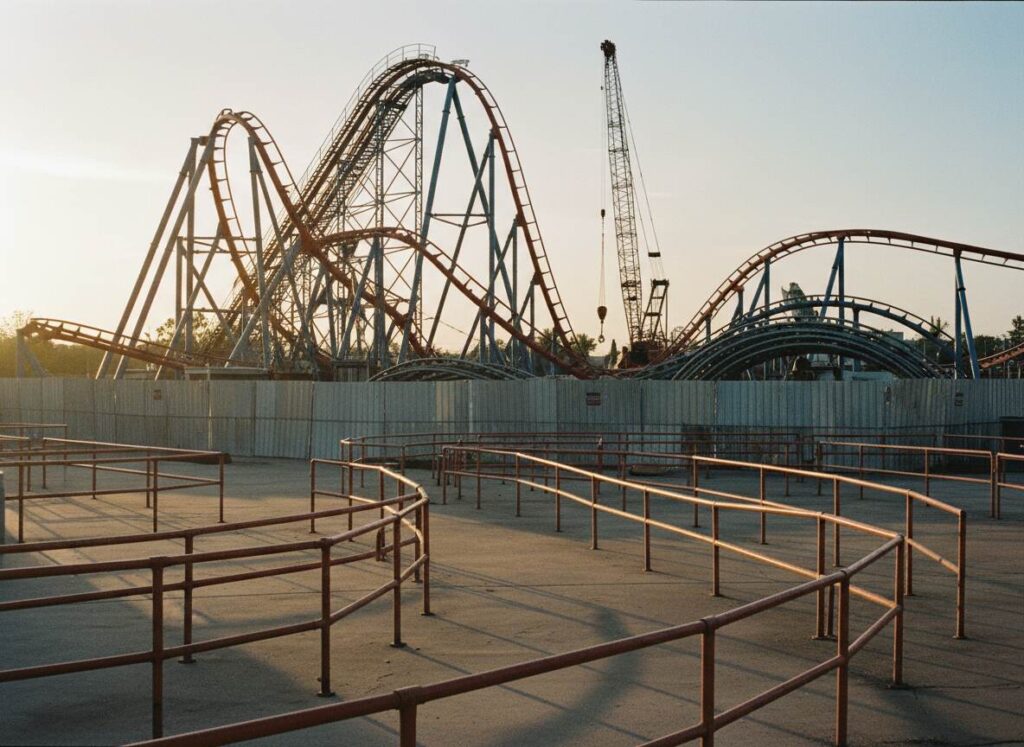
The First Thing To Understand: Parks Do Not Remove Coasters Lightly
It is tempting to imagine a park treating rides like disposable content. Post a new one, delete the old one, chase the algorithm. That is not how this works.
A roller coaster is not a seasonal overlay. It is a multi-million dollar asset that took years to plan, permit, build, and market. Removing one is expensive, disruptive, and risky. It creates negative press. It upsets locals. It can even create a weird emotional hole in the skyline that makes the park feel smaller.
So if a park is willing to eat that pain, it is usually because keeping the ride is worse.
Reason 1: Reliability Problems That Never Truly Go Away
Fans forgive a lot. We forgive roughness. We forgive weird restraints. We forgive a ride that is “temperamental” as long as it is open when we visit. What parks cannot forgive is a coaster that turns into a daily operational crisis.
Reliability is not just “does it break.” It is also:
- How often it goes down during peak hours
- How long it takes to reset and reopen
- How many technicians it ties up
- How often it causes cascading delays in the surrounding area
- How many guests it disappoints per day
Here is a small, painfully real park-day anecdote. You know that moment when you are walking toward a coaster and you see people leaving the queue with that specific defeated body language, like they just got dumped? Nobody is laughing. Nobody is even mad in a fun way. They are just tired. That is what repeated downtime does. It drains the energy out of a park.
And downtime has a second cost that fans do not always see: it creates staffing chaos. Operators get reassigned. Maintenance gets pulled off other tasks. Guest services gets slammed. The park ends up spending money and goodwill at the same time.
If you have ever wondered what actually happens when a ride stops, and why “stuck” does not automatically mean “danger,” I have a full explainer on What Happens If A Roller Coaster Gets Stuck?. The safety procedures are real, but the guest experience cost is also real, and parks track that.
Reason 2: Parts Become Rare, Custom, Or Impossible
Coasters are not like cars where you can walk into a shop and say, “I need a part for a 2007 model,” and someone has it. Many coaster components are custom. Even when they are not custom, they are often specialized enough that the supply chain is thin.
Over time, a coaster can drift into a bad place where every repair becomes a scavenger hunt. Sometimes the manufacturer no longer supports the model. Sometimes the company has merged, restructured, or simply moved on. Sometimes the ride uses systems that are now outdated enough that replacement parts are not stocked in meaningful quantities.
At that point, the park has three choices:
- Pay a premium for custom fabrication and long lead times
- Stockpile parts and hope nothing unusual fails
- Retire the ride before it becomes a public embarrassment
Fans often interpret this as “the park is cheap.” Sometimes it is not cheapness. Sometimes it is reality. If a part takes six months to fabricate and the ride is down for weeks at a time, the coaster is not functioning as an attraction anymore. It is functioning as a very expensive sculpture.
Reason 3: Maintenance Costs Rise Faster Than The Ride’s Value
Every coaster has a maintenance curve. Early years are usually smoother. Later years require more attention. That is normal. What kills a coaster is when the maintenance curve turns into a cliff.
It is not just the cost of parts. It is the cost of labor, the cost of specialized expertise, and the opportunity cost of tying up your best technicians on one ride while the rest of the park also needs care.
If you want the broader money context, I also have a breakdown on How Much Does A Roller Coaster Cost?. It helps explain why parks sometimes choose replacement over refurbishment, even when the original ride has history and fans.
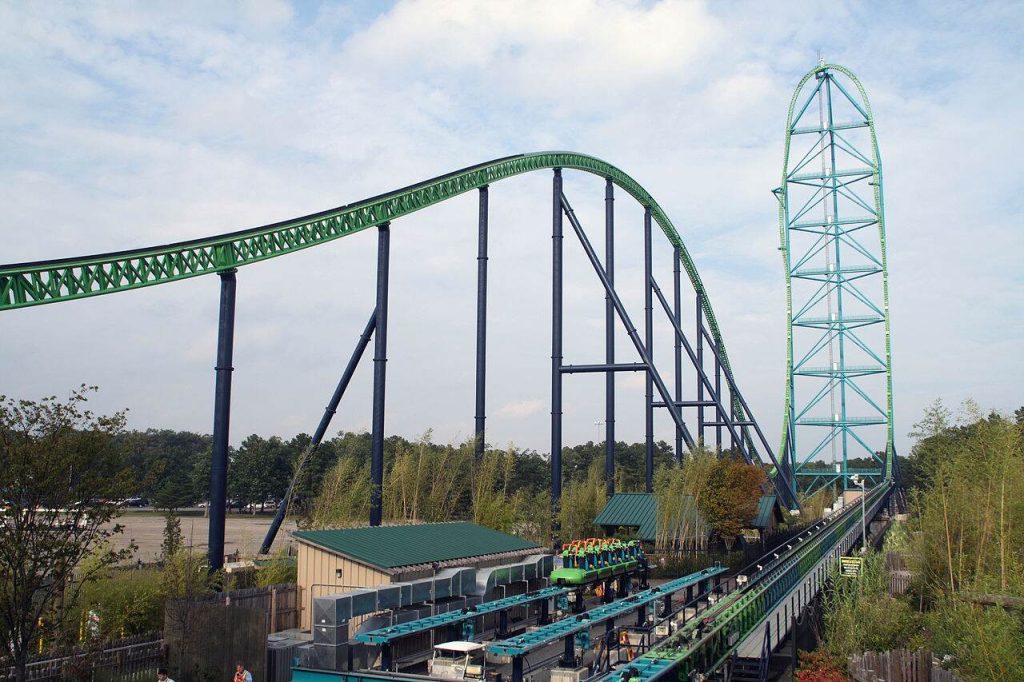
Related Post: Where Is Kingda Ka Now? What Happened to the Pieces, Where It Stood in the Park, and What Comes Next
Reason 4: The Ride Stops Fitting The Park’s Audience (Or The Park’s Future)
This is the one fans hate, because it sounds like the park is “selling out.” But parks do not exist to impress coaster Twitter. They exist to sell tickets to the people who actually show up.
A coaster can be loved by enthusiasts and still be a mismatch for the park’s broader audience if:
- it is too low capacity for the demand it creates
- it has a reputation for being rough or uncomfortable for casual guests
- it has restrictive rider requirements that cut out a big chunk of families
- it is intimidating in a way that scares off the average visitor
This does not mean parks only want gentle rides. It means parks want rides that produce happy guests at scale. A coaster that creates a lot of “I hated that” or “my head hurts” reactions can be beloved by a niche and still be a net negative for the park’s overall satisfaction scores.
And yes, parks track this. They track complaints. They track downtime. They track throughput. They track how many people enter the queue and then bail. They track how often a ride is the reason someone visits, and how often it is the reason someone says, “we are not coming back.”
If you are curious about how fear and comfort play into coaster decisions, you might like How To Overcome Roller Coaster Fear. Parks spend a lot of money trying to convert nervous guests into confident guests, and ride lineups are part of that strategy.
Reason 5: Capacity And Operations Problems (The Hidden Killer)
Here is a brutal truth: a coaster can be mechanically fine and still get removed because it is an operational headache.
Capacity is not just “how many trains can it run.” It is the full system:
- How fast the station can load and unload
- How often restraints cause delays
- How many guests need extra time or assistance
- How frequently the ride stacks trains
- How often it runs below ideal speed because of conditions
Some rides are inherently slow to load. Some have complicated restraint checks. Some have uncomfortable seats that cause more guest hesitation. Some have designs that are safe but operationally finicky. Over a season, those minutes add up into hours of lost capacity, and that turns into longer lines across the park.
And long lines are not just annoying. Long lines change spending. Guests stuck in line are not buying food, not shopping, not doing smaller attractions, and not feeling like they got value for their ticket.
Reason 6: Land Value And Park Layout (The “It’s Not Personal” Reason)
Coasters take up a lot of land. Not just the track footprint, but the support structure, the queue, the station, the maintenance access, the safety clearance zones, and the backstage space you need to keep the ride running.
Sometimes a coaster is removed because the park wants to build something that uses the same land more efficiently. That “something” could be:
- a new coaster with higher capacity and better reliability
- a themed land that increases overall guest satisfaction
- a family attraction cluster that serves more of the park’s audience
- infrastructure improvements that fix chronic crowd flow problems
This is where fans often say, “but the park has plenty of space.” In many parks, the space that looks empty to guests is not buildable in the way you think. It might be protected land, floodplain, utility corridors, backstage operations, or simply too expensive to develop compared to reusing an existing ride pad.
Also, parks love reusing ride pads because the permitting and utility work can be easier than starting from scratch. Not always, but often enough that it becomes the default move.
Reason 7: Safety Perception Can Matter Almost As Much As Safety Reality
This is a hard one to talk about, because coaster people (myself included) love to be the “actually, statistically” person. And yes, roller coasters are extremely safe compared to everyday risks. I have a whole post on roller coaster safety statistics if you want the numbers and the context.
But parks do not operate in a spreadsheet. They operate in public perception.
If a coaster becomes associated with scary headlines, even if the underlying issue is rare or fixable, the park has to decide whether the ride can ever recover its reputation. Sometimes it can. Sometimes it cannot. The same mechanical incident can play out two different ways depending on timing, media coverage, and how the park communicates.
Here is the kind of anecdote that parks pay attention to: a family walks up to a coaster, sees the name, and you can literally watch the parents tense up. They do not say “I read the incident report.” They say something like, “isn’t this the one that…” and then the sentence trails off. That moment is not about engineering. It is about trust. Trust is fragile, and parks do not like attractions that require a 10 minute reassurance speech from every parent in the queue.
Sometimes the park can fix perception with a refurbishment, a re-theme, or a very visible safety upgrade. Sometimes the ride is already old, already expensive, already low capacity, and the perception issue becomes the final push.
Reason 8: The Ride Is Technically Fixable, But The Fix Is Basically A Rebuild
Fans often say, “why not just refurb it?” like refurbishment is a single button you press.
In coaster terms, “refurb” can mean anything from replacing wheels and repainting supports, all the way up to replacing major track sections, reworking trains, modernizing control systems, and rebuilding the station. At a certain point, you are not maintaining the ride, you are re-manufacturing it.
Wooden coasters are the clearest example because track work is part of normal life. But steel coasters can also reach a point where the park is dealing with fatigue, wear, and systems that are simply not modern by today’s standards.
When the fix starts looking like a rebuild, parks ask a very blunt question: if we are going to spend this much money, do we want to spend it on the same guest experience, or do we want to spend it on something new that will sell tickets?
This is one reason record coasters often have shorter lifespans. The more extreme the forces and the more specialized the ride, the more expensive it can be to keep it running at a high standard. If you are also writing about record rides, this ties directly into your “why the tallest rides disappear” theme.
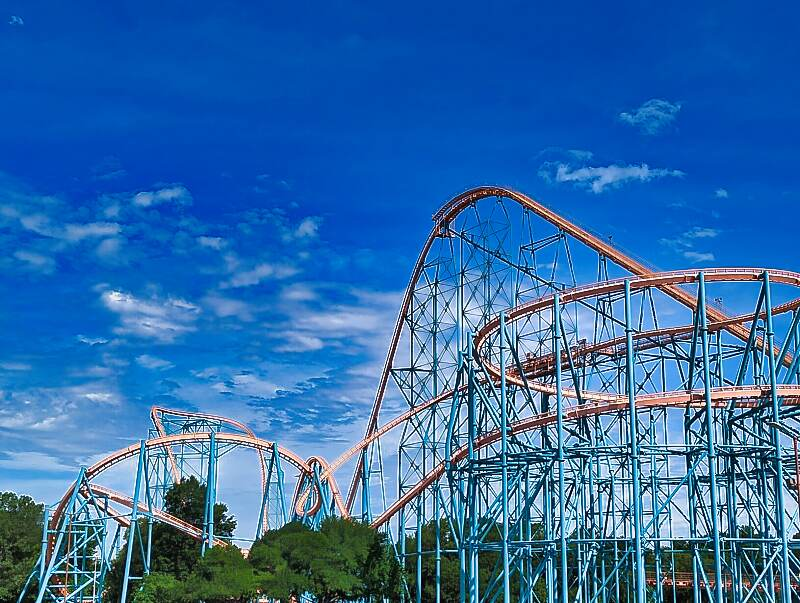
Related Post: What Actually Happens When a Roller Coaster Loses Power? The Titan Evacuation Explained
Reason 9: The Manufacturer Support Problem (And Why It Is Not Always The Park’s Fault)
Coaster fans love to assign blame, and sometimes blame is deserved. But manufacturer support is complicated, and it can make or break a coaster’s long-term future.
Here are a few realities parks deal with:
- Model-specific expertise: some coaster types require specialized knowledge that is not easy to replace when staff turnover happens.
- Control systems age: electronics and control hardware do not stay modern forever, and retrofits can be expensive.
- Supplier changes: even if the manufacturer still exists, the suppliers for certain components may not.
- Documentation gaps: older rides may not have the same level of digital documentation and support that newer rides do.
Sometimes a coaster becomes the only ride of its type left in a region, and that sounds cool until you realize it also means the park is the only one still trying to keep that specific system alive.
Reason 10: Chain-Level Strategy And The “Portfolio” Problem
If you only visit one park, it is easy to think every decision is made locally. In reality, many parks are part of chains, and chains think in portfolios.
That means decisions can be influenced by things like:
- standardizing maintenance practices across multiple parks
- shifting budgets toward projects with the best return
- reducing risk exposure on older, harder-to-maintain rides
- aligning the park’s lineup with a new brand direction
This is also where you sometimes see the “why would they remove that instead of this other coaster?” argument. The answer can be boring: the other coaster fits the chain’s long-term maintenance and operations model better, even if fans like it less.
It is not romantic, but it is real.
Reason 11: The Ride Is Loved, But It Is A Guest Experience Problem
This is the part where coaster fans and casual guests often live in different universes.
An enthusiast might say, “it is rough, but it is classic rough.” A casual guest might say, “my head hurts and I feel sick.” An enthusiast might say, “the restraints are iconic.” A casual guest might say, “I felt trapped.”
If a coaster generates a steady stream of negative experience reports, parks have to decide whether that ride is helping or hurting their brand. This is especially true for parks that want more families, more first-timers, and more repeat visits from people who are not already coaster nerds.
Restraints are a huge part of this. If you are curious why some restraints feel comfortable and others feel like a medieval device, I wrote about it here: Why Roller Coasters Have Different Restraints.
And if you want the emotional side of guest experience, fear matters. Parks want guests to feel challenged, not traumatized. If you are a nervous rider, or you are the designated “coaster translator” in your friend group, this post helps: How To Overcome Roller Coaster Fear.
Reason 12: The Ride’s Theme Or Location Stops Making Sense
Sometimes the coaster is not removed because of the coaster. It is removed because the land around it is being reimagined.
Parks have learned that cohesive areas sell. A themed land encourages people to stay longer, spend more, and feel like they got a complete experience instead of a random collection of rides.
If a coaster sits in the middle of a future land plan and it does not fit the story, the park has to decide whether to retheme it, relocate it, or remove it. Retheming is not always possible, especially if the coaster’s layout and footprint fight the new plan.
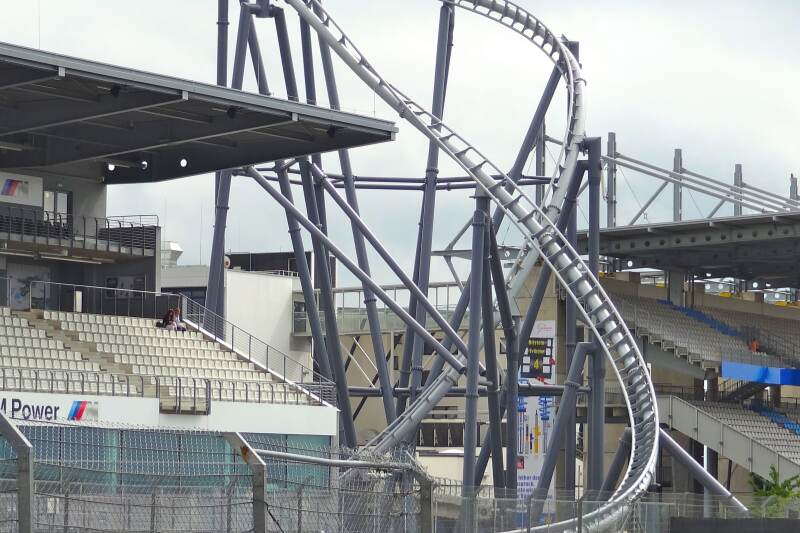
Related Post: Ring Racer Roller Coaster: The Nürburgring Launch Coaster That Barely Ever Ran
So Why Do Some Coasters Get Relocated Instead Of Scrapped?
This is the question fans ask when they are bargaining. “Maybe another park will take it.” Sometimes that happens. Often it does not.
Relocation is more realistic when:
- the ride has a strong reliability record and a manageable maintenance profile
- the coaster is a model that exists elsewhere, so parts and expertise are easier
- the footprint can be adapted to a new site without massive redesign
- the receiving park has a clear gap the ride fills
Relocation is less realistic when:
- the ride is custom and site-specific
- the coaster is already a maintenance problem
- the cost of removal and reinstallation approaches the cost of buying something new
- the ride’s reputation is damaged, even if the ride is safe
There is also a harsh practical reality: dismantling a coaster carefully for relocation is not the same as dismantling it for scrap. If the park has already decided the ride is not worth saving, they are not going to spend extra money treating it like a museum artifact.
How Fans Can Predict Removals Before They Are Announced (Without Going Full Conspiracy)
I am not telling you to doomscroll. I am saying there are patterns.
Here are the signs that tend to show up before a removal announcement:
- Chronic downtime: not just “it was down once,” but a season-long pattern.
- Reduced operations: fewer trains, shorter hours, frequent delays.
- Quiet de-marketing: the coaster stops being featured in ads, maps, and hype materials.
- Parts rumors that sound boring: “they can’t get X component” is often more predictive than dramatic rumors.
- Land prep: construction walls, utility work, survey markings in the area.
And here is the emotional truth: fans often notice these signs because they are already grieving the ride. You start paying attention differently when you feel like something is slipping away.
The Part Nobody Wants To Hear: Removal Is Often A Sign The Park Is Trying To Improve
Sometimes a coaster is removed because the park is struggling. But just as often, removal is a sign the park is investing. They are clearing space, budget, and operational bandwidth for something that fits better.
That does not mean you have to like it. You are allowed to be mad. You are allowed to mourn. Theme parks are weirdly emotional places, and rides become memory anchors. Losing one can feel like losing a piece of your own timeline.
But if you want the most honest way to frame it, it is this: parks remove coasters when the ride stops doing the job a coaster is supposed to do. The job is not “exist.” The job is to run reliably, move people efficiently, and make them leave smiling.
Quick Answers
Why do parks remove popular roller coasters?
Because popularity does not pay the bills if the ride is unreliable, expensive to maintain, low capacity, or sitting on land the park needs for a better long-term plan.
Are removed coasters usually unsafe?
Not usually. Removal is more often about reliability, cost, parts, guest experience, and strategy. Safety perception can accelerate a decision, but it is rarely the only factor.
Why not just refurbish an old coaster?
Because some “refurbs” are basically rebuilds, and at that cost level a park may choose a new ride that sells tickets and improves operations.
Do coasters get relocated often?
Sometimes, but relocation only makes sense when the ride is a good operational fit and the cost of moving it is meaningfully lower than buying new.

Leave a Reply